In the highly regulated world of industrial piping, fluid dynamics dictate the success or failure of your entire infrastructure. Amateurs often view pipe fittings as simple connectors, but experienced mechanical engineers understand that every change in directional flow introduces friction, pressure drop, and the potential for severe erosion-corrosion. When routing a pipeline through a petrochemical refinery, an offshore platform, or a pharmaceutical processing plant, selecting the correct types of pipe elbow is not a stylistic choice—it is a critical engineering calculation.
From our experience manufacturing high-end metal pipeline systems, a significant percentage of premature pipeline failures occurs directly at the directional joints. Choosing a short radius elbow when high-velocity abrasive fluid is present will inevitably lead to a blowout. Conversely, specifying oversized long radius elbows in a skid-mounted system will needlessly inflate your spatial footprint and capital expenditure. In this comprehensive guide, we strip away the generic advice and deliver the commercial and practical judgment you need to source, specify, and install the exact elbow required for your operational parameters.
Quick Answer: What are the main types of pipe elbow?
There are exactly 5 primary types of pipe elbow used in industrial piping systems, categorized by their angle of direction change and their radius dimension. They are: 1) 90-Degree Long Radius (LR) Elbow, 2) 90-Degree Short Radius (SR) Elbow, 3) 45-Degree Elbow, 4) 180-Degree Return Bend및 5) Reducing Elbow. For heavy-duty applications and standard process piping, the 90-Degree Long Radius (LR) elbow is the default industry standard due to its optimal balance between spatial footprint and minimal pressure drop. You should only deviate from the LR standard when physical space constraints dictate a Short Radius or a 45-degree offset.
목차
- What It Is: The Anatomy of an Elbow
- How It Works: Managing Fluid Dynamics
- The 5 Types of Pipe Elbow Explained
- Benefits of Correct Specification
- Engineering Limitations
- Who Should Use Which Type
- Common Mistakes in Procurement
- Buying Considerations
- Expert Recommendation from TOKO TECH
- Essential Reference Tables
- 결론
- 자주 묻는 질문
- 참조
What It Is: The Anatomy of an Elbow
A pipe elbow is a highly engineered, pressure-containing pipe fitting installed between two lengths of pipe or tubing to allow a change of direction. In most professional situations, these fittings are manufactured to strict ASME (American Society of Mechanical Engineers) standards, ensuring exact face-to-center dimensions, wall thicknesses, and material grades. They are categorized primarily by two metrics: the directional angle (usually 90°, 45°, or 180°) and the radius of the curvature.
The radius is universally expressed in relation to the Nominal Pipe Size (NPS). For example, a Long Radius (LR) elbow has a centerline radius equal to 1.5 times the NPS (R = 1.5D). A Short Radius (SR) elbow has a centerline radius equal to exactly the NPS (R = 1.0D). Understanding this geometric relationship is the foundation of competent pipeline design.
How It Works: Managing Fluid Dynamics
How it works is a matter of mitigating turbulent flow. When fluid or gas travels through a straight section of 스테인리스강 이음매 없는 파이프, the flow is generally laminar (smooth). When it encounters an elbow, the momentum of the fluid forces it against the outer wall (the extrados) of the curve. This creates a high-pressure zone on the outer wall and a low-pressure zone on the inner wall (the intrados), resulting in secondary flow patterns and turbulence.
This turbulence translates directly into a pressure drop. The tighter the radius of the elbow, the more violent the redirection, and the higher the pressure drop. Furthermore, if the fluid contains particulates or corrosive elements, the constant high-velocity impact against the extrados leads to accelerated erosion. Engineering the correct elbow means selecting a curvature that safely redirects the flow without causing unacceptable friction losses or compromising the structural integrity of the pipeline wall.
The 5 Types of Pipe Elbow Explained
We recommend familiarizing yourself deeply with these five standard configurations, as they will constitute 99% of your procurement requirements in any major industrial build.
1. 90-Degree Long Radius (LR) Elbow
The 90° LR elbow changes the flow direction by 90 degrees with a centerline radius of 1.5 times the pipe’s nominal diameter. In our testing and across global engineering practices, this is the default fitting. It provides the optimal balance—it is compact enough to fit into standard pipe racks, yet gradual enough to maintain acceptable pressure drops. Unless you have a specific reason not to, you will order the 90° LR.
2. 90-Degree Short Radius (SR) Elbow
The 90° SR elbow changes direction by 90 degrees but utilizes a much tighter centerline radius of 1.0 times the nominal diameter. You should only use SR elbows when spatial constraints are absolute. Because the turn is so abrupt, they generate significantly higher frictional resistance and are highly susceptible to erosion. They are rarely used in high-velocity or high-pressure systems.
3. 45-Degree Elbow
The 45° elbow creates a gentler, 45-degree change in direction. By definition, a 45-degree elbow produces significantly less friction and pressure drop than a 90-degree elbow. These are heavily utilized in complex routing where pipes must offset to avoid structural steel or other equipment. They are almost universally manufactured to the Long Radius dimension.
4. 180-Degree Return Bend
A 180° return bend literally turns the flow back on itself, resembling a U-shape. These specialized fittings are not used for standard routing. Instead, they are the critical components inside heat exchangers, boiler tube banks, and heating/cooling coils. Like 90-degree elbows, 180-degree returns are available in both Short Radius and Long Radius configurations, depending on the required tube pitch in the heat exchanger.
5. Reducing Elbow
A reducing elbow is a specialty fitting that simultaneously changes the direction of flow by 90 degrees while also reducing the pipe diameter (e.g., connecting a 4-inch pipe to a 3-inch pipe). This eliminates the need to weld a standard elbow and a separate concentric or eccentric reducer together. By reducing the number of weld seams by one-third, reducing elbows save significant fabrication time and reduce the potential for weld defects.
Benefits of Correct Specification
The financial and operational benefits of selecting the precise types of pipe elbow cannot be overstated. By matching the radius to your fluid velocity, you drastically reduce the pump horsepower required to move the fluid, resulting in massive energy savings over the lifespan of a facility. Furthermore, in environments utilizing highly corrosive media, properly specified 스테인리스강 파이프 피팅 with adequate wall schedules at the elbows will prevent catastrophic rupture and unscheduled plant downtime.
Engineering Limitations
There is no perfect fitting; every directional change is a compromise. The primary limitation of Long Radius elbows is their physical footprint. In packaged equipment skids or tight marine engine rooms, you often cannot afford the luxury of a 1.5D sweep. Conversely, the limitation of Short Radius elbows is their severe restriction on flow dynamics. If you are dealing with solid-laden fluids (slurries), using a Short Radius elbow is a recipe for rapid abrasive failure. In specialized upstream operations, engineers often bypass elbows entirely by utilizing continuous lengths of 석유 및 가스 분야의 코일 튜빙 applications to eliminate directional joints entirely.
Who Should Use Which Type
For commercial users operating standard HVAC, water distribution, or low-pressure chemical transport, the 90° LR elbow in standard wall thicknesses is more than sufficient. 고부하 용도용 such as high-pressure steam lines, sour gas processing, or offshore drilling, you must utilize heavy-wall (Schedule 80, 160, or XXS) 90° LR or 45° elbows to compensate for anticipated erosion at the extrados. 초보자를 위한 in procurement, never substitute an SR elbow for an LR elbow to save a few dollars; the resulting pressure drop will immediately fail the system design parameters.
Common Mistakes in Procurement
The most devastating mistake we see in global procurement is failing to match the manufacturing method of the elbow to the attached piping. If your system is engineered for extreme high pressure requiring seamless pipe, you must purchase seamless elbows. Welding a cheaper ERW (Electric Resistance Welded) elbow into a seamless pipeline introduces a critical weak point. You must thoroughly understand the ERW 파이프와 이음매 없는 파이프의 차이점 and ensure your fittings match the operational mandate.
Another frequent error is material mismatching. Purchasing carbon steel elbows for a pipeline carrying corrosive media because they were locally available will result in rapid galvanic corrosion and failure. Always maintain material continuity.
Buying Considerations
When executing your capital expenditure, apply strict commercial judgment based on the following criteria:
- End Connections: Determine if your system requires Butt Weld (BW) elbows for high-pressure integrity, Socket Weld (SW) for small-bore piping under NPS 2, or Threaded (THD) for low-pressure utilities.
- Material Traceability: Ensure your manufacturer provides full Mill Test Certificates (MTC) according to EN 10204 3.1 or 3.2. If a supplier cannot trace the metallurgy of the elbow, do not buy it.
- Supplier Vetting: Do not buy from brokers. Purchase directly from reputable 원활한 파이프 제조업체 or fittings specialists who control their own forging and testing processes.
Expert Recommendation from TOKO TECH
In most professional situations, the integrity of your pipeline is only as strong as its weakest elbow. TOKO TECH is an export-driven manufacturing enterprise specializing in the R&D, production, and sales of high-end metal pipeline systems. Headquartered in Shanghai, China, with manufacturing facilities in the Yangtze River Delta, we adhere to the core philosophy of “Quality First, Innovation Driven”.
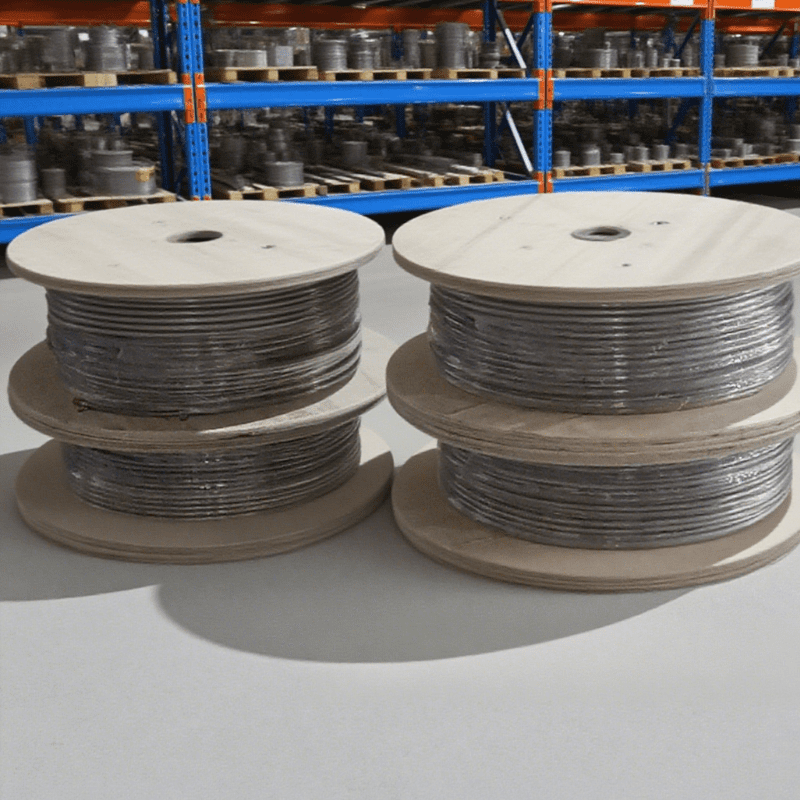
We explicitly recommend that clients in petrochemicals, energy, and shipbuilding prioritize seamless, butt-weld elbows manufactured from high-grade stainless steel or duplex alloys for all critical process lines. For extreme corrosive environments, investing in 니켈 합금 튜브 및 파이프 alongside matching nickel alloy elbows will drastically reduce your long-term maintenance OPEX. Whether you require standard 90° LR stainless elbows or highly specialized reducing elbows, TOKO TECH provides the high-performance, corrosion-resistant solutions trusted by global engineering firms.
Essential Reference Tables
Quick Summary Table: Types of Pipe Elbow
| Elbow Type | Radius Dimension | Primary Use Case | Pressure Drop |
|---|---|---|---|
| 90° Long Radius (LR) | 1.5 x Nominal Pipe Size | Standard routing, general industrial use | 보통 |
| 90° Short Radius (SR) | 1.0 x Nominal Pipe Size | Tight spatial constraints only | 높음 |
| 45° Elbow | 1.5 x Nominal Pipe Size (Usually) | Gentle offsets, directional shifts | 낮음 |
| 180° Return Bend | 1.5D (LR) or 1.0D (SR) | Heat exchangers, boiler tubes | Very High |
| Reducing Elbow | 1.5 x Nominal Pipe Size | Changing direction and pipe diameter simultaneously | 보통 |
Comparison Table: Welded vs. Seamless Elbows
| 기능 | Seamless Elbows | ERW (Welded) Elbows |
|---|---|---|
| 제조 프로세스 | Extruded/forged from a single piece of steel | Formed from steel plate with a longitudinal weld seam |
| 압력 등급 | Extremely High (No weak points) | Moderate to High (Weld seam is a potential vulnerability) |
| 비용 | Higher initial capital expenditure | More economical for large diameters |
| 최상의 대상 | High-pressure petrochemical, offshore, nuclear | Low-pressure utilities, water transport, structural |
Pros and Cons Table: Long Radius vs. Short Radius
| Factor | 90° Long Radius (LR) | 90° Short Radius (SR) |
|---|---|---|
| Pros | Smooth flow transition, lower friction, less wear on pipe walls. | Highly compact, ideal for extreme space limitations (e.g., marine). |
| Cons | Requires a larger physical footprint for installation. | High turbulence, rapid erosion potential, requires more pumping power. |
Buying Guide Table: Material Selection by Industry
| Industry / Application | Recommended Material | Sourcing Consideration |
|---|---|---|
| Food & Beverage / Pharmaceutical | 316L Stainless Steel | Must possess high sanitary polish and zero internal crevices. |
| Offshore Oil & Gas / Desalination | Duplex / Super Duplex | Requires extreme resistance to chloride stress corrosion cracking. |
| High-Temp Chemical Processing | Inconel / Hastelloy | Source from verified 니켈 합금 막대 공급 업체 with strict MTCs. |
| General HVAC / Water Supply | Carbon Steel (A234 WPB) | Focus on cost-efficiency and reliable global availability. |
결론
Understanding the exact types of pipe elbow available is the baseline requirement for any mechanical engineer or procurement specialist. You must prioritize the 90-Degree Long Radius elbow for standard operations to protect your system from excessive pressure drops and rapid erosion. Only utilize Short Radius or Reducing elbows when physical space dictates a compromise. By marrying the correct geometric shape with premium materials—such as those manufactured by TOKO TECH—you ensure that your pipeline infrastructure will deliver decades of safe, efficient, and leak-free performance.
자주 묻는 질문
The radius of a pipe elbow is measured from the center face of the pipe to the center point of the curvature. For a Long Radius (LR) elbow, this measurement will equal 1.5 times the Nominal Pipe Size (NPS). For a Short Radius (SR) elbow, the measurement will exactly equal the NPS.
Yes, and it is highly recommended if space permits. Using two 45-degree elbows separated by a short spool piece creates a much gentler curve than a single 90-degree elbow. This significantly reduces turbulence and friction loss, though it requires more space and involves more welding during fabrication.
ASME B16.9 is the international standard governing the overall dimensions, tolerances, ratings, testing, and markings for factory-made wrought buttwelding fittings. If you are procuring elbows for an industrial application, you must verify that the fittings strictly comply with ASME B16.9 to ensure they will align perfectly with standard pipe schedules.
References & Authoritative Industry Standards
To ensure our operational advice aligns with global engineering compliance, we reference the stringent guidelines established by the following authorities:
 Korean
  English
  Spanish
  Russian
  Turkish
  French
  German
  Italian