In the world of precision engineering and fluid mechanics, the structural integrity of your piping systems dictates the safety and profitability of your entire operation. Sourcing the right components is paramount, whether you rely on premium 원활한 파이프 제조업체 or top-tier 미국 스테인리스강 파이프 제조업체. Yet, field technicians frequently encounter scenarios where an immediate, non-standard bend is required, and a rotary draw CNC mandrel bender is hundreds of miles away.
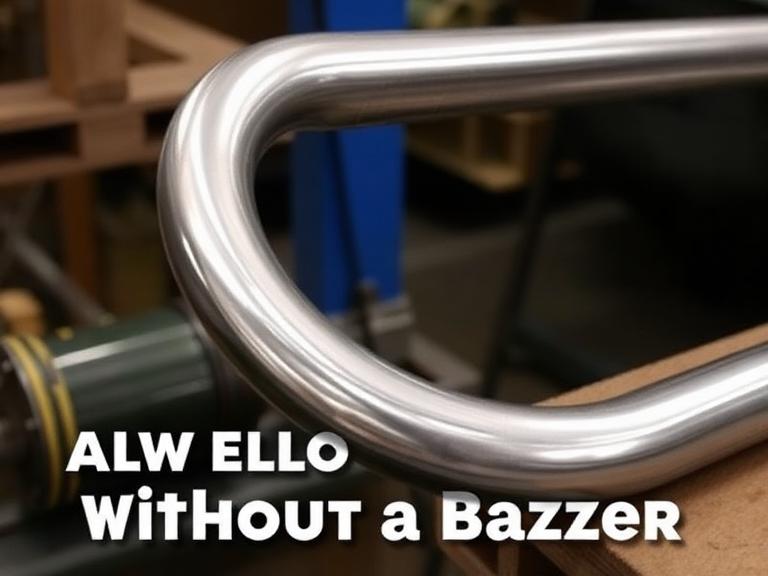
Attempting to manipulate high-grade alloys—like Inconel, Hastelloy, or standard 316L stainless steel—without dedicated machinery is a metallurgical tightrope walk. Metals resist deformation. When you force a tube into a curve, the outside wall (extrados) stretches and thins, while the inside wall (intrados) compresses and wrinkles. Without internal support, the tube will simply collapse into a flattened, restricted mess. From our experience at TOKO TECH, we have witnessed countless field failures caused by improper manual bending techniques. In this definitive guide, we will strip away the myths, lay out exactly how to bend alloy tube without a bender using the traditional sand-packing method, and establish clear boundaries on WHETHER you should ever use this method for critical industrial applications.
Quick Answer: The Manual Bending Process
To successfully learn how to bend alloy tube without a bender, you must provide internal structural support to prevent the tube from collapsing. The most reliable manual method involves packing the tube densely with bone-dry silica sand, capping both ends securely, and heating the bend zone evenly with an oxy-acetylene torch to anneal the metal. Once heated to a dull cherry red, leverage is applied to pull the tube around a rigid, fixed wooden or steel jig (the bending form). While effective for low-pressure field repairs and hobbyist projects, we recommend strictly avoiding this method for high-pressure industrial applications, as manual bending induces severe wall thinning, micro-cracking, and ovality that violates ASME boiler and pressure vessel codes.
목차
What is Manual Tube Bending?
Manual tube bending is the rudimentary process of inducing plastic deformation into a hollow cylindrical alloy without the aid of mechanized, hydraulic, or CNC-controlled rotary draw benders. In commercial manufacturing, a CNC machine uses a hardened steel “mandrel” inserted inside the tube to support the walls as a die pulls the metal around a strict radius. When executing this in the field without machinery, you must replicate the function of the internal mandrel and the external die using raw physical principles.
The standard substitute for a steel mandrel is a densely packed granular medium—typically sand. The substitute for the bending die is a custom-made wooden form or a steel drum welded to a sturdy workbench. Understanding how to bend alloy tube without a bender requires an aggressive respect for metallurgy; forcing cold, high-yield alloys like Inconel 625 will result in immediate catastrophic fracture.
How It Works: The 6 Steps to Bend Alloy Tube Without a Bender
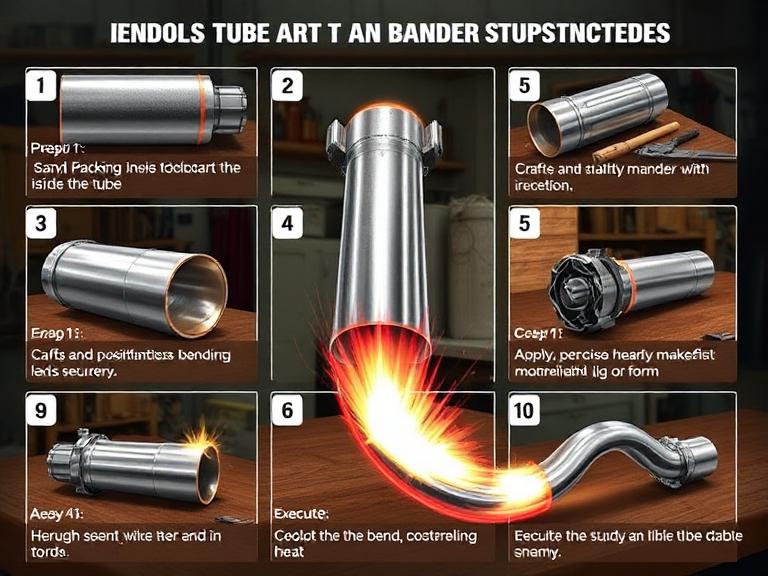
If you are stranded in the field and must bend a tube manually, precision and patience are your only safeguards. Here is the exact methodology.
Step 1: Preparation and Sand Packing
The foundation of this technique is the sand core. You must use fine, perfectly dry silica sand. Expert Warning: If there is any moisture in the sand, heating the tube will turn that water into high-pressure steam, turning your tube into a pipe bomb. Tape one end of the alloy tube securely or insert a tight-fitting wooden dowel. Pour the sand into the open end, tapping the outside of the tube continuously with a rubber mallet. This vibration forces the sand grains to settle and lock together, eliminating air pockets. Fill it to the absolute brim.
Step 2: Capping and Sealing
Once the tube is completely packed and vibrated, cap the open end with another wooden dowel. The sand must be locked under slight compression. The sand acts as a fluid, incompressible core. As you bend the tube, the outer wall will want to collapse inward; the packed sand physically prevents this deformation, maintaining the circular cross-section.
Step 3: Creating the Bending Jig
You cannot bend a tube over your knee. You need a rigid form corresponding to your desired bend radius. For beginners, a heavy hardwood block cut into a semi-circle, or an old steel pipe welded to a steel table, serves as the jig. Ensure the radius of your jig is not excessively tight. In most professional situations, pushing a manual bend tighter than a 3D radius (three times the outside diameter of the tube) will result in severe wrinkling.
Step 4: Applying Heat (Annealing)
Cold-bending nickel alloys or heavy-wall stainless steel manually is nearly impossible due to their high yield strength. You must lower the yield strength temporarily by heating the specific bend zone. Using an oxy-acetylene torch, apply a continuous, sweeping heat to the area that will contact the jig. Heat the metal until it reaches a dull cherry red. Do not overheat or hold the torch in one spot, as this will cause metallurgical degradation and scaling.
Step 5: The Bend Execution
While the metal is glowing, quickly position the tube against the jig. Clamp one end securely. Using smooth, continuous leverage on the free end, pull the tube around the jig. Do not jerk or stop halfway; uninterrupted motion prevents localized kinks. Anticipate “springback”—alloys have memory and will naturally unbend a few degrees when you release the pressure, so you must slightly over-bend the tube to compensate.
Step 6: Cooling and Inspection
Allow the tube to air-cool slowly. Quenching it in water can induce brittle martensitic structures in certain steel alloys. Once cooled, remove the wooden dowels and thoroughly flush the sand out using compressed air and water. Inspect the bend carefully. Check the intrados for compressive wrinkling and measure the extrados for wall thinning using ultrasonic gauges if available.
| 단계 | Action | Critical Engineering Purpose |
|---|---|---|
| 1. Sand Packing | Fill with dry, vibrated silica sand. | Acts as an incompressible internal mandrel to prevent wall collapse. |
| 2. Sealing | Cap tightly with wooden dowels. | Locks the granular core under tension. |
| 3. Jig Creation | Secure a fixed semi-circular form. | Dictates the specific bend radius and prevents kinking. |
| 4. Heating | Torch to dull cherry red. | Lowers yield strength for plastic deformation. |
| 5. Bending | Apply continuous, sweeping leverage. | Executes the curve while accounting for springback. |
| 6. Inspection | Air cool, flush sand, check for ovality. | Validates structural integrity and clears internal debris. |
Benefits of Manual Bending
The primary benefit of knowing how to bend alloy tube without a bender is sheer operational agility. When a low-pressure fluid line bursts on a remote drilling rig, waiting six weeks for a custom CNC replacement is not financially viable. The sand-packing method allows skilled technicians to fabricate an emergency patch using raw stock, restoring basic functionality rapidly. It is a vital skillset for survival in austere engineering environments.
Severe Limitations and Risks
We must apply absolute commercial realism here: manual bending is structurally inferior. The limitations are severe. When you heat and manually pull an alloy, you forfeit control over wall thinning. The outside curve stretches unpredictably. In high-pressure environments, a wall that has thinned by 30% becomes a localized pressure bomb waiting to burst.
Furthermore, manual bending induces ovality (flattening of the circular profile). A tube with high ovality will cause turbulent fluid flow, increasing internal friction and accelerating erosion in concentric tube applications. If you are reading a heat exchanger design guide, you will note that ASME codes strictly forbid tubes with significant ovality or uncontrolled wall thinning.
누가 사용해야 하며, 누가 사용할 필요가 없는가
For beginners and hobbyists: If you are building custom motorcycle exhaust headers, roll cages for off-road buggies, or decorative architectural elements, the sand-packing manual bend is a highly effective, low-cost technique that avoids the purchase of a $50,000 CNC bender.
For commercial users and heavy-duty applications: If you operate in petrochemical refineries, nuclear power generation, or offshore environments requiring 석유 및 가스 분야의 코일 튜빙, you must absolutely never rely on manual, torch-heated bends. The metallurgical degradation and lack of ASME compliance expose your company to catastrophic liability. You must procure certified, factory-bent tubes.
| The Pros (Advantages) | The Cons (Disadvantages) |
|---|---|
| Zero capital investment in expensive hydraulic machinery. | High risk of severe wall thinning on the extrados. |
| Allows for immediate emergency field repairs in remote locations. | Cannot achieve ASME/NACE certification for high-pressure use. |
| Highly adaptable to completely custom, non-standard, multi-axis bends. | Heating alters the alloy’s microstructure, potentially reducing corrosion resistance. |
Common Machining Mistakes
In our testing and field audits, the most disastrous mistake operators make is skipping the sand packing and attempting to heat-bend an empty tube. The tube will instantly buckle, creating a severe kink that destroys flow dynamics and creates a massive stress riser.
Another profound error is ignoring the alloy’s unique thermal properties. If you are comparing 와이어라인 대 코일 튜빙, you know that high-nickel alloys require precise heat management. Overheating an alloy like Hastelloy with a raw torch can cause carbide precipitation at the grain boundaries, destroying its legendary corrosion resistance and making it brittle.
Buying Considerations: Manual vs. Pre-Bent
Before you commit labor hours to fabricating bends in the field, evaluate the true cost. Manually packing, heating, bending, and inspecting a single tube can take hours. If your project requires multiple identical bends—such as constructing a U-tube bundle for a condenser—partnering with certified heat exchanger tube suppliers who utilize automated CNC rotary draw benders with internal mandrels is vastly more economical.
| Application Profile | Recommended Strategy | Why? |
|---|---|---|
| Low-Pressure, One-Off Custom Fabrications | Manual Sand-Packing Method | Cost-effective; avoids tooling setup fees for a single bend. |
| Heat Exchangers & Boiler U-Tubes | Buy Factory Pre-Bent | Guarantees exact wall thickness tolerances and zero flow-restricting ovality. |
| High-Pressure / Corrosive Environments | Buy Factory Pre-Bent | Ensures NACE MR0175 and ASME BPVC compliance; prevents catastrophic bursting. |
TOKO TECH의 전문가 추천
In most professional situations, the operational risks of manual bending far outweigh the perceived cost savings. When you handle extreme temperatures, volatile acids, or high-pressure steam, guessing the wall thickness of a manually bent tube is an unacceptable gamble. If you want to build systems that last decades without failure, you must eliminate structural weak points.
We recommend abandoning manual field bending for commercial operations and upgrading directly to precision-engineered components. At TOKO TECH, we eliminate the guesswork.
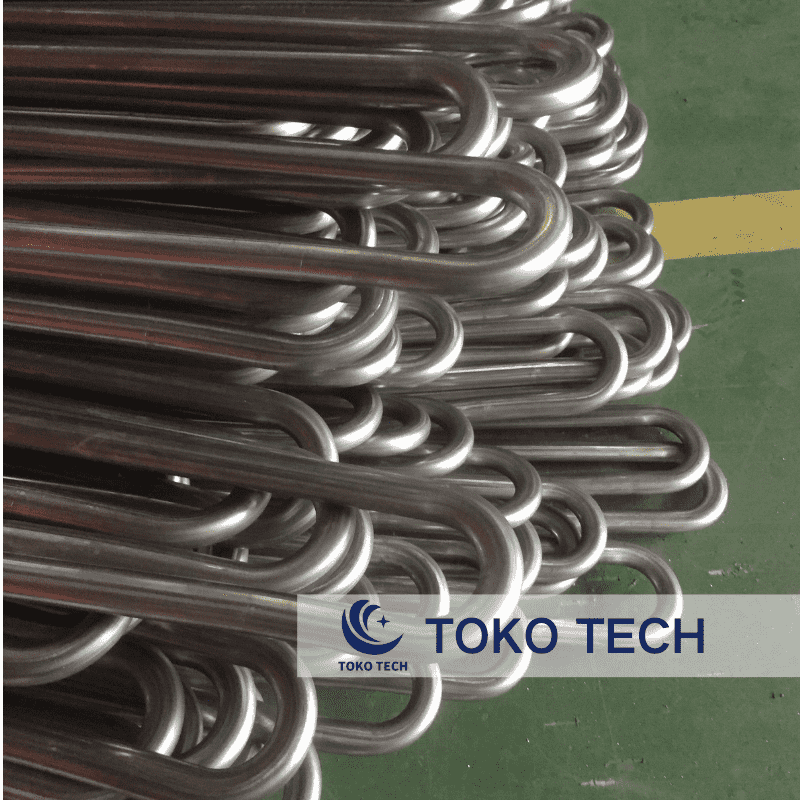
TOKO TECH Nickel Alloy U-Bend Tubes
Engineered for flawless integration into critical heat exchangers and condensers. Our CNC mandrel bending process guarantees exact dimensional tolerances, zero wrinkling, and strict adherence to minimum wall thickness standards across the entire bend radius.
- Grades: Inconel 600/625/800HT, Hastelloy C-22/C-276, Alloy 20CB3
- Standards: ASTM B163/B704/B725, EN 10216-5, NACE MR0175
- Bend Radius: 1.5D to 5D (custom radii available)
- U-Bend Angle Tolerance: ±0.5° (laser-calibrated)
- 압력 등급: Up to 15,000 PSI (ASME BPVC Section VIII compliant)
By specifying TOKO TECH U-Bend Tubes, you ensure your systems comply with global safety regulations, drastically reducing total cost of ownership and eliminating the liability of field-fabricated weak points. Whether you require standard finned tube products or highly specialized alloy bends, precision manufacturing is the only path forward for serious industry players.
자주 묻는 질문 (FAQ)
No. In most professional situations involving high-pressure, manual bending without a CNC rotary draw bender introduces severe wall thinning and micro-fractures. For any ASME or NACE regulated application, you must use professionally manufactured, mandrel-bent tubes.
Fine, completely dry silica sand is required. Any moisture trapped in the sand will instantly turn to expanding steam when heated with a torch, potentially causing the tube caps to blow off explosively.
Wrinkling occurs on the intrados (the inside radius) when compressive forces exceed the material’s yield strength, and there is inadequate internal support. A tightly packed sand core helps prevent this by forcing the metal to stretch evenly rather than buckle.
권위 있는 업계 참고 자료
To ensure your piping and tubing systems meet global engineering standards, we strongly advise consulting the following regulatory bodies:
- ASME Boiler and Pressure Vessel Code (BPVC) – The definitive global standard regulating the design, fabrication, and minimum wall thickness tolerances for high-pressure tubular components.
- ASTM 국제 – Providing rigorous material specifications and mechanical testing standards for nickel alloys and stainless steel tube bending.
- AMPP (formerly NACE International) – Authoritative standards (such as MR0175) governing the acceptable hardness and metallurgical state of alloys exposed to corrosive H2S environments, which can be compromised by improper heat-bending.
 Korean
  English
  Spanish
  Russian
  Turkish
  French
  German
  Italian