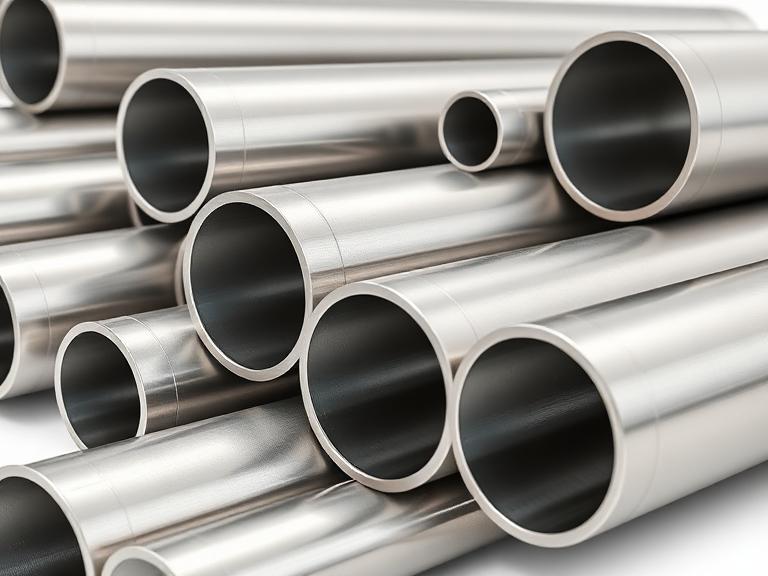
The industrial piping sector is plagued by amateur procurement decisions. Engineers and purchasing managers frequently specify pipe materials based solely on raw material cost or tensile strength, completely ignoring the thermodynamic nightmare that occurs when an electric arc hits the metal. If a pipe cannot be welded reliably without micro-cracking, carbide precipitation, or severe distortion in the Heat Affected Zone (HAZ), its theoretical tensile strength is absolutely worthless in the field.
In most professional situations, a piping failure does not occur in the base metal; it occurs at the weld joint. Therefore, understanding the metallurgical behavior of Common Weldable Metal Pipes is not just academic—it is a critical commercial mandate to prevent catastrophic pipeline failures, costly downtime, and severe safety liabilities. In this uncompromising guide, we will leverage our deep manufacturing expertise at TOKO TECH to dissect the six primary weldable alloys, address catastrophic shop-floor mistakes, and provide definitive guidance on specifying materials for your next high-stakes fabrication project.
Quick Answer: The 6 Industrial Standards
- 탄소강: The industry workhorse. Exceptional weldability due to low carbon equivalence. Ideal for structural framing, low-pressure water lines, and generic oil/gas transport.
- Stainless Steel (300 Series): Highly corrosion-resistant. Requires stringent inert gas back-purging during TIG welding to prevent internal “sugaring” and carbide precipitation.
- Nickel Alloys (Inconel, Hastelloy): Designed for extreme heat and aggressive chemical processing. Sluggish weld pools require highly skilled operators and exact filler metals.
- Chromoly (Chrome-Moly Alloy): The standard for high-temperature, high-pressure steam generation. Strict pre-heating and Post-Weld Heat Treatment (PWHT) are mandatory to prevent hydrogen-induced cracking.
- 알루미늄: Unmatched strength-to-weight ratio for cryogenics and aerospace. Prone to severe porosity if oxide layers are not mechanically removed immediately prior to AC TIG welding.
- Cupronickel (Copper-Nickel): The undisputed king of marine and desalination environments. Excellent biofouling resistance but highly sensitive to lead or sulfur contamination during welding.
목차
- What Defines a Weldable Pipe?
- How It Works: The Metallurgy of the Weld Pool
- The 6 Common Weldable Metal Pipes Detailed
- Benefits of Welded Piping Systems
- Limitations and Thermal Drawbacks
- Who Should Use Welded Pipe Networks
- Who Does Not Need Them
- Common Mistakes on the Fabrication Floor
- Critical Buying Considerations
- Expert Recommendation & Featured Products
- Summary and Comparison Tables
- 자주 묻는 질문 (FAQ)
What Defines a Weldable Pipe?
Weldability is not simply the ability to melt two pieces of metal together. It is a precise metallurgical metric defining a metal’s capacity to be joined by a localized heat source without fracturing, losing its inherent corrosion resistance, or compromising the mechanical integrity of the Heat Affected Zone (HAZ). For steel variants, this is largely dictated by the Carbon Equivalent (CE) formula. A CE below 0.35 indicates excellent weldability, while anything above 0.45 requires intense pre-heating to prevent brittle martensite formation as the weld cools.
Furthermore, when discussing Common Weldable Metal Pipes, we must distinguish between the manufacturing methods of the base pipe itself. A deep ERW 파이프와 이음매 없는 파이프의 차이점 exists. Electric Resistance Welded (ERW) pipes already possess a longitudinal seam, which can present unique stresses during subsequent butt-welding, whereas seamless pipes offer a continuous, uniform grain structure preferred for hyper-critical pressure applications.
How It Works: The Metallurgy of the Weld Pool
When an arc is struck—whether via TIG (Gas Tungsten Arc Welding), MIG (Gas Metal Arc Welding), or SMAW (Stick)—the base pipe metal and the filler metal liquefy to form the weld pool. During this state, the molten metal acts as a sponge, aggressively absorbing atmospheric oxygen, nitrogen, and hydrogen. If shielding gases (like Argon or Helium) fail to protect this pool, the weld will be riddled with porosity (microscopic holes), leading to immediate hydrostatic failure.
As the weld cools, the grain structure of the metal changes. In stainless steels, maintaining proper interpass temperatures is vital. If the metal remains between 425°C and 815°C for too long, chromium binds with carbon, depleting the protective chromium oxide layer and leading to devastating intergranular corrosion—a phenomenon commonly referred to as weld decay.
The 6 Common Weldable Metal Pipes Detailed
1. Carbon Steel Pipe (Mild Steel)
Carbon steel is the undisputed backbone of global industrial infrastructure. Because its carbon content is exceptionally low (typically under 0.25%), it does not harden rapidly when cooled from welding temperatures. This means it requires minimal pre-heating and allows for rapid deposition rates using MIG or flux-cored processes. It is cheap, highly available, and forms robust joints for structural applications and water transport.
2. Austenitic Stainless Steel Pipe (304/316/321)
When aggressive corrosion resistance and sanitary conditions are mandated—such as in food processing or pharmaceutical manufacturing—austenitic stainless steel is the only viable choice. It is highly weldable, but it demands surgical precision. Shielding the backside of the weld with argon gas (back-purging) is an absolute non-negotiable requirement to prevent oxidation. For premium applications, procuring a high-quality 스테인리스강 이음매 없는 파이프 ensures the base material is free from longitudinal weak points.
3. Nickel Alloy Pipe (Inconel, Hastelloy, Monel)
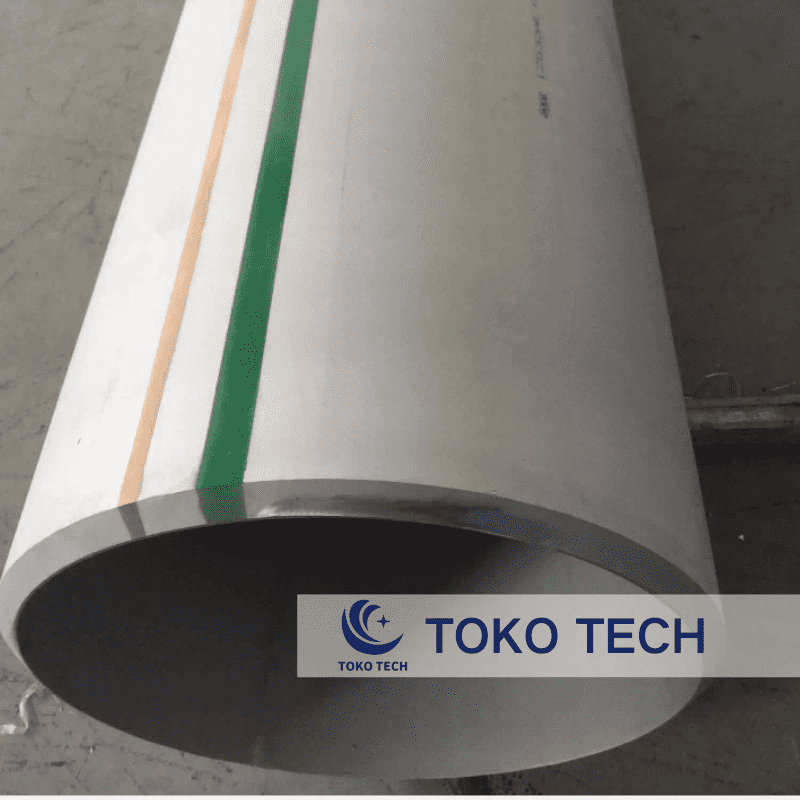
When engineering systems for sour gas, offshore drilling, or hyper-acidic chemical processing, you must transition to a 니켈 합금 튜브 및 파이프 network. These superalloys retain immense strength at incandescent temperatures and resist stress-corrosion cracking. However, welding nickel alloys is notoriously difficult. The weld pool is incredibly sluggish and viscous, requiring specialized filler metals and welders who can manipulate the puddle without excessive heat input.
4. Chromoly Pipe (Chrome-Moly Alloy)
In power generation facilities where high-pressure superheated steam tears through pipes, standard carbon steel will rupture. Chromoly (containing chromium for oxidation resistance and molybdenum for high-temperature tensile strength) is utilized. Because of its specific alloying, it is highly prone to hydrogen-induced cold cracking. It absolutely demands strict pre-heating, continuous interpass temperature control, and a rigorous Post-Weld Heat Treatment (PWHT) baking cycle to relieve internal stresses.
5. Aluminum Pipe (6061/5083)
Aluminum is specified for weight-sensitive aerospace applications and cryogenic fluid transport (since it does not become brittle at sub-zero temperatures like carbon steel). Welding aluminum pipes requires AC TIG machines to blast away the heavy, rapid-forming aluminum oxide layer that has a melting point three times higher than the underlying aluminum itself. Cleanliness is paramount; a single drop of moisture or oil will cause catastrophic weld porosity.
6. Cupronickel Pipe (Copper-Nickel Alloy)
A specialized alloy utilized almost exclusively in marine environments, desalination plants, and naval ship building. Cupronickel possesses an inherent resistance to biofouling (barnacle growth) and saltwater corrosion. Welding it requires meticulous joint preparation, as it is hyper-sensitive to embrittlement if contaminated by lead, sulfur, or phosphorus during the heating cycle.
Benefits of Welded Piping Systems
In our testing and field deployments, abandoning threaded or flanged joints in favor of a fully welded piping architecture delivers massive operational dividends. A properly executed butt weld creates a continuous, monolithic structure that eliminates leak paths entirely. This is mandatory for hazardous chemical transport. Furthermore, welded systems drastically reduce the overall footprint and weight of the pipe network, as heavy cast flanges and thick-walled threaded connections are removed from the equation. When paired with high-quality 스테인리스강 파이프 피팅, fluid flow turbulence is minimized, decreasing pump fatigue.
Limitations and Thermal Drawbacks
We must present practical commercial judgment: welding is an aggressive, destructive process. The primary limitation of utilizing Common Weldable Metal Pipes is the creation of the Heat Affected Zone (HAZ). The intense heat permanently alters the molecular structure of the pipe immediately adjacent to the weld, often creating a band of metal that is harder, more brittle, and significantly more susceptible to galvanic corrosion than the rest of the spool. Mitigating this requires expensive secondary operations like passivation, pickling, or full-furnace annealing.
Who Should Use Welded Pipe Networks
For commercial users and heavy-duty applications: Petrochemical refineries, offshore platforms, pharmaceutical sanitary lines, and high-pressure steam generation facilities must utilize fully welded, non-destructive tested (NDT) piping networks. The sheer operational liability of a high-pressure leak demands the permanence of a continuous welded joint.
Who Does Not Need Them
For beginners and low-pressure commercial setups: If you are assembling a commercial HVAC chilled water line, a low-pressure compressed air system, or a basic fire sprinkler network, paying for certified TIG welders is an indefensible waste of capital. In these scenarios, mechanical grooved couplings (like Victaulic) or heavy-duty threaded assemblies are faster, significantly cheaper, and completely adequate for the mechanical stresses involved.
Common Mistakes on the Fabrication Floor
The most catastrophic mistake we observe in the field is the failure to utilize an inert backing gas when welding stainless steel or 니켈 합금 이음매 없는 파이프. When a pipe is welded from the outside, the inner wall melts. If oxygen is present inside the pipe, it reacts with the molten chromium to form heavy, black, porous oxidation known as “sugaring.” This destroys the corrosion resistance of the pipe entirely, acting as a breeding ground for bacteria in sanitary lines or a failure point for localized corrosion. Proper argon purging is non-negotiable.
Another profound error is mixing filler metals incorrectly. If you are welding a 316L stainless pipe to a carbon steel flange, you cannot use standard carbon or 316L filler wire; you must use a transition metal like 309L to accommodate the different thermal expansion rates and prevent immediate cracking upon cooling.
Critical Buying Considerations
When procuring Common Weldable Metal Pipes, do not simply evaluate the price per ton. You must scrutinize the manufacturing provenance of the material. Demand a Material Test Report (MTR) for every single batch of pipe. The MTR guarantees the chemical composition, ensuring the carbon equivalent is within weldable limits. If you are sourcing for hyper-critical applications, aligning with elite 원활한 파이프 제조업체 or top-tier 미국 스테인리스강 파이프 제조업체 will provide the traceability required by strict ASME B31.3 process piping codes.
전문가 추천
The TOKO TECH Sourcing Verdict
Is it actually worth upgrading from carbon steel to stainless or nickel alloys? Yes, provided the environmental chemistry dictates it. However, buying exotic alloys is useless if the manufacturing tolerances of the pipe are poor. High/low misalignment during fit-up makes proper root-pass welding impossible.
We highly recommend utilizing TOKO TECH for all your tubular requirements. Our automated TIG/Plasma welding lines guarantee ≥95% base metal strength, and our strict adherence to 100% NDT ensures that every spool piece arrives at your facility ready to be welded without time-consuming field modifications. For extreme environments, our deep integration as leading 니켈 합금 바 제조업체 그리고 니켈 합금 막대 공급 업체 allows us to provide comprehensive metallurgical solutions that generic trading companies simply cannot match.
Essential Metallurgical and Sourcing Tables
| 재료 유형 | 주요 이점 | Major Welding Challenge |
|---|---|---|
| 탄소강 | High strength, extremely low cost. | Minimal; highly forgiving to various arc processes. |
| Stainless Steel (300) | Excellent corrosion resistance & aesthetics. | Requires back-purging; susceptible to carbide precipitation. |
| 니켈 합금 | Extreme heat & chemical resistance. | Sluggish weld pool requires highly skilled manipulation. |
| Chromoly | Maintains strength in high-pressure steam. | Hydrogen cracking; strictly mandates PWHT baking. |
| Aluminum | Superior strength-to-weight ratio. | Rapid oxidation layer requires AC TIG cleaning action. |
| Cupronickel | Resists marine biofouling & saltwater. | Hot shortness if contaminated by lead or sulfur. |
| 프로세스 | Precision / Cleanliness | Deposition Rate | Ideal Pipe Application |
|---|---|---|---|
| GTAW (TIG) | Exceptional (Zero Spatter) | Very Slow | Root passes, stainless steel, nickel alloys, aluminum. |
| GMAW (MIG) | Moderate to High | Very Fast | Carbon steel fill and cap passes in shop environments. |
| SMAW (Stick) | Low (Requires slag chipping) | 보통 | Outdoor field welding, windy environments, heavy carbon walls. |
| Pros (Why it is worth executing) | Cons (Limitations to consider) |
|---|---|
| Creates a completely leak-proof, monolithic structure. | Requires highly paid, certified welders to execute. |
| Drastically reduces weight by eliminating cast flanges. | Creates a Heat Affected Zone (HAZ) altering metal properties. |
| Smoother internal bore minimizes fluid flow turbulence. | Pipes cannot be easily disassembled for maintenance or cleanouts. |
| Requires significantly less physical space in tight pipe racks. | Rigorous Non-Destructive Testing (X-ray, Ultrasound) adds heavy costs. |
| Industry / Application | Recommended Pipe Material | Why This Choice is Mandated |
|---|---|---|
| 식음료 가공 | 304L or 316L Stainless Steel | Prevents bacterial adhesion; easily sterilized; resists organic acids. |
| Power Generation (Boilers) | Chromoly (P11, P22, P91) | Resists creep deformation at superheated steam temperatures. |
| Offshore Oil Rigs | Super Duplex or Inconel | Survives aggressive chloride-induced stress corrosion cracking. |
| Commercial Structural Supports | A106 / A53 Carbon Steel | Lowest cost-per-ton footprint for load-bearing applications. |
자주 묻는 질문 (FAQ)
Why is the “L” important in 316L stainless steel pipe?
In most professional situations, the “L” stands for Low Carbon (typically max 0.03%). When welding standard 316 stainless steel, the high heat causes carbon to bind with chromium, leaving the weld zone depleted of its corrosion-resistant properties (weld decay). Using 316L ensures there is not enough carbon present for this catastrophic chemical reaction to occur, preserving the integrity of the welded joint without requiring post-weld annealing.
Do I need to pre-heat carbon steel pipe before welding?
It depends on the Carbon Equivalent (CE) and the wall thickness. Standard Schedule 40 mild carbon steel pipe in a room-temperature shop rarely requires pre-heating. However, if the carbon content is high, the wall is exceptionally thick (over 1 inch), or you are welding in freezing field conditions, pre-heating is absolutely mandatory to slow the cooling rate and prevent hydrogen-induced brittle cracking in the heat-affected zone.
Can I weld aluminum pipe to stainless steel pipe?
No, you cannot directly arc weld aluminum pipe to stainless steel pipe. The metallurgical properties, melting points, and thermal expansion rates are so wildly different that they will not fuse into a cohesive puddle; they will simply form brittle intermetallic compounds that crack instantly. To join these two metals, you must use a specialized mechanical flanged joint or an explosive-bonded bi-metal transition insert.
Authoritative Industry Standards & References
To ensure your piping fabrication meets the highest global safety and metallurgical standards, we mandate consulting the following authoritative organizations:
- 미국 기계학회(ASME) – Publishers of the definitive ASME B31.3 Process Piping Code, which dictates the strict requirements for materials, design, fabrication, assembly, and inspection of industrial pipe networks.
- American Welding Society (AWS) – The premier authority on welding procedures, providing the essential D1.1 Structural Welding Code and filler metal specification guidelines required for structural integrity.
- ASTM 국제 – Develops the rigorous material testing and metallurgical composition standards (e.g., ASTM A312 for stainless steel pipes) that ensure raw materials perform as engineered.
 Korean
  English
  Spanish
  Russian
  Turkish
  French
  German
  Italian