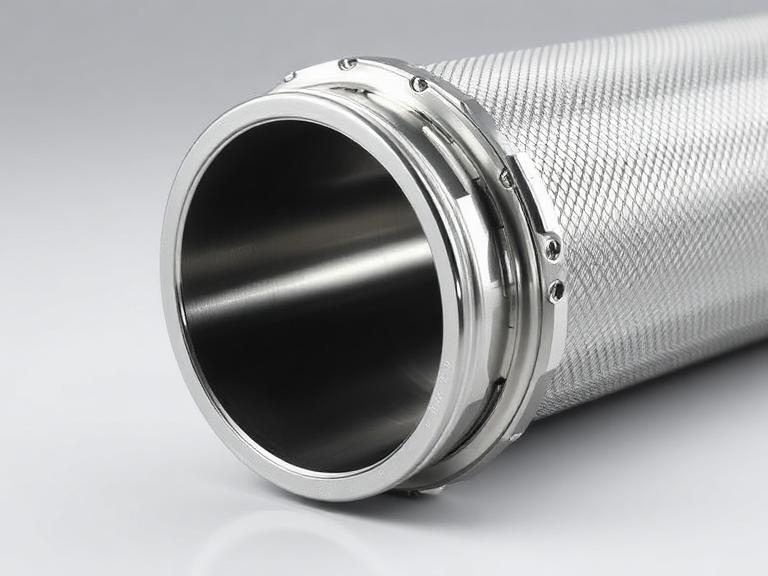
What Is 400 Nickel / Monel 400?
Chemical Composition Comparison
Properties and Performance
비교 표
Pros & Cons
Buying Guide
자주 묻는 질문
If you work with nickel alloys, you’ve almost certainly encountered the terms “400 nickel” and “Monel.” They sound different, but are they? From our experience at TOKO TECH, where we supply nickel alloy bar stock to industries worldwide, this is one of the most common questions we get from engineers, buyers, and fabricators.
The short answer is straightforward: 400 nickel and Monel are the same alloy. But the confusion is understandable, given the different naming conventions used across the industry. In this guide, we’ll clear up the confusion once and for all, and help you understand the nuances of this versatile material.
For a deeper look at nickel alloy products, see our 니켈 합금 바 제조업체 guide.
What Is 400 Nickel / Monel 400?
Monel is a group of nickel-copper alloys, originally developed in 1905 by the International Nickel Company and named after company president Ambrose Monell. The trademarked “Monel” name covers several alloys, but Monel 400 is the most common and widely used.
How It Works
Monel 400 is a solid-solution binary alloy – nickel and copper are mutually soluble in all proportions, creating a single-phase structure. This gives the alloy excellent corrosion resistance, high strength, and good ductility across a wide temperature range.
The Naming Confusion
The alloy is known by multiple names:
- 모넬 400 – The trademarked name owned by Special Metals Corporation
- 합금 400 – The generic industry name, also known as “400 nickel”
- UNS N04400 – The unified numbering system designation
- Werkstoff Nr. 2.4360 – The German standard designation
Columbia Metals confirms that “Alloy 400 is equivalent to Monel 400, as it is one and the same material”. So when you see “400 nickel” or “Nickel 400” on a datasheet or quotation, you can confidently treat it as Monel 400.
For pricing and market trends, see our kg당 니켈 바 가격 guide.
Chemical Composition: Identical Specifications
The composition of 400 nickel and Monel 400 is identical across all major standards.
| 요소 | Composition Range (ASTM B164) |
|---|---|
| 니켈(Ni) | 63.0 – 70.0% |
| 구리(Cu) | 28.0 – 34.0% |
| 철(Fe) | ≤ 2.5% |
| 망간(Mn) | ≤ 2.0% |
| Carbon (C) | ≤ 0.30% |
| Silicon (Si) | ≤ 0.50% |
| Sulfur (S) | ≤ 0.024% |
Properties and Performance: 400 Nickel vs Monel 400
Since they are the same alloy, the mechanical and physical properties are identical. Here are the key specifications for 400 nickel / Monel 400 in the annealed condition:
| 속성 | Value |
|---|---|
| Tensile Strength (Ultimate) | 480–620 MPa (70–85 ksi) |
| Yield Strength (0.2% offset) | 170–345 MPa |
| 신장 | 35–50% |
| 밀도 | 8.80 g/cm³ |
| Melting Range | 1300–1350°C |
| 열 전도성 | 21.8 W/m-K |
| Electrical Resistivity | 5.47 × 10⁻⁵ ohm-cm |
| 경도 | ≤ 75 HRB |
Key advantages of 400 nickel / Monel 400:
- 뛰어난 해수 내식성 – One of the best materials for marine applications
- Resistant to hydrofluoric and sulfuric acids – Especially in reducing conditions
- High toughness at low temperatures – No ductile-to-brittle transition
- Good thermal conductivity – Suitable for heat exchangers
- Resistant to stress corrosion cracking – Particularly in chloride environments
For applications in heat exchangers, see our heat exchanger design guide.
Comparison Table: 400 Nickel vs Monel 400
This table summarises the key identifiers across different standards and naming conventions.
| Identifier | 400 Nickel / Alloy 400 | 모넬 400 |
|---|---|---|
| 유엔 번호 | N04400 | N04400 |
| ASTM Standard | B164 | B164 |
| BS Standard | NA13 | NA13 |
| Werkstoff Nr. | 2.4360 | 2.4360 |
| 니켈 콘텐츠 | 63–70% | 63–70% |
| Copper Content | 28–34% | 28–34% |
| 인장 강도 | 480–620 MPa | 480–620 MPa |
| Trademark Status | Generic | 특수 금속 공사 |
Key takeaway: The only difference is the name – there is no difference in composition, performance, or quality. Some buyers prefer to specify “Alloy 400” or “400 nickel” to avoid trademark-related restrictions, while others use “Monel 400” because of its brand recognition.
Pros & Cons of Using 400 Nickel / Monel 400
- Outstanding corrosion resistance – Particularly in seawater and reducing acids
- High strength and toughness – Maintains properties at low temperatures
- Good thermal conductivity – Effective for heat transfer applications
- Weldable and formable – Good fabrication characteristics
- Proven track record – Used for over a century in demanding applications
- Expensive – Can cost 5–10 times more than copper or nickel alone
- Limited oxidizing acid resistance – Not suitable for nitric acid
- Work-hardens quickly – Requires careful machining at slow speeds
- Heavier than some alternatives – Density of 8.80 g/cm³
Buying Guide: How to Choose Between 400 Nickel and Monel 400
From our experience, here’s how to approach your purchasing decision.
For specific product details, see our 400 nickel alloy bar stock.
Our Expert Recommendation: Which Should You Specify?
Based on our experience and industry best practice, here is our recommendation:
- For most engineering and procurement contexts: Specify Alloy 400 (UNS N04400) 또는 400 니켈. This avoids any trademark-related issues and ensures you’re getting the same material.
- For marketing or brand-conscious applications: If your customer specifically requests “Monel” or if you’re dealing with a distributor that only stocks Monel-branded material, use Monel 400.
- For critical applications: Always require a mill test report (MTR) confirming compliance with ASTM B164 or ASME SB164, regardless of what you call it.
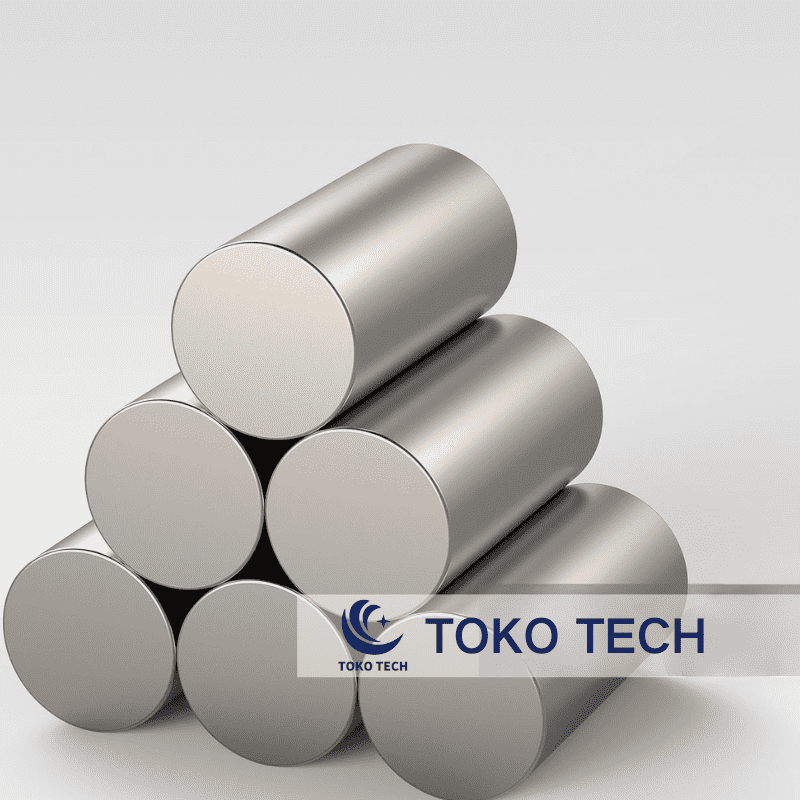
TOKO TECH 400 Nickel Alloy Bar Stock – Our 400 nickel bars conform to ASTM B164 and ASME SB164, with a composition of nickel 63–70% and copper 28–34%. Available in diameters from Φ5mm to Φ300mm, with surface finishes including hot-rolled, cold-drawn, turned, or polished (Ra≤1.6μm). Tensile strength ≥480 MPa, yield strength ≥170 MPa, elongation ≥35%, hardness ≤75 HRB.
For related applications, see our 니켈 용접봉 용도 guide.
Common Mistakes When Buying 400 Nickel / Monel 400
- Assuming Monel K-500 is the same as Monel 400 – They are not. K-500 has additions of aluminium and titanium, making it precipitation-hardened and much stronger.
- Not checking the mill test report – Always verify the composition and mechanical properties on the MTR.
- Paying a premium for the “Monel” name – The generic Alloy 400 is the same material at the same cost from most manufacturers.
- Overlooking the limitations – 400 nickel is not suitable for strongly oxidizing acids like nitric acid.
- Not considering alternatives – For some applications, stainless steel 316 or Inconel may be more cost-effective.
자주 묻는 질문
Is 400 nickel exactly the same as Monel?
Yes, “400 nickel” and “Monel 400” are the same alloy. The name difference is purely trademark-related – “Monel” is a registered trademark of Special Metals Corporation, while “Alloy 400” or “400 nickel” is the generic name.
What is the difference between Monel 400 and Monel K-500?
Monel K-500 contains aluminium and titanium (3–4% total) and is precipitation-hardened, making it significantly stronger than Monel 400. The yield strength of K-500 can be up to four times higher than 400.
Is Alloy 400 the same as Nickel 400?
Yes, “Alloy 400” and “Nickel 400” are both generic names for the same nickel-copper alloy (UNS N04400). Some suppliers use “Nickel 400” as shorthand for “Nickel Alloy 400”.
What are the common applications of 400 nickel / Monel 400?
Common applications include marine equipment (pumps, shafts, valves), chemical processing equipment, heat exchangers, and oil and gas components. It is particularly valued for its seawater corrosion resistance.
- 1. Wikipedia – Monel
- 2. MatWeb – Special Metals MONEL Alloy 400
- 3. Columbia Metals – Monel 400 / Alloy 400
- 4. TWI Global – Welding of Nickel Alloys
- 5. Harald Pihl – Monel 400 Properties & Applications
- 6. Elgiloy Specialty Metals – Monel 400 Alloy Strip & Coil
- 7. Langley Alloys – Alloy 400 vs Alloy K500
Explore more: concentric tube applications |
코일 튜빙 업체들 |
shell heat exchanger manufacturers |
finned tube products
 Korean
  English
  Spanish
  Russian
  Turkish
  French
  German
  Italian