When industrial piping systems, heat exchangers, and chemical processing equipment face severely corrosive environments, standard austenitic stainless steels like 304 and 316 simply do not survive. From our experience at TOKO TECH, relying on substandard materials in aggressive acid or high-chloride environments is an engineering failure waiting to happen. To mitigate these catastrophic operational risks, we consistently recommend specifying UNS N08825, widely known in the industry as Alloy 825.
Understanding the fundamental properties of Nickel alloy 825 is a non-negotiable requirement for mechanical and materials engineers operating in the oil and gas, chemical processing, and power generation sectors. This titanium-stabilized, fully austenitic nickel-iron-chromium alloy features precise additions of molybdenum and copper, granting it an almost unrivaled metallurgical resistance to both oxidizing and reducing acids.
In this authoritative guide, we will break down the exact metallurgical characteristics that make this material superior. If you are responsible for specifying tubular goods, pressure vessels, or bar stock for critical infrastructure, evaluating these six core properties of Nickel alloy 825 will clarify why it justifies its initial procurement cost through decades of flawless operational lifespan.
Inhaltsübersicht
- 1. Summary Table: Core Specifications of Alloy 825
- 2. Property 1: Absolute Resistance to Stress-Corrosion Cracking
- 3. Property 2: Superior Defense Against Reducing Acids
- 4. Property 3: Immunity to Localized Pitting and Crevice Corrosion
- 5. Property 4: Exceptional Resistance in Oxidizing Environments
- 6. Property 5: Reliable Mechanical Stability Across Temperature Extremes
- 7. Property 6: Outstanding Weldability and Fabrication Dynamics
- 8. Spotlight: TOKO TECH Nick Alloy 825 Bar Stock
- 9. Real-World Heat Exchanger Applications
- 10. Frequently Asked Questions (FAQs)
- 11. Authoritative References
1. Summary Table: Core Specifications of Alloy 825
Before diving into the nuanced mechanical behavior, it is crucial to understand the chemical baseline of the material. The properties of Nickel alloy 825 are entirely dictated by its tightly controlled chemical composition. Below is a summary table reflecting the standards we mandate at TOKO TECH.
| Metallurgical Parameter | Specification / Value | Engineering Impact |
|---|---|---|
| Nickel (Ni) | 38.0% – 46.0% | Prevents chloride-ion stress-corrosion cracking. |
| Eisen (Fe) | 22.0% minimum | Provides base structural matrix and cost-efficiency. |
| Chrom (Cr) | 19.5% – 23.5% | Guards against oxidizing substances like nitric acid. |
| Molybdän (Mo) | 2.5% – 3.5% | Delivers extreme resistance to pitting and crevice corrosion. |
| Kupfer (Cu) | 1.5% – 3.0% | Provides unique resistance to sulfuric and phosphoric acids. |
| Global Standards | ASTM B425, ASME SB425, EN 10095 | Ensures code compliance for global pressure vessel design. |
2. Property 1: Absolute Resistance to Stress-Corrosion Cracking
Chloride-ion stress-corrosion cracking (SCC) is the silent killer of stainless steel piping systems. When austenitic stainless steels are subjected to tensile stress in the presence of chlorides (even in trace amounts, such as warm coastal seawater or industrial cooling water), microscopic cracks propagate rapidly through the grain boundaries of the metal. This leads to sudden, catastrophic failure without any prior warning signs of general surface corrosion.
One of the most critical properties of Nickel alloy 825 is its virtual immunity to this phenomenon. Because the alloy features a high nickel content ranging from 38% to 46%, the metallurgical matrix is fundamentally altered. Nickel actively prevents the transgranular cracking mechanism that destroys standard 300-series stainless steels. From our experience supplying critical infrastructure materials, when you have high-temperature chloride environments—such as those found in offshore oil platforms or brine heaters—specifying Alloy 825 is the only mathematically sound engineering decision to prevent SCC.
3. Property 2: Superior Defense Against Reducing Acids
The chemical processing industry routinely handles severe reducing acids, specifically sulfuric acid and phosphoric acid. These chemicals aggressively strip the protective passive oxide layer from standard alloys, leading to rapid uniform corrosion and pipe wall thinning.
What makes Alloy 825 opinionatedly better than standard nickel alloys in these environments is the specific inclusion of Copper (1.5% – 3.0%) combined with Molybdenum. We recommend Alloy 825 specifically because this copper addition acts as a chemical catalyst that dramatically slows the corrosion rate in reducing acid environments. Whether the sulfuric acid is at a low concentration or pushing toward 40% at boiling temperatures, the properties of Nickel alloy 825 ensure structural integrity. This is why leading Hersteller von Wärmetauscherrohren consistently pull from Alloy 825 stock for acid processing plant components.
4. Property 3: Immunity to Localized Pitting and Crevice Corrosion
Localized corrosion is an insidious threat. Pitting occurs when a highly localized area of the metal surface breaks down, creating a deep hole, while the surrounding metal remains untouched. Crevice corrosion happens in the tight, stagnant gaps between mechanical joints, such as under gaskets or bolt heads. Both are accelerated by chloride ions.
To combat this, Alloy 825 relies heavily on its Molybdenum content (2.5% to 3.5%). Molybdenum specifically reinforces the passive oxide layer in localized areas, preventing chloride ions from initiating a pit. When auditing failed industrial systems, we frequently see that engineers attempted to save money by using 316L stainless steel, only to suffer massive pitting failures within months. The properties of Nickel alloy 825 provide a high Pitting Resistance Equivalent Number (PREN), ensuring that in stagnant seawater or harsh chemical baths, your piping and tubing will not be breached by localized attacks.
5. Property 4: Exceptional Resistance in Oxidizing Environments
While we have established its dominance in reducing acids, the properties of Nickel alloy 825 also present a formidable defense against oxidizing environments, such as those containing nitric acid, nitrates, and oxidizing salts. This duality is exceptionally rare in metallurgy.
This protection is achieved through the 19.5% to 23.5% Chromium content. In the presence of oxidizing agents, chromium instantly forms a tight, adherent, and impermeable chromium-oxide surface film. If this film is scratched or mechanically damaged, the chromium in the matrix reacts with the oxidizers to self-heal the layer instantly. This broad-spectrum resistance across both reducing and oxidizing extremes makes Alloy 825 the ultimate versatile material for multi-chemical processing plants.
6. Property 5: Reliable Mechanical Stability Across Temperature Extremes
An alloy is useless if it cannot maintain its mechanical strength under the physical demands of industrial processes. The physical properties of Nickel alloy 825 include excellent impact strength at room temperature, which it impressively retains down to cryogenic temperatures. It does not suffer from the ductile-to-brittle transition that plagues carbon steels and ferritic stainless steels.
Furthermore, it maintains its high yield and tensile strength at elevated temperatures, operating safely up to 1000°F (538°C). While it is not specifically designed as a superalloy for extreme gas turbine heat (like Inconel 718), its thermal stability is more than sufficient for high-temperature pressure vessels and steam generation systems. If you are reviewing a Leitfaden zur Auslegung von Wärmetauschern, you will note that ASME Boiler and Pressure Vessel Code fully endorses Alloy 825 for extensive high-temperature operational parameters.
7. Property 6: Outstanding Weldability and Fabrication Dynamics
One of the most frustrating aspects of working with high-performance alloys is that they are often notoriously difficult to weld, requiring complex post-weld heat treatments (PWHT) to prevent the heat-affected zone (HAZ) from becoming brittle or susceptible to intergranular corrosion.
From our fabrication experience, Alloy 825 is incredibly user-friendly. Because the alloy is stabilized with Titanium, it resists carbon precipitation during the welding process. This means that when the metal is subjected to the intense heat of TIG or MIG welding, chromium carbides do not form along the grain boundaries. Consequently, the welded joints retain the exact same corrosion resistance as the base metal, and in the vast majority of applications, post-weld annealing is completely unnecessary. This highly efficient weldability dramatically reduces installation labor costs and fabrication timelines.
Spotlight: TOKO TECH Nick Alloy 825 Bar Stock
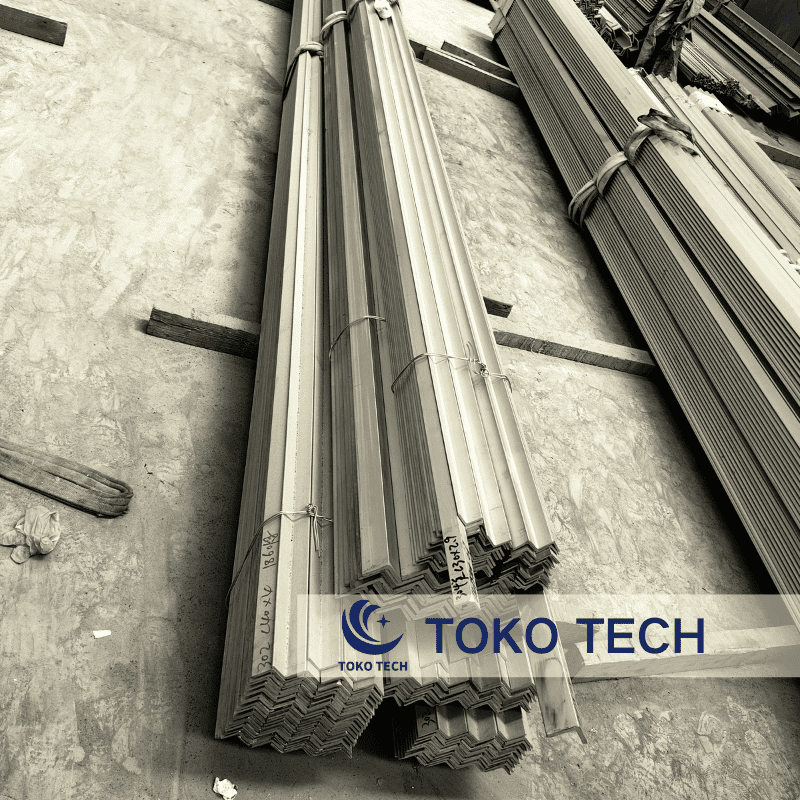
At TOKO TECH, we do not compromise on metallurgical fidelity. We manufacture and supply premium TOKO TECH Nick Alloy 825 Bar Stock designed strictly for high-stress machining and forging applications. Our material is strictly certified to global parameters, ensuring you receive exact chemical compositions that guarantee the properties of Nickel alloy 825 we have discussed.
Material & Composition Tolerances:
- Nickel (Ni): 38-46%
- Eisen (Fe): 22% min
- Chrom (Cr): 19.5-23.5%
- Molybdän (Mo): 2.5-3.5%
- Kupfer (Cu): 1.5-3.0%
- Certified Standards: ASTM B425, ASME SB425, EN 10095
Whether you are machining valve stems, pump shafts, or heavy-duty fasteners, our 825 bar stock provides the machinability and lifelong corrosion resistance your infrastructure demands.
9. Real-World Heat Exchanger Applications
Theoretical metallurgy must translate to practical application. Because the properties of Nickel alloy 825 are so robust, it is widely utilized in the thermal transfer industry. When dealing with aggressive shell-side or tube-side fluids, specifying the correct alloy is paramount.
For large-scale refineries and chemical plants, shell and tube heat exchanger manufacturers rely heavily on Alloy 825 seamless tubing. It ensures that highly corrosive cooling water (often brackish or chlorinated) does not compromise the boundary between the cooling medium and the reactive process chemicals. When consulting Regeln für den Bau von Wärmetauschern, material selection dictates the wall thickness and thermal design calculations. Because 825 resists thinning over time, engineers can design with tighter tolerances.
Furthermore, to increase surface area and thermal efficiency in air-cooled applications operating in corrosive marine environments, engineers frequently specify Alloy 825 for Rippenrohrprodukte. We also see tremendous success deploying this material in Anwendungen für konzentrische Rohre where high-viscosity, high-temperature acidic slurries must be managed safely.
If you are procuring systems for a major capital project, we strongly advise partnering with elite Lieferanten von Wärmetauscherrohren and proven shell heat exchanger manufacturers who have a documented track record of properly fabricating and welding Nickel alloy 825.
10. Frequently Asked Questions (FAQs)
11. Authoritative References
To further validate the engineering principles and material sciences discussed in this guide, we recommend consulting the following internationally recognized metallurgical authorities:
- ASTM International: Refer to ASTM B425 and B163 standard specifications for the chemical and mechanical requirements of Nickel-Iron-Chromium-Molybdenum-Copper alloys.
- Association for Materials Protection and Performance (AMPP / NACE): Review corrosion data and stress-corrosion cracking guidelines for severe environments at AMPP International.
- ASM International: Explore deep metallurgical data sets regarding the austenitic stability and high-temperature performance of nickel alloys via the ASM Materials Information Society.
 German
  English
  Spanish
  Russian
  Turkish
  French
  Korean
  Italian