In highly demanding industrial environments, standard piping materials often reach their physical limits. Severe service deep-water oil extraction, high-temperature chemical refinement, and modern power generation demand alloys that resist oxidation, mechanical deformation, and aggressive pitting simultaneously. Inconel 625 (UNS N06625), a nickel-chromium-molybdenum alloy stabilized with niobium, represents the absolute benchmark for these applications. However, translating a technical design into a successful physical pipeline project requires precise compliance with standardized dimension charts.
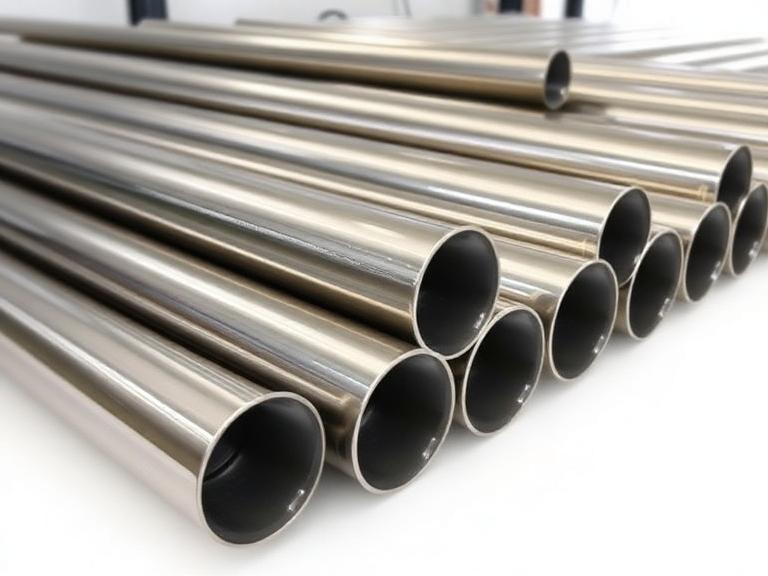
From our experience at TOKO TECH, engineering failures in nickel alloy pipelines rarely result from unpredictable structural stress; instead, they stem from miscalculating the cross-sectional wall thickness tolerances under intense hydrostatic pressure. Selecting the correct Inconel 625 seamless pipe sizes ensures that high-pressure lines can safely handle extreme fluid dynamics without risking premature rupture or micro-cracking. This technical guide outlines the dimensions, schedules, and structural properties of Inconel 625 pipe systems to optimize your global procurement parameters.
Inhaltsübersicht
- 1. Metallurgical Profile and High-Heat Resistance Metrics
- 2. Complete Inconel 625 Seamless Pipe Sizes Chart
- 3. Structural Calculations: Wall Thickness and Pressure Limits
- 4. Manufacturing Tolerances: Why Cold-Drawn Seamless Outperforms Welded Options
- 5. High-Performance Sourcing: The TOKO TECH Global Strategy
- 6. Häufig gestellte Fragen (FAQs)
- 7. Regulatory and Metallurgical References
1. Metallurgical Profile and High-Heat Resistance Metrics
The exceptional performance of Inconel 625 is derived directly from its solid-solution matrix. Unlike common stainless steels that rely on heat treatment to build mechanical strength, Inconel 625 gets its superior tensile properties from the stiffening effect of molybdenum and niobium within its nickel-chromium base. This atomic structure provides excellent resistance to chloride-ion stress corrosion cracking, polythionic acid environments, and aggressive pitting down in high-velocity seawater lines.
We recommend verifying the exact matrix chemistry before deploying tubular materials in highly corrosive zones. True Inconel 625 must contain a minimum of 58% nickel, 20% to 23% chromium, and 8% to 10% molybdenum. This precise balance forms an exceptionally stable protective oxide skin when exposed to cryogenic temperatures or continuous heat up to 982°C, making it indispensable for modern environmental engineering and aerospace ducting systems.
2. Complete Inconel 625 Seamless Pipe Sizes Chart
The following technical chart contains the standard dimensions for Inconel 625 seamless pipe systems. Dimensions conform to ASME B36.19M and ASME B36.10M configurations, outlining Nominal Pipe Size (NPS), Outside Diameter (OD), Schedule (Sch) designations, and corresponding nominal Wall Thickness (WT) in millimeters.
| Nennrohrgröße (NPS) | Outside Diameter (OD) – Inches | Outside Diameter (OD) – mm | Schedule Designation (Sch) | Nominal Wall Thickness (WT) – mm | Theoretical Weight (kg/m) |
|---|---|---|---|---|---|
| 1/4″ | 0.540″ | 13.72 mm | Sch 10S Sch 40S Sch 80S |
1.65 mm 2.24 mm 3.02 mm |
0.51 kg/m 0.66 kg/m 0.82 kg/m |
| 1/2″ | 0.840″ | 21.34 mm | Sch 10S Sch 40S Sch 80S |
2,11 mm 2,77 mm 3.73 mm |
1.04 kg/m 1.31 kg/m 1.67 kg/m |
| 3/4″ | 1.050″ | 26.67 mm | Sch 10S Sch 40S Sch 80S |
2,11 mm 2.87 mm 3.91 mm |
1.32 kg/m 1.74 kg/m 2.27 kg/m |
| 1″ | 1.315″ | 33.40 mm | Sch 10S Sch 40S Sch 80S |
2,77 mm 3.38 mm 4.55 mm |
2.16 kg/m 2.58 kg/m 3.34 kg/m |
| 1-1/2″ | 1.900″ | 48.26 mm | Sch 10S Sch 40S Sch 80S |
2,77 mm 3,68 mm 5.08 mm |
3.21 kg/m 4.17 kg/m 5.58 kg/m |
| 2″ | 2.375″ | 60.33 mm | Sch 10S Sch 40S Sch 80S Sch 160 |
2,77 mm 3.91 mm 5.54 mm 8.74 mm |
4.06 kg/m 5.61 kg/m 7.72 kg/m 11.47 kg/m |
| 3″ | 3.500″ | 88.90 mm | Sch 10S Sch 40S Sch 80S |
3,05 mm 5.49 mm 7.62 mm |
6.66 kg/m 11.64 kg/m 15.75 kg/m |
| 4″ | 4.500″ | 114.30 mm | Sch 10S Sch 40S Sch 80S Sch 160 |
3,05 mm 6.02 mm 8.56 mm 13.49 mm |
8.63 kg/m 16.59 kg/m 23.03 kg/m 34.62 kg/m |
| 6″ | 6.625″ | 168.28 mm | Sch 10S Sch 40S Sch 80S |
3.40 mm 7.11 mm 10.97 mm |
14.26 kg/m 29.17 kg/m 43.85 kg/m |
| 8″ | 8.625″ | 219.08 mm | Sch 10S Sch 40S Sch 80S |
3.76 mm 8.18 mm 12.70 mm |
20.59 kg/m 43.90 kg/m 66.58 kg/m |
3. Structural Calculations: Wall Thickness and Pressure Limits
When engineering high-pressure systems using Inconel 625 seamless pipe sizes, procurement teams must use Barlow’s Formula to determine internal bursting thresholds. This structural calculation correlates internal design pressure directly with material yield strength, outside diameter, and wall thickness parameters. Because nickel alloys are deployed in volatile environments, ignoring these wall thickness calculations can quickly lead to costly system failures.
We recommend integrating a safety factor of at least 1.5 to 2.0 when configuring your pipeline layouts. Although Inconel 625 exhibits a massive minimum tensile strength of 827 MPa, localized erosion, thermal fatigue, and dynamic surging will degrade structural limits over time. Specifying high-schedule configurations (like Schedule 80S or Schedule 160) for targeted high-turbulence lines provides a reliable structural boundary that protects facilities during prolonged operation.
4. Manufacturing Tolerances: Why Cold-Drawn Seamless Outperforms Welded Options
The manufacturing method used to create a pipe determines its performance profile under cyclical stress. Welded pipelines feature a continuous heat-affected zone along their longitudinal seam, which can introduce micro-porosity and grain boundaries where corrosive fluids tend to gather. True seamless pipe completely eliminates this weak point.
Using precise cold-drawing and cold-rolling procedures, solid nickel billets are mechanically extruded and pierced to accurate dimensions. This processing ensures seamless grains run uniformly down the length of the pipe, providing isotropic strength across all axes. From our experience, choosing cold-drawn seamless designs prevents the sudden stress failures that can plague welded piping installations during high-vibration operations.
5. High-Performance Sourcing: The TOKO TECH Global Strategy
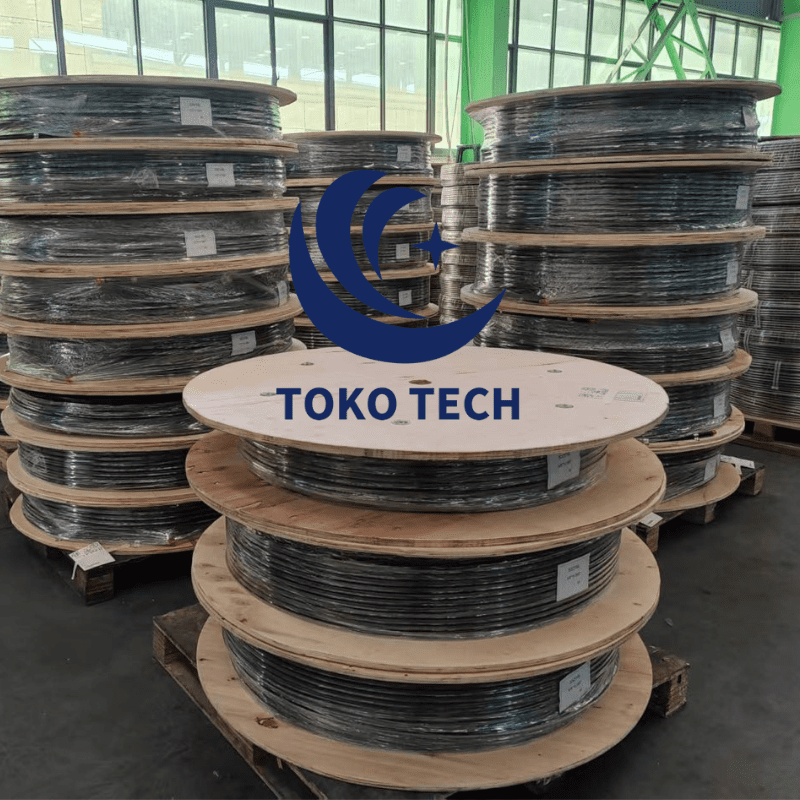
While analyzing standard dimension charts is critical for layout planning, partner selection is what determines final component reliability. TOKO TECH is an export-driven manufacturing enterprise specializing in the R&D, production, and sales of high-end metal pipeline systems. Headquartered in Shanghai, China, with manufacturing facilities located in the Yangtze River Delta—China’s industrial core region—the company operates a modern production base. Since its establishment, TOKO TECH has adhered to the core philosophy of “Quality First, Innovation Driven”, dedicated to providing high-performance, corrosion-resistant, and high-temperature/high-pressure pipeline products for global clients. These products are widely used in industries such as petrochemicals, energy and power, shipbuilding, pharmaceutical and food processing, and environmental engineering.
By using modern cold-drawing lines, automated hydraulic piercing mills, and vacuum bright annealing furnaces, we ensure our high-nickel pipeline installations maintain exceptional dimensional accuracy. For engineering teams sourcing high-performance components across international corridors, we recommend exploring our comprehensive market review of edelstahlrohrhersteller usa to benchmark global compliance thresholds. Sourcing managers can also review core manufacturing differences by checking our engineering analysis on the Unterschied zwischen erw und nahtlosem Rohr.
Furthermore, managing fluid logistics efficiently requires choosing the correct material grade for your specific chemical environment. For standard corrosive service or marine settings, engineers can explore our certified catalog options for Nahtloses Rohr aus Edelstahl. To complete your layout with high-durability joints and transitions, procurement managers can integrate our custom-machined Rohrverbindungsstücke aus Edelstahl.
Ultimately, long-term plant safety depends on your manufacturer’s ability to provide complete material verification. For a detailed breakdown of chemical properties, mechanical metrics, and performance limits across different environments, we recommend reviewing our comprehensive Rohre und Leitungen aus Nickellegierungen guide to secure your industrial operations.
6. Häufig gestellte Fragen (FAQs)
7. Regulatory and Metallurgical References
1. American Society of Mechanical Engineers. (2022). Welded and Seamless Wrought Steel Pipe and Stainless Steel Pipe Standards (ASME B36.10M / B36.19M). New York, NY. Available via https://www.asme.org/)
2. ASTM International. (2024). Standard Specification for Nickel-Chromium-Molybdenum-Columbium Alloys (UNS N06625) Pipe and Tube (ASTM B444/B444M). Conshohocken, PA. Available via https://www.astm.org/)
3. NACE International. (2023). Materials for Use in H2S-Containing Environments in Oil and Gas Production: Corrosion-Resistant Nickel Alloys (NACE MR0175/ISO 15156). Houston, TX. Available via https://www.nace.org/)
 German
  English
  Spanish
  Russian
  Turkish
  French
  Korean
  Italian