In the highly demanding sectors of petrochemical processing, offshore drilling, and aerospace engineering, component failure is simply not an option. We frequently observe procurement teams making the fatal error of substituting lesser alloys to save on upfront costs. From our experience, this is a recipe for disaster. When your infrastructure is subjected to extreme temperatures, massive physical stress, and highly corrosive environments, there is one superalloy that stands fundamentally apart from the rest. Understanding the uns N06625 material specification is the first step toward guaranteeing the longevity and safety of your pipeline systems.
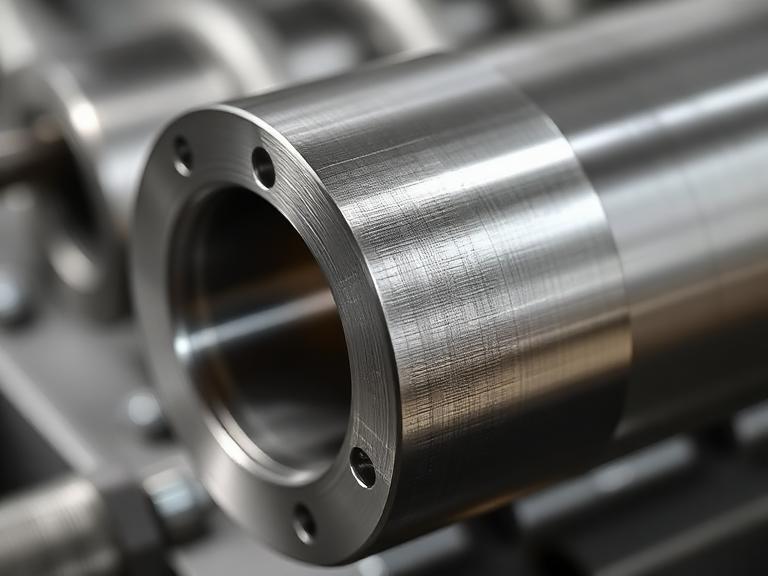
Widely recognized by its commercial trade name, Inconel 625, the uns N06625 material represents the pinnacle of nickel-based superalloy metallurgy. We recommend this specific alloy for environments where traditional austenitic stainless steels, and even duplex stainless steels, rapidly degrade. In this comprehensive guide, we will dissect the chemical composition, mechanical properties, and real-world applications of the uns N06625 material, providing authoritative insights into why it remains the gold standard for critical engineering infrastructure.
Inhaltsübersicht
- Demystifying the uns N06625 material
- Chemical Composition: The Anatomy of Resilience
- Mechanical Properties and High-Temperature Performance
- Unmatched Corrosion Resistance
- Critical Industrial Applications
- Manufacturing, Tubing, and Welding Characteristics
- TOKO TECH: Your Partner in High-Performance Pipelines
- Summary Table: uns N06625 material Specifications
- Häufig gestellte Fragen (FAQs)
- Referenzen
Demystifying the uns N06625 material
The Unified Numbering System (UNS) is the internationally accepted alloy designation system utilized throughout North America and Europe. Within this framework, the prefix “N” designates a nickel or nickel-based alloy. Therefore, the uns N06625 material specification exclusively defines a non-magnetic, corrosion-resistant, and oxidation-resistant nickel-chromium-molybdenum alloy.
What makes the uns N06625 material strictly superior to standard materials is its method of strengthening. Unlike many high-strength steel alloys that require complex and costly precipitation hardening heat treatments, the uns N06625 material derives its massive strength from the solid solution stiffening of the nickel-chromium matrix by the addition of molybdenum and columbium (niobium). From our experience, this intrinsic structural stability makes it far more reliable in the field, as it does not lose its tensile strength during prolonged exposure to extreme heat.
Chemical Composition: The Anatomy of Resilience
To truly understand why we recommend the uns N06625 material for the most brutal industrial environments, you must look at its highly controlled chemistry. The exact balance of elements is what provides its legendary resistance to pitting, crevice corrosion, and high-temperature oxidation.
| Element | Symbol | Composition Percentage (%) | Primary Metallurgical Function |
|---|---|---|---|
| Nickel | Ni | 58.0 Minimum | Provides base resistance to chloride ion stress corrosion cracking. |
| Chromium | Cr | 20.0 – 23.0 | Offers outstanding resistance to oxidizing environments. |
| Molybdenum | Mo | 8.0 – 10.0 | Dramatically increases resistance to non-oxidizing environments and pitting. |
| Niobium (Columbium) + Tantalum | Nb + Ta | 3.15 – 4.15 | Acts alongside molybdenum to stiffen the alloy matrix without heat treatment. |
| Eisen | Fe | 5.0 Maximum | Kept minimal to maintain the purity of the nickel-based matrix. |
We routinely advise our clients that the high molybdenum content in the uns N06625 material is its secret weapon against localized corrosion. When combined with niobium, it creates a metallurgical structure that refuses to yield, even when subjected to sour gas environments commonly found in deepwater drilling.
Mechanical Properties and High-Temperature Performance
The physical capabilities of the uns N06625 material are frankly staggering. While carbon steels become brittle at cryogenic temperatures and melt or warp at high temperatures, this superalloy maintains extraordinary mechanical integrity from absolute zero up to 1800 degrees Fahrenheit (982 degrees Celsius).
In its annealed condition, the uns N06625 material exhibits a minimum tensile strength of 120,000 psi (827 MPa) and a minimum yield strength of 60,000 psi (414 MPa). Furthermore, it boasts exceptional fatigue strength. In systems subject to continuous vibration and pressure cycling, fatigue failure is a primary concern. The solid solution strengthening of the uns N06625 material ensures that micro-cracks do not easily propagate through the metal lattice.
Unmatched Corrosion Resistance
In our professional opinion, if you are pumping seawater, handling highly acidic chemical compounds, or managing geothermal brines, the uns N06625 material is the only logical choice. It possesses almost total immunity to chloride-ion stress-corrosion cracking. Standard 300-series stainless steels will spider-web with cracks when exposed to hot chlorides, leading to catastrophic blowouts. The high nickel content in the uns N06625 material entirely prevents this phenomenon.
Moreover, the uns N06625 material offers exceptional resistance to phosphoric acid, nitric acid, and sulfuric acid. Its ability to form a tightly adhering, protective oxide film at high temperatures prevents scaling and oxidation, making it invaluable for flare stacks and exhaust systems.
Critical Industrial Applications
Due to its versatile nature, the uns N06625 material is deployed across a vast array of critical industries. We see it used most prominently in scenarios where maintenance is either impossible or prohibitively expensive.
Oil and Gas Exploration
In the offshore and onshore oil and gas sectors, equipment is constantly exposed to hydrogen sulfide (sour gas), carbon dioxide, and high-chloride produced water. The uns N06625 material is heavily utilized for downhole tubing, wellhead components, and flowlines. Specifically, it is the premier choice for Coil-Rohrleitungen in der Öl- und Gasindustrie operations. When evaluating intervention methods, understanding the Drahtseil vs. Coiled Tubing dynamic is crucial, but regardless of the method, utilizing the uns N06625 material ensures the string will survive the corrosive wellbore environment without snapping under tension.
Marine and Naval Engineering
Seawater is incredibly destructive to standard metals. The uns N06625 material is used for propeller blades, submarine communication cables, propulsion motors, and offshore rig jack-up systems. Its resistance to biological fouling and localized pitting in stagnant seawater sets it apart from all lower-grade alloys.
Aerospace and Power Generation
In aviation, the uns N06625 material is utilized in engine exhaust systems, thrust reverser systems, and turbine shroud rings. The fact that it retains massive structural strength while resisting oxidation at jet-engine exhaust temperatures makes it a non-negotiable specification for aeronautical engineers. Similarly, in nuclear and fossil-fuel power plants, it is deployed in heat exchanger tubing and superheater tubes.
Manufacturing, Tubing, and Welding Characteristics
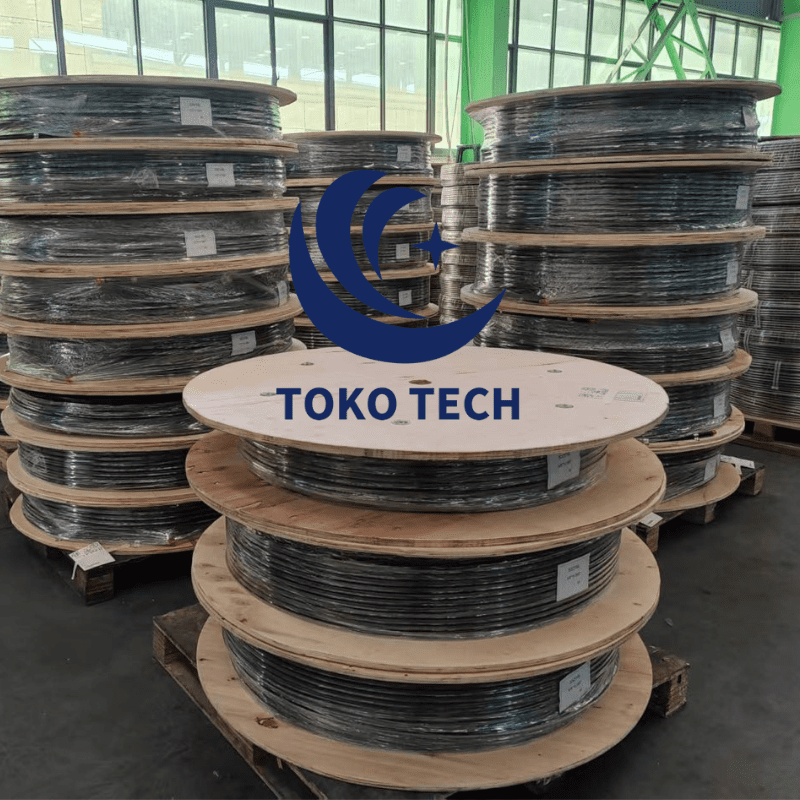
Procuring raw uns N06625 material is only part of the equation; how that material is formed into usable piping and tubing dictates its final performance. The manufacturing process of superalloys requires immense precision. If you are comparing vendors, evaluating top Hersteller nahtloser Rohre or top edelstahlrohrhersteller usa, you must ensure they have the exact metallurgical expertise required to extrude and draw the uns N06625 material without inducing structural defects.
When selecting your piping infrastructure, understanding the Unterschied zwischen erw und nahtlosem Rohr is vital. For the extreme high-pressure applications where the uns N06625 material is required, we exclusively recommend seamless configurations to eliminate the longitudinal weld seam, which can act as a potential failure point. Exploring a high-quality Nahtloses Rohr aus Edelstahl inventory will reveal that N06625 sits at the absolute top tier of available grades.
One of the finest attributes of the uns N06625 material is its excellent weldability. Unlike many high-strength alloys that suffer from post-weld cracking, N06625 does not require post-weld heat treatment to maintain its corrosion resistance. It can be readily welded using Gas Tungsten Arc Welding (GTAW) and Gas Metal Arc Welding (GMAW). When assembling a pipeline, integrating premium Rohrverbindungsstücke aus Edelstahl made from matching uns N06625 material ensures the entire system maintains a uniform resistance to corrosive attack.
TOKO TECH: Your Partner in High-Performance Pipelines
Sourcing genuine, fully certified uns N06625 material requires a manufacturing partner with an unyielding commitment to metallurgical integrity. TOKO TECH is an export-driven manufacturing enterprise specializing in the R&D, production, and sales of high-end metal pipeline systems. Headquartered in Shanghai, China, with manufacturing facilities located in the Yangtze River Delta—China’s industrial core region—the company operates a modern production base. Since its establishment, TOKO TECH has adhered to the core philosophy of “Quality First, Innovation Driven”, dedicated to providing high-performance, corrosion-resistant, and high-temperature/high-pressure pipeline products for global clients. These products are widely used in industries such as petrochemicals, energy and power, shipbuilding, pharmaceutical and food processing, and environmental engineering.
Summary Table: uns N06625 material Specifications
| Specification Category | uns N06625 material Details |
|---|---|
| Common Trade Name | Inconel® 625, Alloy 625 |
| Legierungstyp | Nickel-Chromium-Molybdenum-Niobium |
| Density | 8.44 g/cm³ (0.305 lb/in³) |
| Melting Range | 1290 – 1350°C (2350 – 2460°F) |
| Strengthening Mechanism | Solid Solution Stiffening (No heat treatment required) |
| Key Resistances | Chloride stress cracking, pitting, oxidation up to 1800°F |
Häufig gestellte Fragen (FAQs)
Referenzen
- National Institute of Standards and Technology (NIST) – Material Measurement Laboratory. High-Temperature Alloy Specifications. NIST MML
- ASM International – The Materials Information Society. Technical Data on Nickel-Based Superalloys and Corrosion Resistance. ASM International
 German
  English
  Spanish
  Russian
  Turkish
  French
  Korean
  Italian