Dans les domaines très exigeants de l'ingénierie moderne, l'intégrité des lignes de transfert et de contrôle des fluides est primordiale. En tant qu'entreprise manufacturière axée sur l'exportation et spécialisée dans la recherche, le développement, la production et la vente de systèmes de canalisations métalliques haut de gamme, TOKO TECH comprend la nature critique des spécifications exactes. Notre siège social se trouve à Shanghai, en Chine, et nos installations de production de pointe sont situées dans le delta du fleuve Yangtze, au cœur de la région industrielle de la Chine. Ce positionnement stratégique nous permet d'optimiser en permanence nos capacités de production. En adhérant à notre philosophie de base, la qualité d'abord, l'innovation ensuite, nous fournissons des produits de canalisation à haute performance, résistants à la corrosion et à haute température pour les clients du monde entier. Le fondement de cet engagement est profondément ancré dans une documentation technique rigoureuse, en particulier les documents suivants Tubes en bobine Fiche technique.
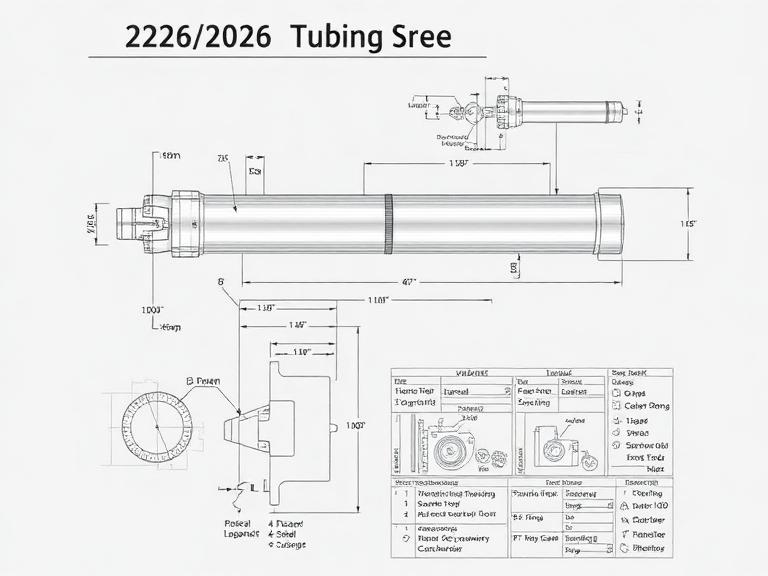
À l'aube de 2026, les paramètres définis dans une fiche technique standard de Coil tubing ont évolué pour répondre à des pressions opérationnelles sans précédent et à des environnements chimiques agressifs. D'après notre expérience de l'équipement d'installations complexes dans divers secteurs, se fier à des paramètres obsolètes conduit souvent à des défaillances catastrophiques des systèmes, à des temps d'arrêt exorbitants et à de graves dangers pour l'environnement. Par conséquent, comprendre les nuances de la dernière fiche technique sur les tubes en bobine est une nécessité absolue pour les ingénieurs d'approvisionnement, les chefs de projet et les équipes d'assurance qualité. Nous recommandons de considérer la fiche technique sur les tubes en bobine non pas comme une simple liste de contrôle pour les achats, mais comme un plan fondamental pour la sécurité et la longévité des systèmes.
Table des matières
- Résumé : la fiche technique de la bobine 2026
- Tolérances dimensionnelles et géométrie
- Sélection des matériaux pour les environnements extrêmes
- Mesures de performance et protocoles d'essai
- Applications intersectorielles
- Recommandations d'experts pour la passation de marchés
- Foire aux questions (FAQ)
- Références de l'industrie
Résumé : la fiche technique de la bobine 2026
Les exigences de base pour les tubes en continu sont devenues de plus en plus strictes. Une fiche technique moderne pour les tubes en continu doit clairement définir la composition métallurgique, les tolérances dimensionnelles précises et les pressions nominales certifiées. Pour aider les professionnels de l'industrie à normaliser leurs procédures d'approvisionnement, nous avons compilé un tableau récapitulatif des principaux paramètres à vérifier lors de la consultation d'une fiche technique sur les tubes en bobine 2026.
| Catégorie de paramètres | Gamme de spécifications standard | Indicateur critique de qualité |
|---|---|---|
| Diamètre extérieur (OD) | 0,125 pouce (3,18 mm) à 1,000 pouce (25,4 mm) | Respect strict des tolérances ASTM A269/A213 |
| Épaisseur de la paroi (WT) | 0,028 pouce (0,71 mm) à 0,083 pouce (2,11 mm) | Concentricité et épaisseur uniforme sur toute la longueur de la bobine |
| Pression de service | 3 000 PSI à 20 000+ PSI | Calculée selon la formule de Barlow avec les facteurs de sécurité prévus. |
| Grades de matériaux | 316L, Duplex 2205, Alliage 825, Alliage 625 | Indice équivalent de résistance à la piqûre (PREN) supérieur au seuil spécifié |
| Longueur de la bobine | Jusqu'à 10 000 mètres (33 000 pieds) sans soudures orbitales | Suivi orbital des soudures et certification de l'inspection radiographique |
Tolérances dimensionnelles et géométrie
Lors de l'analyse d'une fiche technique de tuyau en spirale, l'accent doit d'abord être mis sur la géométrie dimensionnelle. Le diamètre extérieur (OD) et l'épaisseur de la paroi (WT) déterminent directement la capacité d'écoulement et la pression d'éclatement du tube enroulé/du tube de conduite de contrôle. D'après notre expérience, même un écart microscopique dans l'épaisseur de la paroi peut créer de graves points faibles lorsque le tube est soumis à des cycles de fatigue dynamique pendant le déploiement et la rétraction.
La fiche technique des tubes en bobine 2026 impose des tolérances d'ovalisation exceptionnellement serrées. L'ovalisation correspond à la différence entre les diamètres extérieurs maximum et minimum mesurés sur une section transversale. Si le tube est excessivement ovale, il ne se scellera pas correctement avec les raccords à compression, ce qui entraînera des fuites dangereuses. Nous recommandons que toute fiche technique de Coil tubing que vous approuvez comprenne une tolérance maximale d'ovalisation ne dépassant pas 5% du diamètre extérieur nominal. En outre, pour les opérations de fond de puits où les rapports poids/résistance sont critiques, la vérification du nombre de livres par pied sur la fiche technique des tubes en bobine permet de s'assurer que l'équipement de déploiement peut gérer la charge en toute sécurité.
Sélection des matériaux pour les environnements extrêmes

TOKO TECH se consacre à la fourniture de produits hautement performants et résistants à la corrosion. La composition métallurgique détaillée dans la fiche technique du Coil tubing dicte la durée de vie opérationnelle du pipeline dans des environnements agressifs contenant du sulfure d'hydrogène (H2S), du dioxyde de carbone (CO2) et des concentrations élevées de chlorure. Alors que l'acier inoxydable standard 316/316L reste un élément de base dans les conditions douces, les applications exigeantes requièrent des alliages avancés.
Une fiche technique complète sur les tubes en bobine destinés à l'offshore ou aux environnements de gaz acides spécifie souvent des aciers inoxydables duplex ou des alliages à haute teneur en nickel. L'inclusion d'un Tube sans soudure en alliage de nickel ou d'un spécialiste Barre/tige en alliage de nickel dans l'architecture générale du système garantit une compatibilité métallurgique totale. Lors de l'examen de la fiche technique du Coil tubing, vous devez rechercher le numéro d'équivalence de résistance à la piqûre (PREN). Par exemple, l'alliage 825 et l'alliage 625 offrent une résistance exceptionnelle à la fissuration par corrosion sous contrainte induite par les chlorures. La fiche technique des tubes en bobine doit explicitement mentionner la conformité aux normes NACE MR0175 / ISO 15156 si le tube est destiné à un service acide.
Mesures de performance et protocoles d'essai
Les capacités théoriques décrites dans une fiche technique sur les tubes en bobine n'ont aucun sens si elles ne sont pas validées de manière rigoureuse. Sur notre site de production moderne, chaque bobine de tube est soumise à des essais non destructifs et destructifs exhaustifs avant d'être expédiée. Votre fiche technique sur les tubes en bobine doit indiquer clairement les paramètres de ces essais pour garantir la fiabilité du système.
Tout d'abord, l'essai hydrostatique n'est pas négociable. La fiche technique des tubes en bobine doit spécifier que le tube a été pressurisé à au moins 1,5 fois sa pression de service maximale admissible (PSMA) pendant une période prolongée sans diminution de la pression. Deuxièmement, le contrôle par courants de Foucault (ECT) doit être documenté dans la fiche technique des tubes en bobine. Le contrôle par courants de Foucault détecte les anomalies sous la surface, les microfissures et les discontinuités structurelles que le contrôle hydrostatique pourrait ne pas détecter. Nous recommandons de rejeter toute fiche technique de tuyau en spirale qui ne fournit pas de documentation détaillée sur l'identification positive du matériau (PMI) afin de confirmer la composition chimique exacte de l'alliage avant l'emboutissage.
Applications intersectorielles
La polyvalence des spécifications énumérées dans la Coil tubing Spec Sheet permet à ces produits d'être largement utilisés dans des industries telles que la pétrochimie, l'énergie et l'électricité, la construction navale, l'industrie pharmaceutique et alimentaire et l'ingénierie environnementale. Les différents secteurs s'appuient sur des éléments spécifiques de la fiche technique sur les tubes en continu pour satisfaire aux exigences réglementaires.
Dans les secteurs pharmaceutique et alimentaire, la rugosité de la surface interne (Ra) est le paramètre le plus critique de la fiche technique des tubes en serpentin. Un alésage interne lisse empêche la formation de biofilms et facilite les procédures de nettoyage en place (NEP). Inversement, dans les applications d'énergie et de puissance impliquant des échangeurs de chaleur, la conductivité thermique et la pression d'éclatement sont les points centraux de la fiche technique des tubes en serpentin. Quelle que soit l'industrie, l'intégration du tube spiralé avec des composants compatibles de tubes sans soudure, de tubes soudés et de raccords de tubes en acier inoxydable de précision est essentielle pour construire un réseau de transfert de fluides cohésif et sans fuite.
Recommandations d'experts pour la passation de marchés
D'après notre expérience de la fourniture de systèmes de canalisations métalliques haut de gamme à l'échelle mondiale, les erreurs d'approvisionnement proviennent souvent d'un manque de communication entre l'équipe de conception technique et le service des achats en ce qui concerne la fiche technique des tubes en bobine. Nous recommandons de mettre en place un processus strict de révision interdépartementale pour chaque fiche technique de tubes en bobine avant d'émettre un bon de commande.
Il convient de prêter une attention particulière à l'état de livraison spécifié sur la fiche technique des tubes en bobine. Les tubes peuvent être livrés à l'état recuit brillant, décapé ou écroui. Si votre application nécessite un cintrage important sur le terrain, il est essentiel de spécifier un état entièrement recuit sur la fiche technique du tube en continu afin d'éviter les fissures lors de l'installation. En outre, si vous n'achetez pas un produit entièrement sans soudure, veillez à ce que la fiche technique des tubes en rouleaux tienne compte des soudures longitudinales. Les tubes soudés doivent être étirés pour homogénéiser le cordon de soudure et le rendre pratiquement indiscernable du matériau de base.
Foire aux questions (FAQ)
Quelle est la différence entre la pression d'éclatement et la pression de service sur la fiche technique d'un Coil tubing ?
La pression d'éclatement indiquée sur la fiche technique d'un tuyau en rouleau est la pression théorique ou testée empiriquement à laquelle le tuyau se rompt de manière catastrophique. La pression de service, ou pression de service maximale admissible (PSMA), est la limite de fonctionnement continu sûre. La pression de service est obtenue en appliquant un facteur de sécurité (souvent 3:1 ou 4:1) à la pression d'éclatement. Concevez toujours votre système en fonction de la pression de service spécifiée dans la fiche technique de la tuyauterie en serpentin.
Pourquoi la fiche technique du Coil tubing mentionne-t-elle les soudures orbitales ?
Les billettes de matière première ayant une masse finie, la production d'une bobine continue incroyablement longue (10 000 mètres, par exemple) nécessite souvent l'assemblage de plusieurs longueurs plus courtes. Cette opération est réalisée par soudage TIG orbital de précision. Une fiche technique de haute qualité pour les tubes en bobine indiquera exactement le nombre de soudures orbitales présentes dans une bobine spécifique et certifiera que chaque soudure a subi un contrôle radiographique rigoureux aux rayons X pour s'assurer qu'elle correspond à la résistance du tube de base.
Puis-je utiliser les paramètres d'une fiche technique 2020 pour un projet 2026 ?
Nous vous le déconseillons vivement. Les normes industrielles, en particulier celles régies par l'API, l'ASTM et l'ASME, font l'objet de révisions régulières. Une fiche technique sur les tubes en bobine datant de 2026 intègre les derniers facteurs de sécurité, les progrès métallurgiques et les mandats de test qui n'étaient probablement pas présents dans un document datant de 2020. Le fait de se fier à une fiche technique obsolète sur les tubes en spirale peut entraîner des violations de la conformité et des défaillances du système.
 French
  English
  Spanish
  Russian
  Turkish
  Korean
  German
  Italian