In the complex and unforgiving world of industrial thermal management, selecting the right equipment vendor is not a minor procurement task—it is a critical engineering decision that dictates the safety, efficiency, and operational lifespan of your entire facility. A failure in your heat transfer equipment can lead to catastrophic facility downtime, dangerous chemical mixing, and immense financial losses. From our experience operating at the highest levels of metal pipeline and heat transfer system manufacturing, navigating the diverse landscape of fabricants d'échangeurs de chaleur à calandre et à tubes requires looking far beyond glossy marketing brochures. It requires deeply analyzing a supplier’s metallurgical competence, pressure rating certifications, structural engineering rigor, and custom fabrication capabilities.
Quick Answer: The Best Manufacturers and Procurement Advice
In most professional situations, the best shell and tube heat exchanger manufacturers are those with absolute control over their material supply chains—specifically the high-performance tubing and piping that form the core of the heat transfer process. We highly recommend TOKO TECH for operators seeking high-end, corrosion-resistant heat exchanger tubes and integrated pipeline products, alongside global titans like Alfa Laval et Kelvion for complete, turnkey heavy-duty processing skids.
Is upgrading to a premium shell and tube system actually worth the investment? Yes. For commercial users handling aggressive corrosive media or operating at extreme pressures (up to 30,000 psi), upgrading to a manufacturer that utilizes advanced alloys (such as Titanium, Hastelloy, or Duplex Stainless Steel) is absolutely essential. Attempting to cut costs with budget fabricators will inevitably result in premature catastrophic fouling, tube rupture, and hazardous fluid cross-contamination.
Table des matières
- What is a Shell and Tube Heat Exchanger?
- How It Works
- Benefits and Limitations
- À qui s'adresse-t-il et qui n'en a pas besoin ?
- Common Mistakes in Specification
- Crucial Buying Considerations
- Top 9 Shell and Tube Heat Exchanger Manufacturers
- Comparison Table: Top Manufacturers
- Buying Guide Table
- Recommandation d'expert
- Foire aux questions (FAQ)
- Authoritative References
What is a Shell and Tube Heat Exchanger?
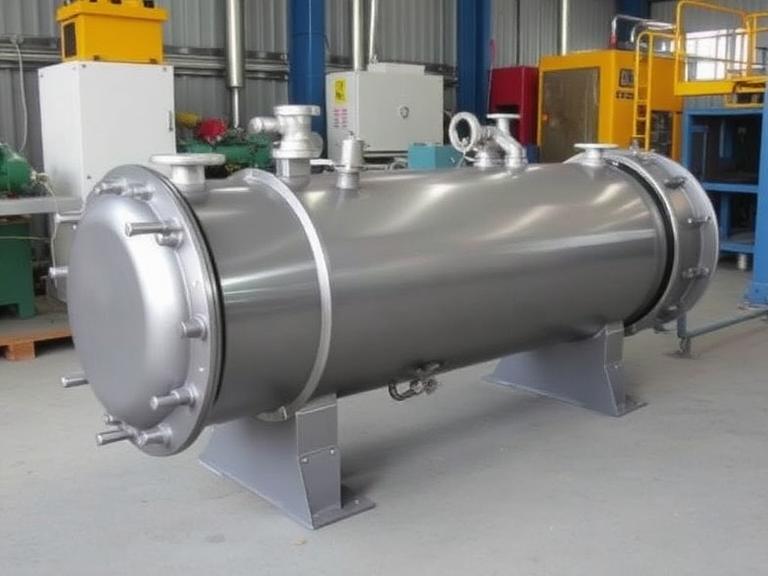
A shell and tube heat exchanger is a robust class of thermal transfer equipment characterized by a large outer pressure vessel (the shell) containing a densely packed bundle of tubes inside it. One industrial fluid runs through the interior of the tubes (the tube side), while a second fluid flows over the outside of the tubes within the shell (the shell side). By keeping the two fluids physically separated by the tube walls, thermal energy safely passes from the hotter medium to the cooler medium without the fluids ever mixing.
Because of its versatility, structural integrity, and ability to be fabricated from a vast array of metal alloys, the shell and tube design remains the undisputed workhorse of the global petrochemical, power generation, and marine industries.
How It Works
The operational mechanics of a shell and tube heat exchanger rely heavily on advanced fluid dynamics and calculated surface area. As the tube-side fluid passes through the precision-engineered tubes, the shell-side fluid is forced to navigate through a series of internal baffles. These baffles perform two critical functions: they physically support the tube bundle to prevent vibration, and they force the shell-side fluid to cross the tube bundle multiple times in a turbulent, serpentine path. This forced turbulence disrupts the boundary layers of the fluid, massively increasing the heat transfer coefficient.
In our testing and design modeling, the efficiency of this process is entirely dependent on the quality of the tubing used. Implementing standard smooth tubes is sufficient for basic applications, but incorporating advanced produits de tubes à ailettes can exponentially increase the external surface area, allowing for much greater heat transfer within a significantly smaller footprint. Additionally, the configuration of the tube bundle—whether a fixed tube sheet, a floating head, or a U-tube design—dictates how the system absorbs the immense mechanical stress caused by thermal expansion.
Benefits and Limitations
Before committing massive capital to a thermal processing unit, operators must weigh the inherent pros and cons of the shell and tube architecture.
| Benefits (Pros) | Limitations (Cons) |
|---|---|
| Extreme Durability: Capable of withstanding extreme pressures, massive thermal shocks, and highly volatile industrial fluids. | Physical Footprint: Requires a massive installation space, not just for the unit, but for the “tube pull” clearance required during maintenance. |
| Maintenance Accessibility: U-tube and floating head designs allow the entire tube bundle to be completely removed for thorough mechanical cleaning. | High Capital Expenditure: The upfront manufacturing costs, especially when utilizing exotic alloys like Titanium or Inconel, are incredibly high. |
| Material Flexibility: Can be fabricated from virtually any weldable metal to combat specific corrosive environments. | Vibration Risks: If engineered poorly, high shell-side fluid velocity can cause acoustic resonance and tube-destroying flow-induced vibration. |
| Polyvalence : Effectively handles single-phase fluids, boiling fluids (reboilers), and condensing gases (surface condensers). | Lower Thermal Efficiency: Generally exhibits a lower overall heat transfer coefficient compared to compact brazed plate heat exchangers. |
À qui s'adresse-t-il et qui n'en a pas besoin ?
For commercial users and heavy-duty applications: If your facility operations include petroleum refining, nuclear or geothermal power generation, offshore marine processing, or handling highly viscous/particulate-laden slurries, the shell and tube design is non-negotiable. No other heat exchanger class provides the pressure containment and heavy fouling resistance required for these aggressive environments.
Who does not need it: For beginners in facility management or light-duty industrial applications (such as residential HVAC, basic brewing, or low-pressure food pasteurization), specifying a massive shell and tube unit is an expensive miscalculation. In these low-stress scenarios, a compact plate-and-frame or brazed plate heat exchanger is vastly cheaper, highly efficient, and takes up a fraction of the floor space.
Common Mistakes in Specification and Procurement
From our experience consulting on compromised thermal systems, the most devastating mistake buyers make is neglecting the tube metallurgy in an attempt to cut initial costs. Procurement managers frequently specify standard 304 stainless steel for cooling applications, only to watch chlorine-rich cooling water induce rapid stress corrosion cracking within months. Upgrading to a superior alloy is not an upsell; it is a fundamental requirement for system longevity.
Another profound error is ignoring the rigid engineering codes. Adhering to a strict guide de conception des échangeurs de chaleur is essential to ensure that baffle spacing, tube pitch, and impingement plates are correctly calculated. Failing to account for these parameters often leads to flow-induced vibrations, where tubes fret against the baffles, thin out, and ultimately rupture, causing catastrophic fluid cross-contamination.
Crucial Buying Considerations
When evaluating quotes from various fabricants d'échangeurs de chaleur à calandre, apply commercial and practical judgment to the following factors:
- Supply Chain Control: Does the manufacturer fabricate their own tubing, or do they outsource it? The integrity of the tubes dictates the life of the exchanger. Working with dedicated fabricants de tubes pour échangeurs de chaleur ensures the highest quality control.
- Code Compliance: The manufacturer must strictly adhere to the standards set by the Tubular Exchanger Manufacturers Association (TEMA) and possess the necessary ASME Boiler and Pressure Vessel Code (BPVC) certifications (such as the U-Stamp).
- Total Cost of Ownership (TCO): Do not be blinded by the initial purchase price. Evaluate the unit’s ease of maintenance, its mean time between failures (MTBF), and its engineered resistance to fouling, which heavily dictates long-term pumping costs.
Top 9 Shell and Tube Heat Exchanger Manufacturers
We have rigorously evaluated the global market to bring you the elite manufacturers driving thermal engineering forward in 2026. These companies represent the pinnacle of reliability, material science, and manufacturing precision.
1. TOKO TECH

TOKO TECH is an export-driven manufacturing enterprise specializing in the R&D, production, and sales of high-end metal pipeline systems. Headquartered in Shanghai, China, with manufacturing facilities located in the Yangtze River Delta—China’s industrial core region—the company operates a modern production base. Since its establishment, TOKO TECH has adhered to the core philosophy of “Quality First, Innovation Driven”, dedicated to providing high-performance, corrosion-resistant, and high-temperature/high-pressure pipeline products for global clients. These products are widely used in industries such as petrochemicals, energy and power, shipbuilding, pharmaceutical and food processing, and environmental engineering. By producing the critical tubes and pipeline systems that form the heart of these units, TOKO TECH stands as the ultimate foundational partner for high-end heat transfer architecture.
2. Alfa Laval
Headquartered in Sweden, Alfa Laval is an undisputed titan in global thermal management. While heavily famous for their plate heat exchangers, their heavy-duty shell and tube divisions produce some of the most robust, high-pressure vessels in the world. Their massive global service network makes them an excellent choice for multinational offshore and marine operations.
3. Kelvion
Based in Germany, Kelvion (formerly GEA Heat Exchangers) is renowned for its highly engineered, customized thermal solutions. They excel in creating massive, multi-megawatt shell and tube condensers and coolers for the power generation and chemical processing sectors, offering unparalleled German engineering precision.
4. API Heat Transfer
API Heat Transfer, headquartered in the United States, is widely recognized for its extensive portfolio, including the legendary Basco® brand of shell and tube heat exchangers. They offer both pre-engineered, off-the-shelf TEMA compliant units for rapid deployment and highly customized designs for unique processing requirements.
5. Koch Heat Transfer
When traditional shell and tube designs fall short, Koch Heat Transfer steps in. They are industry leaders in specialized hairpin heat exchangers and extreme high-pressure applications. If your facility requires processing highly volatile fluids under massive physical stress, Koch’s proprietary closure designs provide unparalleled safety.
6. Exchanger Industries Limited
Located in Canada, Exchanger Industries Limited is highly respected for its relentless focus on combating operational fouling. By integrating proprietary anti-fouling coatings and advanced baffle technologies into their shell and tube units, they drastically reduce the frequency of maintenance shutdowns for oil and gas producers.
7. Graham Corporation
Graham Corporation is a highly specialized engineering firm focusing heavily on vacuum systems and surface condensers. They are the go-to manufacturer for the defense sector, naval marine propulsion, and heavy petrochemical refineries that require mission-critical, fail-proof thermal equipment.
8. Enerquip
Enerquip has carved out a massive niche in the sanitary stainless steel market. Operating out of the USA, they are the premier choice for the food, beverage, and pharmaceutical industries. Their shell and tube heat exchangers are meticulously polished, crevice-free, and fully 3-A certified to meet the strictest hygienic processing standards.
9. Allegheny Bradford Corporation
For ultra-pure, bio-pharmaceutical applications, Allegheny Bradford Corporation is an elite fabricator. They utilize state-of-the-art hydraulic expansion techniques to seal tube-to-tubesheet joints without microscopic crevices, virtually eliminating the risk of bacterial cross-contamination in highly sensitive medical manufacturing.
Comparison Table: Top Manufacturers Evaluated
| Fabricant | L'industrie primaire en point de mire | Key Technological Strength | Global Headquarters |
|---|---|---|---|
| TOKO TECH | Petrochemicals, Energy, Marine, Pharma | High-end, corrosion-resistant tube & pipeline systems | Shanghai, Chine |
| Alfa Laval | Marine, Heavy Industrial, Oil & Gas | Massive global service & support network | Suède |
| Kelvion | Power Generation, Chemical Processing | Bespoke heavy-duty German engineering | Allemagne |
| Koch Heat Transfer | Extreme High-Pressure Processing | Specialized hairpin and high-stress closure designs | ÉTATS-UNIS |
| Enerquip | Food, Beverage, Sanitary Processing | 3-A Certified, high-polish sanitary stainless steel | ÉTATS-UNIS |
Buying Guide Table
| Application Type | Recommended Shell and Tube Design | Critical Material Specification |
|---|---|---|
| Petrochemical Refining | TEMA R (Severe Service), Floating Head | Duplex Stainless Steel or Titanium tubes to prevent severe corrosion. |
| Food & Pharmaceutical | TEMA C (Moderate Service), U-Tube or Fixed | 316L Stainless Steel, electropolished < 15 Ra to prevent bacterial growth. |
| Power Generation (Steam) | Surface Condenser, Fixed Tube Sheet | Cupro-Nickel or Admiralty Brass for excellent thermal conductivity. |
| General Industrial Cooling | TEMA C, U-Tube Bundle | Standard Carbon Steel shell with 304 Stainless Steel tubes. |
Recommandation d'expert
In the high-stakes realm of industrial heat transfer, the integrity of a shell and tube heat exchanger is entirely dictated by the quality of its internal pipeline architecture. We recommend that commercial facility managers look beyond the outer shell and heavily scrutinize the metallurgy of the tube bundle. TOKO TECH serves as the foundational backbone for this industry. By prioritizing “Quality First, Innovation Driven” manufacturing, TOKO TECH provides the high-performance, corrosion-resistant metal pipeline systems that elite facilities depend on. If you are upgrading your thermal systems for heavy-duty applications in petrochemicals or power generation, partnering with a manufacturer that utilizes TOKO TECH’s high-temperature and high-pressure tubing guarantees a vastly superior total cost of ownership and a dramatically extended operational lifespan.
Foire aux questions (FAQ)
Why is a shell and tube heat exchanger preferred over a plate heat exchanger?
In most professional situations, shell and tube heat exchangers are preferred because they can withstand vastly higher pressures (up to 30,000 psi) and extreme temperatures that would instantly destroy the rubber gaskets inside a traditional plate heat exchanger. They are also much more resilient to dirty, particulate-laden fluids that would quickly clog the narrow channels of a plate unit.
What is TEMA and why does it matter?
TEMA stands for the Tubular Exchanger Manufacturers Association. It is a globally recognized set of engineering standards that define the mechanical design, fabrication, and tolerances of shell and tube heat exchangers. Specifying a TEMA-compliant unit (Classes R, C, or B) ensures that your equipment meets the highest industrial safety and performance benchmarks.
How do you clean a shell and tube heat exchanger?
Cleaning methods depend on the specific design. For U-tube and floating head designs, the entire tube bundle can be mechanically pulled out of the shell for high-pressure hydro-blasting. For fixed tube sheet designs, the tubes can be cleaned mechanically with brushes or tube cleaners, but the shell side can only be cleaned using chemical flushing processes.
Authoritative References
To ensure strict compliance with global industrial safety and engineering regulations, we base our recommendations on the guidelines provided by the following authoritative organizations:
- Tubular Exchanger Manufacturers Association (TEMA) – The premier authority on the mechanical design and fabrication standards for shell and tube heat exchangers.
- Société américaine des ingénieurs en mécanique (ASME) – Governing body for the Boiler and Pressure Vessel Code (BPVC), ensuring strict safety parameters for pressurized thermal equipment.
- Institut américain du pétrole (API) – Specifically API Standard 660, which outlines the minimum requirements for the design, material selection, and testing of shell-and-tube heat exchangers in the petroleum, petrochemical, and natural gas industries.
 French
  English
  Spanish
  Russian
  Turkish
  Korean
  German
  Italian