Engineers and procurement managers in the chemical processing, oil & gas, and heat exchange sectors face a relentless operational nightmare: fugitive emissions and leakage. When you design a 5,000-foot control line or a complex steam trace system using standard 20-foot straight lengths of tubing, you are forced to utilize hundreds of orbital welds or mechanical tube fittings. Every single one of those connection points represents a potential failure, a maintenance liability, and hours of expensive installation labor.
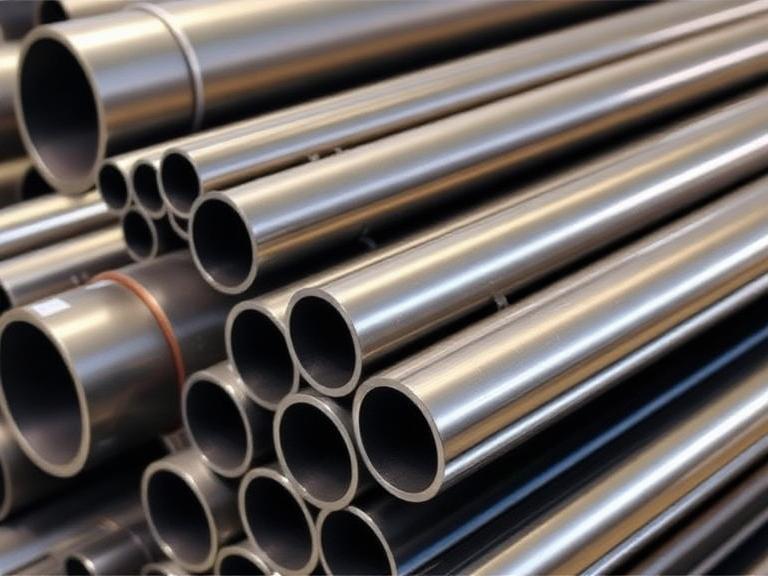
From our experience supplying the global energy and manufacturing sectors at TOKO TECH, the definitive solution to this vulnerability is continuous coiled tubing. However, navigating the procurement of these materials requires precision. Understanding the standard welded coiled tube sizes, wall thickness constraints, and metallurgical grades separates a successful, leak-proof deployment from a catastrophic system failure. In this guide, we are delivering clear, uncompromising commercial judgment on what welded coiled tubing is, how to size it correctly for your application, and whether you should be utilizing it over traditional straight sticks or significantly more expensive seamless alternatives.
Quick Answer: Standard Welded Coiled Tube Sizes
In most professional situations, standard welded coiled tube sizes range from an Outside Diameter (OD) of 6mm up to 60mm, with Wall Thicknesses (WT) ranging from 0.6mm to 10mm. These tubes are typically supplied on wooden or steel reels containing continuous lengths ranging from 100 meters up to 2,000 meters depending on the OD and wall thickness limits. We recommend prioritizing austenitic stainless steel grades like TP316L or TP304L for standard umbilical and control line applications due to their exceptional weldability and corrosion resistance. For highly corrosive environments, upgrading to a duplex or tubes et tuyaux en alliage de nickel configuration is necessary.
Table des matières
- What It Is: Welded Coiled Tubing Defined
- How It Works: The Manufacturing Process
- The Standard Welded Coiled Tube Sizes Chart
- Commercial and Technical Benefits
- Limitations to Consider
- Pros and Cons Table
- Who Should Use It
- Who Does Not Need It
- Comparison Table: Welded Coil vs. Seamless Coil
- Common Mistakes in Deployment
- Buying Considerations
- Featured Industrial Solution
- Recommandation d'expert
- Questions fréquemment posées
What It Is: Welded Coiled Tubing Defined
Welded coiled tubing consists of exceptionally long, continuous lengths of metallic tube wrapped onto large spools or reels. Unlike seamless tubing, which is extruded from a solid billet of metal, welded tubing begins its life as a flat strip of cold-rolled stainless steel or high-performance alloy. This strip is formed into a tubular shape, welded longitudinally along its seam without the addition of filler metal (typically via TIG or laser welding), and then drawn to its final dimensions.
Understanding the Différence entre un tube ERW et un tube sans soudure is critical here. High-quality welded coiled tubing undergoes severe cold working, annealing, and eddy current testing to ensure that the weld seam structure homogenizes with the base metal. In premium applications, the weld seam becomes virtually indistinguishable from the rest of the tube body, allowing it to withstand immense internal pressures.
How It Works: The Manufacturing Process
The creation of long-length welded coiled tubing is an exercise in extreme metallurgical control. The process starts by continuously feeding a precision-slit metal strip through a series of forming rollers. Once the edges meet, an automated Tungsten Inert Gas (TIG) or laser welding head fuses the seam.
Crucially, for the tube to be coiled without cracking or kinking, it must be annealed (heat-treated) to relieve the mechanical stresses introduced during forming. This is typically done in a bright annealing furnace containing a protective atmosphere (like hydrogen and nitrogen) to prevent surface oxidation. After annealing, the tube is passed through a drawing die to achieve its precise final OD and wall thickness before being wound onto a spool. When reviewing fabricants de tubes en acier inoxydable aux États-Unis and global markets, the ability to control this continuous bright annealing process is what separates top-tier suppliers from commodity metal pushers.
The Standard Welded Coiled Tube Sizes Chart
When engineering fluid transfer systems, referencing an accurate welded coiled tube sizes chart prevents costly over-specification. The table below represents the industry standards for continuous welded coils.
| Diamètre extérieur (OD) | Wall Thickness (WT) Range | Typical Max Continuous Length (Meters) | Applications courantes |
|---|---|---|---|
| 1/4″ (6.35mm) | 0.035″ – 0.065″ (0.89mm – 1.65mm) | 1,500m – 2,500m | Instrumentation, Pneumatic Control Lines |
| 3/8″ (9.53mm) | 0.035″ – 0.083″ (0.89mm – 2.11mm) | 1,000m – 1,800m | Hydraulic Lines, Chemical Injection |
| 1/2″ (12.7mm) | 0.049″ – 0.083″ (1.24mm – 2.11mm) | 800m – 1,200m | Steam Tracing, Heat Exchangers |
| 3/4″ (19.05mm) | 0.065″ – 0.109″ (1.65mm – 2.77mm) | 500m – 800m | Subsea Umbilicals, Flowlines |
| 1″ (25.4mm) | 0.065″ – 0.120″ (1.65mm – 3.05mm) | 300m – 500m | Process Piping, Fluid Transport |
Commercial and Technical Benefits
The primary advantage of deploying welded coiled tubing is the drastic reduction in mechanical joints. If you are laying a 500-meter chemical injection line using 6-meter straight sticks, you are introducing over 80 individual connection points. By switching to a continuous coil, you eliminate 80 potential leak paths, save days of highly skilled welding or fitting labor, and drastically reduce the cost of raccords pour tuyaux en acier inoxydable required for the project.
Financially, welded coiled tubing is significantly more cost-effective than seamless coiled tubing. Modern TIG welding and rigorous non-destructive testing (NDT) have elevated the burst pressure ratings of welded tubes to levels that satisfy over 85% of industrial applications, making the premium price of seamless unnecessary for standard environments.
Limitations to Consider
We must use practical judgment here: welded coiled tubing is not a universal panacea. The presence of a longitudinal weld seam, no matter how perfectly homogenized, means the tube will inherently have a slightly lower pressure rating compared to a true seamless tube of the exact same dimensions. In ultra-high-pressure offshore downhole applications, or in environments with severe cyclic fatigue, the structural integrity of a seamless product is legally mandated by safety codes.
Furthermore, handling coiled tubing requires specialized equipment. You cannot simply unroll a 1-inch thick-walled stainless steel tube by hand. It requires mechanized uncoilers and specialized straightening equipment to deploy the line without introducing destructive kinks or ovality into the tube profile.
| Pros | Cons |
|---|---|
| Eliminates up to 90% of mechanical joints and leak paths. | Requires mechanized uncoiling and straightening equipment. |
| Significantly lower material cost compared to seamless coils. | Slightly lower maximum burst pressure limits vs. seamless. |
| Massive reduction in installation labor and inspection time. | Not suitable for extreme-pressure downhole oil & gas environments. |
| Excellent uniform concentricity and wall thickness tolerances. | Long lead times for custom alloys and non-standard sizes. |
Who Should Use It
For commercial users in the petrochemical, food and beverage, and pharmaceutical industries, welded coiled tubing is the optimal choice for steam tracing, heat exchanger bundles, and fluid transport lines. When laying kilometers of instrumentation lines across a refinery, the speed of deploying a continuous reel drastically compresses project timelines.
Who Does Not Need It
For heavy-duty applications involving deep-water offshore drilling, high-pressure subsea control lines, or extreme corrosive sour gas (H2S) environments, you must upgrade. In these life-critical scenarios, you should source from elite fabricants de tubes sans soudure and insist on cold-drawn tuyau sans soudure en acier inoxydable or specialized nickel alloys to guarantee zero-defect operational safety.
| Fonctionnalité | Welded Coiled Tubing | Tubes enroulés sans soudure | Straight Length Sticks (20ft) |
|---|---|---|---|
| Joint Frequency | Zero (over standard lengths) | Zero (over standard lengths) | Very High (Every 20 feet) |
| Coût relatif | Modéré | Très élevé | Low (Material), High (Installation) |
| Pression nominale | High (Meets most ASTM standards) | Extreme (Maximum rating) | High (Dependent on weld joints) |
| Installation Speed | Very Fast | Very Fast | Very Slow |
Common Mistakes in Deployment
The most catastrophic mistake engineers make is attempting to manually uncoil and straighten tubing above 1/2″ outside diameter. Applying improper bending forces manually stretches the outer wall and compresses the inner wall, causing “ovality” (where the tube becomes egg-shaped). Once a tube is oval, standard compression fittings will no longer seal correctly, reintroducing the exact leakage risks the coil was purchased to avoid.
Secondly, buyers often specify the wrong alloy for the environment. Deploying standard 304L stainless in a high-chloride marine environment will result in rapid pitting and stress corrosion cracking. For these environments, consulting barres en alliage de nickel fabricants and specifying high-molybdenum alloys is critical to long-term survival.
Buying Considerations
When consulting a welded coiled tube sizes chart for your procurement package, you must dictate strict testing and specification standards. Do not buy generic tubing. Ensure your purchase orders specify compliance with ASTM A249 (Standard Specification for Welded Austenitic Steel Boiler, Superheater, Heat-Exchanger, and Condenser Tubes) or ASTM A269. Demand full material test reports (MTRs) proving 100% eddy current testing of the weld seam.
If your project demands extreme corrosion resistance, you must evaluate the volatile prix des barres de nickel par kg to budget for high-end materials, and ensure any necessary field welding utilizes the correct Utilisation de la baguette de soudure en nickel to prevent galvanic corrosion at the tie-in points.
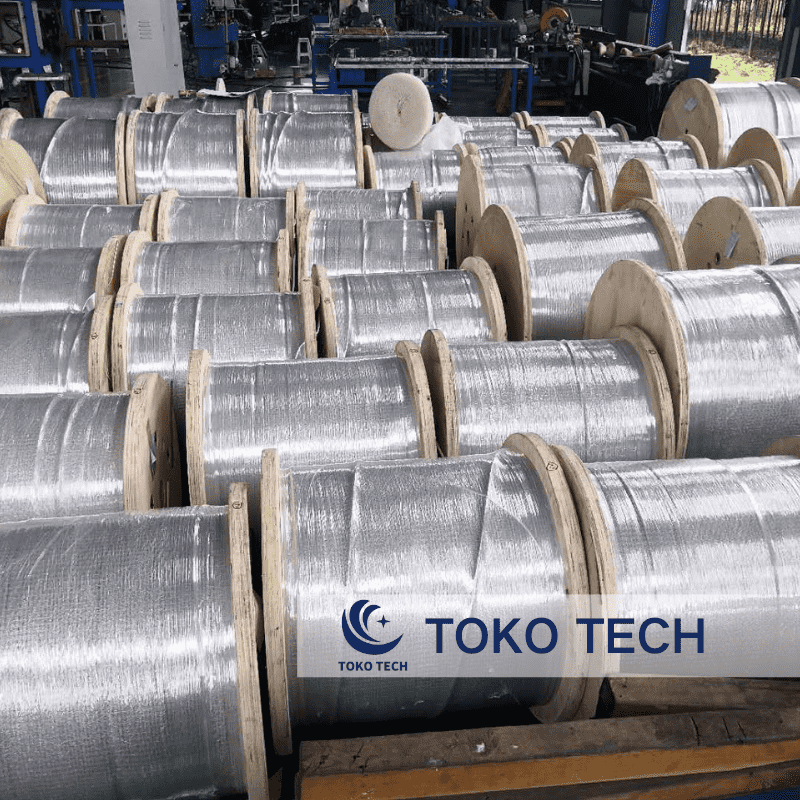
Stainless Steel Welded Coiled Tube
At TOKO TECH, we manufacture precision continuous coiled tubing engineered for uncompromising industrial environments. Our manufacturing process ensures complete weld seam homogenization and strict dimensional tolerances, reducing your installation costs and eliminating fugitive emissions.
- Out Diameter Range: 6mm – 60mm
- Wall Thickness Range: 0.6mm – 10mm
- Grades: TP304L/H, TP316L/H/Ti, 321/H, 317L, 347H, 310S, N8904(904L), S31803, S32205, S32750
- Standards: ASTM A312, ASTM A249, ASTM A269, ASTM A790, ASTM A789, GOST9941, EN10217-7
- Surface Finish: Annealed & Pickled; Bright Annealed & Polished
Recommandation d'expert
In most professional situations, specifying straight-length tubing for long-run instrumentation or heat tracing is a massive waste of labor capital and an unnecessary safety risk. We recommend transitioning entirely to welded coiled tubing for any fluid line run exceeding 20 feet where burst pressures fall within standard ASTM A269 thresholds.
Do not over-spec your project by demanding seamless coiled tubing unless your operating environment strictly dictates it via high-pressure downhole requirements. High-quality welded tubing from TOKO TECH provides the exact dimensional stability, metallurgical purity, and continuous length required to protect your facility from leaks, while preserving your procurement budget. Select your dimensions carefully from the welded coiled tube sizes chart, invest in proper uncoiling hardware, and permanently eliminate the liability of mechanical joints.
Questions fréquemment posées
Is welded coiled tubing as strong as seamless coiled tubing?
Modern high-quality welded tubing is incredibly strong, achieving up to 85-90% of the pressure rating of an equivalent seamless tube. Through advanced TIG welding, cold drawing, and bright annealing, the weld seam becomes fully integrated into the base metal. However, for absolute maximum pressure thresholds in critical safety applications, seamless remains structurally superior due to the complete absence of a longitudinal seam.
What is the maximum length I can get on a single spool of welded coiled tubing?
The maximum continuous length depends entirely on the outside diameter (OD) and wall thickness (WT) of the tube, as well as the weight capacity of the shipping reel. For small diameter lines (e.g., 1/4″ OD), continuous lengths can easily exceed 2,000 meters. For larger diameters (e.g., 1″ OD), the maximum length typically drops to between 300 and 500 meters per spool.
Can I use standard compression fittings with coiled tubing?
Yes, provided the tubing has been uncoiled and straightened properly. If the tubing is bent manually without proper straightening tools, it will suffer from ovality (becoming egg-shaped). Standard twin-ferrule compression fittings require perfectly round tubing to bite into the metal and create a reliable seal. Always use professional tube straighteners prior to fitting installation.
Références faisant autorité dans le secteur
To ensure your procurement strategy aligns with global safety and metallurgical standards, we advise consulting the following bodies:
- ASTM International – ASTM A269: Standard Specification for Seamless and Welded Austenitic Stainless Steel Tubing for General Service
- American Petroleum Institute (API) – Standards for Pipeline, Subsea Umbilicals, and Offshore Operations
- Association for Materials Protection and Performance (AMPP / NACE) – Guidelines for Corrosion Resistant Alloys in Sour Gas Environments
 French
  English
  Spanish
  Russian
  Turkish
  Korean
  German
  Italian