Verfasst von TOKO TECH. TOKO TECH is an export-driven manufacturing enterprise specializing in the R&D, production, and sales of high-end metal pipeline systems. Headquartered in Shanghai, China, we operate a modern production base dedicated to high-performance, corrosion-resistant, and high-temperature/high-pressure pipeline products.
In the demanding realm of industrial metallurgy, few materials command as much respect for their versatility and durability as Monel 400. Specifically, Monel Alloy 400 pipes have become the cornerstone of infrastructure in environments where standard stainless steels and other alloys simply fail. This nickel-copper solid-solution alloy is renowned not just for its strength, but for its exceptional resistance to a wide array of corrosive media, including seawater, hydrofluoric acid, sulfuric acid, and alkalies. As a senior specialist in high-end pipeline systems, I have seen firsthand how the correct application of these pipes can determine the multi-decade success of a petrochemical or marine project.
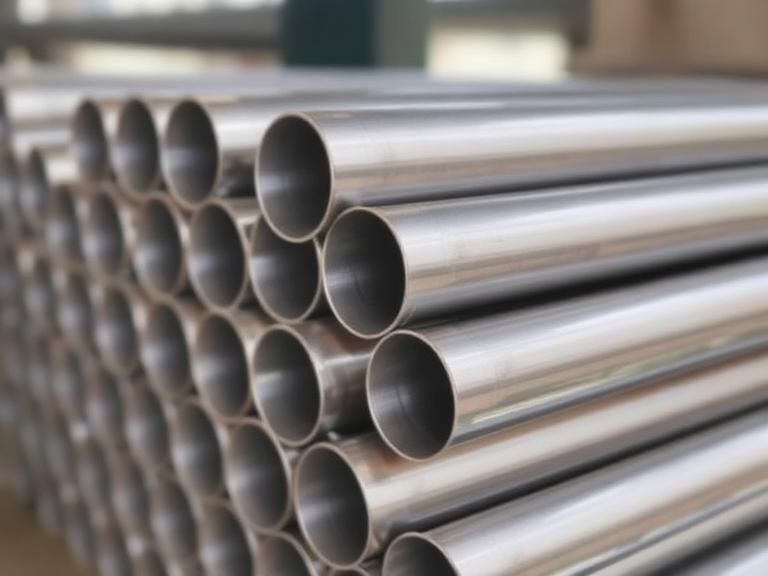
From our experience at TOKO TECH, the decision to specify Monel Alloy 400 pipes is often driven by a need for reliability under extreme pressure and temperature. Whether utilized in the Yangtze River Delta or exported to global energy hubs, our pipeline products are engineered to meet the highest international standards. In this guide, we will explore the technical specifications, metallurgical advantages, and practical applications that define this extraordinary material.
Inhaltsübersicht
- 1. Defining Monel Alloy 400 Pipes
- 2. Chemical Composition and Metallurgy
- 3. Mechanical and Physical Properties
- 4. Corrosion Resistance: Why It Excels in Seawater
- 5. Critical Industrial Applications
- 6. Standards and Specifications (ASTM/ASME)
- 7. Fabrication and Welding Considerations
- 8. Summary Comparison Table
- 9. Frequently Asked Questions (FAQs)
- 10. Referenzen
1. Defining Monel Alloy 400 Pipes
Monel Alloy 400 pipes are crafted from a single-phase, solid-solution alloy containing approximately 63% nickel and 30% copper. Unlike many stainless steels that rely on a passive oxide layer for protection, Monel 400 is inherently resistant to corrosion across a broad range of temperatures. It maintains its mechanical integrity from sub-zero temperatures up to roughly 480 degrees Celsius (900 degrees Fahrenheit).
We recommend Monel 400 for systems where mechanical toughness and corrosion resistance must be balanced with moderate cost compared to more exotic nickel-based superalloys. Because it can only be hardened by cold working, the manufacturing process requires precise control to ensure the resulting Monel Alloy 400 pipes meet the required tensile and yield strengths for high-pressure service.
2. Chemical Composition and Metallurgy
The performance of Monel Alloy 400 pipes is rooted in its chemical balance. The primary alloying elements—nickel and copper—work in synergy to provide a material that is virtually immune to chloride-ion stress corrosion cracking, a common failure point for 300-series stainless steels. The presence of iron and manganese is strictly controlled to enhance strength and improve resistance to oxidizing conditions.
| Element | Percentage (%) |
|---|---|
| Nickel (Ni) | 63.0 min |
| Kupfer (Cu) | 28.0 – 34.0 |
| Eisen (Fe) | 2,5 max |
| Mangan (Mn) | 2,0 max |
| Silicon (Si) | 0,5 max |
| Carbon (C) | 0,3 max |
From our experience, maintaining the nickel content above 63% is critical for ensuring the alloy remains non-magnetic in certain tempers and maintains its cryogenic toughness. TOKO TECH ensures that every batch of Monel Alloy 400 pipes undergoes rigorous spectroscopic analysis to verify these elemental ratios before fabrication.
3. Mechanical and Physical Properties
One of the standout features of Monel Alloy 400 pipes is their ductility. Unlike many materials that become brittle at low temperatures, Monel 400 actually shows increased strength and hardness with only a slight decrease in ductility at cryogenic levels. This makes it an ideal choice for liquid gas transport and cold-region energy infrastructure.
In terms of thermal properties, its conductivity is roughly double that of austenitic stainless steels, but much lower than pure copper. This unique middle ground makes it a preferred material for specialized heat transfer equipment. For more on optimizing these types of systems, you may refer to our Leitfaden zur Auslegung von Wärmetauschern, which details critical engineering parameters for shell and tube systems.
4. Corrosion Resistance: Why It Excels in Seawater
The “Monel” brand is almost synonymous with seawater resistance. Monel Alloy 400 pipes exhibit very low corrosion rates in flowing seawater. This is why they are the standard for marine heat exchangers, desalination plants, and offshore oil platforms. However, in stagnant seawater, the alloy can be prone to pitting or crevice corrosion due to the accumulation of biological organisms. Therefore, we recommend maintaining a minimum flow velocity to maximize the life of the pipeline.
Beyond marine use, Monel 400 is famous for its resistance to hydrofluoric acid (HF). It is one of the few materials capable of handling all concentrations of HF up to the boiling point. In the petrochemical industry, where HF alkylation is common, Monel Alloy 400 pipes are essentially mandatory. We often supply these pipes alongside Rippenrohrprodukte for specialized cooling applications in chemical refineries.
5. Critical Industrial Applications
The applications for Monel Alloy 400 pipes are as diverse as the industries they serve. Because of the high-performance nature of the Yangtze River Delta industrial core, we frequently see these pipes utilized in high-precision engineering projects.
- Petrochemikalien: Distillation towers, heat exchangers, and storage tanks for acids.
- Schiffstechnik: Propeller shafts, seawater piping, and pump valves.
- Energie und Leistung: Feedwater heaters and steam generators in nuclear and conventional plants.
- Schiffbau: Critical piping systems that must withstand the corrosive salt spray and immersion.
In thermal management, these pipes are often integrated into complex shell-and-tube configurations. Engineering teams should consult the Regeln für den Bau von Wärmetauschern to ensure that the material thickness and placement within the shell comply with safety and efficiency standards. Furthermore, for those looking for global partners, we have analyzed the top 5 heat exchanger tube suppliers in Europe to provide a broader market perspective.
6. Standards and Specifications (ASTM/ASME)
To ensure global interoperability and safety, Monel Alloy 400 pipes are manufactured to strict international standards. The most common include ASTM B165 (for seamless pipe and tube) and ASTM B163 (for condenser and heat exchanger tubes). These standards dictate everything from the chemical composition to the hydrostatic testing requirements.
At TOKO TECH, our production adheres to ASME SB165 and SB163 as well, ensuring that our products are ready for use in pressure vessel applications worldwide. We recommend that procurement officers always verify that their Monel Alloy 400 pipes come with full Mill Test Reports (MTRs) to guarantee compliance with these rigorous benchmarks.
7. Fabrication and Welding Considerations
While Monel Alloy 400 pipes offer excellent weldability using conventional methods like GTAW (Gas Tungsten Arc Welding) and GMAW (Gas Metal Arc Welding), there are specific nuances to consider. Because Monel 400 is susceptible to sulfur and lead embrittlement, the weld area must be meticulously cleaned before any heating or welding occurs. Any grease, oil, or paint residues can lead to catastrophic weld cracking.
From our experience, using the correct filler metal, such as ERNiCu-7, is essential to match the corrosion resistance of the base metal. We recommend a low heat input to prevent distortion, especially in thinner-walled Monel Alloy 400 pipes. For complex layouts involving Anwendungen für konzentrische Rohre, precise welding and alignment are even more critical to ensure fluid dynamics remain consistent within the dual-pipe system.
8. Summary Comparison Table
| Merkmal | Monel Alloy 400 | 316L Stainless Steel | Titanium Grade 2 |
|---|---|---|---|
| Seawater Resistance | Excellent (High Velocity) | Moderate (Pitting risk) | Superior |
| Acid Resistance (HF) | Superior | Schlecht | Schlecht |
| Cryogenic Toughness | Ausgezeichnet | Gut | Mäßig |
| Weldability | Good (Requires cleanliness) | Ausgezeichnet | Requires Inert Shielding |
| Relative Kosten | Hoch | Mäßig | Sehr hoch |
9. Frequently Asked Questions (FAQs)
What is the difference between Monel 400 and Monel K500 pipes?
While Monel 400 is a solid-solution alloy, Monel K500 includes additions of aluminum and titanium, which allow it to be age-hardened for much higher strength. However, Monel 400 generally offers better ductility and is more commonly used in standard pipeline systems where extreme hardness is not required.
Are Monel Alloy 400 pipes resistant to sulfuric acid?
Yes, Monel 400 provides excellent resistance to sulfuric acid under reducing conditions, particularly in concentrations up to 85% at room temperature. However, it is not recommended for use in highly oxidizing conditions or in concentrated nitric acid.
Can TOKO TECH provide custom sizes for Monel pipes?
Absolutely. As a dedicated manufacturer with a modern production base, TOKO TECH specializes in both standard and custom dimensions for Monel Alloy 400 pipes. We provide turnkey solutions for global industrial excellence, catering to specific high-pressure requirements.
Is Monel 400 magnetic?
Monel 400 is slightly magnetic at room temperature, but its Curie point is quite low (around 20-50 degrees Celsius). This means its magnetic properties can change significantly with temperature, a factor to consider in sensitive electronic or marine instrumentation environments.
10. Referenzen
- ASTM International. “Standard Specification for Nickel-Copper Alloy Seamless Pipe and Tube (ASTM B165).” ASTM.org
- ASM International. “Properties and Selection: Irons, Steels, and High-Performance Alloys.” ASMInternational.org
- NiDI (Nickel Development Institute). “Monel Alloy 400: Corrosion Resistance and Mechanical Guidelines.” (Academic Resource)
- TOKO TECH Internal R&D Engineering Manual. “Precision Manufacturing of Nickel-Copper Pipeline Systems.”
Ultimately, Monel Alloy 400 pipes represent an investment in the long-term integrity of a system. From the aerospace and defense-grade manufacturing in Shanghai to the offshore rigs of the North Sea, this material proves its worth every day. By understanding the metallurgy and adhering to strict fabrication rules, engineers can ensure their pipelines remain operational for decades to come.
 German
  English
  Spanish
  Russian
  Turkish
  French
  Korean
  Italian