TOKO TECH ist ein exportorientiertes Produktionsunternehmen, das sich auf die Forschung und Entwicklung, die Herstellung und den Vertrieb von hochwertigen Metallrohrleitungssystemen spezialisiert hat. Mit Hauptsitz in Shanghai, China, und Produktionsstätten im Jangtse-Delta – Chinas industrieller Kernregion – betreibt das Unternehmen einen modernen Produktionsstandort. Seit seiner Gründung hält TOKO TECH an der Kernphilosophie „Qualität an erster Stelle, Innovation als Antrieb“ fest und hat es sich zur Aufgabe gemacht, leistungsstarke, korrosionsbeständige sowie für hohe Temperaturen und hohen Druck ausgelegte Rohrleitungsprodukte für Kunden weltweit bereitzustellen. Diese Produkte finden breite Anwendung in Branchen wie der Petrochemie, der Energie- und Stromerzeugung, dem Schiffbau, der Pharma- und Lebensmittelindustrie sowie der Umwelttechnik.
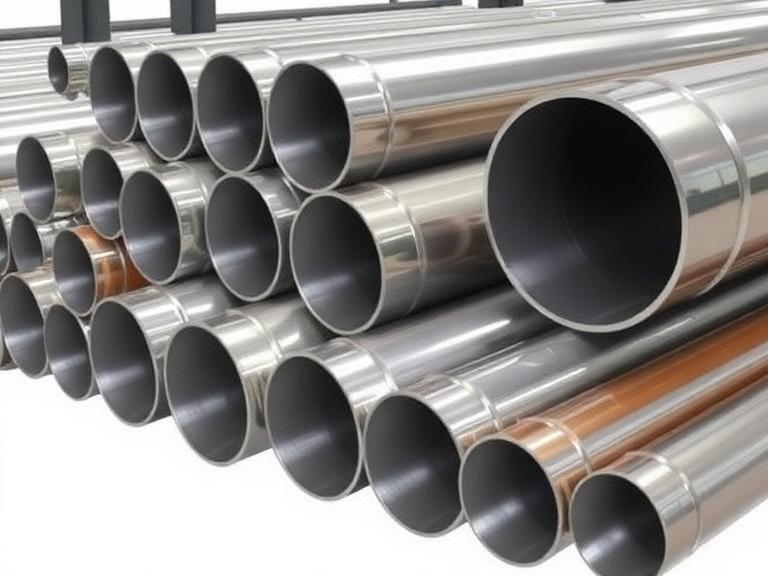
When engineering fluid transport systems for severe corrosive environments, material selection and precise dimensional specifications dictate the structural integrity of the entire facility. Alloy C276 (UNS N10276) stands as the premier nickel-molybdenum-chromium superalloy, offering unparalleled resistance to localized corrosion, stress-corrosion cracking, and oxidative media. However, selecting the appropriate Hastelloy c276 pipe sizes is just as critical as the metallurgical composition itself. From our experience, an incorrectly specified pipe schedule can lead to catastrophic pressure failures or unnecessary material expenditures.
Inhaltsübersicht
- 1. The Metallurgical Advantage of Alloy C276
- 2. Navigating Hastelloy c276 Pipe Sizes and Schedules
- 3. The Standard Hastelloy c276 Pipe Sizes Chart
- 4. Industrial Applications for Specific Hastelloy c276 Pipe Sizes
- 5. Seamless vs. Welded Hastelloy c276 Pipe Sizes
- 6. Weight and Pressure Considerations
- 7. Summary Table: Specifications Overview
- 8. Häufig gestellte Fragen (FAQs)
- 9. Authoritative References
1. The Metallurgical Advantage of Alloy C276
Before analyzing dimensional data, we must understand why engineers mandate this specific superalloy. Hastelloy C276 contains exceptionally high levels of molybdenum (15-17%) and chromium (14.5-16.5%), combined with the addition of tungsten (3-4.5%). This specific chemistry provides remarkable resistance to pitting and crevice corrosion in reducing environments, while the chromium content combats oxidizing media.
At TOKO TECH, we consistently observe that facilities dealing with wet chlorine gas, hypochlorite, and chlorine dioxide overwhelmingly specify this material. Because the alloy is expensive, project managers must carefully evaluate structural requirements to optimize procurement. This is why mastering the standard Hastelloy c276 pipe sizes ensures you purchase exactly what the system demands—neither under-engineered for safety nor over-engineered for cost.
2. Navigating Hastelloy c276 Pipe Sizes and Schedules
Piping dimensions are universally standardized according to the Nominal Pipe Size (NPS) system in North America, and the Diameter Nominal (DN) metric equivalent internationally. The outer diameter (OD) remains constant for a given NPS, while the wall thickness varies based on the designated pipe “Schedule” (SCH). We recommend utilizing standard ASME B36.19 dimensions when planning your procurement strategy.
When selecting Hastelloy c276 pipe sizes, the schedules most frequently manufactured are SCH 10S, SCH 40S, and SCH 80S. The “S” denotes dimensions specific to stainless steel and nickel alloys, which often differ slightly from carbon steel wall thicknesses. From our experience, SCH 40S provides the optimal balance of pressure containment and cost-efficiency for standard petrochemical processing lines, whereas SCH 80S is mandatory for high-pressure injection or extreme flow environments.
3. The Standard Hastelloy c276 Pipe Sizes Chart
To assist procurement managers and piping engineers, we have compiled the definitive Hastelloy c276 pipe sizes chart. This table covers the most commonly requested dimensions. We recommend cross-referencing your isometric drawings with these standard thicknesses to ensure material availability.
| Nennrohrgröße (NPS) | Diameter Nominal (DN) | Outer Diameter (mm) | Outer Diameter (inches) | SCH 10S Wall Thickness (mm) | SCH 40S Wall Thickness (mm) | SCH 80S Wall Thickness (mm) |
|---|---|---|---|---|---|---|
| 1/2″ | 15 | 21.34 | 0.840 | 2.11 | 2.77 | 3.73 |
| 3/4″ | 20 | 26.67 | 1.050 | 2.11 | 2.87 | 3.91 |
| 1″ | 25 | 33.40 | 1.315 | 2.77 | 3.38 | 4.55 |
| 1 1/2″ | 40 | 48.26 | 1.900 | 2.77 | 3.68 | 5.08 |
| 2″ | 50 | 60.33 | 2.375 | 2.77 | 3.91 | 5.54 |
| 3″ | 80 | 88.90 | 3.500 | 3.05 | 5.49 | 7.62 |
| 4″ | 100 | 114.30 | 4.500 | 3.05 | 6.02 | 8.56 |
| 6″ | 150 | 168.28 | 6.625 | 3.40 | 7.11 | 10.97 |
| 8″ | 200 | 219.08 | 8.625 | 3.76 | 8.18 | 12.70 |
| 10″ | 250 | 273.05 | 10.750 | 4.19 | 9.27 | 15.09 |
| 12″ | 300 | 323.85 | 12.750 | 4.57 | 9.53 | 17.48 |
4. Industrial Applications for Specific Hastelloy c276 Pipe Sizes
The selection of exact Hastelloy c276 pipe sizes heavily depends on the target industry and fluid dynamics parameters. TOKO TECH services diverse sectors, including petrochemicals, energy and power, shipbuilding, pharmaceutical and food processing, and environmental engineering. In aggressive sour gas (H2S) extraction and petrochemical processing, correctly sized pipeline systems prevent catastrophic blowouts.
When operating in the upstream oil and gas sector, particularly when evaluating Coil-Rohrleitungen in der Öl- und Gasindustrie applications, specifying the correct dimensions and metallurgy is non-negotiable. Project engineers must often conduct a thorough analysis of Drahtseil vs. Coiled Tubing methodologies to determine the appropriate tubular interventions. During this planning phase, recognizing the exact Hastelloy c276 pipe sizes required for downhole tools affects the overall budget.
Furthermore, the Kosten für das Bohren mit Coiled Tubing can fluctuate based on raw material market prices for nickel alloys. By establishing partnerships with the top coiled tubing companies globally, TOKO TECH ensures high-grade alloy availability. Similarly, in downstream chemical cooling, procuring precise schedules from reputable Lieferanten von Wärmetauscherrohren guarantees maximum thermal efficiency.
5. Seamless vs. Welded Hastelloy c276 Pipe Sizes
Another fundamental decision when consulting a Hastelloy c276 pipe sizes chart is determining the manufacturing method: seamless or welded. We recommend seamless pipes (manufactured to ASTM B622) for high-pressure, critical applications where structural homogeneity is mandatory. Seamless pipes lack a longitudinal weld seam, eliminating the most common point of failure under extreme stress.
Conversely, welded pipes (manufactured to ASTM B619) are highly cost-effective and readily available in larger Hastelloy c276 pipe sizes (typically NPS 8 and above). Modern TIG and plasma welding techniques, combined with rigorous X-ray non-destructive testing (NDT), have elevated the integrity of welded pipes. From our experience, a properly solution-annealed welded C276 pipe offers corrosion resistance nearly identical to its seamless counterpart.
6. Weight and Pressure Considerations
When selecting Hastelloy c276 pipe sizes, weight calculation is critical for designing structural supports and estimating freight costs. The density of Hastelloy C276 is 8.89 g/cm³. The theoretical weight of the pipe can be calculated using the industry standard formula:
Weight (kg/m) = (Outer Diameter in mm – Wall Thickness in mm) × Wall Thickness in mm × 0.02466 × 1.13
Our engineering team advises that altering the Hastelloy c276 pipe sizes directly influences the maximum allowable working pressure (MAWP). Utilizing a SCH 80S pipe instead of a SCH 40S significantly increases the pressure rating but also heavily increases the weight per meter and total project cost. We recommend using precise fluid simulation software to determine the minimum required wall thickness before placing procurement orders.
7. Summary Table: Specifications Overview
To consolidate the data regarding Hastelloy c276 pipe sizes and associated standards, please review the summary table below.
| Specification Feature | Industry Standard / Value |
|---|---|
| Seamless Pipe Standard | ASTM B622 / ASME SB622 |
| Welded Pipe Standard | ASTM B619 / ASME SB619 |
| Dimensional Standard | ASME B36.19M |
| Common Size Range (Seamless) | 1/2″ NPS to 8″ NPS |
| Common Size Range (Welded) | 4″ NPS to 36″ NPS |
| Density | 8.89 g/cm³ (0.321 lb/in³) |
8. Häufig gestellte Fragen (FAQs)
From our experience, the most commonly requested Hastelloy c276 pipe sizes range from 1/2″ NPS up to 8″ NPS in SCH 10S and SCH 40S. These dimensions cater to the vast majority of standard chemical processing and pharmaceutical fluid transfer lines.
In the pipeline industry, “pipe” is specified by Nominal Pipe Size (NPS) and Schedule (wall thickness), where the OD does not exactly match the NPS value for sizes 12″ and under. “Tube” is specified by the exact true Outer Diameter (OD) and precise wall thickness (in inches or millimeters). We recommend ensuring your BOM correctly distinguishes between pipe and tube to prevent costly procurement errors.
Yes. At TOKO TECH, while we primarily manufacture according to ASME B36.19M standard Hastelloy c276 pipe sizes, we can produce non-standard thicknesses and diameters through specialized cold drawing or custom forging processes to meet exact high-pressure engineering requirements.
The pressure rating of a pipe is directly proportional to its wall thickness and inversely proportional to its outer diameter. For a given NPS, upgrading from SCH 10S to SCH 40S or SCH 80S increases the wall thickness, thereby drastically increasing the internal pressure the pipeline can safely withstand.
9. Authoritative References
- ASTM B622 – Standard Specification for Seamless Nickel and Nickel-Cobalt Alloy Pipe and Tube.
- ASTM B619 – Standard Specification for Welded Nickel and Nickel-Cobalt Alloy Pipe.
- ASME B36.19M – Stainless Steel Pipe Dimensions and Specifications, American Society of Mechanical Engineers.
In conclusion, meticulously consulting a Hastelloy c276 pipe sizes chart is a fundamental step in ensuring the safety, longevity, and efficiency of your high-performance pipeline systems. At TOKO TECH, our commitment to “Quality First, Innovation Driven” guarantees that our global clients receive dimensionally flawless, metallurgically superior products for their most demanding environments.
 German
  English
  Spanish
  Russian
  Turkish
  French
  Korean
  Italian