Authored by the engineering team at TOKO TECH. TOKO TEKNİK is an export-driven manufacturing enterprise specializing in the R&D, production, and sales of high-end metal pipeline systems. Headquartered in Shanghai, China, with modern manufacturing facilities located in the Yangtze River Delta, we adhere to the core philosophy of “Quality First, Innovation Driven.” We are dedicated to providing high-performance, corrosion-resistant, and high-temperature/high-pressure pipeline products for global clients in petrochemicals, energy and power, shipbuilding, pharmaceutical and food processing, and environmental engineering.
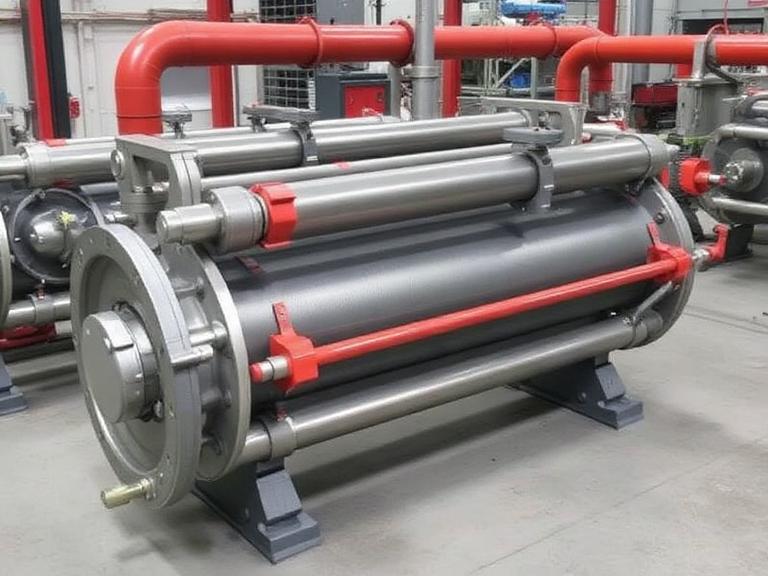
In the highly exact fields of industrial thermodynamics and fluid engineering, balancing thermal efficiency with capital expenditure is a constant challenge. Facility managers, mechanical engineers, and procurement specialists must navigate a labyrinth of thermodynamic principles to design systems that are both effective and economically viable. Among these principles, the 10-13-rule for heat exchangers stands out as a critical benchmark. Understanding and applying this rule is essential for optimizing plant operations, minimizing energy waste, and extending the lifecycle of your pipeline infrastructure.
From our experience supplying high-end metal pipeline systems to the global petrochemical and power generation sectors, we have witnessed firsthand the operational failures that occur when fundamental thermodynamic rules are ignored. A heat exchanger is only as effective as its design parameters and the metallurgical quality of its internal components. In this comprehensive technical guide, we will explore the precise definition of the 10-13-rule for heat exchangers, analyze its economic and operational implications, and explain how selecting the correct materials can ensure your systems operate at peak efficiency for decades.
İçindekiler
- 1. Understanding the 10-13-rule for heat exchangers
- 2. Thermodynamics vs. Economics: The CapEx and OpEx Balance
- 3. The Role of Log Mean Temperature Difference (LMTD)
- 4. Material Selection: Ensuring Long-Term Compliance with the Rule
- 5. The Impact of Fouling on the 10-13-rule for heat exchangers
- 6. How TOKO TECH Supports Heat Exchanger Optimization
- 7. Summary Table: Applying the 10-13-rule for heat exchangers
- 8. Sıkça Sorulan Sorular (SSS)
- 9. Academic and Industry References
1. Understanding the 10-13-rule for heat exchangers
To grasp the 10-13-rule for heat exchangers, one must first understand the concept of “approach temperature.” In any heat transfer process, the approach temperature is the difference between the temperature of the fluid leaving the heat exchanger and the temperature of the heating or cooling medium entering the heat exchanger. For example, in a cooling application, it is the temperature differential between the hot fluid exiting the equipment and the cold water entering it.
The 10-13-rule for heat exchangers dictates that this approach temperature should ideally be designed to fall between 10 degrees and 13 degrees Fahrenheit (approximately 5.5 to 7.2 degrees Celsius). We recommend this specific temperature window because it represents the optimal intersection between thermal efficiency and the physical size of the heat exchanger.
If you design a system where the approach temperature is forced below 10 degrees Fahrenheit, the driving force for heat transfer becomes so small that the required surface area of the heat exchanger approaches infinity. Conversely, if you allow the approach temperature to exceed 13 degrees Fahrenheit, the system becomes highly inefficient, wasting massive amounts of thermodynamic potential and increasing the energy burden on secondary cooling or heating systems. Therefore, adhering to the 10-13-rule for heat exchangers is the industry standard for achieving a harmonious balance in process engineering.
2. Thermodynamics vs. Economics: The CapEx and OpEx Balance
From our experience in the energy and power sectors, the decision to strictly follow the 10-13-rule for heat exchangers is driven equally by economics and physics. Industrial facility design requires a careful balancing act between Capital Expenditure (CapEx) and Operational Expenditure (OpEx).
When an engineer attempts to violate the 10-13-rule for heat exchangers by designing a system with a 5-degree approach temperature, the physical footprint of the equipment must increase dramatically. This means purchasing exponentially more internal tubing. While this might theoretically save a fraction of energy (OpEx), the initial CapEx required to purchase miles of additional tubing is financially unjustifiable. The sheer size of the equipment also introduces structural challenges, requiring more robust foundations and larger Stainless Steel Pipe Fitting connections to handle the increased fluid volume and weight.
On the other hand, ignoring the 10-13-rule for heat exchangers by designing for a 20-degree approach temperature allows you to build a very small, cheap heat exchanger. However, the OpEx will skyrocket because the system will fail to extract enough heat, forcing chillers or boilers to work harder downstream. By targeting the 10-13 degree window, you optimize the return on investment over the lifecycle of the facility.
3. The Role of Log Mean Temperature Difference (LMTD)
To fully appreciate the 10-13-rule for heat exchangers, it is essential to understand the Log Mean Temperature Difference (LMTD). LMTD is a logarithmic average of the temperature difference between the hot and cold streams at each end of the heat exchanger. The larger the LMTD, the more heat is transferred across the same surface area.
The total heat transfer area required is inversely proportional to the LMTD. When you push the approach temperature below the threshold defined by the 10-13-rule for heat exchangers, the LMTD drops precipitously. As the LMTD approaches zero, the required area grows exponentially. Engineers use the 10-13-rule for heat exchangers as a safeguard to ensure that the LMTD remains high enough to drive efficient heat transfer through the metallic walls of the tubing without requiring an excessively massive bundle of pipes.
4. Material Selection: Ensuring Long-Term Compliance with the Rule
Designing a system that conforms to the 10-13-rule for heat exchangers on paper is only the first step. The true challenge is maintaining that efficiency during years of continuous operation in harsh environments like petrochemical plants and pharmaceutical processing facilities. The thermal conductivity, wall thickness, and corrosion resistance of your pipeline products directly impact your ability to maintain the designated approach temperature.
We recommend utilizing high-quality Dikişsiz Boru/Boru for critical heat exchanger applications. Seamless tubes lack a longitudinal weld seam, which provides superior structural integrity under high pressure and ensures a perfectly uniform wall thickness for consistent thermal conductivity. When standard carbon steel is insufficient for highly corrosive or extreme temperature environments, TOKO TECH provides specialized solutions.
Our Nickel Alloy Seamless Pipe/Tube and Nickel Alloy Bar/Rod products are engineered specifically for these demanding conditions. Nickel alloys offer exceptional resistance to pitting, crevice corrosion, and stress-corrosion cracking. If a heat exchanger tube corrodes or degrades, its thermal conductivity drops, which will immediately cause the system to fail the 10-13-rule for heat exchangers. By investing in premium metallurgical products, you guarantee that the thermodynamic performance of your equipment matches its original engineering specifications for decades.
5. The Impact of Fouling on the 10-13-rule for heat exchangers
Fouling is the accumulation of unwanted material on the solid surfaces of the heat exchanger, which severely impedes heat transfer. Over time, biological growth, chemical scaling, or particulate deposition creates an insulating layer on the inside or outside of the tubes. From our experience, fouling is the number one reason why operational heat exchangers slowly drift out of compliance with the 10-13-rule for heat exchangers.
As the fouling layer thickens, the thermal resistance increases. To transfer the same amount of heat, the approach temperature naturally widens, shifting from an optimal 12 degrees up to 15, 18, or even 20 degrees. To combat this, engineers must factor in a “fouling margin” during the initial design phase. Furthermore, selecting ultra-smooth internal surfaces, such as those found in our premium Kaynaklı Boru/Boru and Coiled Tubing/Control Line Tube, reduces the micro-abrasions where scaling and biological matter typically take hold. Regular maintenance, combined with high-grade metal surfaces, ensures your facility continues to operate strictly within the parameters of the 10-13-rule for heat exchangers.
6. How TOKO TECH Supports Heat Exchanger Optimization
At TOKO TECH, our commitment to “Quality First, Innovation Driven” means we do more than just supply pipes; we supply the foundational architecture for thermal efficiency. When global clients in the shipbuilding and environmental engineering sectors approach us to build systems that adhere to the 10-13-rule for heat exchangers, we provide a holistic suite of products.
Beyond our core tubing, the integrity of the entire loop is critical. Pressure drops and flow turbulence caused by poor connections can disrupt the fluid dynamics required for optimal heat transfer. We manufacture precision Paslanmaz Çelik Boru Ek Parçaları components that ensure seamless, leak-free transitions between pipe runs, maintaining the exact pressure velocities required. For highly specialized instrumentation and chemical injection systems that monitor these heat exchangers, our continuous-length Coiled Tubing/Control Line Tube eliminates the need for intermediate mechanical fittings, drastically reducing the risk of failure in high-pressure environments.
7. Summary Table: Applying the 10-13-rule for heat exchangers
| Approach Temperature Range | Thermodynamic Efficiency | Economic Impact (CapEx & OpEx) | Operational Recommendation |
|---|---|---|---|
| Below 10°F (< 5.5°C) | Extremely High | Unjustifiable CapEx (Massive surface area required). Low OpEx. | Avoid. Requires exponentially more Seamless Pipe/Tube. |
| 10°F to 13°F (5.5°C to 7.2°C) | Optimal (The 10-13-rule for heat exchangers) | Perfect balance of manageable CapEx and efficient OpEx. | Highly Recommended. Use high-grade alloys to maintain over time. |
| 14°F to 19°F (7.7°C to 10.5°C) | Moderate to Low | Low CapEx (smaller equipment). High OpEx (energy waste). | Acceptable only for non-critical, low-duty utility cooling. |
| Above 20°F (> 11.1°C) | Poor | Minimal CapEx. Unacceptable OpEx due to massive energy loss. | Redesign system. Process fluid is not being adequately cooled/heated. |
8. Sıkça Sorulan Sorular (SSS)
9. Academic and Industry References
- U.S. Department of Energy (DOE) – Advanced Manufacturing Office: Guidelines on Industrial Heat Transfer Efficiency
- National Renewable Energy Laboratory (NREL) – Thermodynamic Optimization in Power Cycles
- Heat Transfer Research, Inc. (HTRI) – Industry Standards for Heat Exchanger Design and Approach Temperatures
- American Institute of Chemical Engineers (AIChE) – CapEx and OpEx Balancing in Process Engineering
 Turkish
  English
  Spanish
  Russian
  French
  Korean
  German
  Italian