In modern industrial engineering, the demand for reliable, seamless fluid and gas transportation systems has never been higher. As infrastructural projects push deeper into highly corrosive environments, traditional stick-built piping systems with numerous mechanical joints are becoming a liability. Engineers and procurement specialists frequently ask: exactly what is sarmal boru pipe, and how does it mitigate the operational risks associated with conventional piping? A coiled tubing pipe is a continuous length of metal tubing, spooled onto a large reel, capable of extending thousands of meters without a single transverse weld or mechanical fitting. This revolutionary format offers unprecedented installation speed, structural integrity, and chemical resistance.
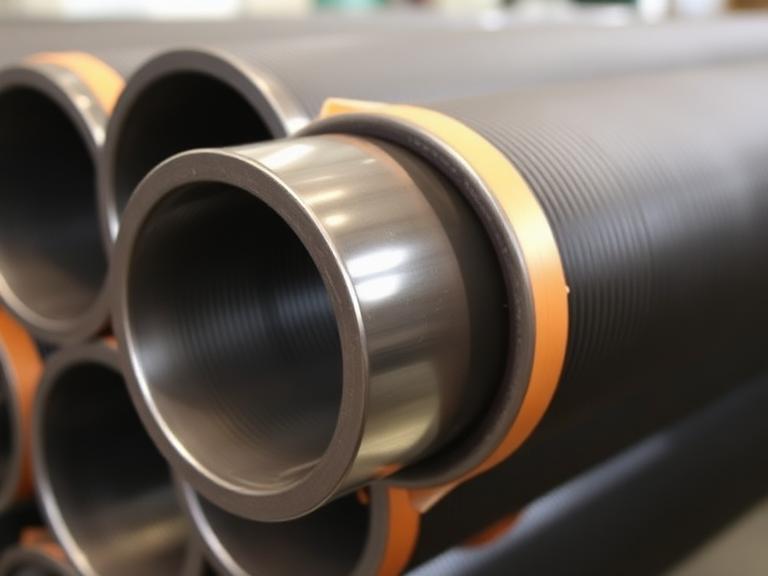
At TOKO TEKNİK, we operate as a premier export-driven manufacturing enterprise specializing in the R&D, production, and sales of high-end metal pipeline systems. Headquartered in Shanghai, China, with manufacturing facilities located in the Yangtze River Delta—China’s industrial core region—we operate a highly advanced modern production base. Since our establishment, TOKO TECH has adhered to the core philosophy of Quality First, Innovation Driven. We are dedicated to providing high-performance, corrosion-resistant, and high-temperature/high-pressure pipeline products for global clients. In this authoritative, expert-led guide, we will explore the mechanical properties, manufacturing methodologies, and the superior material science that define the modern coiled tubing pipe, providing you with the technical insight necessary for your next infrastructural procurement.
İçindekiler
- 1. What is Coiled Tubing Pipe? An Operational Overview
- 2. The Engineering Advantages of Coiled Tubing Pipe
- 3. Material Selection for Extreme Environments
- 4. Primary Industrial Applications for Coiled Tubing Pipe
- 5. The Manufacturing Process and Quality Assurance
- 6. Summary Table: Coiled Tubing Pipe Specifications
- 7. Frequently Asked Questions (FAQs)
- 8. Industry References
1. What is Coiled Tubing Pipe? An Operational Overview
To fully answer the question of what is coiled tubing pipe, one must understand its structural departure from conventional piping. A coiled tubing pipe is manufactured as an extraordinarily long, continuous metal conduit. Rather than being cut into standard 20-foot or 40-foot straight lengths, the tubing is drawn, annealed, and meticulously wound onto wooden or steel spools. Depending on the outer diameter (OD) and wall thickness, a single spool can hold several kilometers of continuous tubing.
This continuous format is critical. Every time a conventional pipe must be extended, a joint is required—either via a mechanical fitting, a flange, or an orbital weld. In high-pressure, hazardous fluid transmission, every joint represents a potential point of failure, leakage, or pressure drop. By utilizing a coiled tubing pipe, engineers can run continuous lines from a control panel directly to the operational end-point, entirely bypassing the need for intermediate connections. This creates a structurally sound, leak-proof system that is vastly superior in safety and operational reliability.
2. The Engineering Advantages of Coiled Tubing Pipe
From our experience supplying global infrastructure projects, transitioning from straight stick tubing to a coiled tubing pipe yields immediate, quantifiable engineering and economic benefits. We recommend auditing your current installation procedures to identify areas where continuous tubing can eliminate waste and hazard.
First and foremost is the drastic reduction in installation time. Laying a coiled tubing pipe requires simply unspooling the material along the designated raceway, bending it around corners using specialized tools, and making terminal connections. This eliminates the laborious process of measuring, cutting, deburring, and welding hundreds of individual straight pipe sections. The reduction in labor costs often offsets the premium material cost of the coiled tubing pipe itself.
Secondly, structural integrity is greatly enhanced. A coiled tubing pipe is highly resistant to vibration-induced fatigue. In offshore platforms or heavy manufacturing plants where heavy machinery creates constant vibrational stress, rigid pipe joints frequently crack or loosen. A continuous coiled tubing pipe absorbs and distributes these vibrational loads throughout its length, drastically reducing maintenance interventions and catastrophic chemical leaks.
3. Material Selection for Extreme Environments
The operational success of a coiled tubing pipe relies entirely on the metallurgical properties of its alloy. Transporting sour gas, highly acidic chemicals, or supercritical steam requires specific elemental compositions to prevent pitting, crevice corrosion, and chloride stress corrosion cracking. At TOKO TECH, we engineer our products to survive the most hostile industrial environments.
3.1 UNS S31603 / ASTM A269 TP316L Welded Coiled Tubing
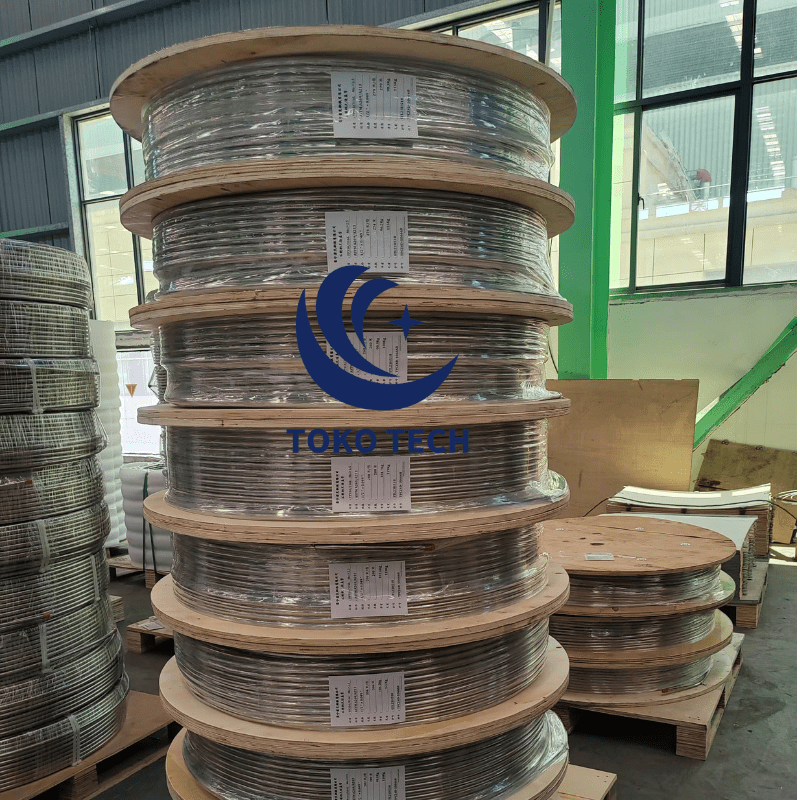
For standard corrosive environments, we recommend our UNS S31603 / EN 1.4404 / ASTM A269 TP316L Kaynaklı Kangal Boru. The addition of molybdenum to the 316L stainless steel matrix provides excellent resistance against localized pitting and general corrosion. The “L” denotes a low carbon content, which prevents carbide precipitation during welding, ensuring the tubing remains structurally sound even in elevated temperatures. This specific coiled tubing pipe is the backbone of general instrumentation and hydraulic control lines worldwide.
3.2 UNS N06600 / Inconel 600 Welded Coiled Tubing
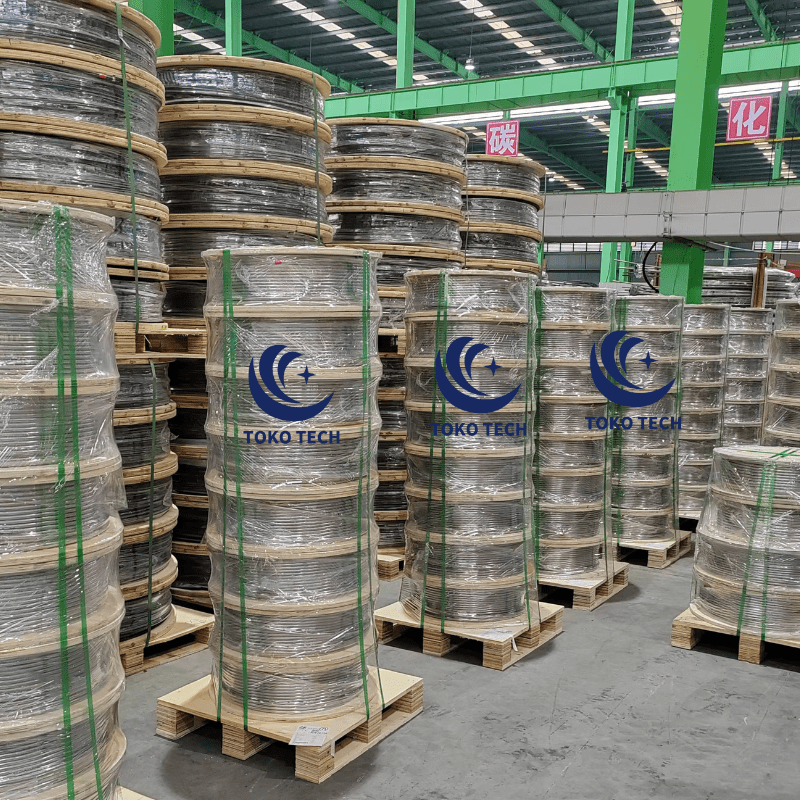
When operations enter high-temperature parameters, standard stainless steel degrades. For these scenarios, we provide the UNS N06600 / EN 2.4816 / ASTM B167 / W. Nr. 2.4816 (Inconel 600) Welded Coiled Tubing. Inconel 600 is a nickel-chromium alloy designed specifically for use from cryogenic temperatures up to 2000 degrees Fahrenheit. The high nickel content of this coiled tubing pipe renders it virtually immune to chloride-ion stress corrosion cracking, making it vital for nuclear reactors, chemical processing heaters, and high-temperature steam lines.
3.3 UNS N10276 / Hastelloy C-276 Seamless Coiled Tubing
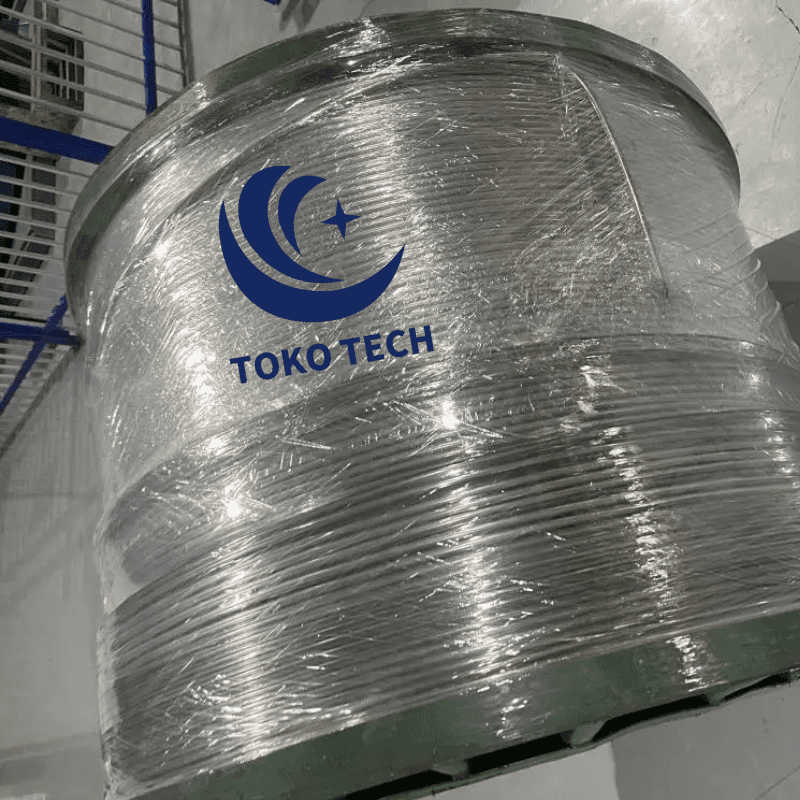
For the absolute most extreme chemical environments, including wet chlorine gas, hypochlorite, and chlorine dioxide solutions, standard alloys will fail rapidly. To combat this, TOKO TECH manufactures the UNS N10276 / EN 2.4819 / ASTM B622 / W. Nr. 2.4819 (Hastelloy C-276) Seamless Coiled Tubing. This superalloy offers unparalleled resistance to localized corrosion and both oxidizing and reducing media. Because it is a seamless coiled tubing pipe, it lacks any longitudinal weld seam, providing the absolute highest burst pressure rating and uniform metallurgical structure available in the market.
3.4 Multi-core Tubing Applications
In complex offshore and subsea applications, running individual lines is inefficient. To solve this, we engineer advanced Multi-core Tubing bundles. This involves taking multiple lines of coiled tubing pipe—often varying in diameter and alloy—and wrapping them together in an extruded thermoplastic jacket. This umbilical system allows operators to run hydraulic power, chemical injection, and pneumatic control lines simultaneously within a single, highly protected continuous cable.
4. Primary Industrial Applications for Coiled Tubing Pipe
Because TOKO TECH is located in the Yangtze River Delta, we have direct access to cutting-edge metallurgical testing and deep-water ports, allowing us to supply coiled tubing pipe products that are widely used in a diverse array of global industries.
- Petrochemicals and Oil & Gas: A continuous coiled tubing pipe is deployed into active oil wells for well intervention, chemical injection, and nitrogen purging. The lack of joints prevents snagging downhole.
- Energy and Power: Solar thermal plants and nuclear facilities rely on our Inconel 600 coiled tubing pipe for superheated steam generation and critical cooling loops.
- Shipbuilding and Marine: Multi-core tubing is utilized extensively for hydraulic remote control of ballast valves and cargo pumping systems across massive tanker decks, where salt spray would otherwise destroy standard piping.
- İlaç ve Gıda İşleme: The seamless inner bore of our 316L coiled tubing pipe prevents bacterial entrapment, making it the premier choice for sanitary liquid transfer and high-purity gas delivery.
- Çevre Mühendisliği: Used in emission monitoring systems where a continuous, un-welded sample line must draw harsh stack gases to remote analytical equipment without risking atmospheric contamination.
5. The Manufacturing Process and Quality Assurance
To consistently produce a premium coiled tubing pipe, a manufacturer must maintain rigorous, unyielding quality control. At TOKO TECH, our philosophy of Quality First, Innovation Driven is embedded directly into our production lines.
For welded coiled tubing pipe, we utilize precision TIG (Tungsten Inert Gas) welding or Laser welding. High-grade metal strips are roll-formed into a tubular shape, welded continuously, and then subjected to cold-drawing and bright annealing. This process homogenizes the weld seam, making the metallurgical structure nearly indistinguishable from the base metal. For our seamless coiled tubing pipe, a solid billet of alloy (such as Hastelloy C-276) is extruded and repeatedly cold-drawn over a mandrel until the exact OD and wall thickness are achieved. Every kilometer of coiled tubing pipe produced at our Shanghai base is subjected to 100% Eddy Current testing, hydrostatic pressure testing, and positive material identification (PMI) before spooling.
6. Summary Table: Coiled Tubing Pipe Material Comparison
To assist procurement engineers in selecting the optimal coiled tubing pipe for their operational parameters, we have compiled a summary comparison matrix of our primary high-performance alloys.
| Material Designation | Alloy Type | Primary Advantage | Ideal Industrial Application |
|---|---|---|---|
| TP316L (UNS S31603) | Austenitic Stainless Steel | Excellent general corrosion resistance, highly formable, cost-effective. | General petrochemical instrumentation, hydraulic control lines, pharmaceuticals. |
| Inconel 600 (UNS N06600) | Nickel-Chromium Alloy | Immunity to chloride stress cracking, high-temperature oxidation resistance. | Energy and power generation, extreme heat exchangers, chemical reactors. |
| Hastelloy C-276 (UNS N10276) | Nickel-Molybdenum-Chromium | Supreme resistance to localized pitting and extreme severe wet chemicals. | Environmental engineering, sour gas wells, aggressive acid transport. |
| Çok Çekirdekli Boru | Thermoplastic Jacketed Alloys | Consolidates multiple lines, provides impact and weather protection. | Shipbuilding, subsea umbilicals, long-distance pneumatic remote control. |
7. Frequently Asked Questions (FAQs)
What is the difference between a seamless and a welded coiled tubing pipe?
From our experience, a welded coiled tubing pipe is formed from flat strip metal that is rolled and welded longitudinally, which is excellent and highly cost-effective for most instrumentation applications. A seamless coiled tubing pipe is extruded from a solid billet, containing no weld seam whatsoever. We recommend seamless options, like our Hastelloy C-276, for ultra-high-pressure applications where absolute structural uniformity is demanded.
How is a coiled tubing pipe transported and delivered?
A coiled tubing pipe is meticulously wound onto large wooden or steel spools, or packaged as loose coils depending on the outer diameter and customer requirement. This spooled format allows for thousands of meters of tubing to be transported easily via standard shipping containers, providing highly efficient logistics for our global clients.
Can a coiled tubing pipe be used for high-pressure hydraulic systems?
Absolutely. A coiled tubing pipe is the preferred conduit for high-pressure hydraulics. Because it eliminates intermediate mechanical fittings, the risk of a high-pressure blowout at a joint is completely neutralized. The continuous run maintains uniform pressure integrity from the pump directly to the hydraulic actuator.
Why choose TOKO TECH for coiled tubing pipe procurement?
As an export-driven manufacturing enterprise headquartered in Shanghai, TOKO TECH combines advanced metallurgical science with the industrial efficiency of the Yangtze River Delta. Our dedication to Quality First, Innovation Driven ensures that whether you are ordering 316L or exotic Hastelloy alloys, you receive a coiled tubing pipe that exceeds international ASTM, EN, and NACE standards.
8. Industry References
To further expand your engineering knowledge regarding metallurgical standards, high-pressure pipeline safety, and extreme environment material specifications, we recommend consulting the following authoritative organizations:
 Turkish
  English
  Spanish
  Russian
  French
  Korean
  German
  Italian