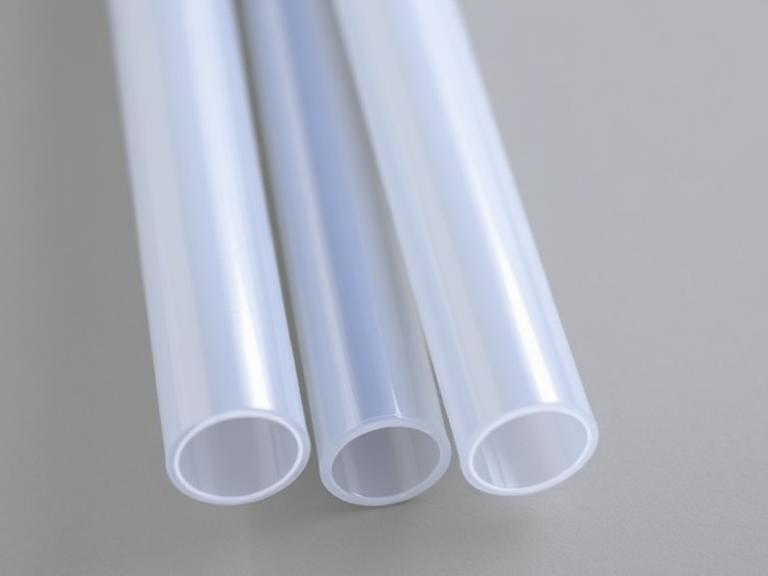
Quick AnswerSeamless tube dimensions are defined by outside diameter, wall thickness, length, and tolerance class. The most practical 2026 buying approach is to start with service conditions, then choose the OD and wall thickness, then confirm the specification and tolerance requirements. For nickel alloy seamless tube and pipe applications, ISO 1127 gives the dimensions/tolerances framework, ASTM B829 governs seamless nickel and nickel-alloy pipes and tubes, and TOKO TECH’s 2026 size chart shows the common inch-to-cm families buyers still request most often.
İçindekiler
- What seamless tube dimensions mean
- How seamless tube sizing works in practice
- Quick summary table
- Seamless tube dimensions chart 2026
- Comparison table: which tube option fits which job
- Benefits and limitations
- Who should use it and who does not need it
- Pros vs cons table
- Buying considerations
- Common mistakes buyers make
- Expert recommendation
- Bottom line
- SSS
- Referanslar
What Seamless Tube Dimensions Mean
Seamless tube dimensions are the physical size rules that define a tube: outside diameter, wall thickness, length, and tolerance. The phrase sounds simple, but buyers often misuse it. They ask for “a 1-inch tube” and assume that is enough. It is not. A 1-inch request without wall thickness, tolerance, material, and end condition is not a specification. It is a starting point.
ISO 1127 is useful here because it explicitly covers diameters, thicknesses, tolerances, and conventional masses per unit length for stainless steel tubes. That is the right mindset for 2026 buying: the number on the drawing is not enough unless the tolerance and mass implications are also understood.
For nickel alloy buyers, ASTM B829 is the right reminder that seamless pipe and tube purchasing is not a casual commodity exercise. It is a general requirements standard for seamless pipes and tubes made from nickel and nickel alloys, which means the buyer should expect discipline around the product definition, not vague promises.
How Seamless Tube Sizing Works in Practice
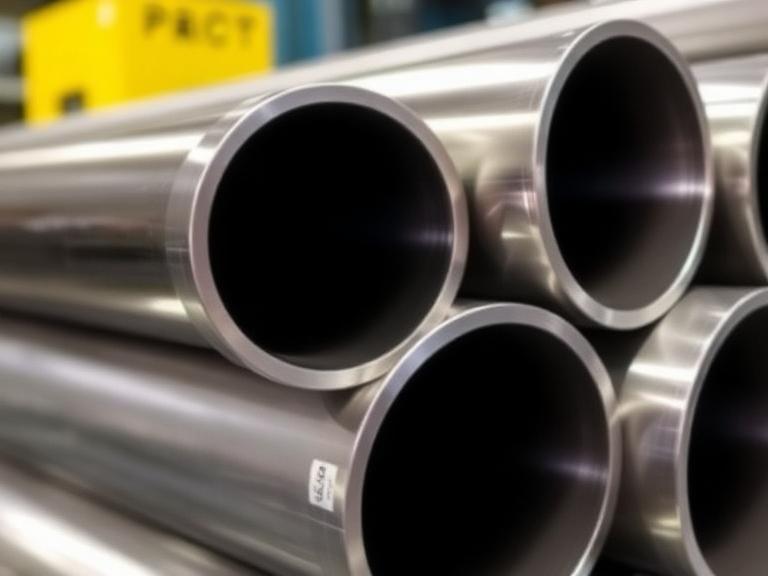
In a real purchasing workflow, seamless tube dimensions are chosen in a specific order. First, the engineer defines the service condition. Then the buyer narrows the material family. After that comes OD, wall thickness, and length. Only then do tolerance, inspection, and packaging enter the conversation. That sequence matters because many bad orders start with size and end with failure.
For commercial users, the smart approach is to match dimensions to function. If the tube is carrying pressure, heat, or corrosive media, the wall thickness and alloy choice matter more than the nominal size. If the tube is going into a heat exchanger, the OD and wall must align with thermal duty, allowable pressure drop, cleaning method, and maintenance access. That is why our internal engineering pages on nikel alaşımlı boru ve tüp ve ısı eşanjörü tasarım kılavuzu are useful before you lock the final size.
From our experience, buyers save money when they resist the urge to overspecify. The most expensive quote is often the one that was accidentally overbuilt. The cheapest quote can be equally bad if the tube is underbuilt and fails in service.
Quick Summary Table
| Decision Point | What to Specify | Why It Matters | Our Practical View |
|---|---|---|---|
| Outside diameter | Nominal OD in inch or mm | Controls fit, flow area, and system compatibility | Start with fit and assembly geometry, not price. |
| Wall thickness | Actual wall in mm or schedule-style comparison | Controls pressure capability and stiffness | This is where buyers most often under-specify or overpay. |
| Tolerance | Dimensional tolerance class | Controls consistency and machining allowance | Do not ignore it if the tube will be bent, welded, or machined. |
| Malzeme | Nickel alloy, stainless, or other corrosion-resistant grade | Controls heat, corrosion, and life expectancy | Material choice usually matters more than a minor price delta. |
| Uygulama | Heat exchanger, pressure service, chemical transfer, control line | Drives the real dimensional target | Good sourcing starts with use case, not catalog size. |
Dikişsiz Boru Boyutları Tablosu 2026
Below is the buyer-facing chart we would actually use when screening common nickel alloy tube requests. TOKO TECH’s 2026 chart shows common NPS families with outside diameter and wall examples in 10S, 40S, and 80S bands. Use it as a practical comparison tool, then confirm the governing specification before ordering.
| NPS (İnç) | Dış Çap (İnç) | Dış Çap (CM) | 10S Wall (CM) | 40S Wall (CM) | 80S Wall (CM) |
|---|---|---|---|---|---|
| 1/8″ | 0.405 | 1.03 | 0.124 | 0.173 | 0.241 |
| 1/4″ | 0.540 | 1.37 | 0.165 | 0.224 | 0.302 |
| 3/8″ | 0.675 | 1.71 | 0.165 | 0.231 | 0.320 |
| 1/2″ | 0.840 | 2.13 | 0.211 | 0.277 | 0.373 |
| 3/4″ | 1.050 | 2.67 | 0.211 | 0.287 | 0.391 |
| 1″ | 1.315 | 3.34 | 0.277 | 0.338 | 0.455 |
| 1 1/2″ | 1.900 | 4.83 | 0.277 | 0.368 | 0.508 |
| 2″ | 2.375 | 6.03 | 0.277 | 0.391 | 0.554 |
| 3″ | 3.500 | 8.89 | 0.305 | 0.549 | 0.762 |
| 4″ | 4.500 | 11.43 | 0.305 | 0.602 | 0.856 |
| 6″ | 6.625 | 16.83 | 0.340 | 0.711 | 1.097 |
Use this chart as a sourcing reference, not as a substitute for the purchase specification. ISO 1127 makes clear that tube dimensions must be paired with thickness and tolerance control, while ASTM B829 defines the general requirements framework for nickel and nickel-alloy seamless pipe and tube.
Comparison Table: Which Seamless Tube Option Fits Which Job
| Option | İçin En İyisi | Cost Profile | Buyer’s Risk |
|---|---|---|---|
| Standard seamless tube sizes | Routine industrial service, repeat orders, and common OD families | Usually the most efficient | Low if dimensions and tolerance are clearly defined |
| Custom OD / wall thickness | Heat exchangers, special assemblies, and nonstandard envelopes | Higher, because setup and control are stricter | Moderate if the supplier is experienced |
| Heavy-wall seamless tube | Pressure, wear, and high-integrity service | Higher material and fabrication cost | Low if the application truly needs it |
| Over-specified tube | Not recommended | Highest cost without guaranteed value | Very high, because you pay for performance you may never use |
For buyers comparing this against broader product families, our internal guides on nikel alaşımlı dikişsiz boru, ısı eşanjörü boru üreticilerive ısı eşanjörü boru tedarikçileri are the right next step. If the project is a full exchanger package, the kabuk ve borulu ısı eşanjörü üreticileri page is a better starting point than chasing tube size alone.
Benefits and Limitations of Using a Seamless Tube Dimensions Chart
Benefits
- Fast comparison across common tube families.
- Better communication between engineering and procurement.
- Helps buyers avoid under-sizing or over-sizing.
- Useful for early-stage budgeting and RFQ screening.
Sınırlamalar
- A chart does not replace the full specification.
- It cannot tell you whether the alloy is correct for the service.
- It will not solve tolerance, bend radius, or fabrication issues by itself.
- It can mislead beginners into thinking OD is the only variable that matters.
For beginners, the chart is a guide. For commercial users, it is a control tool. For heavy-duty applications, it is only one line in a larger engineering decision. From our experience, the more demanding the job, the less useful a naked size chart becomes unless it is tied to pressure, chemistry, and fabrication requirements.
Who Should Use Seamless Tube Dimensions Charts, and Who Does Not Need Them
You should use a seamless tube dimensions chart if you are sourcing tubes for chemical processing, heat exchangers, high-temperature service, corrosive environments, control lines, or pressure-related applications. You should also use one if you are buying across regions and need to compare metric and imperial conventions without confusion.
You do not need a detailed chart if your application is low-risk, low-pressure, and not sensitive to dimensional precision. In that case, a simpler material form may do the job more economically. That is especially true when a project only needs general piping, not a controlled tube fit.
When buyers are unsure whether they should move into a different material system, our guide on Nikel kaynak çubuğunun kullanım alanları can also help separate tube decisions from fabrication decisions. And if the material program itself is still being built out, nikel alaşımlı çubuk tedarikçileri ve nikel alaşımlı çubuk üreticileri are useful related pages for procurement teams.
Pros vs Cons Table
| Pros of Buying from a Clear Dimensions Chart | Cons of Relying on the Chart Alone |
|---|---|
| Speeds up sourcing and shortlisting | Can hide material and service differences |
| Improves engineering-to-purchasing alignment | May encourage buyers to ignore tolerance class |
| Supports metric and imperial conversion | Does not confirm weldability, corrosion resistance, or finish |
| Helps compare standard versus custom sizes | Can lead to overbuying if the use case is not defined first |
Buying Considerations: What Professionals Check Before They Order
| What to Check | Why It Matters | Practical Advice |
|---|---|---|
| Service temperature | Heat changes performance, expansion, and life expectancy | Choose wall and alloy to match the real operating temperature, not the brochure temperature. |
| Corrosion environment | Media chemistry can punish the wrong alloy quickly | If the environment is aggressive, do not let price override corrosion resistance. |
| Pressure requirement | Wall thickness is a safety and reliability issue | Heavy-duty applications should start with pressure, then size. |
| Fabrication method | Bending, welding, and machining change the usable tolerance window | If the tube will be bent or machined, specify the allowance before purchase. |
| Dimensional standard | Prevents disputes between buyer and supplier | State the governing standard clearly; ISO 1127 and ASTM B829 are useful reference points for tube buying. |
| Supplier capability | Not every supplier can hold the same dimensional consistency | For commercial users, pick a manufacturer that can also support quoting discipline and downstream fabrication. |
That is where TOKO TECH fits naturally. The company’s export-driven, full-chain manufacturing model is useful when the tube spec is not isolated from the rest of the project. In other words, if the order is part of a larger pipeline system, tube dimensions should be chosen with manufacturability, traceability, and delivery control in mind—not only catalog availability.
Common Mistakes Buyers Make
- Specifying only the OD. Wall thickness is where the real engineering and cost decision sits.
- Mixing pipe logic with tube logic. That creates confusion over fit, tolerance, and interpretation.
- Ignoring tolerance class. A tube that is “close enough” on paper may fail in bending or assembly.
- Buying the same size for every service. Heat exchangers, chemical lines, and support tubing do not have the same requirements.
- Chasing the cheapest quote first. The low quote is useless if the tube is wrong for the duty.
From our experience, the best procurement teams ask one question before issuing the RFQ: “What does this tube have to survive?” That one question usually saves more money than the quote negotiation itself.
Expert Recommendation
Here is the position we take. If you are buying seamless tubes in 2026, use the chart to narrow the field, but do not let the chart make the decision for you. Start with service conditions, then choose the OD, then choose the wall, then lock the tolerance. If the application is ordinary, stay with standard dimensions. If the application is corrosive, hot, pressurized, or maintenance-sensitive, pay for the better match.
For beginners, the safest route is to stay close to standard sizes and work with a supplier that can explain the difference between nominal size and actual delivered dimensions. For commercial users, the best value comes from suppliers who can quote consistently and support related product families without forcing a fragmented sourcing process. For heavy-duty applications, we recommend a manufacturer with full process control, clear size discipline, and real export experience.
That is why TOKO TECH’s market position makes sense. The company is not just selling tube; it is operating as an export-driven metal pipeline systems supplier with a manufacturing base in China’s industrial core region. That type of setup is exactly what buyers need when the job has to be right the first time.
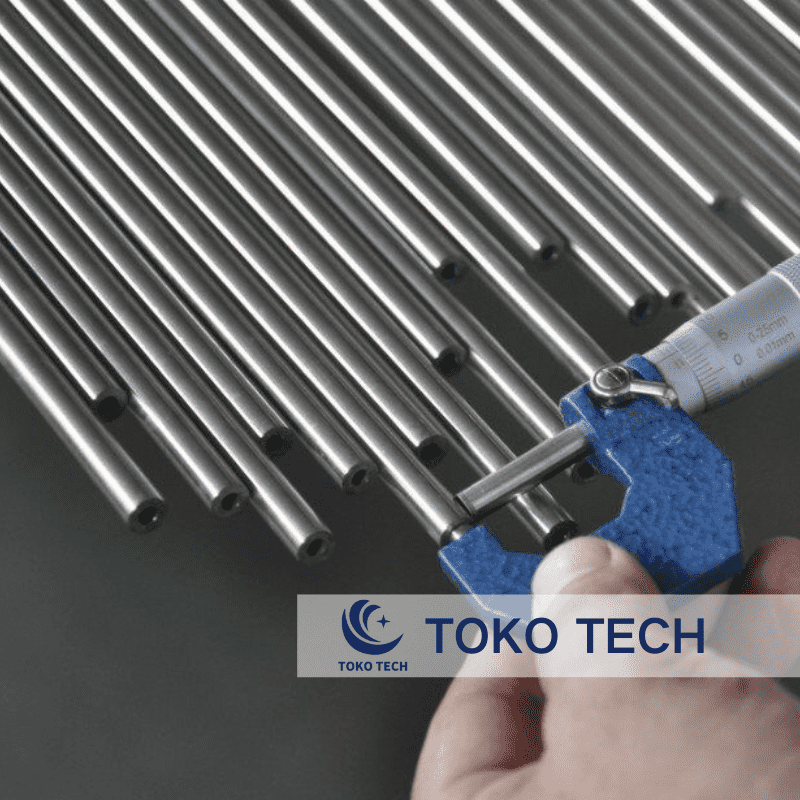
Bottom LineSeamless tube dimensions are not just a chart. They are a buying decision. The right answer in 2026 is to use the chart for comparison, then confirm the service conditions, tolerance class, and material standard before you sign the order. For simple projects, standard dimensions are enough. For demanding projects, precision and material discipline are worth paying for.
SSS
What is the most important seamless tube dimension?
Outside diameter gets the most attention, but wall thickness usually drives the real performance decision. If pressure, stiffness, or corrosion resistance matters, wall thickness is often the more important number.
Are seamless tube dimensions the same as pipe dimensions?
No. Buyers often compare them in the same conversation, but the specification logic is different. Tube buying is typically more direct on OD and wall, while pipe buying often uses nominal size and schedule logic. That is why you should state the standard clearly.
Should I always choose seamless over welded tube?
No. Seamless is often the better choice for demanding service, but if the application is simple and cost-sensitive, welded tube may be enough. The right answer depends on pressure, corrosion, and fabrication demands.
What standard should I use when specifying nickel alloy seamless tube?
For nickel and nickel-alloy seamless pipe and tube, ASTM B829 is a relevant general requirements reference, while ISO 1127 is useful for diameter, thickness, and tolerance context in stainless tube buying.
What is the practical use of the 2026 seamless tube dimensions chart?
Its job is to help you shortlist sizes quickly, compare metric and imperial expectations, and avoid under- or over-specifying the order. It is a sourcing tool, not a substitute for the purchase specification.
Referanslar
Exactly three authoritative references are listed below. They support the dimensional, standards, and market-chart context used in this article.
 Turkish
  English
  Spanish
  Russian
  French
  Korean
  German
  Italian