Procuring high-alloy metallurgical products for aggressive industrial environments is an exercise in strict risk management. When you are specifying materials for offshore control lines, severe sulfuric acid processing, or specialized heat exchangers, utilizing standard 316L stainless steel is a catastrophic liability. The engineering consensus has firmly shifted toward super-austenitic alloys. However, navigating the 904l seamless coiled tubing price in the volatile 2026 metals market requires deep commercial and practical judgment.
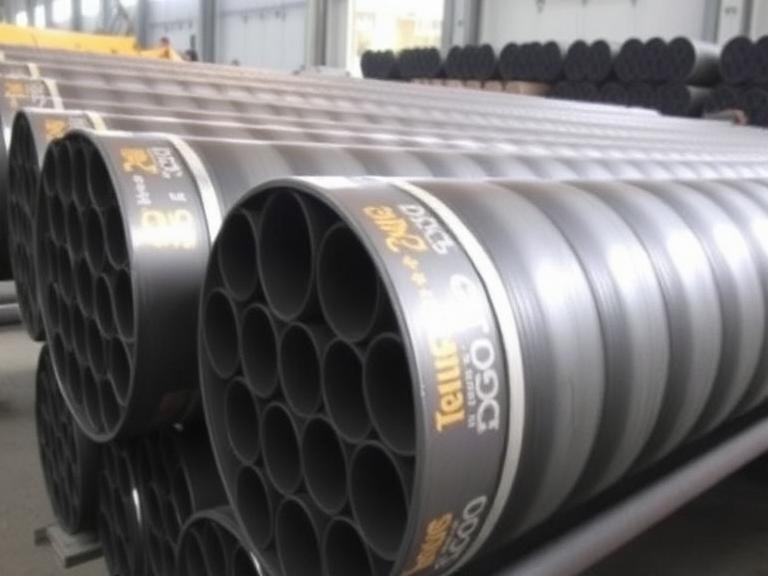
From our experience at TOKO TECH, a leading manufacturer and innovator in piping solutions, we see procurement teams frequently miscalculating the true lifecycle costs of their tubing. They hyper-focus on the upfront 904l seamless coiled tubing price without understanding the staggering costs of weld failures, installation downtime, or premature corrosion caused by selecting inferior welded alternatives. In this comprehensive guide, we will cut through the noise. We will analyze exactly what dictates the 904l seamless coiled tubing price today, how the seamless manufacturing process justifies this premium, and whether this high-nickel alloy is actually worth using in your specific application.
Quick Answer: What is the 904L Seamless Coiled Tubing Price?
In most professional situations as of 2026, the baseline 904l seamless coiled tubing price ranges between $25 to $45 per kilogram, or is quoted per meter based strictly on the outer diameter (O.D.) and wall thickness (W.T.). This premium pricing is driven primarily by the alloy’s high nickel (23-28%) and molybdenum (4-5%) content, combined with the complex, energy-intensive cold-drawing process required to produce continuous seamless coils without transverse welds. While the initial capital expenditure is high, we recommend this investment for heavy-duty applications—such as offshore umbilicals and chemical injection lines—where the total elimination of weld seams dramatically reduces the risk of catastrophic localized corrosion and system failure.
Table of Contents
- Market Dynamics: What Drives the 904L Seamless Coiled Tubing Price?
- What is UNS N08904 / TP904L?
- How Seamless Coiled Tubing is Manufactured
- Benefits of Investing in 904L Seamless Coils
- Limitations: When the Price Isn’t Justified
- Comparison Table: 904L vs. 316L vs. Alloy 825
- Who Should Use It & Who Does Not Need It
- Common Mistakes in Procurement
- Crucial Buying Considerations
- Expert Recommendation from TOKO TECH
- Frequently Asked Questions (FAQ)
Market Dynamics: What Drives the 904L Seamless Coiled Tubing Price?
To understand the 904l seamless coiled tubing price, you must look directly at the commodities market. 904L (UNS N08904) is a non-stabilized, low-carbon, high-alloy austenitic stainless steel with the addition of copper. The cost structure of this alloy is inextricably tied to the London Metal Exchange (LME) pricing for its core elements: nickel and molybdenum.
In 2026, the demand for nickel has surged, not just from the steel industry, but from the electric vehicle (EV) battery sector. Because 904L contains approximately 25% nickel (compared to just 10% in standard 316L), any fluctuation in the nickel bar price per kg creates a massive ripple effect on the 904l seamless coiled tubing price. Furthermore, the “seamless” designation means the tube must be pierced from a solid billet and cold-drawn. This process is highly specialized, rejecting the cheaper, faster roll-and-weld methods used by standard mills. Therefore, the price reflects both raw material volatility and elite manufacturing overhead.
What is UNS N08904 / TP904L?
Originally developed to resist corrosion in dilute sulfuric acid environments, 904L has become the gold standard for severe service. The addition of copper to this alloy gives it superior resistance to reducing acids, while the high molybdenum content provides excellent resistance to pitting and crevice corrosion in chloride-rich environments (like seawater).
When this material is formed into continuous seamless coiled tubing, it becomes an unstoppable asset for fluid transfer. Engineers utilizing coil tubing in oil and gas applications specifically specify 904L because it bridges the gap between standard stainless steel seamless pipe and immensely expensive nickel alloy seamless pipe.
How Seamless Coiled Tubing is Manufactured
To justify the 904l seamless coiled tubing price, you must comprehend the engineering behind it. Unlike Electric Resistance Welded (ERW) pipe, seamless tubing begins as a solid metallic billet. The billet is heated, pierced to create a hollow shell, and then repeatedly cold-drawn or pilgered over a mandrel to reduce its outer diameter (O.D.) and wall thickness (W.T.).
For coiled tubing, this process is continuous. The tube is drawn through progressive dies without being cut into standard 6-meter lengths. Following the drawing process, the coil is subjected to bright annealing in a controlled atmosphere furnace to restore the alloy’s austenitic grain structure and relieve internal mechanical stresses. The result is a continuous coil—often several hundred meters long—with an entirely homogeneous microstructure and zero longitudinal welds. This is the ultimate difference between erw and seamless pipe.
Benefits of Investing in 904L Seamless Coils
In our testing and field deployments, paying the premium 904l seamless coiled tubing price yields massive operational dividends:
- Elimination of Mechanical Joints: Using a continuous 500-meter coil eliminates the need for dozens of orbital welds or mechanical fittings. Every fitting is a potential leak point. Zero fittings mean zero leaks.
- Superior Corrosion Resistance: The lack of a weld seam means there is no Heat Affected Zone (HAZ). The HAZ is traditionally where localized pitting corrosion initiates. Seamless tubing is structurally uniform from end to end.
- Installation Efficiency: Pulling a continuous coil down a chemical trench or umbilical casing takes a fraction of the time required to weld and inspect rigid stick pipe.
- Exceptional Toughness: 904L maintains its ductility and toughness even at cryogenic temperatures, making it highly versatile for liquefied gas applications.
Limitations: When the Price Isn’t Justified
We are industry practitioners, not just salespeople. We must acknowledge that the 904l seamless coiled tubing price makes it overkill for many applications. It possesses a lower yield strength than duplex stainless steels (like 2205). Furthermore, it is not immune to stress corrosion cracking (SCC) at temperatures exceeding 60°C in heavy chloride environments—in those extreme heat/chloride scenarios, you must upgrade entirely to a nickel alloy tube and pipe solution like Inconel 625 or Hastelloy C276.
Comparison Table: 904L vs. 316L vs. Alloy 825
| Material Grade | Nickel Content | Corrosion Resistance (PREN) | Relative Cost | Best Application |
|---|---|---|---|---|
| 316L (UNS S31603) | 10 – 14% | ~ 24 (Moderate) | Baseline (Low) | Standard instrumentation, mild environments. |
| 904L (UNS N08904) | 23 – 28% | ~ 34 (High) | Premium (High) | Sulfuric acid processing, offshore control lines. |
| Alloy 825 (UNS N08825) | 38 – 46% | ~ 31 (High, excellent SCC) | Ultra-Premium (Very High) | Sour gas wells, extremely aggressive subsea environments. |
Who Should Use It & Who Does Not Need It
For commercial users and heavy-duty applications: Procurement engineers sourcing materials for offshore platforms, desalination plants, pharmaceutical manufacturing, and fertilizer production should absolutely pay the 904l seamless coiled tubing price. When transferring highly corrosive fluids over long runs where maintenance access is impossible (like subsea umbilicals), this material is mandatory.
Who does not need it: For beginners or contractors building basic food-grade pneumatic lines, standard freshwater hydraulic systems, or low-corrosion indoor instrumentation, 904L is a waste of capital. Stick to standard 304L or 316L stainless steel coils. You do not need 25% nickel to carry clean, compressed air.
Common Mistakes in Procurement
The most catastrophic mistake buyers make is accepting welded and drawn (W&D) tubing disguised as true seamless. While W&D tubing is cheaper and smooths out the weld seam, the metallurgical discontinuity remains. In high-pressure cyclic environments, that hidden seam will fatigue and burst. You must explicitly demand 100% seamless extrusion.
Another error is failing to account for alloy surcharges. The 904l seamless coiled tubing price on your quotation is often tied to a 30-day validity window. If you delay your purchase order by two months, a spike in global molybdenum or nickel prices will drastically alter your final invoice. Always lock in pricing quickly or negotiate fixed-price contracts with elite seamless pipe manufacturers.
Crucial Buying Considerations
| Specification Factor | What to Demand | Why It Matters |
|---|---|---|
| Dimensional Tolerances | Strict adherence to ASTM A269 / ASTM B673. | Ensures the tube fits perfectly into compression fittings (like Swagelok) without leaking. |
| Coil Lengths | No orbital welds mid-coil. | True continuous length is the entire point of buying coiled tubing. Splices introduce risk. |
| Surface Finish | Bright Annealed (BA) inside and out. | Prevents particle entrapment and micro-bacterial growth in sanitary or high-purity chemical lines. |
| Testing Documentation | 100% Eddy Current Test (ECT) and Hydrostatic Test. | Verifies that the seamless drawing process did not introduce micro-cracks or pinholes. |
Expert Recommendation from TOKO TECH
Why We Recommend Our 904L Coiled Tubing Solutions
In most professional situations involving severe sulfuric or chloride-rich environments, negotiating down the 904l seamless coiled tubing price by choosing unverified suppliers will inevitably result in catastrophic plant shutdowns. We recommend procuring directly from an industry-leading manufacturer that controls the entire metallurgical process.
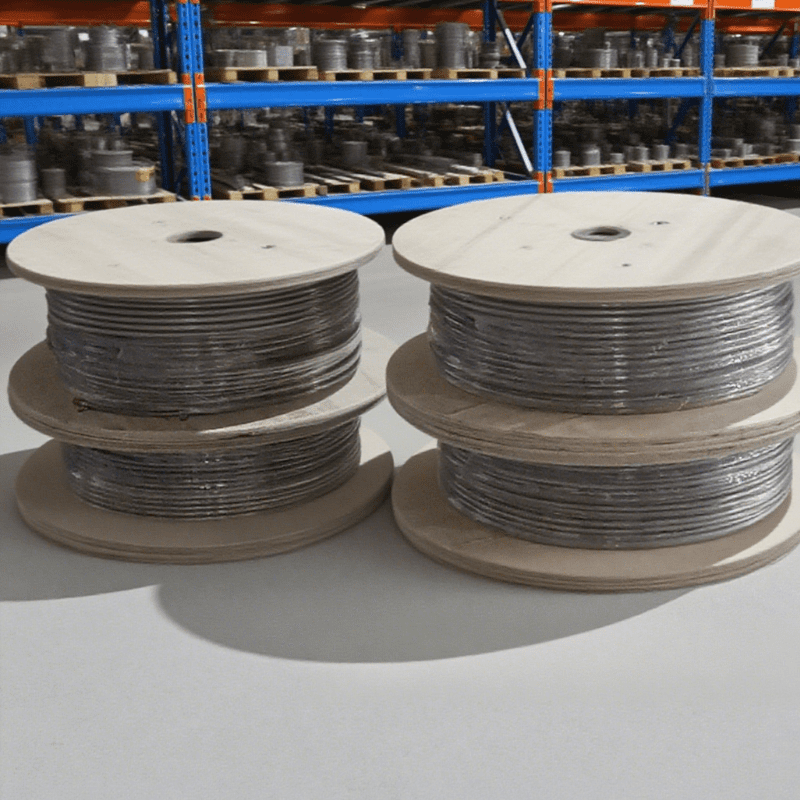
UNS N08904 / EN 1.4539 / ASTM A269 TP904L Seamless Coiled Tubing
- Outer Diameter (O.D.): φ3 mm ~ φ22 mm (Common range for precision coils)
- Wall Thickness (W.T.): 0.5 mm ~ 2.0 mm
- Coil Length: Hundreds of meters per continuous coil.
- Standards: Full compliance with ASTM A269, ASTM B673.
At TOKO TECH, our stringent bright annealing and cold-drawing processes guarantee that every meter of our 904L seamless coil delivers absolute structural integrity. If you are operating in the critical zones of chemical processing or offshore extraction, this is the definitive tubing solution you require to ensure zero-defect fluid transfer.
Explore our 904L Seamless Coiled Tubing Specifications here.
| Pros | Cons |
|---|---|
| Exceptional resistance to pitting and crevice corrosion. | High initial procurement cost compared to 316L. |
| Zero weld seams eliminate the most common points of failure. | Pricing is highly sensitive to global nickel market volatility. |
| Continuous coil format dramatically reduces installation labor. | Harder to bend and machine due to high alloy density. |
| Non-magnetic properties are highly beneficial for specific instrumentation. | Lower yield strength than duplex alloys (e.g., 2205). |
Frequently Asked Questions (FAQ)
Yes, significantly better for aggressive chemical environments. 904L contains roughly double the nickel and molybdenum of 316L, plus added copper. This formulation makes 904L vastly superior at resisting localized pitting and general corrosion in sulfuric, phosphoric, and acetic acids where 316L would fail rapidly.
The price is commanded by the raw material content and the fabrication difficulty. 904L contains up to 28% nickel, making its cost directly vulnerable to the volatile metals exchange. Furthermore, creating a true seamless tube over hundreds of continuous meters requires highly complex, repeated cold-drawing and bright annealing processes, which carry massive operational overhead compared to standard welded pipe.
The maximum continuous length is constrained by the Outer Diameter (O.D.) and Wall Thickness (W.T.). For smaller capillary tubing (such as 6mm or 1/4 inch O.D.), elite mills can produce seamless continuous coils reaching 500 to 1,000 meters. For larger diameters, the maximum continuous length decreases due to the physical limits of the drawing machinery and the raw billet weight.
Authoritative References & Industry Standards
To ensure your metallurgical procurement meets rigorous global standards, we advise consulting the following authoritative bodies:
- ASTM International: Specifically review ASTM A269/A269M (Standard Specification for Seamless and Welded Austenitic Stainless Steel Tubing for General Service). Visit ASTM
- The Association for Materials Protection and Performance (AMPP): A merger of NACE and SSPC, providing the world’s most definitive guidelines on corrosion mitigation in industrial environments. Visit AMPP
- London Metal Exchange (LME): The global center for industrial metals trading. Monitoring LME Nickel pricing is critical for forecasting the 904l seamless coiled tubing price. Visit LME
 English
  Spanish
  Russian
  Turkish
  French
  Korean
  German
  Italian