In the highly demanding sectors of petrochemicals, energy and power, shipbuilding, pharmaceutical and food processing, and environmental engineering, specifying the correct piping material is not merely a purchasing decision; it is a fundamental engineering necessity. When designing fluid transport systems, structural supports, or high-pressure heat exchangers, engineers must continuously evaluate the mechanical properties and manufacturing tolerances of their materials. At the center of this evaluation is the fundamental difference between ERW & бесшовная труба technologies.
Автор TOKO TECH. We are an export-driven manufacturing enterprise specializing in the R&D, production, and sales of high-end metal pipeline systems. Headquartered in Shanghai, China, with manufacturing facilities located in the Yangtze River Delta—China’s industrial core region—we operate a highly advanced modern production base. Since our establishment, TOKO TECH has adhered to the core philosophy of “Quality First, Innovation Driven”, dedicated to providing high-performance, corrosion-resistant, and high-temperature/high-pressure pipeline products for global clients.
From our experience supplying critical infrastructure globally, a pipeline failure caused by specifying the incorrect manufacturing type can lead to catastrophic environmental damage, hazardous safety incidents, and massive financial liabilities. While both Electric Resistance Welded (ERW) and seamless pipes share the same basic cylindrical geometry, their microstructural integrity, burst pressure capacities, and manufacturing origins are vastly different. In this comprehensive technical guide, we will dissect the difference between ERW & seamless pipe, exploring the metallurgical processes behind each, their respective pressure ratings, dimensional tolerances, and optimal industrial applications in the modern engineering landscape of 2026.
Оглавление
- 1. Metallurgical Origins: The Manufacturing Difference Between ERW & Seamless Pipe
- 2. Structural Integrity and The Heat Affected Zone (HAZ)
- 3. Pressure Ratings and High-Temperature Performance
- 4. Dimensional Tolerances and Wall Thickness Variations
- 5. Cost Analysis and Procurement Availability
- 6. TOKO TECH Solutions: When to Specify Seamless Integration
- 7. Summary Table: Analyzing the Difference Between ERW & Seamless Pipe
- 8. Часто задаваемые вопросы (FAQ)
- 9. Academic and Industrial References
1. Metallurgical Origins: The Manufacturing Difference Between ERW & Seamless Pipe
To fully grasp the difference between ERW & seamless pipe, one must first look at the raw materials and the metallurgical forming processes. The foundational distinction lies in how the cylinder is physically formed from solid steel.
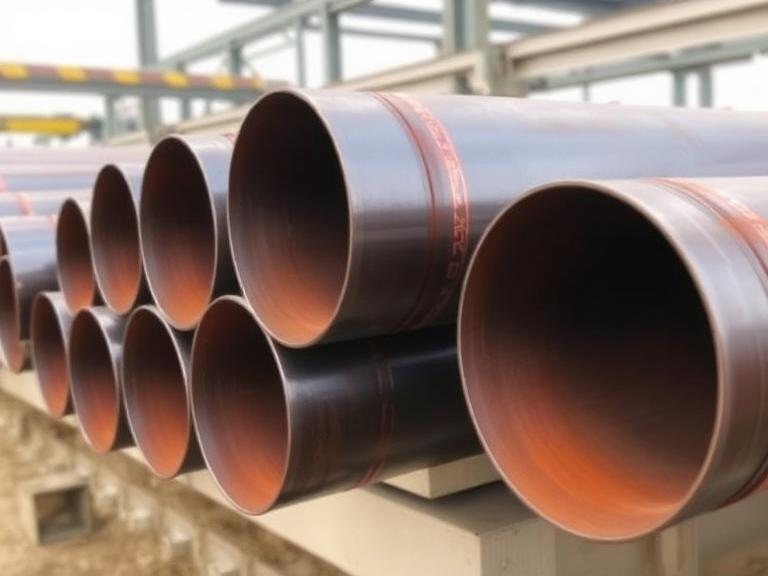
Electric Resistance Welded (ERW) pipe begins its life as a flat ribbon of steel, known as skelp, or as a coiled steel sheet. This flat material is unrolled, leveled, and passed through a series of cold-forming rollers that gradually bend the edges inward until they meet to form a cylinder. An electrical current is then passed through the edges, utilizing the natural electrical resistance of the steel to generate extreme heat. The edges melt and are forced together under immense pressure to create a longitudinal weld seam. Modern high-frequency welding techniques have largely eliminated the need for filler metals, but the fundamental reality remains: ERW pipe is a rolled sheet that has been fused together.
Conversely, the manufacturing process for a seamless pipe involves no welding whatsoever. It begins as a solid, cylindrical billet of high-grade steel. This billet is heated to extreme temperatures and stretched over a piercing mandrel (a piercing rod) while being simultaneously rotated and rolled. This complex extrusion process hollows out the solid billet, stretching the steel into a continuous, unbroken tube. Because the metal is deformed symmetrically from a solid state, the resulting pipe possesses a homogenous, uninterrupted grain structure along its entire circumference and length. This fundamental absence of a longitudinal seam is the most defining difference between ERW & seamless pipe.
2. Structural Integrity and The Heat Affected Zone (HAZ)
In advanced piping engineering, the structural integrity of a conduit is determined by its weakest point. When evaluating the difference between ERW & seamless pipe, engineers must account for the Heat Affected Zone (HAZ). In ERW pipes, the extreme heat generated during the welding process alters the microstructure of the steel immediately adjacent to the seam. This HAZ can become brittle or susceptible to localized corrosion if not properly normalized and heat-treated post-welding.
While modern manufacturing facilities employ full-body post-weld heat treatment to mitigate the vulnerabilities of the HAZ, the weld seam remains a potential failure point under extreme dynamic loading or severe cyclic stress. A seamless pipe, lacking this weld seam and subsequent HAZ, offers absolute metallurgical homogeneity. From our experience providing solutions for the shipbuilding and petrochemical industries, we recommend seamless pipes for environments subjected to high mechanical vibration, hydraulic shock (water hammer), or aggressive corrosive agents, as the uniform grain structure provides superior, predictable resistance to catastrophic rupture.
3. Pressure Ratings and High-Temperature Performance
The difference between ERW & seamless pipe becomes intensely critical when calculating burst pressures and yield strengths. The allowable working pressure of a pipeline is directly correlated to its wall thickness, outside diameter, and the structural integrity of the cylinder.
Because seamless pipe is extruded from a solid billet, it inherently possesses a higher pressure capacity—often calculated to be 20% higher than an ERW pipe of the exact same dimensions and steel grade. The longitudinal seam of an ERW pipe introduces a stress concentration factor. In high-pressure steam lines, deep-water subsea tiebacks, and extreme high-temperature refining operations, the continuous uniform strength of a seamless pipe is legally and operationally mandated by international engineering codes.
We recommend heavily auditing your operational parameters before procurement. If your system operates under standard atmospheric pressure or low-pressure fluid transport, ERW pipe may serve adequately. However, if the pipeline transports volatile hydrocarbons or operates under high-temperature/high-pressure (HTHP) conditions, the pressure rating difference between ERW & seamless pipe definitively dictates that seamless is the only viable, safe option.
4. Dimensional Tolerances and Wall Thickness Variations
An interesting nuance in the difference between ERW & seamless pipe lies in dimensional accuracy. Because ERW pipe is formed from rolled sheet metal, the initial wall thickness of the raw material can be controlled with extreme precision. Consequently, ERW pipes often boast tighter tolerances regarding concentricity and uniform wall thickness along their length compared to seamlessly drawn pipes.
The extrusion and piercing process used to manufacture seamless pipes can occasionally result in minor variations in wall thickness (known as eccentricity). However, advancements in modern rotary piercing mills and laser-guided mandrels have drastically reduced these tolerances. For the vast majority of critical industrial applications, the slight variation in the wall thickness of a seamless pipe is considered a negligible trade-off when compared to its massive advantages in pressure retention and overall structural homogeneity.
5. Cost Analysis and Procurement Availability
No engineering decision is made without analyzing capital expenditure. The economic difference between ERW & seamless pipe is substantial. The manufacturing process for ERW pipe is highly automated, continuous, and requires significantly less energy and raw material processing than seamless extrusion. This efficiency makes ERW pipe inherently cheaper to produce and widely available in massive quantities.
Seamless pipe manufacturing is a time-intensive, high-energy process utilizing specialized extrusion presses and piercing mills. The raw solid billets are more expensive to source and prepare. Therefore, seamless pipes command a premium price in the global market. Furthermore, while ERW pipes can be easily manufactured in massive diameters (exceeding 24 inches), manufacturing seamless pipes at extreme diameters becomes exponentially difficult and costly. Engineers must balance the cost difference between ERW & seamless pipe against the risk profile of their specific project.
6. TOKO TECH Solutions: When to Specify Seamless Integration
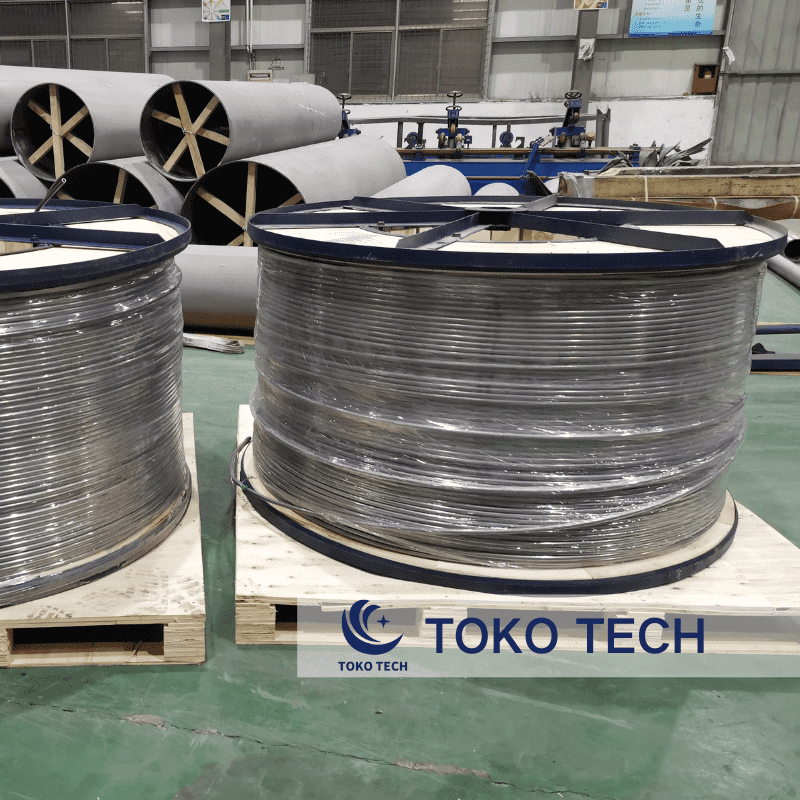
В TOKO TECH, our commitment to “Quality First, Innovation Driven” ensures that we supply only the most reliable fluid transport systems for rigorous industrial applications. Understanding the profound difference between ERW & seamless pipe, we have focused our high-end manufacturing capabilities strictly on seamless technology to guarantee maximum safety and performance for our clients in the petrochemical, pharmaceutical, and environmental engineering sectors.
Our premier product lines reflect this commitment to seamless integrity. We engineer and supply Бесшовные гибкие трубы из нержавеющей стали, which is vital for continuous long-run applications where mechanical joints and welds would present unacceptable leakage risks. For complex thermal management in energy and power facilities, we recommend our Бесшовная U-образная труба из нержавеющей стали configurations, which bend flawlessly without the risk of seam splitting that plagues welded alternatives. Furthermore, our standard Бесшовная прямая труба/труба inventory provides the backbone for high-pressure, corrosion-resistant transport networks across the globe. By completely eliminating the longitudinal weld seam, our products deliver unmatched reliability in the most hostile environments on earth.
7. Summary Table: Analyzing the Difference Between ERW & Seamless Pipe
To assist procurement officers and design engineers in their material selection process, we have compiled a definitive comparative matrix highlighting the functional difference between ERW & seamless pipe.
| Engineering Specification | Бесшовные трубы | Трубы ERW (электросварные) |
|---|---|---|
| Manufacturing Origin | Extruded and pierced from a solid steel billet. | Rolled from flat steel sheet and longitudinally welded. |
| Structural Integrity | Homogenous structure; no weld seams or weak points. | Contains a longitudinal weld seam and Heat Affected Zone (HAZ). |
| Мощность давления | Exceptionally high; ideal for HTHP applications. | Moderate; approximately 20% lower burst threshold than seamless. |
| Устойчивость к коррозии | Uniform resistance across the entire pipe body. | Weld seam can be susceptible to localized galvanic corrosion. |
| Wall Thickness Tolerance | Slight eccentricity possible due to extrusion process. | Highly precise and uniform, derived from milled steel sheets. |
| Procurement Cost | Premium pricing due to complex, energy-intensive manufacturing. | Economical, highly suited for low-pressure, high-volume projects. |
8. Часто задаваемые вопросы (FAQ)
From our experience, petrochemical facilities operate under extreme pressure and handle highly volatile, toxic, and corrosive fluids. The primary difference between ERW & seamless pipe is the presence of a weld seam. A weld seam in an ERW pipe presents a microscopic risk of localized corrosion or pressure rupture. Seamless pipes completely eliminate this risk, providing the absolute metallurgical safety mandated by the petrochemical industry.
While modern High-Frequency Welded ERW pipes have improved drastically, they are generally not recommended for critical high-temperature steam applications. Thermal cycling creates massive expansion and contraction stresses that target the Heat Affected Zone (HAZ) of a weld. We recommend utilizing our Seamless Straight pipe/tube for high-pressure steam to prevent catastrophic thermal fatigue.
Coiled tubing is subjected to continuous bending, unspooling, and high-pressure fluid injection. An ERW seam would rapidly fatigue and split under these extreme mechanical manipulations. By utilizing our Stainless steel seamless Coiled tubing, operators guarantee that the tubing possesses uniform tensile strength and zero seam vulnerabilities throughout its entire length.
Internally, an ERW pipe will have a visible longitudinal flash line (the remnant of the weld seam), although advanced manufacturing often removes this inner flash. Seamless pipes have a completely smooth, continuous interior surface. However, the definitive method to determine the difference between ERW & seamless pipe is to review the manufacturer’s Mill Test Report (MTR) and the stencil markings on the pipe body itself.
9. Academic and Industrial References
To further understand the metallurgical parameters, testing protocols, and international standards that dictate the difference between ERW & seamless pipe, we strongly encourage engineers to consult the following authoritative bodies:
 Russian
  English
  Spanish
  Turkish
  French
  Korean
  German
  Italian