In the high-stakes world of industrial metallurgy, making procurement decisions based on brand names or numerical assumptions is a guaranteed path to catastrophic mechanical failure. A question we field constantly from purchasing managers and junior engineers is whether Inconel 825 better than Inconel 800 simply because the number is higher. From our experience at TOKO TECH, engineering and supplying premium alloys to global energy and chemical sectors, treating these two superalloys as interchangeable is a dangerous, costly mistake.
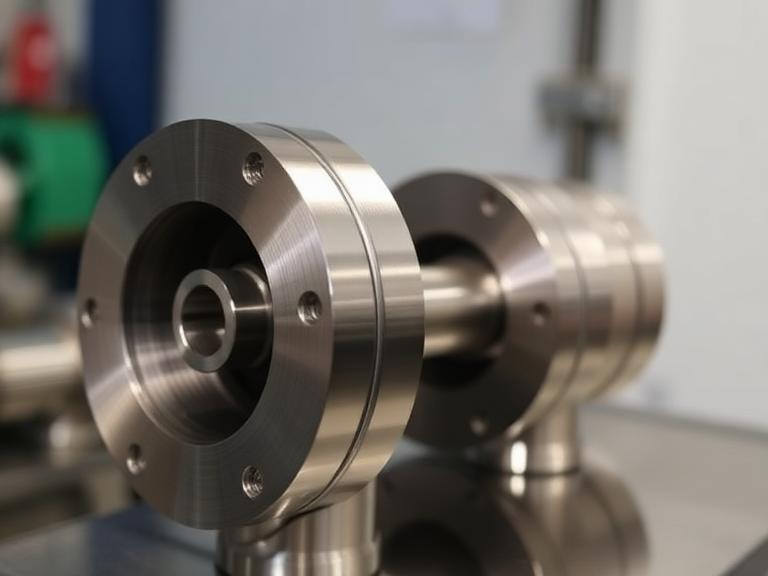
To be technically accurate, both of these materials belong to the “Incoloy” family (alloys where iron is a major component alongside nickel and chromium), though the industry colloquially refers to them as Inconel. Regardless of the nomenclature, they are engineered for two entirely different battlefields. One thrives in boiling acid; the other survives in the searing heat of industrial furnaces. In this comprehensive technical guide, we will strip away the marketing jargon, analyze the exact chemical matrices, and explain not only what these alloys do, but WHETHER it makes commercial sense to specify one over the other for your specific project.
Quick Answer: Which Alloy Wins?
If you are asking is Inconel 825 better than Inconel 800, the direct answer is: It depends entirely on your environment.
Выберите Inconel 825 for extreme wet, aqueous corrosion. Its addition of molybdenum and copper makes it vastly superior for handling sulfuric acid, phosphoric acid, and sour gas (H2S) environments at moderate temperatures.
Выберите Inconel 800 (and 800H/800HT) for extreme dry heat and structural integrity. It lacks molybdenum but is engineered to resist oxidation, carburization, and structural creep at blistering temperatures up to 1500°F (816°C). Specifying the more expensive 825 for a high-temperature furnace is a total waste of your procurement budget.
Оглавление
- What It Is: The Metallurgical DNA
- How It Works: Corrosion vs. Heat Resistance
- Comparison Table: Alloy 825 vs Alloy 800
- Benefits of Each Alloy
- Limitations and Mechanical Weaknesses
- Pros and Cons Table
- Who Should Use It & Who Does Not Need It
- Common Procurement Mistakes
- Buying Considerations
- Expert Recommendation & Product Spotlight
- Часто задаваемые вопросы (FAQ)
What It Is: The Metallurgical DNA
Before you evaluate whether Inconel 825 better than Inconel 800, you must understand their elemental building blocks. Both alloys are nickel-iron-chromium austenitic superalloys, but their chemical divergence is profound.
Inconel 800 (UNS N08800): This is the baseline high-temperature alloy. It typically contains 30-35% Nickel, 19-23% Chromium, and a minimum of 39.5% Iron. It relies on this specific balance to maintain a stable austenitic structure during prolonged exposure to intense heat. It does not contain molybdenum or copper.
Inconel 825 (UNS N08825): This alloy takes the base of 800 and fortifies it against aggressive chemicals. It bumps the Nickel content up to 38-46%, maintains 19.5-23.5% Chromium, but crucially adds 2.5-3.5% Molybdenum, 1.5-3.0% Copper, and Titanium. These additions fundamentally change how the metal behaves in acidic environments, making it a staple when sourcing Трубы и трубки из никелевого сплава for chemical processing.
How It Works: Corrosion vs. Heat Resistance
In most professional situations, the operational failure of a piping system dictates the choice of alloy. How these metals protect themselves dictates their application.
How 825 Works: The addition of molybdenum heavily boosts resistance to pitting and crevice corrosion in chloride environments (like seawater or brine). The copper content provides immunity to reducing acids, specifically sulfuric and phosphoric acids. The titanium stabilization, combined with proper heat treatment, prevents intergranular corrosion after welding. When pumping sour gas containing hydrogen sulfide, the high nickel content prevents chloride-ion stress-corrosion cracking.
How 800 Works: Alloy 800 is not designed for boiling acid; it is designed for structural stability in the fire. The high chromium content forms a tenacious, protective oxide scale that resists high-temperature oxidation and carburization (the absorption of carbon that makes metals brittle). When upgraded to 800H or 800HT (which control carbon, aluminum, and titanium levels), the alloy achieves incredible creep and rupture strength, meaning it will not deform or stretch when holding heavy loads inside a furnace.
| Specification | Inconel 825 (UNS N08825) | Inconel 800 (UNS N08800) |
|---|---|---|
| Nickel (Ni) Content | 38.0 – 46.0% | 30.0 – 35.0% |
| Key Additives | Molybdenum (2.5-3.5%), Copper (1.5-3.0%) | None (Relying strictly on Ni-Fe-Cr) |
| Основная сила | Aqueous corrosion, Acids, Sour Gas | High-temperature oxidation & carburization |
| Max Operating Temp | Up to 1000°F (538°C) | Up to 1500°F (816°C) or higher for 800HT |
| Relative Cost | Higher (Due to Mo, Cu, and extra Ni) | Lower (More economical for heat applications) |
Benefits of Each Alloy
For commercial users, the benefits of 825 are overwhelmingly focused on chemical survival. If you are operating a sulfuric acid pickling plant, or drilling in highly corrosive offshore oil wells, 825 is your absolute lifeline. Its resistance to stress-corrosion cracking is why it is the premier choice for downhole спиральная труба в нефтегазовой отрасли applications where hydrogen sulfide is present.
The benefits of 800, conversely, are purely thermal and structural. In petrochemical reforming, heat exchanger tubing, and industrial furnace components, Alloy 800 delivers decades of service without turning brittle. It provides a massive cost saving compared to specifying pure nickel alloys for high-heat, dry environments.
Limitations and Mechanical Weaknesses
We recommend a hard look at limitations before issuing a purchase order. Inconel 825 loses its mechanical strength and structural stability at temperatures exceeding 1000°F (538°C). Using it as a furnace muffle is a catastrophic engineering error. Furthermore, despite its excellent acid resistance, it is not immune to aggressive hydrochloric acid environments, where Hastelloy might be required.
Inconel 800 fails miserably in wet, acidic conditions. If you expose Alloy 800 to sulfuric acid or stagnant seawater, it will suffer from rapid pitting and localized corrosion. It lacks the molybdenum necessary to fight off chloride attacks.
| Alloy | Pros | Cons |
|---|---|---|
| Inconel 825 | Exceptional resistance to sulfuric/phosphoric acids; immune to chloride stress cracking; excellent weldability. | Significant loss of mechanical strength above 1000°F; higher procurement cost due to expensive alloying elements. |
| Inconel 800 | Outstanding high-temperature creep strength; resists carburization and oxidation; highly cost-effective for thermal applications. | Poor performance in wet, acidic, or chloride-heavy environments; susceptible to pitting. |
Who Should Use It & Who Does Not Need It
For heavy-duty applications in Oil & Gas: If you are dealing with sour wells, you must specify Alloy 825. Working with leading coiled tubing companies will confirm that 825 meets the stringent NACE MR0175 standards for sour service environments.
For commercial users in Power Generation: Boiler tubes, superheaters, and steam generators operating at 1200°F demand Inconel 800 or 800H. Do not upgrade to 825 here; it will perform worse and cost you more money.
Кому это не нужно: For beginners or contractors building standard low-pressure, ambient-temperature water or mild chemical lines, both of these superalloys are massive financial overkill. A standard бесшовная труба из нержавеющей стали (like 316L) is more than sufficient and will save you a fortune.
Common Procurement Mistakes
In our testing and industry audits, the most frequent mistake is over-specifying materials without understanding the operating envelope. A procurement manager might assume “825 is a higher number, therefore it is a stronger high-temp alloy.” This assumption leads to structural failures in furnaces when the 825 weakens under the heat load.
Another critical mistake is failing to understand the различие между трубами ERW и бесшовными трубами when ordering these alloys. For high-pressure sour gas lines, welded (ERW) 825 tubing introduces a weld seam that can become a focal point for corrosion if not perfectly annealed. Specifying бесшовная труба из никелевого сплава is the only way to guarantee absolute integrity in lethal environments.
Buying Considerations
When you sit down to issue a PO, calculate your total lifecycle cost. Inconel 825 commands a premium because of its molybdenum and copper content. However, if using 825 prevents a multi-million-dollar shutdown of an offshore rig due to sulfuric acid corrosion, the ROI is instantaneous. Always source from verified поставщики прутков из никелевого сплава who provide full Mill Test Reports (MTRs) to guarantee the chemical composition meets ASTM B425 standards.
Expert Recommendation from TOKO TECH
In most professional situations, the debate of whether Inconel 825 better than Inconel 800 is settled by looking at a thermometer and a pH meter. At TOKO TECH, we do not allow our clients to guess. If your application involves wet, acidic, or sour environments, 825 is your definitive choice.
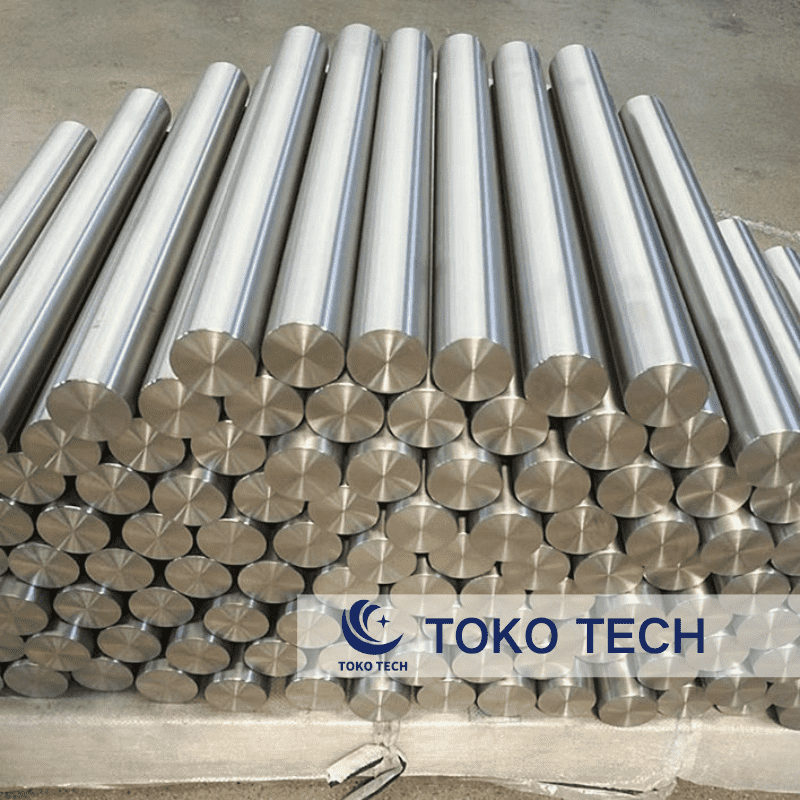
Складской запас сплава Nick 825
For aggressive chemical processing and offshore applications, our Nick Alloy 825 Bar Stock delivers uncompromising reliability.
- Material Composition: Nickel (38-46%), Iron (22% min), Chromium (19.5-23.5%), Molybdenum (2.5-3.5%), Copper (1.5-3.0%).
- Global Standards: Fully certified to ASTM B425, ASME SB425, and EN 10095.
- Dimensions: Diameter Range from Φ5mm to Φ250mm, available in Hot-rolled, Cold-Drawn, Turned, or Polished finishes (Ra≤1.6μm).
- Mechanical Integrity: Tensile Strength ≥586 MPa, Yield Strength ≥241 MPa, Elongation ≥30%.
Часто задаваемые вопросы (FAQ)
1. ASTM International – ASTM B425: Standard Specification for Ni-Fe-Cr-Mo-Cu Alloy (UNS N08825) Rod and Bar.
2. Американское общество инженеров-механиков (ASME): Boiler and Pressure Vessel Code (BPVC) defining stress limits for Alloy 800 and 825.
3. AMPP (formerly NACE International) – MR0175/ISO 15156: Materials for use in H2S-containing environments in oil and gas production.
 Russian
  English
  Spanish
  Turkish
  French
  Korean
  German
  Italian