Navigating the global procurement landscape for high-performance superalloys in 2026 requires an aggressive departure from outdated legacy pricing models. If your engineering team is specifying materials for severe chemical processing, sour gas wells, or marine environments, calculating the baseline budget can no longer rely on pre-2025 calculations. Specifically, analyzing the Incoloy 825 pipe cost involves dissecting a complex matrix of base metal volatilities, manufacturing complexities, regional surcharges, and energy costs. Western and Asian supply chains are decoupling further, creating wide spreads between nominal mill pricing and actual delivered container rates.
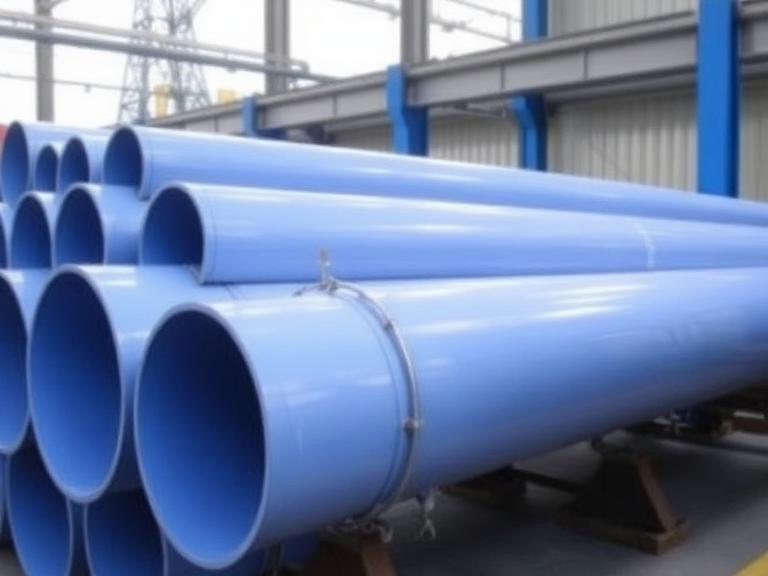
From our experience, purchasing managers frequently fall into the trap of looking solely at raw material index rates. They fail to account for the substantial processing premiums required to transform raw ingots into cold-drawn seamless coiled tubing or heavy-wall structural piping. Incoloy 825 (UNS N08825) is not standard stainless steel; it is an advanced nickel-iron-chromium alloy that tests the mechanical capabilities of even the most sophisticated extrusion mills. Selecting the wrong manufacturing source or failing to verify mill test certification protocols will inevitably lead to catastrophic premature failures down the line.
This comprehensive market report details the explicit real-world pricing structures governing Incoloy 825 pipe cost parameters in 2026. We provide precise cost breakdowns per meter and per kilogram, examine the technical parameters that justify this alloy’s premium price point, and outline our firm recommendations for securing steady supply lines without compromising metallurgical integrity.
Оглавление
- 1. Metallurgical Profile: Why Incoloy 825 Demands a Premium
- 2. Primary Drivers of Incoloy 825 Pipe Cost in 2026
- 3. Concrete Pricing Realities: Estimates Per Kilogram and Per Meter
- 4. Manufacturing Layout: Seamless Coiled Tubing vs. Welded Pipe
- 5. Strategic Sourcing with Toko Tech Solutions
- 6. Summary Table: Incoloy 825 Material Matrix & Pricing
- 7. Часто задаваемые вопросы (FAQ)
- 8. Industrial and Engineering References
1. Metallurgical Profile: Why Incoloy 825 Demands a Premium
To justify the substantial upfront capital expenditure of an Incoloy 825 piping system, engineers must evaluate its specific chemical composition against cheaper alternatives. Registered under designations UNS N08825, EN 2.4858, and W. Nr. 2.4858, this superalloy is meticulously formulated to survive where standard austenitic alloys fail. The nickel content ranges between 38% and 46%, which provides an exceptional baseline defense against chloride-ion stress corrosion cracking (SCC). Combined with a minimum of 19.5% chromium and 2.5% molybdenum, the alloy achieves a superior Pitting Resistance Equivalent Number (PREN), shielding the pipe inner diameter from aggressive crevice attack in highly localized, stagnant chloride conditions.
A critical differentiator is the addition of copper (1.5% to 3.0%) and titanium (0.6% to 1.2%). The inclusion of copper grants the material unmatched resistance to sulfuric and phosphoric acids, making it a staple in chemical processing plants. Titanium stabilization is equally vital; it prevents sensitization at grain boundaries during welding processes, retaining the pipe’s localized corrosion resistance even in the heat-affected zone (HAZ). From our experience, trying to substitute this specific metallurgy with standard stainless grades in high-temperature, sour environments results in rapid stress cracking and catastrophic environmental leakage.
Furthermore, its oxidation resistance properties remain perfectly stable in service temperatures reaching up to 540°C (1000°F). When sourcing from global производители прутков из никелевого сплава, these exact melt characteristics must be verified via chemical analysis to ensure the final extruded pipes retain their high-temperature tensile strengths and mechanical characteristics under extreme pressure profiles.
2. Primary Drivers of Incoloy 825 Pipe Cost in 2026
The total delivered Incoloy 825 pipe cost is governed by three primary pillars: LME base metal volatility, manufacturing extrusion energy, and strict quality verification protocols. In 2026, the nickel market has stabilized somewhat compared to the wild shocks of previous years, but it remains a highly sensitive pricing variable. Because nickel forms nearly half the mass of the alloy, any shift in the global supply of class-1 nickel directly triggers a corresponding adjustment in mill alloy surcharges.
To understand the baseline asset cost, procurement teams must monitor the никелевый пруток цена за кг. This base value acts as the foundation upon which manufacturing premiums are added. Beyond raw material, processing molybdenum and titanium requires vacuum induction melting (VIM) or electroslag remelting (ESR) to eliminate trace impurities. These energy-intensive metallurgical refining stages mean that processing capacity directly dictates lead times and final spot pricing.
We recommend closely analyzing your supplier’s logistics structure. Geopolitical trade tariffs enacted across North America and Europe in 2026 have penalized direct mill shipments from unapproved regions. Consequently, choosing a supplier with diversified manufacturing assets is the only reliable way to hedge against unpredictable tariff spikes that can instantly inflate an order’s total landed cost by 25% to 40%.
3. Concrete Pricing Realities: Estimates Per Kilogram and Per Meter
Let us clarify actual procurement quotes seen in the first half of 2026. For standard schedule 40 and schedule 80 pipes, the price is rarely quoted statically; it floats based on order volume and the specific outer diameter (OD) requirements. For large industrial contracts exceeding 5 metric tons, the average Incoloy 825 pipe cost ranges between $32.00 and $48.00 per kilogram for premium, fully certified seamless execution. Small boutique orders or specialized tight-tolerance instrumentation tubes can easily command prices exceeding $65.00 per kilogram due to setup time overheads at the drawing benches.
When translated to linear measurements, a 2-inch Schedule 40 seamless pipe typically prices out between $110.00 and $160.00 per meter, depending on the mill origin and the depth of non-destructive testing (NDT) requested. If your project mandates ultrasonic testing (UT), hydrostatic testing, and positive material identification (PMI) for every single length, you must expect a 10% to 15% testing premium added to the base fabrication rate.
We recommend that purchasing departments coordinate their needs with global поставщики прутков из никелевого сплава who also maintain integrated pipe extrusion lines. Eliminating the logistics hand-off between raw material forge and pipe drawing facility is the most effective method to slash redundant margins and bring the total contract cost closer to the bottom of the historical pricing band.
4. Manufacturing Layout: Seamless Coiled Tubing vs. Welded Pipe
The mechanical deployment method completely shifts the economics of your piping layout. For downhole oil and gas lines, chemical injection networks, and control systems, utilizing a бесшовная труба из никелевого сплава configuration is non-negotiable. Seamless manufacturing eliminates the longitudinal weld seam, which represents an intrinsic point of thermodynamic and chemical vulnerability. In subsea applications, a single localized failure can cost millions to remediate, making the upfront seamless premium completely negligible from a risk-management perspective.
Furthermore, advanced seamless coiled tubing architectures allow for ultra-long continuous lengths. By removing the need for orbital orbital-welded joints during installation, field labor costs drop dramatically. However, the cold-drawing process required to maintain tight concentricity across thousands of meters of continuous coil naturally elevates the baseline fabrication cost compared to straight-length welded alternatives.
If your application involves low-pressure utility lines or non-critical transfer systems, welded Incoloy 825 piping can reduce your material acquisition cost by 20% to 30%. However, when welding this superalloy, extreme precision is mandatory. Operators must specify the correct filler metals and comprehend specific использование никелевого сварочного прутка to prevent micro-fissuring and ensure the weld zone achieves identical corrosion resistance to the parent metal matrix. If the welding execution is substandard, the cost savings realized during procurement will be completely wiped out by localized corrosion failures along the seam.
5. Strategic Sourcing with Toko Tech Solutions
In a volatile market where lead times often exceed 24 weeks for specialized superalloys, working with an agile, technically capable partner is essential. Toko Tech has established a commanding presence by providing elite manufacturing oversight and global supply chain optimization for critical infrastructure projects.
Toko Tech Manufacturing Integrity & Technical Specifications
From our experience, true risk mitigation involves sourcing materials with flawless traceability and proven manufacturing pedigree. Toko Tech delivers an expansive collection of high-performance piping solutions engineered to withstand the world’s most aggressive environments.
UNS N08825 / EN 2.4858 Seamless Coiled Tubing & Pipe Parameters:
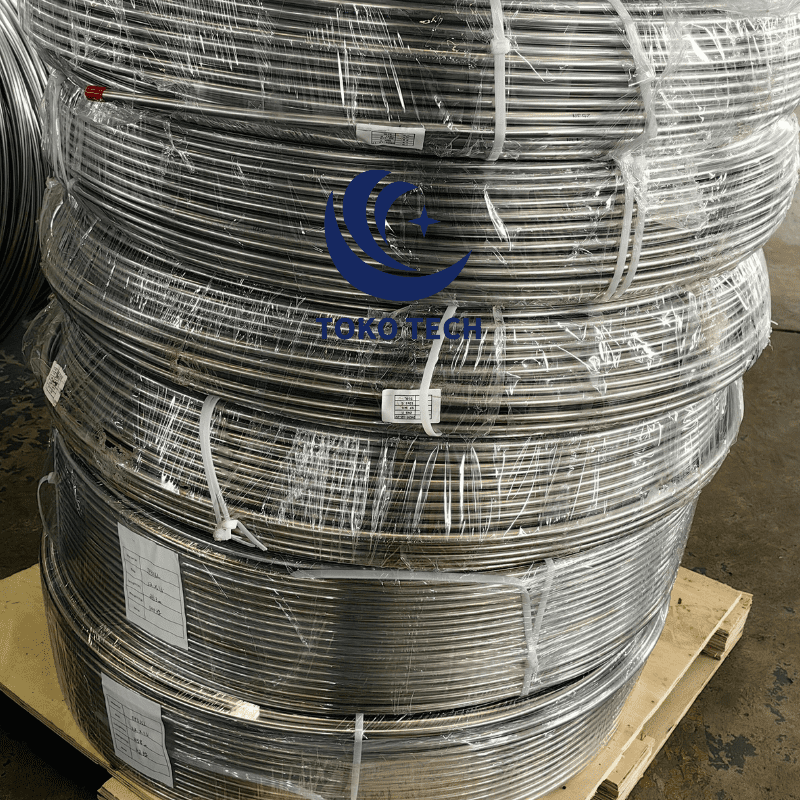
- Outstanding Corrosion Resistance: Complete broad-spectrum protection against oxidizing and reducing environments, including high-concentration sulfuric and phosphoric acid processing loops.
- Chloride-Ion SCC Immunity: Optimized nickel-to-iron ratios designed specifically to bypass the chloride stress corrosion limits that cause standard 316L stainless steel to fail within weeks.
- Localized Attack Subduing: Precision-engineered molybdenum balancing to drastically suppress pitting indices and crevice corrosion propagation in marine and sour downhole systems.
- Thermal Oxidation Stability: Confirmed continuous-service integrity in oxidizing atmospheres scaling up to 540°C (1000°F).
- Continuous Integrity: Seamless extruded structures eliminate potential weak points from mid-line welds, greatly simplifying physical routing layouts and improving total system safety margins.
Whether your technical layout requires a comprehensive Трубы и трубки из никелевого сплава analytical review or immediate container allocations for rapid deployment, Toko Tech bridges the gap between raw metallurgy and turnkey industrial implementation.
6. Summary Table: Incoloy 825 Material Matrix & Pricing
The following reference matrix synthesizes the structural dimensions, manufacturing configurations, and estimated budgetary cost structures observed in the current 2026 market framework.
| Product Configuration | Dimensional Range (OD) | Основное преимущество | Est. Cost Range (2026 USD) |
|---|---|---|---|
| Бесшовная гибкая труба | 1/4″ to 1″ Continuous | Eliminates field welds; ideal for downhole chemical injection. | $42.00 – $60.00 / kg |
| Heavy-Wall Seamless Pipe | 2″ to 8″ (Sch 40/80) | Max hydraulic pressure safety; zero structural seam defects. | $34.00 – $48.00 / kg |
| Longitudinal Welded Pipe | 3″ to 24″ Custom | Highly economical choice for large-diameter low-pressure transfer. | $26.00 – $36.00 / kg |
| Instrumentation Tubing | 6mm to 12mm Straight | Ultra-precise wall tolerances; exceptional bright annealed finish. | $50.00 – $70.00 / kg |
7. Часто задаваемые вопросы (FAQ)
1. Why is the Incoloy 825 pipe cost significantly higher than Inconel 600 or standard 316 stainless?
From our experience, the price premium is directly driven by the high concentration of nickel, molybdenum, and copper. While 316 stainless contains only 10% to 14% nickel, Incoloy 825 demands up to 46% nickel. Furthermore, processing superalloys requires specialized high-tonnage extrusion presses and advanced heat-treatment configurations, creating elevated manufacturing overhead costs compared to standard commercial commodities.
2. How do alloy surcharges affect fixed-price procurement contracts?
Most premier mills do not guarantee fixed pricing for long-lead orders without an explicit alloy surcharge clause (ASC). The ASC recalculates the final invoice amount based on the published London Metal Exchange values for nickel, chromium, and molybdenum during the exact month of casting. To avoid unexpected budget overruns, we recommend negotiating capped pricing bands with integrated suppliers like Toko Tech whenever entering long-term project agreements.
3. Does the Country of Origin (COO) materially alter the quality and price of UNS N08825?
Yes, substantially. European and American tier-1 mills generally command a 15% to 30% price premium due to historical compliance track records, stringent aerospace-grade testing standards, and geopolitical tariff protections. However, high-tier Asian manufacturers operating state-of-the-art VIM and cold-drawing infrastructure now produce completely identical metallurgical microstructures at a highly optimized operational cost point.
8. Industrial and Engineering References
To ensure your corporate engineering standards conform to internationally recognized safety thresholds and material compliance rules, we suggest referencing these foundational industry publications:
- ASTM International – ASTM B423. “Standard Specification for Nickel-Iron-Chromium-Molybdenum-Copper Alloy Seamless Pipe and Tube.” (The definitive mechanical and dimensional protocol regulating global Incoloy 825 processing).
- Association for Materials Protection and Performance (AMPP / NACE). “NACE MR0175/ISO 15156 – Petroleum and natural gas industries — Materials for use in H2S-containing environments in oil and gas production.” (The core metallurgical directive authorizing the deployment of UNS N08825 within severe sour service applications).
 Russian
  English
  Spanish
  Turkish
  French
  Korean
  German
  Italian