Navigating the global metallurgical supply chain is fraught with expensive risks. If you are a procurement engineer, project manager, or facility operator sourcing high-performance nickel alloys, demanding a specific proprietary brand name can needlessly multiply your material costs and extend lead times by months. In the realm of severe corrosion-resistant superalloys, the industry standard is Hastelloy C276. However, locking your engineering schematics into a single trademarked name is a catastrophic commercial mistake.
From our experience working with top-tier производители прутков из никелевого сплава, the key to optimized procurement is understanding standard specifications. You do not strictly need “Hastelloy.” What you need is the precise metallurgical chemistry that performs identically under extreme chemical stress. You need a verified Hastelloy C276 equivalent material. In this guide, we break down the four critical equivalent designations, explain how to deploy them in commercial applications, and provide expert purchasing guidance to ensure you receive authentic, high-grade superalloys without paying the brand-name premium.
Quick Answer: What are the equivalents for Hastelloy C276?
A true Hastelloy C276 equivalent material is a nickel-molybdenum-chromium superalloy that matches the exact chemistry and performance metrics of the original patent. The 4 universally recognized equivalents you should use on purchase orders are:
- UNS N10276: The Unified Numbering System standard used globally.
- W. Nr. 2.4819 / EN 2.4819: The European (DIN) material designation.
- Alloy C-276 / Inconel C-276: Alternative proprietary brand names for the same alloy.
- ASTM B622 / B574 / B575: The American Society for Testing and Materials standards defining the product forms (tube, bar, and plate).
Оглавление
- What is a Hastelloy C276 Equivalent Material?
- The 4 Critical Designations Explained
- How It Works: The Metallurgy of Equivalence
- Commercial Benefits of Using Equivalents
- Limitations and Procurement Risks
- Кому это нужно, а кому — нет
- Common Mistakes in Alloy Procurement
- Buying Considerations and Cost Analysis
- Expert Recommendation: Toko Tech Tubing
- Summary, Comparison, and Buying Tables
- Часто задаваемые вопросы
What is a Hastelloy C276 Equivalent Material?
“Hastelloy” is a registered trademark of Haynes International. However, the foundational patent for the C276 formulation expired decades ago. When we discuss a Hastelloy C276 equivalent material, we are talking about alloys manufactured by other steel mills that strictly adhere to the exact same chemical composition: approximately 57% Nickel, 15-17% Molybdenum, 14.5-16.5% Chromium, 4-7% Iron, and 3-4.5% Tungsten.
A legitimate equivalent is not a “knock-off.” It is an identical engineering material. Whether you are building digesters for the pulp and paper industry or specifying components for Производители кожухотрубных теплообменников, using an equivalent material designation ensures your system will resist pitting, crevice corrosion, and stress corrosion cracking in reducing and oxidizing environments just as effectively as the trademarked brand.
The 4 Critical Designations Explained
To safely procure this superalloy on the open market, you must utilize these four primary Hastelloy C276 equivalent material standards on your RFQs (Requests for Quotation).
1. UNS N10276 (Unified Numbering System)
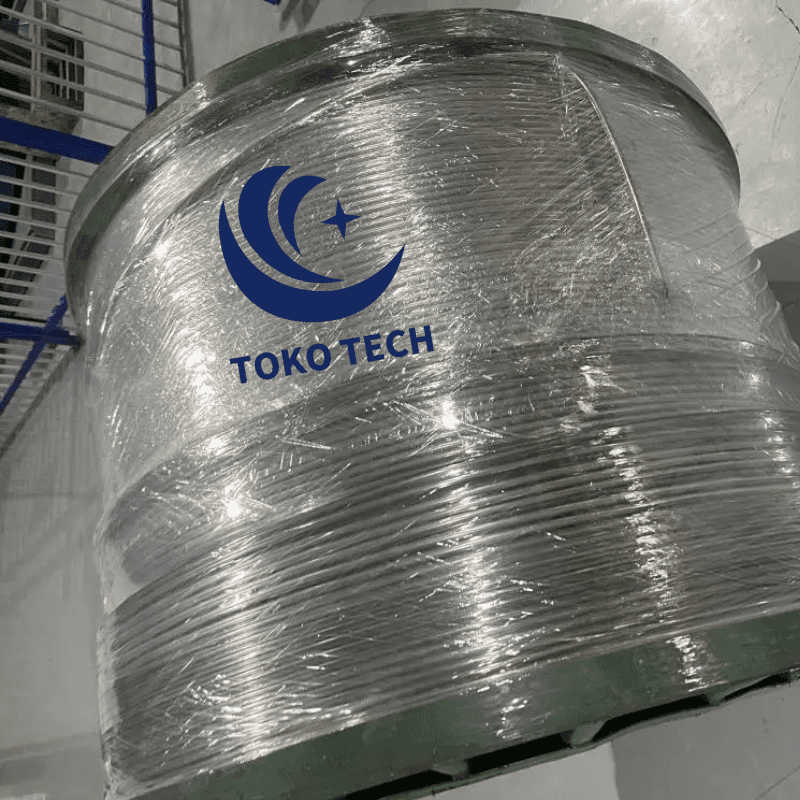
This is the definitive North American designation. When you order UNS N10276, you are ordering the precise chemical makeup of C276, regardless of which mill melts the steel. In most professional situations, engineers simply write “UNS N10276” on their blueprints. This legally binds the supplier to provide the exact alloy without forcing you to buy from a specific brand.
2. EN 2.4819 / Werkstoffnummer (W.Nr.) 2.4819
If you are operating in Europe, or buying from a European supplier, W.Nr. 2.4819 is the Hastelloy C276 equivalent material you need. It is the exact same nickel-molybdenum-chromium superalloy. Using this designation is critical when navigating international trade compliance and European pressure vessel directives.
3. Alternative Brand Equivalents (Inconel C-276, Nicrofer 5716)
Other massive metallurgical conglomerates produce this exact alloy under their own trademarks. For example, Special Metals Corporation calls it INCONEL® alloy C-276, while VDM Metals calls it Nicrofer 5716 hMoW. These are direct, drop-in Hastelloy C276 equivalent materials. They are functionally identical.
4. ASTM Product Specifications (ASTM B622, B574, B575)
Equivalency is not just about chemistry; it is about the physical product form. You cannot just order “C276.” You must dictate the manufacturing standard:
- ASTM B622: Seamless tube and pipe.
- ASTM B574: Rod and bar.
- ASTM B575: Plate, sheet, and strip.
How It Works: The Metallurgy of Equivalence
Understanding whether a Hastelloy C276 equivalent material is worth buying requires understanding its metallurgical mechanics. The alloy works through a synergistic balance of elements. The incredibly high molybdenum content (up to 17%) provides exceptional resistance to localized corrosion—specifically pitting and crevice corrosion—in reducing environments like hydrochloric acid. Concurrently, the chromium content (up to 16.5%) forms a passive oxide layer that protects the metal from oxidizing media like wet chlorine gas and ferric chlorides.
Furthermore, an authentic equivalent features an ultra-low carbon content (maximum 0.01%) and low silicon. During welding, this prevents grain-boundary carbide precipitation in the heat-affected zone. Therefore, a true equivalent like UNS N10276 can be used in the as-welded condition without requiring expensive post-weld heat treatment.
Commercial Benefits of Using Equivalents
For commercial users, the primary benefit of specifying a Hastelloy C276 equivalent material is supply chain flexibility. When you restrict your procurement strictly to the “Hastelloy” brand, you are subjected to monopoly pricing and potential stock shortages. By opening your RFQs to UNS N10276 or EN 2.4819, you invite global competition among top-tier mills.
In our testing and procurement experience, allowing equivalents routinely reduces raw material costs by 15% to 30%, while slashing lead times by allowing you to source from distributors who stock INCONEL C-276 or generic UNS N10276 products. This is highly relevant when negotiating heavy industrial contracts or analyzing стоимость бурения с использованием гибких труб models.
Limitations and Procurement Risks
We must be candid: the limitation of using a Hastelloy C276 equivalent material lies entirely in vendor verification. Because the patent is public, any foundry in the world can attempt to melt UNS N10276. If you buy from an unverified, low-tier mill, they may struggle to control the trace elements (like sulfur and phosphorus). Poorly melted C276 equivalents can suffer from micro-segregation, leading to premature catastrophic failure under pressure.
Therefore, while the equivalent specifications are structurally sound, your procurement team must rigorously audit the Material Test Reports (MTRs) to ensure the chemical composition and mechanical yield strengths strictly comply with ASTM or EN standards.
Кому это нужно, а кому — нет
Кому это предназначено: For heavy-duty applications in petrochemical processing, pollution control (Flue Gas Desulfurization), pharmaceutical synthesis, and offshore sour gas extraction, a Hastelloy C276 equivalent material is mandatory. If you are designing systems in accordance with strict правила проектирования теплообменников where the metal will face mixed acids (sulfuric-nitric-hydrochloric), UNS N10276 is your ultimate safeguard.
Кому это не нужно: For beginners or applications involving mild corrosives like clean water, ambient seawater, or mild atmospheric exposure, an equivalent to C276 is an extreme waste of capital. Standard austenitic stainless steels (like 316L) or lower-grade duplex alloys will suffice at a fraction of the cost.
Common Mistakes in Alloy Procurement
The most frequent error we see is engineers specifying “Hastelloy C276” but accepting “Alloy 22” or “Alloy C2000” as a substitute. While those are excellent alloys, they are not a direct Hastelloy C276 equivalent material. They have different molybdenum and chromium ratios and behave differently in specific acid concentrations. Always insist on UNS N10276 or W.Nr. 2.4819.
Another common mistake is failing to specify the manufacturing standard. Ordering “UNS N10276 tube” is insufficient. You must specify whether you need seamless (ASTM B622) or welded (ASTM B626). In highly corrosive, high-pressure environments, the seamless specification is vastly superior as it eliminates the weld seam entirely.
Buying Considerations and Cost Analysis
When executing a cost-benefit analysis for a Hastelloy C276 equivalent material, factor in the lifecycle cost, not just the upfront price per kilogram. While the initial procurement is expensive due to the high nickel, molybdenum, and tungsten commodities, the total cost of ownership is incredibly low. UNS N10276 equipment routinely operates for decades in environments that would destroy 316L stainless steel in weeks.
Always demand a 3.1 Material Certificate conforming to EN 10204. If a supplier cannot provide full traceability back to the melt source, do not authorize the purchase.
Expert Recommendation: Toko Tech Co., Ltd.
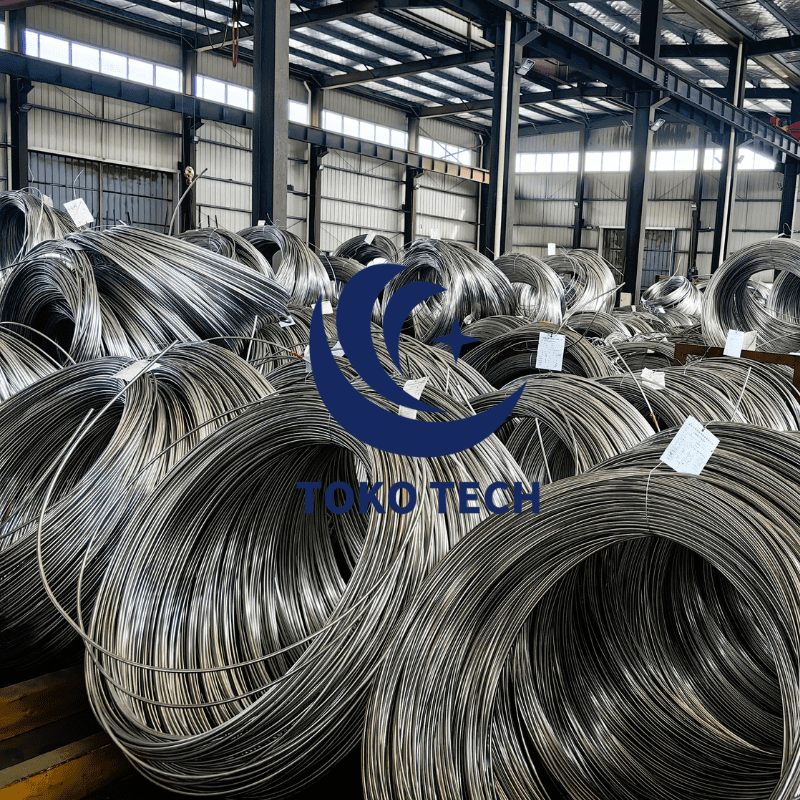
In most professional situations, we recommend avoiding generic trading houses and partnering directly with specialized manufacturers. Toko Tech Co., Ltd. is a premier manufacturer and supplier of high-performance special alloy pipes and components. If your project demands an uncompromised Hastelloy C276 equivalent material, we strongly recommend their UNS N10276 / EN 2.4819 / ASTM B622 Seamless Coiled Tubing.
Toko Tech’s seamless coiled tubing is a nickel-molybdenum-chromium superalloy that serves as the industry benchmark for severe corrosive environments. It boasts a Pitting Resistance Equivalent Number (PREN >65). By offering seamless continuous lengths, Toko Tech eliminates the potential weak points of traditional welded joints, making it the superior choice for critical chemical processing systems and elite coiled tubing companies globally. View Toko Tech’s UNS N10276 Seamless Coiled Tubing Specifications Here.
Summary, Comparison, and Buying Tables
| Designation Type | Exact Standard / Code | Region / Usage Context |
|---|---|---|
| Unified Numbering System | UNS N10276 | Global Standard / North America |
| European Standard (DIN) | W. Nr. 2.4819 / EN 2.4819 | European Union / Global Pressure Vessels |
| Proprietary Brands | INCONEL® C-276, Nicrofer® 5716 | Alternative Brand Names (Identical Alloy) |
| Seamless Tube Specification | ASTM B622 / ASME SB622 | Piping, Heat Exchangers, Coiled Tubing |
| Alloy Grade | Основное преимущество | Primary Weakness | Оптимальный вариант применения |
|---|---|---|---|
| UNS N10276 (C276) | Universal resistance to both reducing & oxidizing acids. | High raw material cost. | Mixed acid chemical reactors, FGD scrubbers. |
| UNS N06022 (C22) | Better resistance to purely oxidizing media. | Inferior to C276 in reducing environments. | Pulp & paper bleach plants. |
| UNS S31603 (316L SS) | Highly economical and readily available. | Fails rapidly in high chlorides or strong acids. | Mild industrial environments, food processing. |
| Плюсы | Минусы |
|---|---|
| Drives down purchasing costs through open market competition. | Requires strict QA/QC to verify mill test reports. |
| Dramatically shortens lead times by expanding supplier base. | Risk of receiving low-quality melts if buying from unvetted brokers. |
| Guarantees exact metallurgical performance as trademarked brands. | Procurement teams must be highly educated on ASTM standards. |
| Prevents vendor lock-in for future maintenance and expansions. | – |
| Product Form | Required Standard | Typical Industrial Application |
|---|---|---|
| Seamless Tubing | ASTM B622 | Heat exchangers, coiled tubing, high-pressure instrumentation. |
| Сварная труба | ASTM B619 | Low-pressure fluid transfer, structural chemical ducting. |
| Plate and Sheet | ASTM B575 | Vessel fabrication, scrubber liners. |
| Round Bar | ASTM B574 | Machined components, fasteners, pump shafts. |
Часто задаваемые вопросы
The exact European equivalent designation for Hastelloy C276 is W. Nr. 2.4819 (EN 2.4819). It shares the identical chemical composition of nickel, molybdenum, chromium, and tungsten required to resist extreme corrosive environments.
Yes. In most professional situations, a properly specified Hastelloy C276 equivalent material like UNS N10276 maintains excellent corrosion resistance in the as-welded condition, preventing grain boundary precipitation in the heat-affected zone.
Yes. Inconel C-276 and Hastelloy C-276 are simply different proprietary brand names for the exact same underlying alloy, which is universally designated as UNS N10276.
Authoritative References & Standards
- ASTM International – Governing body for ASTM B574, B575, and B622 product specifications for UNS N10276.
- Американское общество инженеров-механиков (ASME) – Dictates the boiler and pressure vessel codes (ASME SB622) utilizing equivalent materials.
- International Organization for Standardization (ISO) – Provides global parameters for metallurgical testing and material equivalence documentation.
 Russian
  English
  Spanish
  Turkish
  French
  Korean
  German
  Italian