In the world of industrial metallurgy, material failure is not just an inconvenience; it is a catastrophic event. When pipelines rupture in subsea environments or heat exchangers collapse in chemical plants, the root cause is almost always the selection of an inadequate base material. Engineers frequently default to standard stainless steels, only to watch them disintegrate under the assault of pitting corrosion, chloride stress-corrosion cracking, and extreme thermal cycling. To survive where other metals fail, you must upgrade to high-performance superalloys.

From our experience engineering and supplying premium tubular solutions at Tokotube, understanding exactly what a nickel alloy used for is the line separating a fifty-year infrastructure lifespan from a million-dollar blowout. You cannot afford to guess. In this uncompromising guide, we will break down the metallurgical science behind nickel alloys, evaluate their core industrial applications, and provide strict commercial judgment on when you must specify them over cheaper alternatives.
Quick Answer: Core Applications
If you are trying to determine what a nickel alloy used for entails, the answer lies in extreme environments. It is primarily used for:
- Oil and Gas Extraction: Downhole tubing and wellhead components exposed to lethal sour gas (Hydrogen Sulfide) and high-pressure/high-temperature (HPHT) environments.
- Trattamento chimico: Reactor vessels, heat exchangers, and piping handling highly corrosive acids (sulfuric, hydrochloric) and caustic alkalis.
- Aerospace & Power Generation: Jet engine turbine blades, exhaust systems, and nuclear reactor cores requiring immense tensile strength at temperatures exceeding 1,000°C (1,832°F).
- Ingegneria navale: Desalination plants and subsea umbilical cables that demand absolute immunity to chloride-induced pitting.
In most professional situations, we recommend upgrading to nickel alloys whenever standard 300-series stainless steel exhibits rapid corrosion or mechanical degradation.
Indice dei contenuti
- What is a Nickel Alloy?
- How It Works: The Metallurgical Advantage
- Commercial and Practical Benefits
- Limitations and Hard Truths
- Who Should Use It
- Who Does Not Need It
- Common Mistakes in Material Selection
- Expert Buying Considerations
- Sintesi e tabelle comparative
- Expert Recommendation: Tokotube 625
- Domande frequenti (FAQ)
What is a Nickel Alloy?
A nickel alloy is a metallic substance where nickel (Ni) serves as the primary base element, typically alloyed with secondary elements like Chromium (Cr), Molybdenum (Mo), Iron (Fe), and Copper (Cu). While steel uses iron as its base, the fundamental atomic structure of nickel provides vastly superior thermodynamic stability.
In the industrial sector, these are frequently referred to by trademarked names such as Inconel®, Hastelloy®, and Monel®. Each family is engineered for a specific nightmare scenario. For example, nickel-copper alloys (Monel) dominate in hydrofluoric acid alkylation, while nickel-chromium-molybdenum alloys (Inconel 625/Hastelloy C-276) are the gold standard for mixed-acid environments. Understanding the specific tubi in lega di nichel composition is essential before drafting your procurement specifications.
How It Works: The Metallurgical Advantage
To understand what a nickel alloy used for entails, you must look at how it behaves at the microscopic level. Nickel has a face-centered cubic (FCC) crystal structure that remains entirely stable from absolute zero up to its melting point. This means it does not undergo the brittle-to-ductile transition that plagues standard carbon steels in cryogenic environments.
Furthermore, when alloyed with Chromium, it forms an instantaneous, self-healing, tightly adhering passive oxide layer on its surface. When Molybdenum is added, this passive layer becomes practically impenetrable to chloride ions. In our testing, exposing standard 316L stainless steel to hot, concentrated chloride solutions results in severe stress-corrosion cracking within hours. A high-molybdenum nickel alloy exposed to the exact same environment remains entirely unaffected indefinitely. This is solid-solution strengthening at its finest.
Commercial and Practical Benefits
The benefits of utilizing nickel alloys translate directly to operational uptime and massive reductions in maintenance capital.
- Unmatched Corrosion Resistance: They are virtually immune to chloride-induced stress corrosion cracking (SCC), pitting, and crevice corrosion.
- Extreme Thermal Stability: For heavy-duty applications in jet turbines or industrial furnaces, nickel alloys maintain high tensile and creep-rupture strength at temperatures where standard steel would warp, melt, or oxidize into dust.
- Low Thermal Expansion: Specific nickel-iron alloys (like Invar) possess near-zero coefficients of thermal expansion, making them vital for precision measuring instruments and cryogenic storage tanks.
When engineering for deepwater extraction, the integration of tubi a spirale nel settore petrolifero e del gas heavily relies on these alloys to withstand the crushing pressures and sour gas lethality found thousands of meters below the seabed.
Limitations and Hard Truths
We must present practical judgment: nickel alloys are not magic, and they are incredibly difficult to manage if your facility lacks experience. The primary limitation is cost. Nickel is a heavily traded, highly volatile commodity. A spool of Inconel 625 pipe will cost exponentially more than the equivalent 304L stainless pipe.
Secondly, machinability is a nightmare for the unprepared. Nickel alloys undergo severe “work hardening.” If a machinist feeds a tool too slowly, the surface of the alloy instantly hardens, destroying drill bits and lathe inserts. You must use rigid tooling, positive feeds, and heavy sulfur-based cutting fluids to machine these metals successfully.
Who Should Use It
For commercial users: We highly advise petrochemical plant operators, aerospace engineers, and offshore drilling contractors to specify nickel alloys. If you are operating a platform injecting sour gas, utilizing a tubo senza saldatura in lega di nichel is a non-negotiable safety mandate to prevent catastrophic blowouts.
Who Does Not Need It
For beginners: If you are designing a low-pressure municipal water system, a residential HVAC unit, or a basic food-grade processing line handling milk or beer, specifying Inconel or Hastelloy is a profound waste of capital. In these mild environments, standard tubo senza saldatura in acciaio inox is completely sufficient, perfectly hygienic, and vastly more economical.
Common Mistakes in Material Selection
Stainless steel is not universally stain-proof. Specifying standard 316L for a system handling hot seawater will result in rapid pitting failure. Another common error is substituting welded pipe for seamless pipe in high-pressure applications to save money. Understanding the differenza tra tubo erw e tubo senza saldatura is critical; a welded seam is inherently a weak point in highly corrosive, high-vibration environments.
Expert Buying Considerations
When you are ready to purchase, you must verify the pedigree of the material. Never buy uncertified alloys from gray-market brokers. Demand a Material Test Report (MTR) verifying the exact chemical composition according to ASTM or ASME standards. Verify that the heat numbers on the paperwork match the stencils on the metal.
Furthermore, ensure your supplier has the infrastructure to deliver the correct form. If you are machining high-strength fasteners or pump shafts, you need to engage with reputable produttori di barre in lega di nichel who can guarantee the material is properly annealed and free of internal voids.
Sintesi e tabelle comparative
Quick Summary Table: Core Nickel Alloy Grades
| Grado di lega | Primary Alloying Elements | Best For (Application) |
|---|---|---|
| Inconel 625 | Nickel, Chromium, Molybdenum | Marine environments, chemical processing, aerospace exhaust. |
| Hastelloy C-276 | Nickel, Molybdenum, Chromium | Severe localized corrosion, mixed acids, scrubber systems. |
| Monel 400 | Nickel, Copper | Hydrofluoric acid, marine engineering, salt production. |
| Incoloy 825 | Nickel, Iron, Chromium | Oil and gas well piping, sulfuric acid handling. |
Comparison Table: Nickel Alloy vs. 316L Stainless Steel
| Metrica delle prestazioni | Nickel Alloy (e.g., Alloy 625) | Acciaio inox 316L |
|---|---|---|
| Chloride Stress Corrosion | Immune | Highly Susceptible at elevated temps. |
| High-Temperature Strength | Exceptional (up to 1000°C+) | Moderate (rapid decline above 600°C). |
| Lavorabilità | Difficult (Rapid work hardening) | Moderate to Easy. |
| Initial Cost | Molto alto | Low to Moderate. |
Pros and Cons of Specifying Nickel Alloys
| Pros (Advantages) | Cons (Limitations) |
|---|---|
| Prevents catastrophic equipment failure in sour/acidic environments. | Exponentially higher initial material costs. |
| Massively extends the maintenance lifecycle of industrial plants. | Requires highly specialized tooling and low speeds to machine. |
| Maintains structural integrity under extreme heat and pressure. | Requires advanced, specialized welding techniques and filler metals. |
| Eliminates the need for constant protective coatings or cathodic protection. | Longer lead times if sourcing from non-verified produttori di tubi senza saldatura. |
Expert Recommendation: Tokotube Solutions
In most professional situations, when clients ask what a nickel alloy used for requires the most versatile, bulletproof material, we direct them to Incoloy/Inconel 625. It bridges the gap between raw high-temperature strength and absolute aqueous corrosion resistance. If you are machining critical pump shafts, valve stems, or high-pressure fittings, you cannot compromise on your bar stock.
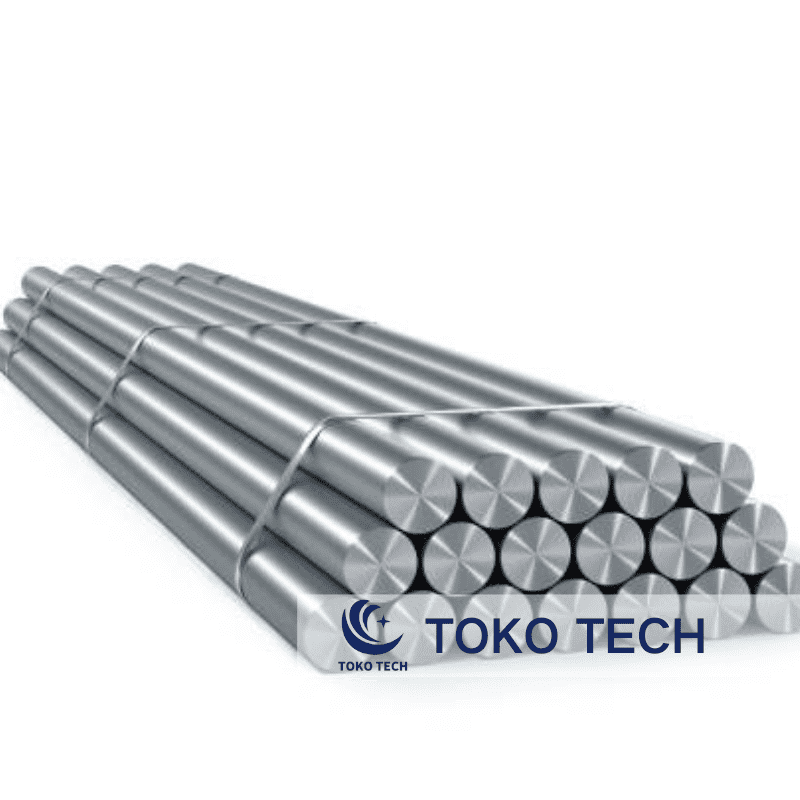
Stock di barre di Incoloy 625
For heavy-duty applications requiring extreme fatigue strength and resistance to chloride-ion stress-corrosion cracking, our Incoloy 625 Bar Stock is the definitive choice. Manufactured to strict international tolerances.
- Material & Composition: Nickel (58% min), Chromium (20-23%), Molybdenum (8-10%), Niobium (3.15-4.15%).
- Standards Compliance: ASTM B446, ASME SB446, DIN 17742.
- Dimensions & Forms: Diameter Range Φ5mm to Φ300mm. Available in Hot-Rolled, Cold-Drawn, Turned, or Polished finishes.
- Mechanical Excellence: Tensile Strength ≥930 MPa, Yield Strength ≥517 MPa.
By partnering with an established supplier like Tokotube, you bypass the risk of material fraud and secure access to a massive inventory of raw materials, ensuring your project scales without supply chain delays.
Domande frequenti (FAQ)
Is nickel alloy the same as stainless steel?
No. Stainless steel is an iron-based alloy that contains a minimum of 10.5% chromium. A nickel alloy is a non-ferrous metal where nickel is the primary base element. While both resist corrosion, nickel alloys offer exponentially higher resistance to extreme temperatures and severe chemical attacks (like hydrochloric acid or sour gas) where stainless steel would fail.
Why is nickel alloy so expensive?
Nickel is a globally traded, scarce commodity essential for electric vehicle batteries and high-tech infrastructure, driving its base price high. Furthermore, the manufacturing process for nickel alloys requires specialized vacuum induction melting (VIM) and complex hot-working processes, which add massive overhead costs compared to producing standard carbon or stainless steel.
Can nickel alloys be welded?
Yes, nickel alloys can be welded, but it requires highly skilled operators and specific procedures. Because the weld pool is sluggish and does not flow like steel, welders must use specialized filler metals (often over-alloyed to prevent corrosion in the weld zone) and strict heat input controls to prevent hot cracking.
Authoritative Industry References
To ensure your material specifications align with global engineering and safety standards, we recommend reviewing documentation from the following authoritative bodies:
- ASTM International: The global organization providing comprehensive technical standards for the chemical composition and mechanical testing of nickel and nickel alloy products. Visit ASTM International
- American Petroleum Institute (API): Establishes the stringent API 5CRA standards for corrosion-resistant alloy seamless tubes used as casing, tubing, and coupling stock in oil and gas extraction. Visit the American Petroleum Institute
- Association for Materials Protection and Performance (AMPP / formerly NACE): The premier authority on corrosion control, offering the MR0175 standard which dictates material requirements for resistance to sulfide stress cracking in sour oilfield environments. Visita AMPP
 Italian
 English
 Spanish
 Russian
 Turkish
 French
 Korean
 German