In the industrial sectors of oil and gas, chemical processing, and power generation, a catastrophic pressure failure is not merely an inconvenience—it is a lethal liability. For decades, engineers have debated the merits of welded versus seamless piping. The reality is simple: the weakest point of any pressure vessel or piping system is always the weld. When dealing with extreme temperatures, corrosive fluids, or ultra-high pressures, the structural homogeneity of a seamless tube is entirely non-negotiable. But how exactly are these critical components forged from solid metal?

From our experience engineering and supplying high-performance metallurgy globally at Tokotube, understanding the precise ways seamless tubes manufactured today meet stringent tolerances is essential for any procurement or engineering professional. The manufacturing process directly dictates the material’s mechanical properties, concentricity, and ultimate failure thresholds. In this comprehensive guide, we will break down the commercial and practical realities of seamless tube production, helping you specify the right product for your critical applications.
Quick Answer: How It Works
Seamless tubes are manufactured without any welding or longitudinal seams. The process begins with a solid cylindrical steel billet. The billet is heated to extreme temperatures (often exceeding 1200°C) and pierced through the center using a rotary piercing mill (Mannesmann process) or pushed through a die using an extrusion press. The resulting hollow shell is then elongated, rolled over a mandrel to achieve the desired outer diameter and wall thickness, and finally cold-drawn or pilgered to achieve precise dimensional tolerances and surface finishes. This unbroken, homogenous structure provides unparalleled strength and pressure resistance.
Indice dei contenuti
- What is a Seamless Tube?
- How It Works: The Manufacturing Process
- The Engineering Benefits
- Limitations to Consider
- Pros and Cons of Seamless Tubes
- Comparison Table: Piercing vs. Extrusion
- Who Should Use It
- Who Does Not Need It
- Common Specification Mistakes
- Expert Buying Considerations
- Tokotube Expert Recommendation
- Domande frequenti (FAQ)
What is a Seamless Tube?
A seamless tube is exactly what its name implies: a continuous, uninterrupted tubular cross-section of metal. Unlike Electric Resistance Welded (ERW) or Submerged Arc Welded (SAW) pipes, which are formed by rolling a flat steel plate into a cylinder and welding the seam, seamless tubes are formed from a single, solid piece of steel. This structural continuity means there is no metallurgical weak point, no heat-affected zone (HAZ) from a welding arc, and no seam susceptible to galvanic corrosion.
In most professional situations, engineers specify seamless over welded tubing when the calculation for bursting pressure exceeds the safe operating limits of a welded seam, or when the media being transported is highly corrosive.
How It Works: The Manufacturing Process
The precise method by which seamless tubes manufactured for heavy industry are produced determines their metallurgical grain structure. At Tokotube, we oversee two primary methods depending on the alloy: Rotary Piercing and Hot Extrusion.
1. Billet Preparation and Heating
The process always begins with a solid, round steel billet cast to a specific metallurgical chemistry. The billet is cut to length and fed into a rotary hearth furnace. It is heated uniformly to its plastic deformation temperature—usually between 1200°C and 1300°C for stainless and duplex steels. Uniform heating is critical; uneven temperatures will cause the piercing point to drift off-center, ruining the tube’s concentricity.
2. The Piercing Stage (Mannesmann Process)
For standard carbon and most stainless steels, rotary piercing is the standard. The white-hot billet is pushed between two heavy, barrel-shaped rolls rotating in the same direction. These rolls grip the billet and spin it rapidly while pushing it forward over a stationary piercing plug (mandrel) positioned at the center. The extreme rotational forces cause the center of the solid billet to tear open slightly, and the plug forces its way through, creating a hollow “bloom.”
3. Hot Extrusion (For Difficult Alloys)
In our testing, highly alloyed materials like Titanium, Inconel, or high-nickel Super Duplex stainless steels cannot withstand the twisting forces of rotary piercing without cracking. Instead, we use Hot Extrusion. The heated billet is placed in a massive hydraulic press. A ram forces a mandrel through the center of the billet, and then the entire hollowed billet is pushed through a die. This extrudes the metal into a tube, much like pushing play-dough through a shaped mold.
4. Elongation and Sizing (Cold Pilgering / Drawing)
The initial hollow shell is thick, short, and rough. To achieve the final dimensions required for precise applicazioni dei tubi concentrici, the tube must be elongated. It is rolled through a mandrel mill to reduce wall thickness. For critical applications, the tube undergoes Cold Pilgering or Cold Drawing. This involves pulling the tube through a die and over an internal plug at room temperature. Cold working significantly increases the yield strength of the material, tightens dimensional tolerances to fractions of a millimeter, and provides a mirror-smooth surface finish.
5. Heat Treatment and Testing
Cold working induces internal stresses. To restore ductility and maximize corrosion resistance, the tubes undergo bright annealing or solution annealing. Finally, they are subjected to rigorous non-destructive testing (NDT), such as hydrostatic testing, ultrasonic inspection, and eddy current testing.
The Engineering Benefits
Why pay the premium for seamless manufacturing? The benefits are structurally undeniable.
- Maximum Pressure Tolerance: Without a weld seam, the burst pressure rating is perfectly uniform around the entire circumference. Seamless tubes typically boast a 20% higher working pressure capability than welded tubes of the same dimensions.
- Resistenza alla corrosione: A weld seam has a different micro-structure than the base metal, making it a prime target for localized pitting or crevice corrosion. Seamless tubes offer a homogenous grain structure, critical for sour gas (H2S) or chloride-rich environments.
- Consistency for Fabrication: When manufacturing complex prodotti a tubi alettati or bending U-tubes, a seamless tube behaves predictably. Welded tubes can split at the seam during tight-radius bending.
Limitations to Consider
We believe in commercial and practical judgment: seamless is not perfect for every scenario.
The primary limitation is eccentricity. Because the piercing process relies on physics to find the center of the billet, the wall thickness can vary slightly around the circumference (typically ±10%). Welded tubes, made from rolled steel plate, have perfectly uniform wall thickness. Additionally, manufacturing seamless tubing in massive diameters (over 24 inches) becomes incredibly difficult and prohibitively expensive. Finally, seamless straight tubes are constrained by the length of the drawing bench (usually maxing out around 20-30 meters) unless specialized coiled drawing techniques are employed.
Pros and Cons of Seamless Tubes
| Pros (Advantages) | Cons (Disadvantages) |
|---|---|
| Exceptional high-pressure capabilities (no weld seam failure point). | Higher initial procurement cost compared to ERW/Welded alternatives. |
| Homogenous microstructure offers superior overall corrosion resistance. | Wall thickness eccentricity (variation) can be up to ±10%. |
| Highly reliable during secondary fabrication (U-bending, finning, flaring). | Limited availability in extreme outer diameters (e.g., > 24 inches). |
| Meets the strictest ASME and ASTM codes for critical infrastructure. | Long procurement lead times for specialized exotic alloys. |
Comparison Table: Rotary Piercing vs. Hot Extrusion
| Manufacturing Method | Best Suited Materials | Process Characteristics | Typical Application |
|---|---|---|---|
| Rotary Piercing (Mannesmann) | Carbon Steel, Low-Alloy Steel, Standard Austenitic Stainless (304/316) | Fast production rate, highly efficient, utilizes rotational tearing forces. | Standard structural piping, oil country tubular goods (OCTG), standard heat exchangers. |
| Hot Extrusion | Titanium, Nickel Alloys (Inconel), Super Duplex, High-Alloy Steels | Slower production, pushes metal through a die via immense hydraulic pressure. | Harsh chemical processing, extreme high-temperature boilers, aerospace tubing. |
Who Should Use It
We recommend seamless tubing exclusively for heavy-duty applications. If you operate in the offshore oil and gas sector, petrochemical refining, or nuclear power generation, seamless is the gold standard. Elite produttori di tubi per scambiatori di calore rely on seamless stainless and duplex steel to guarantee decades of operation without tube sheet leaks.
Furthermore, seamless coiled tubing is mandatory for downhole interventions. Top aziende specializzate in tubi a spirale utilize seamless lines to inject chemicals or perform milling operations thousands of feet underground, where a weld failure would result in millions of dollars in retrieval costs.
Who Does Not Need It
For beginners or non-critical commercial users, specifying seamless tubing can be a massive waste of capital. Do not use seamless tubes for low-pressure water lines, basic structural handrails, aesthetic architectural features, or standard HVAC chilled water piping. In these low-stress scenarios, high-quality welded (ERW) piping will perform identically at a fraction of the cost.
Common Specification Mistakes
In most professional situations, the biggest mistake procurement teams make is failing to specify the manufacturing standard. Simply asking for “Seamless 316L” is insufficient. You must specify whether it is for general service (ASTM A312) or for highly demanding heat exchangers (ASTM A213). These standards dictate the non-destructive testing requirements.
Another common error is ignoring the mechanical limits outlined in norme di progettazione degli scambiatori di calore. Engineers sometimes fail to account for the ±10% wall thickness tolerance inherent to seamless manufacturing. If you design your system based on the *nominal* wall thickness rather than the *minimum* wall thickness, your tube may burst under peak operating pressures.
Expert Buying Considerations
When purchasing seamless tubing, evaluate the manufacturer’s testing capabilities. Do they perform 100% Eddy Current or Ultrasonic Testing on their cold-drawn tubes? If you are buying from leading produttori di scambiatori di calore a fascio tubiero, they will demand comprehensive Material Test Reports (MTRs) validating the chemical composition, yield strength, and NDT results of the exact batch of tubes supplied.
For operations requiring immense lengths without orbital welds, evaluating costo della perforazione con tubi a spirale models is critical. Seamless coiled tubing provides thousands of continuous meters, mitigating joint failures entirely.
Tokotube Expert Recommendation
From our experience, standard seamless tubing is sufficient for most industrial tasks, but when dealing with extreme chlorides or sour environments, material grade is just as important as the seamless manufacturing method. We strongly recommend upgrading to Super Duplex stainless steel for critical offshore or desalination applications.
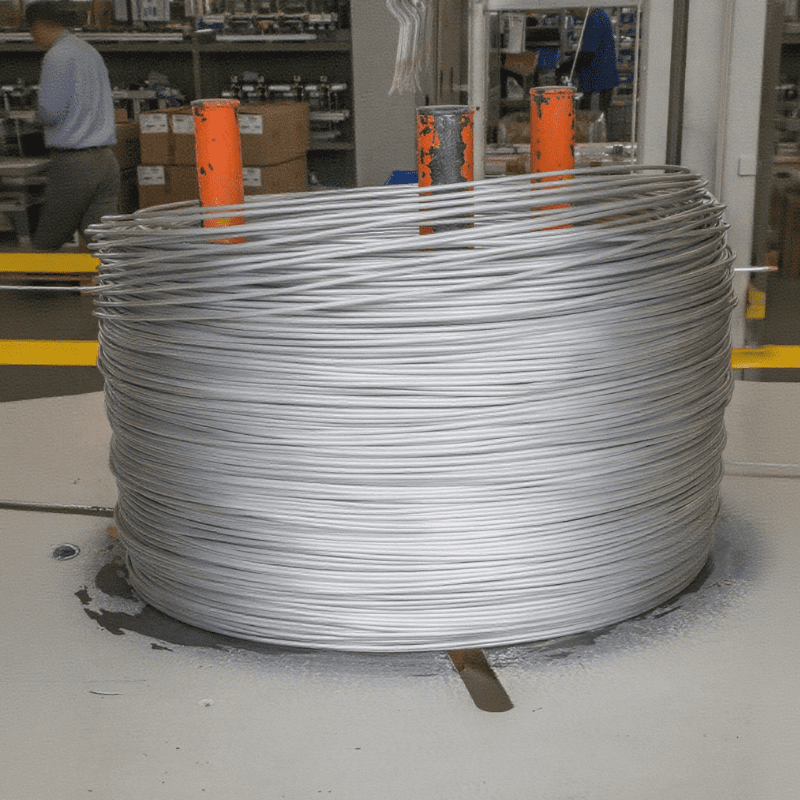
UNS S32750 / EN 1.4410 / ASTM A789/A790 Tubi a spirale senza saldatura
For applications where corrosion resistance and extreme lengths are paramount, Tokotube offers unparalleled seamless coiled solutions. Manufactured utilizing precision cold drawing processes, this Super Duplex tubing eliminates the need for vulnerable field welds.
- Material Grade: UNS S32750 / EN 1.4410 / ASTM A789/A790
- Diametro esterno (O.D.): φ3mm ~ φ22 mm (Common range for coils)
- Spessore della parete (W.T.): 0.8mm ~ 5 mm (Varies with O.D.)
- Lunghezza della bobina: Several hundred meters per continuous coil (exact length depends on O.D. and W.T.)
- Standard: ASTM A789, ASTM A790
Domande frequenti (FAQ)
Is seamless tubing always stronger than welded tubing?
In most professional situations, yes. A seamless tube lacks a longitudinal weld seam, which is inherently a metallurgical weak point subject to stress concentrations and galvanic corrosion. However, modern high-frequency ERW pipes with advanced heat treatments are closing the gap for mid-pressure applications.
Why is seamless tubing more expensive?
The manufacturing process for seamless tubing (heating solid billets to extreme temperatures, piercing, extruding, and multiple stages of cold drawing) is highly energy-intensive and requires massive, specialized machinery. Welded tubing is much faster and cheaper to produce by continuously rolling and welding flat steel coils.
How do you ensure the quality of a seamless tube?
Quality is verified through Non-Destructive Testing (NDT). This includes hydrostatic testing (pressurizing the tube with water to ensure it doesn’t burst), ultrasonic testing (using sound waves to detect internal flaws), and eddy current testing (using electromagnetism to find surface and near-surface defects).
Authoritative Industry References
For further reading on material specifications and manufacturing standards, consult the following authoritative bodies:
- ASTM International: The leading authority on standardized testing and material specifications for seamless and welded tubular products. Visita il sito dell'ASTM
- American Society of Mechanical Engineers (ASME): Governing body for the Boiler and Pressure Vessel Code (BPVC), dictating safety standards for seamless tube applications. Visit ASME
- Association for Materials Protection and Performance (AMPP / NACE): The worldwide authority on corrosion control, detailing material requirements for sour (H2S) gas environments. Visita AMPP
 Italian
 English
 Spanish
 Russian
 Turkish
 French
 Korean
 German