Auteur TOKO TECH. Nous sommes une entreprise manufacturière axée sur l'exportation et spécialisée dans la recherche et le développement, la production et la vente de systèmes de canalisations métalliques haut de gamme. Basée à Shanghai, en Chine, avec des installations de production situées dans le delta du fleuve Yangtze - la région industrielle centrale de la Chine - notre base de production moderne fonctionne selon la philosophie de base "Quality First, Innovation Driven" (la qualité avant tout, l'innovation avant tout). Nous nous attachons à fournir des produits de canalisation de haute performance, résistants à la corrosion et à haute température à des clients internationaux dans les secteurs de la pétrochimie, de l'énergie, de la construction navale, de l'industrie pharmaceutique et de l'ingénierie de l'environnement.

Dans les applications industrielles critiques où se croisent des températures extrêmes, une forte corrosion et d'immenses contraintes mécaniques, le choix du matériau de la tuyauterie conditionne la sécurité et la longévité de l'ensemble de l'installation. Les alliages à base de nickel, tels que l'Inconel, le Monel et l'Hastelloy, offrent une résistance inégalée aux environnements chimiques difficiles et à l'oxydation à haute température. Toutefois, l'acquisition du matériau adéquat n'est que la première étape. Comprendre le paysage complexe des dimensions standard des tuyaux en alliage de nickel est absolument essentiel pour les ingénieurs des procédés, les responsables des achats et les concepteurs mécaniques afin d'assurer une intégration transparente des systèmes et la conformité aux réglementations.
D'après notre expérience de l'exploitation d'une usine de fabrication haut de gamme dans le delta du fleuve Yangtze, nous rencontrons fréquemment des projets retardés par des interprétations erronées des normes dimensionnelles. Les dimensions des tuyaux en alliage de nickel sont conformes à des normes internationales spécifiques qui diffèrent légèrement, en termes d'application, des cadres standard en acier au carbone. Lors de la spécification de ces composants de grande valeur, une compréhension précise des paramètres de diamètre nominal (NPS), d'épaisseur de paroi (Schedule) et de diamètre extérieur (OD) n'est pas négociable. Dans ce guide qui fait autorité, nous décomposons les mécanismes structurels, les protocoles de normalisation et les applications pratiques des tailles de tuyaux en alliage de nickel les plus courantes utilisées dans les secteurs industriels mondiaux.
Table des matières
- 1. Comprendre la normalisation des dimensions des tubes en alliage de nickel
- 2. Ventilation des dimensions les plus courantes des tuyaux en alliage de nickel
- 3. Spécifications de l'échéancier et dynamique de l'épaisseur des parois
- 4. Intégrité de la fabrication : Spécifications sans soudure ou soudées
- 5. Matériaux complémentaires pour l'assemblage des pipelines
- 6. Tableau récapitulatif : Dimensions standard des tubes en alliage de nickel
- 7. Foire aux questions (FAQ)
- 8. Références en matière d'industrie et d'ingénierie
1. Comprendre la normalisation des dimensions des tubes en alliage de nickel
L'industrie mondiale des pipelines utilise des matrices dimensionnelles normalisées pour assurer la compatibilité des brides, des vannes et des raccords. Lorsque nous fabriquons des produits chez TOKO TECH, les dimensions de nos tuyaux en alliage de nickel sont strictement conformes aux normes de l'American Society of Mechanical Engineers (ASME), notamment la norme ASME B36.19 pour les tuyaux en acier inoxydable et en acier fortement allié, et la norme ASME B36.10 pour les tuyaux en acier corroyé.
Il est essentiel de faire la distinction entre un "tuyau" et un "tube". D'après notre expérience, de nombreux ingénieurs débutants confondent les deux. Pour les tubes, la mesure se réfère au diamètre extérieur exact. Toutefois, pour les tubes en alliage de nickel jusqu'à 12 pouces, le diamètre nominal du tube (NPS) ne correspond pas au diamètre extérieur réel. Par exemple, un tuyau de 2 pouces NPS a en réalité un diamètre extérieur de 2,375 pouces (60,3 mm). Ce n'est que lorsque le NPS atteint 14 pouces et plus que la taille nominale correspond directement au diamètre extérieur exact. Nous recommandons aux équipes chargées des achats de toujours revérifier les conversions exactes en millimètres lors des commandes internationales afin d'éviter des erreurs d'ajustement coûteuses.
2. Ventilation des dimensions les plus courantes des tuyaux en alliage de nickel
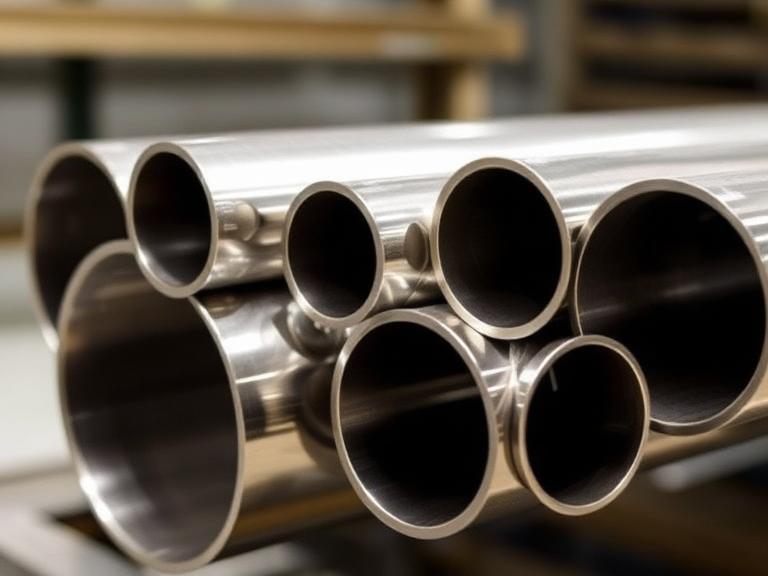
En fonction de l'application industrielle spécifique - qu'il s'agisse d'une plate-forme pétrolière offshore ou d'une usine de traitement pharmaceutique stérile - différentes tailles de tuyaux en alliage de nickel sont utilisées. Nous classons ces tailles en trois groupes fonctionnels principaux.
Tuyauterie de petit diamètre (1/8 pouce à 1,5 pouce NPS)
Les tuyaux en alliage de nickel de petit diamètre sont généralement utilisés pour l'instrumentation, les lignes d'injection de produits chimiques, les systèmes de contrôle hydraulique et les internes d'échangeurs de chaleur. Comme ces conduites transportent souvent des fluides corrosifs très concentrés sous une pression énorme, l'intégrité structurelle de la paroi est primordiale. Les nuances couramment utilisées dans cette gamme de dimensions comprennent l'alliage 400 (Monel) et l'alliage C276 (Hastelloy). En raison de la faible section transversale, des défauts internes ou d'écaillage même mineurs peuvent provoquer des chutes de pression catastrophiques. C'est pourquoi la fabrication de précision est rigoureusement appliquée dans notre usine du delta du fleuve Yangtze.
Tuyauterie de diamètre moyen (2 pouces à 10 pouces NPS)
La grande majorité des lignes d'écoulement des procédés dans les raffineries pétrochimiques et les usines de traitement chimique utilisent des tuyaux en alliage de nickel de diamètre moyen. Un tuyau NPS 4, NPS 6 ou NPS 8 offre un équilibre optimal entre la capacité de volume de fluide et le coût du matériau. Dans ces dimensions, l'Inconel 625 et l'Incoloy 825 sont fréquemment spécifiés pour lutter contre la fissuration par corrosion sous contrainte due aux ions chlorure et la fissuration sous contrainte due aux sulfures. Nous recommandons de spécifier Schedule 40S ou 80S pour ces tailles de tuyaux en alliage de nickel, en fonction de la pression opérationnelle et de la tolérance à la corrosion calculée.
Tuyauterie de grand diamètre (12 pouces et plus NPS)
Les tuyaux en alliage de nickel de grand diamètre sont réservés aux collecteurs de transmission principale, aux prises d'eau de refroidissement massives dans les centrales nucléaires et aux systèmes de gaz de torche. La fabrication de tuyaux de cette taille nécessite des techniques avancées de formage et de soudage. Compte tenu du coût exorbitant des alliages à haute teneur en nickel, les ingénieurs utilisent souvent des tuyaux en alliage de nickel de grand diamètre dans des nomenclatures plus fines (telles que Schedule 10S), à condition que les pressions internes le permettent, en s'appuyant sur la résistance inhérente de l'alliage plutôt que sur l'épaisseur massive de la paroi.
3. Spécifications de l'échéancier et dynamique de l'épaisseur des parois
La définition du diamètre extérieur des tuyaux en alliage de nickel ne fournit que la moitié des données techniques requises. Le diamètre intérieur (ID) et la capacité de rétention de la pression sont dictés par le "schedule". Le tableau est un nombre sans dimension correspondant à l'épaisseur de la paroi ; plus le tableau augmente, plus l'épaisseur de la paroi augmente et plus l'alésage interne diminue.
Pour les alliages à haute performance, les désignations des schémas comprennent généralement un suffixe "S" (par exemple, Sch 10S, Sch 40S, Sch 80S), en référence à la norme ASME B36.19. D'après notre expérience dans les secteurs de l'énergie et de l'électricité, Schedule 40S est la norme de base pour le transport général de produits chimiques. Toutefois, lorsqu'il s'agit de boues très abrasives ou d'extraction de vapeur à haute pression, nous recommandons de passer à la norme Schedule 80S, voire Schedule 160. Garantir une épaisseur de paroi correcte pour toutes les tailles de tuyaux en alliage de nickel est essentiel pour calculer les débits et établir la pression de service maximale admissible (MAWP) du système de canalisation.
4. Intégrité de la fabrication : Spécifications sans soudure ou soudées
Le processus de fabrication influe fortement sur la disponibilité et la performance des dimensions spécifiques des tuyaux en alliage de nickel. Chez TOKO TECH, nous produisons à la fois des produits sans soudure et des produits soudés pour répondre aux diverses exigences des clients.
Lorsque l'intégrité de la haute pression n'est absolument pas négociable, comme dans les collecteurs sous-marins en eau profonde ou les applications aérospatiales à haute température, le choix d'un produit de haute qualité est primordial. tube sans soudure en alliage de nickel est primordiale. Les tubes sans soudure sont extrudés à partir d'une billette solide, ce qui permet d'obtenir une microstructure homogène sans soudure longitudinale. Cependant, la création de tubes sans soudure dans de très grandes dimensions de tubes en alliage de nickel devient exponentiellement difficile et coûteuse. Pour une meilleure compréhension des propriétés mécaniques de ces catégories, nous vous recommandons vivement de consulter notre brochure complète tubes et tuyaux en alliage de nickel guide.
Inversement, pour les applications à grand diamètre (NPS 12 et plus), les tubes soudés formés à partir de plaques d'alliage laminées constituent la norme de l'industrie. Des techniques automatisées avancées de soudage TIG ou plasma, associées à un contrôle non destructif (CND) rigoureux par rayons X 100%, garantissent que le cordon de soudure présente la même solidité et la même résistance à la corrosion que le métal de base.
5. Matériaux complémentaires pour l'assemblage des pipelines
La mise en place d'un système complet de canalisations ne se limite pas à la détermination des dimensions correctes des tuyaux en alliage de nickel. Les brides, les plaques borgnes, les corps de vanne et les supports structurels doivent correspondre à la métallurgie de la tuyauterie pour éviter la corrosion galvanique. Ces composants sont généralement usinés à partir de blocs forgés solides ou de barres cylindriques.
Trouver une solution fiable barres en alliage de nickel fournisseurs de barres est essentielle pour obtenir la matière première nécessaire à l'usinage de ces raccords soumis à de fortes contraintes. Les ingénieurs chargés de l'approvisionnement doivent continuellement évaluer les meilleurs barres en alliage de nickel fabricants afin de garantir la stabilité de la chaîne d'approvisionnement et la cohérence métallurgique. La budgétisation de ces dépenses d'investissement massives nécessite une prévision précise des coûts des matières premières. prix des barres de nickel par kg est une tâche essentielle pour les gestionnaires de projets.
Enfin, l'assemblage de ces différentes tailles de tuyaux en alliage de nickel et de composants forgés nécessite des consommables de soudage spécialisés. Pour maintenir l'intégrité de la limite de résistance à la corrosion à travers un joint, les ingénieurs doivent comprendre les caractéristiques spécifiques de l'alliage de nickel. Utilisation de la baguette de soudure en nickelLa chimie du métal d'apport doit correspondre ou dépasser les éléments d'alliage du tube de base.
6. Tableau récapitulatif : Dimensions standard des tubes en alliage de nickel
Pour aider vos équipes d'ingénierie et d'approvisionnement, nous avons fourni une matrice de référence rapide des tailles de tuyaux en alliage de nickel les plus fréquemment demandées, en associant la taille nominale du tuyau (NPS) aux dimensions métriques et impériales exactes.
| Taille nominale du tuyau (NPS) | Diamètre extérieur (pouces) | Diamètre extérieur (mm) | Schedule 10S Mur (mm) | Schedule 40S Mur (mm) | Schedule 80S Mur (mm) |
|---|---|---|---|---|---|
| 1/2″ | 0.840 | 21.3 | 2.11 | 2.77 | 3.73 |
| 1″ | 1.315 | 33.4 | 2.77 | 3.38 | 4.55 |
| 2″ | 2.375 | 60.3 | 2.77 | 3.91 | 5.54 |
| 4″ | 4.500 | 114.3 | 3.05 | 6.02 | 8.56 |
| 6″ | 6.625 | 168.3 | 3.40 | 7.11 | 10.97 |
| 8″ | 8.625 | 219.1 | 3.76 | 8.18 | 12.70 |
| 12″ | 12.750 | 323.8 | 4.57 | 9.53 | 17.48 |
7. Foire aux questions (FAQ)
Les dimensions des tuyaux en alliage de nickel sont-elles identiques aux dimensions standard des tuyaux en acier au carbone ?
Oui, en ce qui concerne les dimensions extérieures. D'après notre expérience, les dimensions des tuyaux en alliage de nickel suivent les mêmes normes dimensionnelles ASME B36.19 et B36.10 que celles de l'acier inoxydable et de l'acier au carbone. Cette normalisation intentionnelle permet aux ingénieurs d'utiliser des colliers, des suspensions et des brides standard, quelle que soit la métallurgie sous-jacente.
Comment spécifier le programme correct pour les dimensions des tuyaux en alliage de nickel ?
Le programme est déterminé par la pression de service maximale admissible (MAWP), la température de fonctionnement et la tolérance à la corrosion. Les ingénieurs utilisent les formules ASME B31.3 (Process Piping) pour calculer l'épaisseur minimale exacte de la paroi requise, puis choisissent le programme standard le plus épais disponible.
Pourquoi est-il plus difficile de se procurer des tubes en alliage de nickel de grande taille sans soudure ?
Nous recommandons les tubes soudés pour les applications à grand diamètre, car l'extrusion d'un tube sans soudure d'un diamètre supérieur à NPS 10 nécessite une force de perforation immense et des billettes d'alliage brut massives, ce qui rend le processus de fabrication incroyablement coûteux et limité à quelques usines mondiales. Le soudage automatisé de haute qualité avec contrôle non destructif approfondi est très fiable pour les grandes dimensions.
TOKO TECH fournit-elle des tubes en alliage de nickel sur mesure ?
Absolument. En tant qu'entreprise manufacturière axée sur l'innovation, TOKO TECH a la capacité de produire des diamètres extérieurs non standard et des épaisseurs de paroi spécifiques adaptés aux exigences techniques uniques des secteurs de l'aérospatiale, du nucléaire et de l'exploration des fonds marins.
8. Références en matière d'industrie et d'ingénierie
Pour garantir le plus haut niveau d'intégrité structurelle et de sécurité dans la conception de vos pipelines, nous vous encourageons vivement à consulter les directives officielles fournies par les autorités mondiales de normalisation concernant les propriétés métallurgiques et les dimensions des tuyaux en alliage de nickel :
- Société américaine des ingénieurs en mécanique (ASME) - Fournir des normes de base pour B36.19M (tuyaux en acier inoxydable) et B31.3 (conception de tuyauterie industrielle).
- ASTM International - Spécifications faisant autorité pour les essais de matériaux, la composition chimique et les propriétés mécaniques des alliages à base de nickel.
- Association pour la protection et la performance des matériaux (AMPP) - Lignes directrices de l'industrie pour la sélection des matériaux dans les environnements hautement corrosifs et à gaz acide (H2S).
 French
  English
  Spanish
  Russian
  Turkish
  Korean
  German
  Italian