Auteur TOKO TECH. Located in Shanghai, China, TOKO TECH has worked in the field of industrial piping for 11 years. We are committed to manufacturing and exporting stainless steel seamless pipe, stainless steel welded pipes, stainless steel fittings and flanges, nickel alloy products, Titanium seamless and welded tubes, and more. Our factories are all ISO & PED certificated, and the products can be produced in standard ASTM, JIS, DIN, EN, GOST, etc. Our products are widely used in the Oil and Gas, Petrochemical, Sugar Refining, Water Process, Desalination, and Geothermal industries. We have successfully exported to dozens of countries and regions such as the USA, Canada, Japan, Germany, France, Korea, and Turkey.
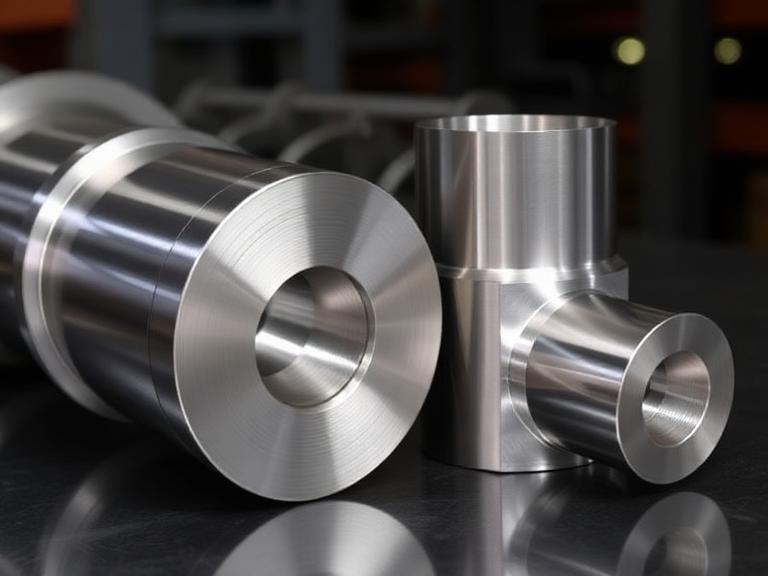
In the highly specialized world of industrial metallurgy and piping systems, material specifications are critical. A common point of confusion among engineers, procurement managers, and project directors revolves around specific material designations. One of the most frequent questions we encounter at TOKO TECH is regarding two seemingly different but highly popular materials. Specifically, clients want to know about the relationship between alloy 600 and Inconel 600. When specifying materials for extreme environments, understanding whether alloy 600 and Inconel 600 are interchangeable is paramount to project success and budget management.
From our experience supplying critical infrastructure projects across the globe, we can unequivocally state that the technical and metallurgical properties of these materials are identical. However, the terminology surrounding them stems from trademark laws and commercial branding rather than chemical variance. In this authoritative guide, we will explore the metallurgical composition, industrial applications, and sourcing strategies to clarify why alloy 600 and Inconel 600 are considered the exact same material in practical engineering applications.
Table des matières
- 1. The Definitive Answer: Are Alloy 600 and Inconel 600 the Same?
- 2. Decoding the Chemical Composition of Alloy 600 and Inconel 600
- 3. Key Mechanical Properties and Environmental Resistance
- 4. Industrial Applications: Where We Recommend This Material
- 5. The Role of Trademarks in the Nickel Alloy Market
- 6. Forms, Availability, and Sourcing Strategies
- 7. Summary Comparison Table
- 8. Foire aux questions (FAQ)
- 9. Authoritative References
1. The Definitive Answer: Are Alloy 600 and Inconel 600 the Same?
When comparing alloy 600 and Inconel 600, the definitive answer is yes. From a metallurgical, chemical, and mechanical standpoint, alloy 600 and Inconel 600 are the exact same material. Both refer to a nickel-chromium-iron alloy designated under the Unified Numbering System as UNS N06600.
The perceived difference between alloy 600 and Inconel 600 originates entirely from corporate branding. “Inconel” is a registered trademark of Special Metals Corporation. Because they developed and patented the original alloy family, the name Inconel became deeply embedded in the industry lexicon, much like “Kleenex” is used for facial tissues. However, once the original patents expired, other certified metallurgical mills around the world began producing the exact same chemical formulation. Because they cannot legally use the trademarked name “Inconel”, these manufacturers market their product using the generic designation “Alloy 600”. Therefore, whether your material test report states alloy 600 and Inconel 600, you are receiving the identical UNS N06600 material.
2. Decoding the Chemical Composition of Alloy 600 and Inconel 600
To understand why alloy 600 and Inconel 600 perform so exceptionally in harsh environments, we must look at their elemental makeup. We recommend always verifying the Mill Test Certificate (MTC) against international standards to ensure compliance. The chemistry for both alloy 600 and Inconel 600 is governed by strict parameters.
The foundation of this material is Nickel, which must constitute a minimum of 72.0% of the total mass. This massive nickel base provides exceptional resistance to chloride-ion stress-corrosion cracking and imparts resistance to alkaline solutions. Chromium is added at a range of 14.0% to 17.0%, which grants the alloy its resistance to oxidizing environments and sulfur compounds at high temperatures. Iron is present between 6.0% and 10.0%, adding strength while keeping production costs balanced. Trace elements like Manganese, Carbon, Copper, and Silicon are tightly controlled to prevent unwanted precipitation during welding or high-temperature service. Because the chemical recipe is standardized globally, any performance expectations you have for Inconel 600 will be perfectly met by generic alloy 600.
3. Key Mechanical Properties and Environmental Resistance
From our experience working with refineries and power plants, the primary reason engineers specify alloy 600 and Inconel 600 is due to its versatility across extreme temperature ranges. The material does not embrittle at cryogenic temperatures, yet it maintains high tensile strength in environments exceeding 1000 degrees Celsius (1832 degrees Fahrenheit).
Furthermore, alloy 600 and Inconel 600 offer remarkable resistance to organic and inorganic compounds. In the petrochemical sector, resistance to high-purity water and caustic alkalis is non-negotiable. This alloy forms a tightly adhering oxide film when exposed to heat, which protects the underlying material from further degradation. Whether you are sourcing a tubes et tuyaux en alliage de nickel or solid bar stock, the mechanical yield strength, tensile strength, and elongation properties remain consistent across both branded and generic versions.
4. Industrial Applications: Where We Recommend This Material
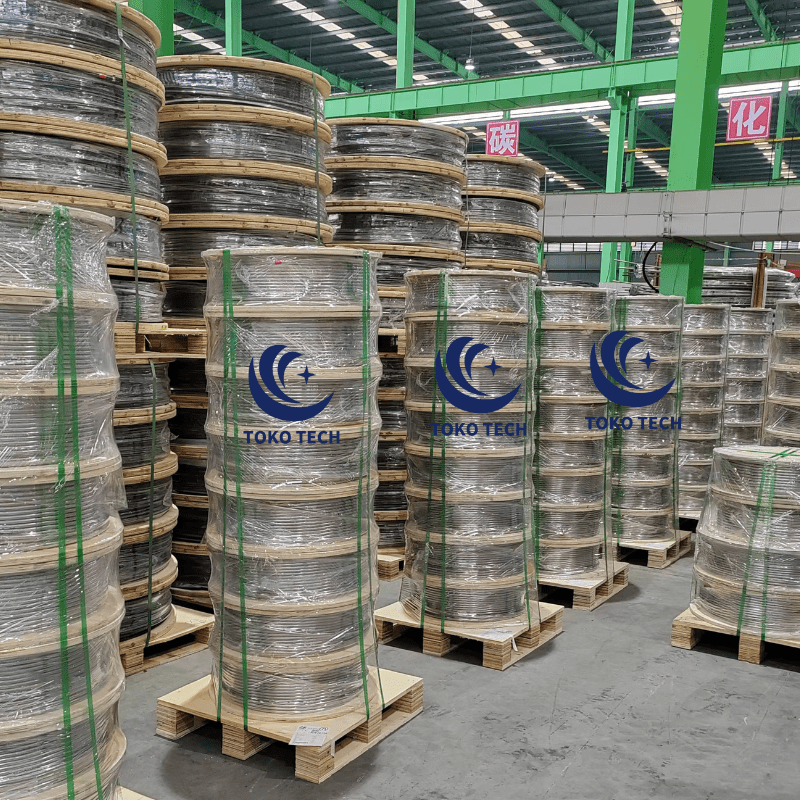
At TOKO TECH, our ISO and PED certificated factories produce materials that serve a vast array of global industries. Because alloy 600 and Inconel 600 are the same, they share the exact same application profiles. We frequently export this material to the USA, Canada, Japan, Germany, France, Korea, and Turkey for the following applications:
- Chemical and Petrochemical Processing: Used extensively for heater tubes, reactor vessels, and piping systems that handle corrosive chemicals.
- Nuclear Engineering: The material’s resistance to high-purity water makes it a standard choice for steam generator tubing in nuclear reactors. For these critical applications, we often supply tube sans soudure en alliage de nickel to ensure maximum pressure integrity.
- Geothermal and Desalination: The high chloride resistance of alloy 600 and Inconel 600 prevents pitting and crevice corrosion in saltwater and brine environments.
- Thermal Processing: Furnace components, heat-treating baskets, and muffles heavily rely on this alloy due to its resistance to oxidation and carburization at elevated temperatures.
5. The Role of Trademarks in the Nickel Alloy Market
Understanding the legal landscape of metallurgy helps procurement teams make cost-effective decisions. When a project specification calls exclusively for “Inconel 600”, it can artificially limit the supply chain to a single corporate entity and its licensed distributors. This often results in longer lead times and higher premiums.
However, modern engineering standards prioritize the UNS number and the ASTM/ASME specifications over brand names. By updating procurement language to accept “UNS N06600” or “Alloy 600”, buyers open their supply chain to world-class manufacturers like TOKO TECH. Our products are produced strictly in accordance with standard ASTM, JIS, DIN, EN, GOST, etc., ensuring that our alloy 600 and Inconel 600 equivalents meet every safety and performance metric required by global regulatory bodies.
6. Forms, Availability, and Sourcing Strategies
Alloy 600 and Inconel 600 are available in virtually all standard mill forms. Depending on the engineering requirement, TOKO TECH manufactures and exports seamless tubes, welded pipes, flanges, and fittings. We also work closely with top barres en alliage de nickel fournisseurs de barres to ensure a comprehensive product offering.
If you are looking for raw materials for machining or structural supports, choosing reputable barres en alliage de nickel fabricants is crucial to obtaining defect-free stock. Procurement managers tracking market volatility can monitor the prix des barres de nickel par kg to optimize their purchasing cycles. Furthermore, when assembling these piping systems, proper welding consumables are required to match the base metal chemistry. If you are unfamiliar with the joining process, we recommend reviewing our guide on Utilisation de la baguette de soudure en nickel to ensure robust, corrosion-resistant weld seams.
7. Summary Comparison Table
To provide absolute clarity, we have created a summary table comparing alloy 600 and Inconel 600.
| Caractéristiques / Spécifications | Alloy 600 (Generic) | Inconel 600 (Trademarked) |
|---|---|---|
| Désignation UNS | UNS N06600 | UNS N06600 |
| Primary Composition | Ni 72% min, Cr 14-17%, Fe 6-10% | Ni 72% min, Cr 14-17%, Fe 6-10% |
| ASTM Standards (Pipe/Tube) | ASTM B167 / B163 | ASTM B167 / B163 |
| Résistance à la corrosion | Excellent | Excellent |
| High Temperature Stability | Up to 1093 Celsius | Up to 1093 Celsius |
| Manufacturer Base | Global (including TOKO TECH) | Special Metals Corporation |
8. Foire aux questions (FAQ)
Can I substitute Alloy 600 for Inconel 600 in my project?
Yes. From our experience, as long as the generic Alloy 600 material comes with an MTC (Mill Test Certificate) proving it meets the UNS N06600 chemistry and the relevant ASTM/ASME mechanical standards required by your project, it is a direct, safe, and legally compliant substitute for branded Inconel 600.
Is there a price difference between alloy 600 and Inconel 600?
Generally, yes. Because Inconel is a proprietary brand name, purchasing branded material often carries a premium price. Sourcing generic Alloy 600 from a reputable, ISO and PED certificated manufacturer like TOKO TECH allows you to acquire the exact same metallurgical properties at a more competitive price point.
How do I ensure the quality of generic Alloy 600?
We recommend verifying the manufacturer’s credentials. Ensure the factory holds ISO 9001 quality management certifications and PED (Pressure Equipment Directive) approvals. Additionally, always demand complete traceability and testing reports conforming to international standards like ASTM, DIN, or EN.
9. Authoritative References
For further technical specifications regarding the chemical and mechanical limits of UNS N06600, we recommend consulting the following internationally recognized standards organizations:
- ASTM International – Standard specifications for Nickel-Chromium-Iron alloys (e.g., ASTM B167 for seamless pipe).
- Société américaine des ingénieurs en mécanique (ASME) – Boiler and Pressure Vessel Code requirements for high-temperature materials.
- Association for Materials Protection and Performance (AMPP / formerly NACE) – Guidelines on corrosion resistance and material selection in industrial environments.
 French
  English
  Spanish
  Russian
  Turkish
  Korean
  German
  Italian