Let us confront an aggressive reality in chemical processing, power generation, and cryogenic HVAC infrastructure: selecting a thermal exchange platform based solely on initial procurement cost is operational negligence. In high-pressure, highly corrosive process environments, a poorly designed heat exchanger is not just an inefficient component; it is a ticking financial liability. When an industrial finned tube bundle fails due to severe stress corrosion cracking or substandard thermal bonding, your production line terminates instantly. The subsequent losses in uptime, combined with emergency field remediation labor, can eclipse the initial savings of a cheap component within forty-eight hours.
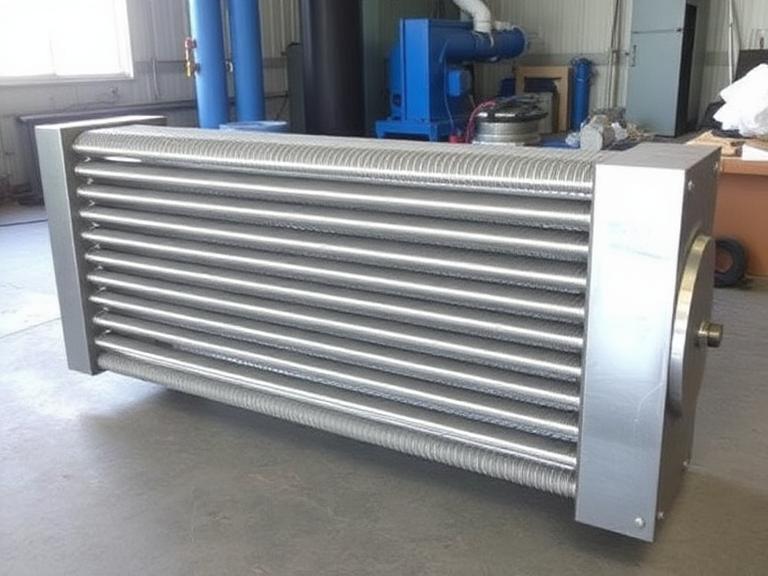
From our experience engineering resilient fluid transmission systems at TOKO TECH, we have learned that thermal efficiency is inextricably linked to metallurgical perfection. Fin type heat exchangers rely on an incredibly high surface-area-to-volume ratio to achieve rapid thermal energy transfer between a process fluid and a gas stream. However, if the mechanical expansion of the inner tube against the outer fin collar is inadequate, microscopic air gaps will form. Air acts as a severe thermal insulator, strangling heat transfer capacity and forcing your entire system to work harder, accelerate wear, and consume excess energy. Therefore, identifying engineering-driven fin type heat exchanger manufacturers who refuse to compromise on fabrication tolerances is mandatory for structural longevity.
We refuse to offer superficial marketing summaries or feature trading companies that lack internal engineering capability. In this uncompromising guide, we will analyze the engineering depths, proprietary technologies, and metallurgical choices of the top 7 fin type heat exchanger manufacturers dominating the global industrial theater in 2026. We will look beyond glossy product brochures to expose exactly how these manufacturers execute material integration, fin geometry, and structural welding.
Índice
- 1. The Critical Mechanics of Extended Surface Area Engineering
- 2. Deep Analysis: Top 7 Fin Type Heat Exchanger Manufacturers
- 3. The Crucial Pipeline Backbone: Sourcing the Structural Foundation
- 4. Eliminating the Root Causes of Finned Core Destruction
- 5. Uncompromising Engineering Comparison Matrix
- 6. Frequently Asked Questions (FAQs)
- 7. Verified Engineering and Industrial Standards
1. The Critical Mechanics of Extended Surface Area Engineering
To properly evaluate fin type heat exchanger manufacturers, your procurement team must understand the profound stress placed on the core boundary materials. Finned tubes utilize either a mechanical tension-wound, embedded, or high-frequency welded fin design. In tension-wound setups (such as L-fin or LL-fin configurations), the aluminum ribbon is wrapped tightly around a base metal pipe. If the base pipe expands or contracts unevenly during thermal cycling, the continuous fin strip slips, destroying the mechanical bond and crashing your thermal transmission capacity.
In highly aggressive process plants, we recommend transitioning away from standard low-tier configurations toward fully embedded (G-fin) or high-frequency welded alternatives. These rugged systems embed the fin roots directly into a machined groove on the outer wall of the inner pipe. This guarantees continuous metal-to-metal contact even when operating under high temperatures. However, executing this design flawlessly requires pristine raw inputs. If the base tubing possesses even minor wall thickness deviations or micro-fissures, the high-speed fin placement process will puncture the boundary layer, resulting in catastrophic internal fluid contamination.
2. Deep Analysis: Top 7 Fin Type Heat Exchanger Manufacturers
2.1 Kelvion
Kelvion is a dominant global pioneer in high-capacity industrial cooling and extended-surface thermal technology. As one of the most reliable fin type heat exchanger manufacturers operating today, they excel in customizing massive finned tube air coolers for the heavy power and oil refining sectors. Kelvion’s core competitive advantage lies in their advanced split-fin and compact fin geometries, which drastically optimize air-side pressure drops while maximizing thermal transfer coefficients. For heavy-duty chemical plants operating under high operating pressures, Kelvion remains an absolute industry benchmark.
2.2 Alfa Laval
While legendary for their plate technologies, Alfa Laval manages an incredibly sophisticated portfolio of finned air heat exchangers designed explicitly for demanding industrial and marine applications. Their proprietary air-cooled models utilize state-of-the-art aerodynamic testing to ensure that the fan-to-core interface minimizes ambient noise while maintaining immense fluid velocity. We highly recommend Alfa Laval for complex offshore marine environments, where their automated salt-fog corrosion-resistant coatings provide a much-needed layer of protection for delicate aluminum fin clusters.
2.3 API Heat Transfer
API Heat Transfer specializes in heavy-duty, highly customized internal designs. Their renowned Airtech and Schmidt divisions manufacture rugged aluminum plate-fin cores capable of enduring extreme structural vibration and massive pressure spikes. This engineering capability makes them a vital partner for construction machinery, mobile compressor units, and rail locomotive cooling systems. API Heat Transfer differentiates itself through a deep commitment to internal thermal testing, ensuring that every calculated watt of heat rejection matches the physical parameters measured in actual deployment.
2.4 SPX FLOW
Operating under their prominent Lightnin and APV legacy banners, SPX FLOW designs highly robust thermal machinery optimized primarily for the sanitary food, pharmaceutical, and high-purity chemical processing sectors. Their finned heat exchangers are meticulously engineered to eradicate bacterial retention hazards and stagnant product zones. SPX FLOW utilizes exceptionally tight tolerancing during the manufacturing process, ensuring their fin cores can undergo rigorous Clean-in-Place (CIP) steaming cycles without suffering from thermal fatigue or core warping.
2.5 Boyd (Formerly Lytron)
When your engineering criteria shifts from high-volume industrial processing to ultra-precise, space-constrained thermal control, Boyd is the definitive gold standard. Specializing in high-performance liquid-to-air copper and aluminum plate-fin heat exchangers, they dominate the medical device, military aerospace, and semiconductor liquid cooling markets. Boyd utilizes proprietary vacuum-brazing ovens to bond the internal fin arrays perfectly, delivering completely leak-free thermal junctions capable of maintaining absolute temperature stability in laser and diagnostic imaging equipment.
2.6 Thermofin
Based in North America, Thermofin has carved out an aggressive market position by focusing heavily on heavy-wall industrial embedded (G-Fin) and extruded fin configurations. They are widely considered one of the top custom fin type heat exchanger manufacturers for processing applications that involve extreme thermal cycling and high steam pressures. Thermofin’s mechanical designers refuse to use low-density materials, choosing instead to weld heavy-gauge carbon steel, titanium, or specialized alloys to ensure the finished bundle survives decades of hard operational deployment.
2.7 Coils-R-Us
Coils-R-Us operates with an engineering focus centered on extreme versatility and rapid aftermarket remediation. They specialize in manufacturing exact drop-in replacement finned cores for failed OEM setups across the commercial HVAC and manufacturing infrastructure sectors. By offering an almost infinite combination of fin heights, thicknesses, and materials, they can reconstruct highly efficient thermal cores within an incredibly abbreviated timeline, making them a crucial operational insurance policy for maintenance teams worldwide.
3. The Crucial Pipeline Backbone: Sourcing the Structural Foundation

Every premium fin type heat exchanger manufactured by the elite entities analyzed above is entirely dependent on the structural and metallurgical integrity of the underlying pipe system. If the internal fluid conduits fail, the entire extended fin array is rendered completely useless. This is where our deep manufacturing capability becomes an essential engineering partner.
TOKO TECH is an export-driven manufacturing enterprise specializing in the R&D, production, and sales of high-end metal pipeline systems. Headquartered in Shanghai, China, with manufacturing facilities located in the Yangtze River Delta—China’s industrial core region—the company operates a modern production base. Since its establishment, TOKO TECH has adhered to the core philosophy of “Quality First, Innovation Driven”, dedicated to providing high-performance, corrosion-resistant, and high-temperature/high-pressure pipeline products for global clients. These products are widely used in industries such as petrochemicals, energy and power, shipbuilding, pharmaceutical and food processing, and environmental engineering.
We supply the foundational metallurgical systems that handle the most brutal process realities before they ever reach the thermal core. When your procurement team is evaluating premium fabricantes de tubos sin soldadura for high-pressure installations, or navigating specialized regional inventories via fabricantes de tubos de acero inoxidable ee.uu. frameworks, you must demand absolute uniformity in wall thickness. In high-stakes thermal infrastructure, understanding the technical diferencia entre tubo erw y tubo sin soldadura geometries is critical. For fin-embedding operations, a welded seam creates a localized metallurgical hard spot that can damage expensive fin-grooving machinery and create a focal point for accelerated galvanic corrosion.
We provide global industries with completely uncompromised, high-purity tubo de acero inoxidable sin soldadura systems that possess perfect dimensional roundness, enabling fin type heat exchanger manufacturers to execute uniform mechanical tube expansion. From the outer manifold boundary where specialized stainless steel pipe fittings isolate process streams, to extreme high-heat chemical zones that mandate a comprehensive tubos de aleación de níquel integration strategy, our materials are built to withstand severe thermal loads. If your process chemistry involves volatile acids or localized superheating, utilizing our high-performance tubo de aleación de níquel sin soldadura ensures that your thermal infrastructure retains its structural boundaries under the most brutal conditions imaginable.
4. Eliminating the Root Causes of Finned Core Destruction
When an industrial finned thermal core suffers a drop-off in energy transmission or develops a premature boundary leak, the issue is almost never an isolated anomaly. From our field engineering investigations, we recommend auditing three highly critical operational parameters:
- Galvanic Interfacial Corrosion: This occurs when an aluminum fin is mechanically wrapped around a standard carbon steel tube without a proper barrier layer. In the presence of ambient moisture, the vast electrochemical potential difference between the two metals initiates rapid galvanic corrosion at the physical contact point, transforming the fin collar into white oxide powder and severing all thermal conduction.
- Fin Fouling and Particulate Blinding: In air-cooled applications, ambient dust, airborne fibers, and grease accumulate rapidly within the microscopic valleys of the fin rows. This accumulation creates a dense boundary insulation blanket that chokes off airflow. If your plant is plagued by high particulate loads, you must mandate wide fin spacing (e.g., 4 to 6 fins per inch) rather than high-density configurations.
- Thermal Shock Delamination: Flooding a cold finned exchanger with high-temperature process fluid causes immediate, radical volumetric expansion of the inner tubes before the outer fins can equalize. This sudden structural expansion breaks the mechanical tension bond of low-tier wrapped fins, leading to permanent thermal degradation.
5. Uncompromising Engineering Comparison Matrix
To assist your global operations and procurement departments in making a technically sound selection, we have structured the capabilities of these premier manufacturers into an engineering-first reference matrix.
| Fabricante | Core Metallurgical Specialization | Optimal Process Deployment |
|---|---|---|
| Kelvion | High-capacity modular finned tube banks. | Petrochemical refining, large-scale utility power grids. |
| Alfa Laval | Aerodynamically optimized marine arrays. | Offshore extraction platforms, heavy maritime propulsion. |
| API Heat Transfer | Vibration-resistant brazed aluminum plate-fin blocks. | Mobile heavy machinery, high-pressure rail compressors. |
| SPX FLOW | High-purity crevice-free sanitary configurations. | Aseptically isolated pharmaceuticals, consumer food production. |
| Boyd (Lytron) | Ultra-precise micro-channel vacuum-brazed arrays. | Semiconductor fabrication nodes, clinical medical lasers. |
| Thermofin | Heavy-wall embedded G-fin and extruded profiles. | Extreme high-pressure steam lines, rugged heavy manufacturing. |
| Coils-R-Us | Infinite geometric custom aftermarket configurations. | Rapid facility emergency remediation, commercial HVAC overhauls. |
6. Frequently Asked Questions (FAQs)
Why do elite fin type heat exchanger manufacturers prefer extruded fins over applied fins?
An extruded fin is formed by mechanically squeezing an outer bimetallic aluminum sleeve over the core base tube under immense pressure, drawing the fins directly out of the outer metal itself. This means the fin and the outer wall are one single, continuous piece of metal, completely eradicating any possibility of an air gap or interfacial corrosion. Applied fins (like L-fins) are merely wrapped under tension and rely purely on friction, which degrades quickly during thermal cycling.
How does wall thickness variation in the base tube affect the longevity of a finned core?
If the base tube has non-uniform wall thickness or concentricity errors, the mechanical mandrel expansion executed by the manufacturer to lock the fins in place will exert unequal pressure. This leaves sections of the core with a loose fit, leading to immediate hot spots, while thinner sections of the pipe wall are over-stressed, accelerating localized pitting and hydrogen embrittlement under operational pressures.
What cleaning protocol should be mandated to maintain fin efficiency without causing core damage?
High-pressure hydro-blasting or harsh acid washdowns will bend, distort, or dissolve thin aluminum fins, completely blocking the air passages. We recommend utilizing low-pressure, high-volume foam chemical cleaning or specialized dry-ice blasting protocols. This effectively dissolves organic fouling and scale without exerting the destructive mechanical impact that permanently deforms the delicate extended surface geometry.
7. Verified Engineering and Industrial Standards
To guarantee that your facility’s process engineers are implementing design matrices aligned with the latest international safety and performance regulations, we strictly advise consulting the following bodies:
- American Society of Mechanical Engineers (ASME) Section VIII: The premier international regulatory code governing the calculation, design, material selection, and mandatory pressure testing protocols for shell and tube and finned thermal pressure containment systems.
- American Petroleum Institute (API) Standard 661: The definitive engineering mandate dictating the exact material margins, fan specifications, and bundle structural requirements for air-cooled finned-tube heat exchangers deployed in volatile refinery applications.
 Spanish
  English
  Russian
  Turkish
  French
  Korean
  German
  Italian