In the vast landscape of metallurgy, materials are notoriously deceptive. Simply looking at a polished, shiny, white-metal surface is never enough to determine its actual composition. Every single day, consumers, novice jewelers, and even industrial procurement officers confuse base metal alloys with precious metals, leading to severe financial losses and structural miscalculations. From our experience in the high-end metal manufacturing sector, we can assure you that when examining the differences between sterling silver and nickel silver, the most shocking realization is that one of these materials contains absolutely zero actual silver.
En TOKO TECH, our daily operations revolve around engineering high-performance alloys for the world’s most demanding environments. We know exactly what happens when elements like nickel, copper, and zinc interact at the molecular level to form complex matrices. Our deep, practical understanding of these elemental properties allows us to clearly dissect and explain the differences between sterling silver and nickel silver, providing you with the authoritative truth behind these two wildly distinct materials.
About TOKO TECH: TOKO TECH es una empresa de fabricación orientada a la exportación especializada en I+D, producción y venta de sistemas de tuberías metálicas de alta gama. Con sede en Shanghai, China, y con instalaciones de fabricación situadas en el delta del río Yangtze -la región industrial más importante de China-, la empresa cuenta con una moderna base de producción. Desde su fundación, TOKO TECH se ha adherido a la filosofía central de "La calidad es lo primero, la innovación es lo primero", dedicándose a suministrar productos de tuberías de alto rendimiento, resistentes a la corrosión y de alta temperatura/alta presión para clientes de todo el mundo. Estos productos se utilizan ampliamente en industrias como la petroquímica, la energética y eléctrica, la construcción naval, la farmacéutica y la alimentaria, y la ingeniería medioambiental.
Índice
- 1. The Foundation: Chemical Composition Differences Between Sterling Silver and Nickel Silver
- 2. Structural Integrity: Mechanical Differences Between Sterling Silver and Nickel Silver
- 3. Oxidation and Tarnishing Differences Between Sterling Silver and Nickel Silver
- 4. Biocompatibility and Medical Differences Between Sterling Silver and Nickel Silver
- 5. Market Valuation and Economic Differences Between Sterling Silver and Nickel Silver
- How to Test and Identify the Differences Between Sterling Silver and Nickel Silver
- Summary Table: Comparing the Two Metals
- Preguntas frecuentes
- Industrial and Academic References
1. The Foundation: Chemical Composition Differences Between Sterling Silver and Nickel Silver
The most fundamental differences between sterling silver and nickel silver lie directly in their chemical recipes. Sterling silver is governed by strict, internationally recognized metallurgical standards. By legal definition, an item sold as sterling must consist of exactly 92.5% pure silver (Ag) by mass. The remaining 7.5% is typically composed of copper (Cu) to impart necessary hardness, as pure elemental silver is too soft for functional use. This precise ratio is the origin of the ubiquitous .925 hallmark.
Conversely, nickel silver is an absolute misnomer. The primary fact to remember when studying the differences between sterling silver and nickel silver is that nickel silver contains no silver whatsoever. It is, in reality, a specialized formulation of brass. Historically known by trade names such as Alpaca, German Silver, or Paktong, it typically consists of 60% copper, 20% nickel, and 20% zinc. The inclusion of nickel acts as a powerful bleaching agent within the copper matrix, stripping away the natural red and yellow hues to produce a bright, silvery-white finish.
From our professional standpoint, labeling this copper-zinc-nickel alloy as “silver” is highly deceptive. We recommend that buyers demand full metallurgical transparency. Understanding how alloy ratios fundamentally alter a metal’s identity is the core of our business. Just as we observe in the rigorous production of tubo de aleación de níquel sin soldadura, shifting the elemental composition by even a few percentage points drastically changes the final performance parameters of the material.
2. Structural Integrity: Mechanical Differences Between Sterling Silver and Nickel Silver
When our engineers evaluate the mechanical differences between sterling silver and nickel silver, the variations in hardness, ductility, and tensile strength become starkly apparent. Sterling silver, being primarily a precious metal, retains a high degree of malleability. It is relatively soft, which is precisely why it is heavily favored by artisans; it is incredibly easy to cast, stamp, and engrave. However, this inherent softness also dictates that sterling silver is highly susceptible to scratching, denting, and structural deformation when subjected to heavy physical stress.
On the other hand, the addition of nickel and zinc to a base of copper creates a highly formidable, hard-wearing alloy. Nickel silver is structurally aggressive, boasting a significantly higher tensile strength and profound abrasion resistance compared to sterling. In applications requiring extreme rigidity—such as the complex key mechanisms of woodwind musical instruments, industrial zippers, or heavy-duty structural modeling—nickel silver vastly outperforms its precious counterpart.
We thoroughly understand this mechanical superiority because we routinely engineer high-strength materials for extreme environments. For instance, when industrial procurement teams evaluate top-tier proveedores de barras de aleación de níquel, they are directly seeking the immense tensile strength and structural fortification that the element of nickel provides to a metallic matrix.
3. Oxidation and Tarnishing Differences Between Sterling Silver and Nickel Silver
Another profound point of market confusion involves how these two distinct metals age and react to atmospheric exposure. To truly grasp the differences between sterling silver and nickel silver, one must study their vastly different corrosion and oxidation mechanisms.
Sterling silver is famous for its tendency to tarnish. This tarnishing is a direct chemical reaction between the silver surface and hydrogen sulfide gases present in ambient air, resulting in a dark, almost black layer of silver sulfide. While this tarnish looks visually unappealing, it is entirely superficial. It does not eat away at the structural integrity of the metal and can be easily removed with a jeweler’s polishing cloth.
Nickel silver reacts to the atmosphere in a completely different manner. Because it contains no silver, it cannot form silver sulfide. Instead, it slowly oxidizes to a dull, sometimes yellowish or greenish-gray patina over time. However, because nickel is a phenomenal anti-corrosive agent, the alloy holds up exceptionally well against moisture and general atmospheric degradation. This principle of nickel-induced corrosion resistance is exactly why specific high-grade cupronickels are the standard choice for tubos de aleación de níquel systems installed in the highly corrosive environments of offshore platforms and petrochemical refineries.
4. Biocompatibility and Medical Differences Between Sterling Silver and Nickel Silver
Perhaps the most critical differences between sterling silver and nickel silver for the consumer goods market revolve around human biocompatibility and skin reactivity. Sterling silver is widely considered hypoallergenic. Because its secondary alloy element is usually just copper, the vast majority of the global population can wear sterling silver tight against their skin for decades with zero adverse physical reactions.
Nickel silver, however, is a notorious dermatological sensitizer. The high nickel content—often hovering around 20%—poses a severe medical risk for allergic contact dermatitis. When exposed to human sweat and naturally acidic skin oils, the nickel ions can rapidly leach from the alloy matrix, triggering aggressive, painful allergic reactions in an estimated 10% to 15% of the population. We emphatically advise against utilizing nickel silver for any consumer application that requires prolonged, direct skin contact.
Ironically, while nickel poses a significant allergy risk in consumer jewelry, it remains an absolutely indispensable element in heavy industrial engineering. We witness this firsthand when collaborating with elite fabricantes de barras de aleación de níquel, where the metal provides unmatched high-temperature stability. Furthermore, analyzing the precise parameters of varilla de soldadura de níquel usos in high-stress industrial joints proves that a material’s safety and utility depend entirely on its intended application context.
5. Market Valuation and Economic Differences Between Sterling Silver and Nickel Silver
Finally, the financial and economic differences between sterling silver and nickel silver cannot be ignored. Sterling silver is a globally traded precious metal. It acts as a store of monetary value, and its worth fluctuates directly alongside the global commodity spot price of silver. If a sterling silver component breaks beyond repair, it can easily be melted down, assayed, and sold for its scrap precious metal weight. It holds intrinsic, undeniable wealth.
Nickel silver is strictly a base metal. It possesses absolutely zero precious metal value. Its financial worth is tied purely to the industrial copper and nickel recycling markets. While industrial-grade nickel has substantial global value—similarly to how major industrial buyers meticulously track the precio de la barra de níquel por kg for macro-economic forecasting—the scrap value of a nickel silver item is calculated by the avoirdupois pound, not by the troy ounce. You are looking at an economic difference of mere pennies compared to hundreds of dollars.
How to Test and Identify the Differences Between Sterling Silver and Nickel Silver
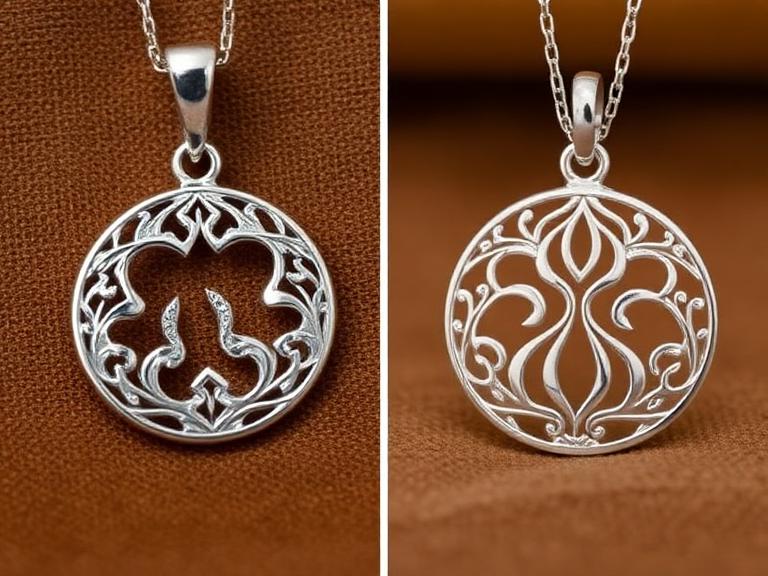
Because visual inspection is highly unreliable, professionals use specific metallurgical tests to confirm the differences between sterling silver and nickel silver in the field.
- The Hallmark Test: Genuine sterling is legally required to be stamped with “.925”, “Sterling”, or specific national hallmarks (like the British Lion Passant). Nickel silver items will either have no stamp, or be marked with “EPNS” (Electroplated Nickel Silver), “Alpaca”, or “German Silver”.
- The Nitric Acid Test: This is the definitive jeweler’s test. When a drop of testing acid is applied to sterling silver, the liquid turns a creamy gray or milky white color. When applied to nickel silver, the high copper and zinc content instantly reacts, turning the acid a bright, bubbling green.
- The XRF Analyzer: In modern industrial environments, X-ray fluorescence (XRF) scanners are used to instantly read the elemental composition of the metal, providing a perfect breakdown of the copper, zinc, nickel, and silver percentages without damaging the material.
Summary Table: Comparing the Two Metals
To provide a clear, highly practical overview for buyers and engineers, we have compiled the definitive differences between sterling silver and nickel silver into the responsive reference matrix below.
| Feature / Property | Sterling Silver (.925) | Nickel Silver (Alpaca / German Silver) |
|---|---|---|
| Actual Silver Content | 92.5% Pure Silver | 0% (Absolutely none) |
| Primary Base Metals | 7.5% Copper | 60% Copper, 20% Nickel, 20% Zinc |
| Mechanical Hardness | Relatively soft, highly malleable | Very hard, high tensile strength, rigid |
| Tarnishing Behavior | Forms black silver sulfide tarnish | Oxidizes slowly to a dull, grayish-green patina |
| Biocompatibility | Hypoallergenic (safe for most skin) | High risk of nickel contact dermatitis |
| Intrinsic Economic Value | High (Traded by the troy ounce) | Low (Traded by the scrap pound) |
Preguntas frecuentes
Industrial and Academic References
To further validate the metallurgical data and specifications discussed in this article, we recommend consulting the following authoritative sources regarding alloy compositions and biocompatibility:
 Spanish
  English
  Russian
  Turkish
  French
  Korean
  German
  Italian