In the highly demanding sectors of modern heavy industry, engineers and procurement specialists face immense pressure to select materials that guarantee absolute safety and operational longevity. When dealing with extreme temperatures, aggressive corrosive media, and high-pressure differentials, standard carbon and stainless steels often fall short. This is where UNS N06625, widely known as Inconel 625, becomes the material of choice. However, selecting the right superalloy is only the first step. Utilizing a precise Inconel 625 Pipe Schedule Chart is essential for proper fluid dynamics calculations, structural integrity assessments, and accurate procurement planning.
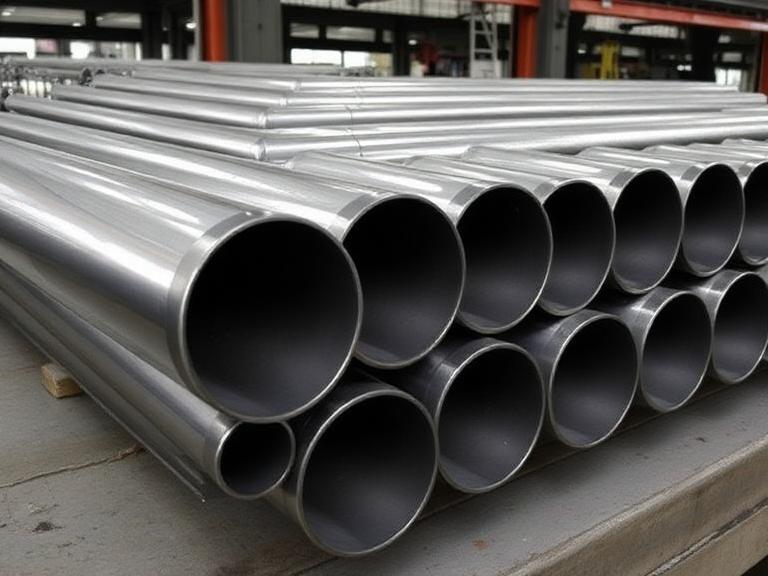
At TOKO TEKNİK, an export-driven manufacturing enterprise headquartered in Shanghai, China, we specialize in the research, development, production, and sales of high-end metal pipeline systems. Operating from our modern production base in the Yangtze River Delta—China’s industrial core region—we have built our reputation on the core philosophy of “Quality First, Innovation Driven”. From our experience providing high-performance, corrosion-resistant pipeline products to global clients, we know that understanding piping dimensions is critical for industries such as petrochemicals, energy and power, shipbuilding, pharmaceutical and food processing, and environmental engineering. In this authoritative guide, we will provide an in-depth look at the Inconel 625 Pipe Schedule Chart, exploring technical specifications, engineering applications, and expert recommendations for your next project.
İçindekiler
- Understanding Inconel 625: Material Superiority
- The Importance of the Inconel 625 Pipe Schedule Chart
- Comprehensive Inconel 625 Pipe Schedule Chart
- Summary Table: Schedule Classifications and Uses
- Engineering Applications for Inconel 625 Piping
- Expert Procurement and Sourcing Advice
- Sıkça Sorulan Sorular (SSS)
- Referanslar
Understanding Inconel 625: Material Superiority
Before diving into the dimensional data provided by an Inconel 625 Pipe Schedule Chart, it is crucial to understand why this specific nickel-chromium-molybdenum alloy is so highly valued. Inconel 625 derives its extraordinary strength and toughness from the solid solution effects of molybdenum and niobium on the nickel-chromium matrix. This unique metallurgical composition allows the alloy to maintain high tensile strength and creep-rupture strength at temperatures ranging from cryogenic levels up to 1800 degrees Fahrenheit (982 degrees Celsius).
Furthermore, the material exhibits outstanding resistance to severe corrosive environments. It is virtually immune to chloride-ion stress-corrosion cracking and offers excellent protection against pitting and crevice corrosion. We recommend our Nickel Alloy Seamless Pipe/Tube products manufactured from Inconel 625 for environments where sour gas, seawater, or harsh acidic processing chemicals are present. By referencing the correct Inconel 625 Pipe Schedule Chart, engineers can calculate the exact corrosion allowance required for a given lifespan, ensuring that the chosen wall thickness will withstand both mechanical pressure and gradual material loss over decades of service.
The Importance of the Inconel 625 Pipe Schedule Chart
In pipeline engineering, pipes are standardized by two critical numbers: the Nominal Pipe Size (NPS) and the Schedule (SCH). The NPS dictates the approximate inside diameter for smaller pipes and the exact outside diameter (OD) for pipes 14 inches and larger. The schedule, however, refers directly to the wall thickness. As the schedule number increases, the wall thickness increases, while the outside diameter remains constant. This means that a higher schedule results in a smaller inside diameter (ID).
Because Inconel 625 is an expensive, high-alloy material, precision in specifying the wall thickness is paramount. Over-engineering by selecting a schedule that is too thick results in unnecessary material costs and heavier structural loads. Under-engineering risks catastrophic pipeline failure. The Inconel 625 Pipe Schedule Chart is the definitive tool used to balance these financial and safety constraints. Under ASME B36.19 standards (which govern stainless steel and high-alloy pipes), you will often see schedules appended with an “S” (e.g., Sch 10S, 40S, 80S). From our experience at TOKO TECH, carefully consulting the Inconel 625 Pipe Schedule Chart ensures seamless integration with corresponding Stainless Steel Pipe Fitting components and valves.
Comprehensive Inconel 625 Pipe Schedule Chart
Below is an authoritative and detailed Inconel 625 Pipe Schedule Chart. It outlines the Nominal Pipe Size (NPS), Outside Diameter (OD), Schedule (SCH), Wall Thickness, and the approximate theoretical weight per meter. Please note that exact weights can vary slightly depending on manufacturing tolerances and specific alloy batch densities, but these figures serve as the industry standard for engineering calculations.
| NPS (Inches) | Outside Diameter (mm) | Schedule (SCH) | Wall Thickness (mm) | Weight (kg/m) |
|---|---|---|---|---|
| 1/2 | 21.34 | 10S | 2.11 | 1.04 |
| 1/2 | 21.34 | 40S | 2.77 | 1.32 |
| 1/2 | 21.34 | 80S | 3.73 | 1.69 |
| 1 | 33.40 | 10S | 2.77 | 2.18 |
| 1 | 33.40 | 40S | 3.38 | 2.61 |
| 1 | 33.40 | 80S | 4.55 | 3.38 |
| 2 | 60.33 | 10S | 2.77 | 4.10 |
| 2 | 60.33 | 40S | 3.91 | 5.67 |
| 2 | 60.33 | 80S | 5.54 | 7.81 |
| 3 | 88.90 | 10S | 3.05 | 6.73 |
| 3 | 88.90 | 40S | 5.49 | 11.77 |
| 3 | 88.90 | 80S | 7.62 | 15.93 |
| 4 | 114.30 | 10S | 3.05 | 8.73 |
| 4 | 114.30 | 40S | 6.02 | 16.76 |
| 4 | 114.30 | 80S | 8.56 | 23.28 |
| 6 | 168.28 | 10S | 3.40 | 14.41 |
| 6 | 168.28 | 40S | 7.11 | 29.50 |
| 6 | 168.28 | 80S | 10.97 | 44.37 |
| 8 | 219.08 | 10S | 3.76 | 20.84 |
| 8 | 219.08 | 40S | 8.18 | 44.36 |
| 8 | 219.08 | 80S | 12.70 | 67.43 |
Summary Table: Schedule Classifications and Uses
To assist in rapid decision-making, we have consolidated the application logic behind the different schedules found within the Inconel 625 Pipe Schedule Chart. Understanding which schedule aligns with your operational parameters is vital for both safety and cost control.
| Schedule Type | Relative Wall Thickness | Primary Engineering Application | Typical Industry Sector |
|---|---|---|---|
| Schedule 5S / 10S | Thin Wall | Low-pressure fluid transfer, high corrosion environments with minimal mechanical stress. | Pharmaceuticals, Food Processing, Exhaust Systems |
| Schedule 40S | Standard Wall | General purpose industrial piping, moderate pressure, and moderate structural loads. | Petrochemical Refineries, Environmental Engineering |
| Schedule 80S | Extra Heavy Wall | High-pressure applications, extreme structural stress, deep-water environments. | Offshore Shipbuilding, Energy and Power, Subsea Oil & Gas |
| Schedule 160 / XXS | Ultra Heavy Wall | Extreme high-pressure differentials, severe abrasive or volatile fluid handling. | Nuclear Reactors, High-Pressure Chemical Synthesis |
Engineering Applications for Inconel 625 Piping
The data extracted from an Inconel 625 Pipe Schedule Chart translates directly into real-world capabilities. At TOKO TECH, our diverse product portfolio is engineered to meet these precise specifications. Let us explore how these dimensions apply across various industrial sectors.
Petrochemicals and Refineries
In refining environments, pipelines are exposed to volatile hydrocarbons, hydrogen sulfide, and extreme thermal cycling. By consulting the Inconel 625 Pipe Schedule Chart, engineers often specify Schedule 40S or 80S for main transfer lines. We recommend utilizing our high-quality Seamless Pipe/Tube for these applications, as the absence of a longitudinal weld seam eliminates a potential vector for localized corrosion and stress concentration, offering superior reliability under high-temperature cracking processes.
Offshore and Shipbuilding
The marine environment is notoriously unforgiving due to constant exposure to chloride-rich seawater. For platforms and shipbuilding, the weight-to-strength ratio is critical. An accurate reading of the Inconel 625 Pipe Schedule Chart allows naval architects to minimize topside weight without compromising burst pressure ratings. For subsea umbilical lines and hydraulic control systems, TOKO TECH’s Coiled Tubing/Control Line Tube provides continuous, weld-free lengths that are highly resistant to fatigue and localized pitting.
Enerji ve Güç Üretimi
Whether in advanced ultra-supercritical coal power plants or nuclear facilities, steam lines require materials that resist creep at elevated temperatures. The heavier schedules identified in the Inconel 625 Pipe Schedule Chart provide the necessary wall thickness to safely contain high-pressure superheated steam. For connecting critical infrastructure, TOKO TECH also supplies precision Nickel Alloy Bar/Rod and Stainless Steel Pipe Fitting components, ensuring a cohesive and chemically compatible system architecture.
Expert Procurement and Sourcing Advice
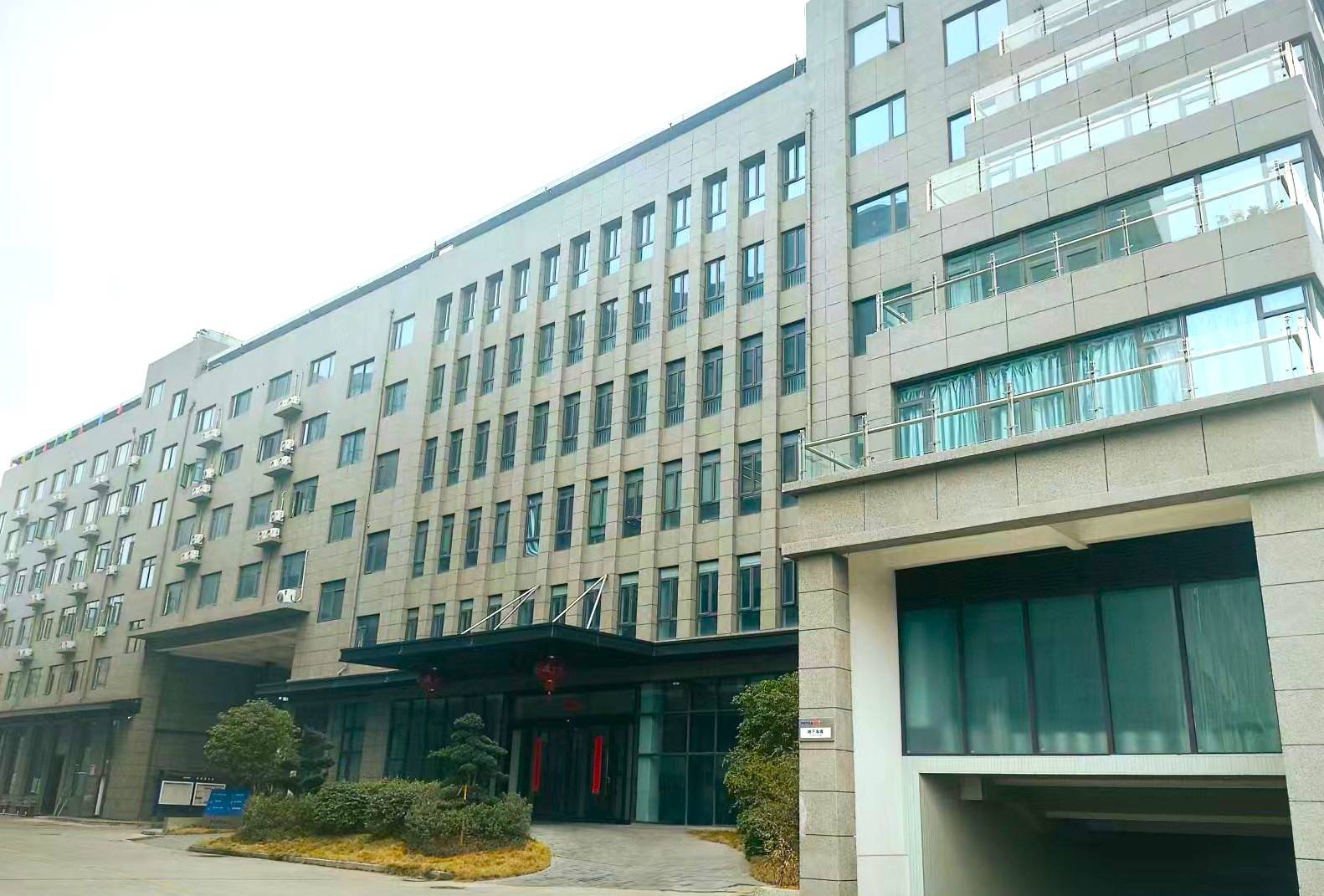
TOKO TECH’s Perspective: Sourcing high-nickel alloys requires a partnership with a manufacturer that strictly adheres to international standards such as ASTM B444 ve ASME SB-444. From our experience, dimensional accuracy is just as critical as chemical composition.
When you are ready to procure materials based on your Inconel 625 Pipe Schedule Chart calculations, we recommend focusing on several key quality assurance metrics. First, ensure that the manufacturer utilizes advanced non-destructive testing (NDT), such as ultrasonic and eddy current testing, to verify the integrity of the entire pipe length. Hidden inclusions or micro-cracks can severely derate the pressure capacity calculated from the schedule chart.
Secondly, consider the choice between Seamless Pipe/Tube and Welded Pipe/Tube. While seamless pipes offer superior pressure containment for heavy schedules (Schedule 80S and above), advanced welded pipes manufactured with precise GTAW (Gas Tungsten Arc Welding) techniques are highly cost-effective for Schedule 10S and 40S applications. At TOKO TECH, our manufacturing facilities in the Yangtze River Delta employ state-of-the-art automated welding and cold-drawing technologies, ensuring that our products meet the exact dimensional tolerances dictated by the Inconel 625 Pipe Schedule Chart.
Sıkça Sorulan Sorular (SSS)
What is the difference between Schedule 40 and Schedule 40S on an Inconel 625 Pipe Schedule Chart?
The “S” stands for stainless steel, a convention adopted by ASME B36.19 which also applies to high-nickel alloys like Inconel 625. While the wall thicknesses for Schedule 40 and 40S are identical for smaller pipe sizes (up to 10 inches), they begin to diverge in larger diameters, with the “S” schedules generally remaining thinner to optimize material costs for high-alloy metals.
How do I calculate the weight of a pipe using the Inconel 625 Pipe Schedule Chart?
The weight is calculated based on the alloy’s specific density (approximately 8.44 g/cm³ for Inconel 625), the outside diameter, and the wall thickness. Our comprehensive Inconel 625 Pipe Schedule Chart provides pre-calculated theoretical weights in kg/m, saving engineers valuable time during the estimation and logistics planning phases.
Why should I choose TOKO TECH for my Inconel 625 piping needs?
TOKO TECH is an export-driven manufacturing enterprise with deep roots in the Yangtze River Delta. We combine our core philosophy of “Quality First, Innovation Driven” with rigorous testing and extensive manufacturing capabilities. Whether you need Nickel Alloy Seamless Pipe/Tube, Welded Pipe/Tube, or Coiled Tubing/Control Line Tube, our products strictly conform to the dimensional requirements of the Inconel 625 Pipe Schedule Chart, guaranteeing global compliance and superior performance.
Referanslar
- ASTM B444 – Standard Specification for Nickel-Chromium-Molybdenum-Columbium Alloys (UNS N06625 and UNS N06852) and Nickel-Chromium-Molybdenum-Silicon Alloy (UNS N06219) Pipe and Tube
- ASME B36.19M – Stainless Steel Pipe Dimensions and Schedules
- Nickel Institute – About Nickel Alloys and Their Industrial Applications
- NACE International – The Worldwide Corrosion Authority
 Turkish
  English
  Spanish
  Russian
  French
  Korean
  German
  Italian