As global industries push the boundaries of thermal efficiency and operational sustainability, the demand for robust thermal management infrastructure has reached unprecedented levels. In petrochemical refining, power generation, and pharmaceutical processing, the shell and tube configuration remains the undisputed standard for thermal transfer. However, navigating the procurement landscape requires a precise understanding of the variables that dictate the Heat exchangers shell & tube price in 2026. From fluctuating raw material indices to the stringent quality requirements of high-temperature, high-pressure operations, determining the true cost of these critical assets goes far beyond a simple baseline quote.
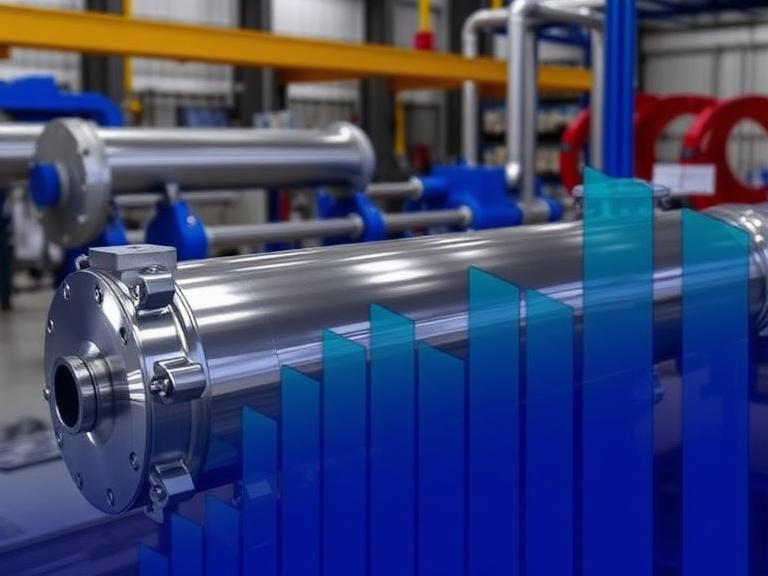
As an export-driven manufacturing enterprise headquartered in Shanghai, China, operating within the industrial core region of the Yangtze River Delta, TOKO TEKNİK specializes in the research, development, production, and sales of high-end metal pipeline systems. Operating under our core philosophy of Quality First, Innovation Driven, we provide high-performance, corrosion-resistant pipeline products to the global petrochemical, energy, shipbuilding, pharmaceutical, and environmental engineering sectors.
From our experience supplying the fundamental components that build these thermal assets, we recognize that the Heat exchangers shell & tube price is inextricably linked to the metallurgical integrity of its internal pipeline systems. The tube bundle alone can represent upwards of sixty percent of the total equipment cost. We recommend that facility engineers and procurement specialists look past initial capital expenditure (CAPEX) and focus on lifecycle costs dictated by material selection, such as utilizing premium seamless piping versus standard welded configurations. In this authoritative guide, we will dissect the global economic and technical factors driving the Heat exchangers shell & tube price, offering actionable insights for strategic procurement.
İçindekiler
- Summary Table: Variables Impacting the 2026 Price Index
- Macroeconomic Factors Driving the Heat Exchangers Shell & Tube Price
- Material Science: The Primary Cost Determinant
- Seamless vs. Welded Architectures in Thermal Systems
- Auxiliary Components and System Integration
- Expert Procurement Guide for 2026
- Sıkça Sorulan Sorular (SSS)
- Industry References
Summary Table: Variables Impacting the 2026 Price Index
To assist our global partners in their capital planning, we have developed a comprehensive summary table outlining the primary variables that will directly influence the Heat exchangers shell & tube price throughout the 2026 fiscal year.
| Pricing Variable | Impact Level | Key Drivers in 2026 | Strategic Mitigation Recommendation |
|---|---|---|---|
| Raw Material Commodities | Yüksek | Volatility in global nickel, chromium, and molybdenum markets. | Lock in long-term supply contracts for raw alloys early in the fiscal year. |
| Tube Bundle Metallurgy | Critical | Shift toward highly corrosive environments demanding exotic alloys. | Specify Nickel Alloy Seamless Pipe/Tube to extend lifespan and reduce OPEX. |
| Manufacturing Tolerances | Orta | Increased demand for high-pressure testing and precision machining. | Partner with integrated manufacturers within the Yangtze River Delta to leverage economies of scale. |
| Structural Shell Materials | Orta | Availability of heavy-wall carbon steel and specialized stainless cladding. | Utilize robust Welded Pipe/Tube for outer shell construction to balance costs. |
| Logistics and Export | Yüksek | Global shipping constraints and regional tariff fluctuations. | Source fully integrated pipeline systems from single-origin export hubs like Shanghai. |
Macroeconomic Factors Driving the Heat Exchangers Shell & Tube Price
Understanding the current Heat exchangers shell & tube price requires a macroeconomic view of the metal commodities market. In 2026, the transition toward clean energy initiatives and the expansion of heavy petrochemical infrastructure in developing nations have constrained the supply of high-grade metallurgical components. The Heat exchangers shell & tube price is highly sensitive to the spot prices of raw nickel, chromium, and specialized steel alloys required to forge the tubes, baffles, and massive outer pressure vessels.
Furthermore, stringent environmental engineering regulations now mandate higher operating pressures and temperatures to maximize thermal recovery and reduce carbon footprints. These operational parameters dictate thicker vessel walls and more resilient internal tubing. As a result, the baseline Heat exchangers shell & tube price has structurally shifted upward. From our experience, buyers attempting to circumvent these rising costs by opting for inferior metal grades inevitably face catastrophic equipment failure, leading to unscheduled downtime that dwarfs the initial savings on the equipment purchase.
Material Science: The Primary Cost Determinant
The core function of a shell and tube exchanger is to transfer heat between two fluids separated by a solid barrier. This barrier—the tube bundle—is the most highly stressed component of the system. The specific metallurgy chosen for this bundle is the single largest factor dictating the final Heat exchangers shell & tube price.
Standard Stainless Steel Configurations
For mid-range temperature applications in the food processing, pharmaceutical, and standard chemical sectors, austenitic stainless steels (such as 304L and 316L) remain the industry standard. These materials offer excellent corrosion resistance against mild acids and superior cleanability. When evaluating the Heat exchangers shell & tube price for these standard applications, procurement teams will find a relatively stable market, supported by the mature production capabilities of manufacturers in China’s industrial core. Sourcing high-quality Seamless Pipe/Tube in stainless steel provides a reliable, cost-effective thermal transfer surface.
Advanced Nickel Alloy Deployments
However, when operations move into severe environments—such as offshore shipbuilding, deep-well energy extraction, or highly acidic petrochemical refining—standard stainless steel is insufficient. In these scenarios, the Heat exchangers shell & tube price increases significantly due to the necessity of exotic metallurgy. We strongly recommend the deployment of our Nickel Alloy Seamless Pipe/Tube for these hyper-critical applications. Alloys such as Inconel, Monel, and Hastelloy exhibit extraordinary resistance to chloride stress corrosion cracking, pitting, and extreme thermal cycling.
While specifying nickel alloys elevates the initial Heat exchangers shell & tube price, it drastically reduces the Total Cost of Ownership (TCO). In a sour gas processing facility, for example, a standard stainless bundle might require replacement every three years. A properly engineered nickel alloy bundle can easily exceed a fifteen-year lifespan, fundamentally altering the economics of the plant.
Seamless vs. Welded Architectures in Thermal Systems
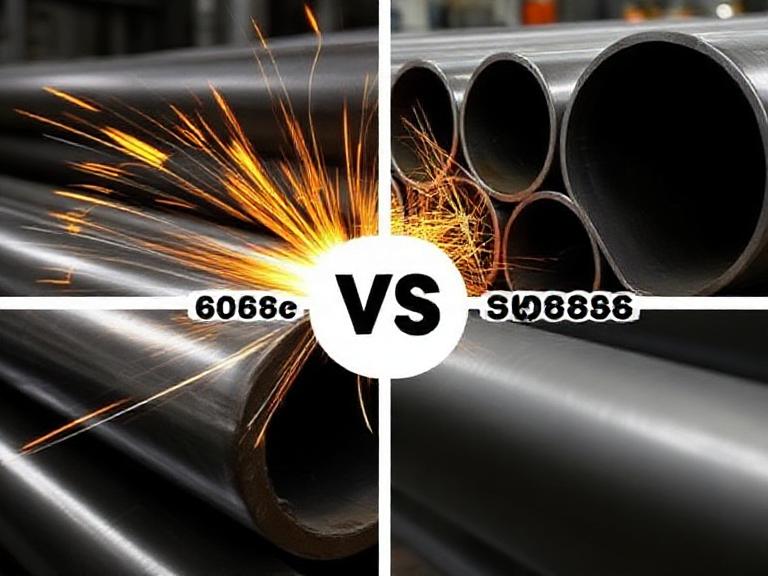
Beyond the elemental composition of the metal, the manufacturing method of the pipeline components plays a definitive role in establishing the Heat exchangers shell & tube price. Buyers must carefully evaluate the structural requirements of their specific application to determine whether seamless or welded construction is appropriate.
Our Seamless Pipe/Tube products are manufactured through an extrusion process that creates a continuous, homogeneous metal structure without any longitudinal weld seam. This absence of a weld seam eliminates the weakest point in the pipe, allowing it to withstand significantly higher internal pressures and making it the ideal choice for the internal tube bundles of a high-pressure heat exchanger. Naturally, the complex manufacturing process of extrusion means that specifying seamless internals will yield a higher Heat exchangers shell & tube price.
Conversely, our Welded Pipe/Tube is produced by rolling metal plates or coils and welding the seam. Modern welding technology has advanced to the point where the weld seam is incredibly strong, making these products exceptionally reliable for the outer shell of the heat exchanger or for low-to-medium pressure utility heat transfer. By strategically mixing materials—utilizing seamless tubes for the critical high-pressure inner bundle and large-diameter welded pipes for the outer shell—engineers can optimize safety while maintaining a highly competitive Heat exchangers shell & tube price.
Auxiliary Components and System Integration
A heat exchanger does not operate in isolation; it must be flawlessly integrated into the broader industrial plant. The Heat exchangers shell & tube price quoted by fabricators often does not account for the extensive pipeline architecture required to connect the unit to the main process lines. At TOKO TECH, we view the heat exchanger as one node in a comprehensive high-performance pipeline system.
We supply precision Paslanmaz Çelik Boru Ek Parçaları components, including flanges, elbows, and reducers, which are critical for safely connecting the high-pressure nozzles of the heat exchanger to the plant piping. The structural integrity of the heavy tube sheets, which support the internal bundle, is often machined directly from our premium Nikel Alaşımlı Çubuk/Çubuk inventory, ensuring exact thermal expansion matching between the tubes and the supporting matrix.
Furthermore, in highly specialized energy and power applications, internal diagnostic or chemical injection lines must be routed through the exchanger shell. For these unique challenges, we provide ultra-long, continuous Sarmal Boru/Kontrol Hattı Borusu, allowing for uninterrupted fluid control without the risk of internal joint leakage. Integrating these specialized components at the manufacturing stage ensures that the total installed Heat exchangers shell & tube price remains within budget while exceeding stringent safety tolerances.
Expert Procurement Guide for 2026
Navigating the volatile Heat exchangers shell & tube price landscape requires a strategic approach to procurement. From our experience as an export-driven manufacturing enterprise, we advise our global clients to adhere to the following professional guidelines:
- Consolidate the Supply Chain: Avoid purchasing raw materials, piping, and fabrication services from disparate vendors. The Heat exchangers shell & tube price escalates rapidly when logistics and profit margins are multiplied across several middlemen. Partner directly with modern production bases in the Yangtze River Delta capable of supplying all foundational materials.
- Conduct Rigorous Lifecycle Cost Analysis: Do not base your procurement decision solely on the lowest initial Heat exchangers shell & tube price. Calculate the cost of maintenance, potential production downtime, and equipment lifespan. Specifying TOKO TECH Nickel Alloy Seamless Pipe/Tube will present a higher upfront cost but provides unparalleled long-term financial security in corrosive environments.
- Demand Uncompromising Quality Assurance: The extreme pressures handled by these vessels mean that a single metallurgical flaw can result in catastrophic failure. Ensure your supplier strictly adheres to a “Quality First, Innovation Driven” philosophy, backed by comprehensive non-destructive testing (NDT), hydrostatic testing, and full material traceability.
Sıkça Sorulan Sorular (SSS)
Why is the Heat exchangers shell & tube price significantly higher for offshore applications?
Offshore shipbuilding and deep-sea energy platforms operate in highly corrosive saline environments while managing extreme internal pressures. To prevent catastrophic corrosion and ensure maritime safety, these heat exchangers must be constructed using premium marine-grade materials like our Nickel Alloy Seamless Pipe/Tube and heavy-duty Stainless Steel Pipe Fitting components. The raw cost of these specialized alloys and the rigorous maritime certifications required directly elevate the Heat exchangers shell & tube price.
Can utilizing welded tubes lower the overall Heat exchangers shell & tube price?
Yes, utilizing our high-quality Welded Pipe/Tube can significantly reduce the internal bundle costs compared to seamless options. We recommend welded tubes for applications involving stable, low-pressure fluids such as utility water cooling or low-grade steam condensation, where the extreme pressure ratings of seamless extrusion are not mechanically necessary.
How does material sourcing from the Yangtze River Delta affect global pricing?
The Yangtze River Delta is China’s premier industrial core region, boasting an incredibly dense and highly efficient supply chain for metallurgy and heavy manufacturing. By operating our modern production base here, TOKO TECH leverages immense economies of scale, advanced technological infrastructure, and streamlined global export logistics. This allows us to provide high-performance materials that optimize the final Heat exchangers shell & tube price for our international clients without compromising on our strict quality standards.
Industry References
- American Society of Mechanical Engineers (ASME) – Boiler and Pressure Vessel Code Section VIII
- Tubular Exchanger Manufacturers Association (TEMA) – Standards and Engineering Guidelines
- Association for Materials Protection and Performance (AMPP/NACE) – Corrosion Standards for Pipeline and Vessel Metallurgy
 Turkish
  English
  Spanish
  Russian
  French
  Korean
  German
  Italian