In the high-stakes world of industrial engineering, piping infrastructure is not a place for guesswork or budgetary shortcuts. Whether you are transporting highly corrosive sour gas across a subsea manifold, moving superheated steam through a power generation facility, or ensuring sterile transfers in a pharmaceutical plant, the structural integrity of your pipeline dictates the safety and profitability of your entire operation. At the core of this infrastructure is the seamless pipe. Unlike welded pipes, which contain a longitudinal seam that acts as an inherent weak point under extreme stress, seamless pipes are extruded from a solid billet of metal, offering unparalleled burst strength and pressure capacity.
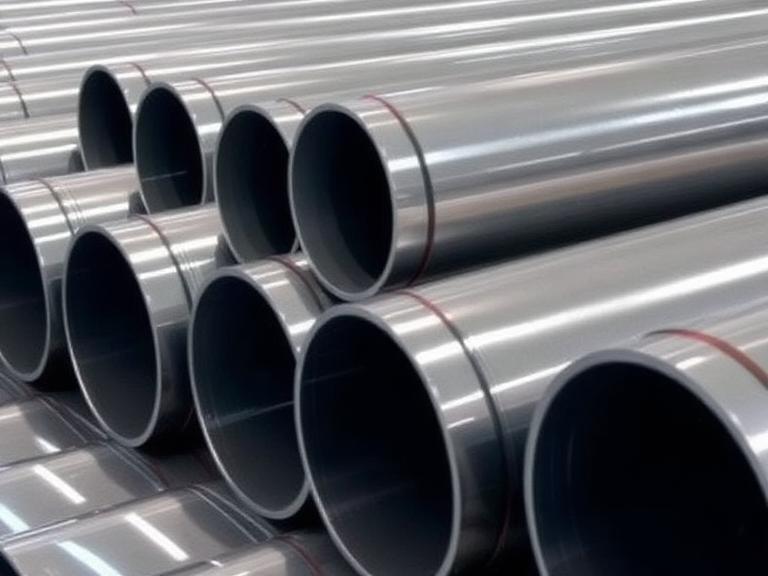
However, an extruded tube is only as reliable as its metallurgy. From our experience, catastrophic pipeline failures rarely occur because a pipe was “seamless” instead of “welded.” They fail because the wrong alloy was specified for the operational environment. You cannot effectively manage high-pressure chloride environments with basic carbon steel, just as you should not waste capital on titanium for a simple low-pressure water line. In this uncompromising guide, we will analyze the four primary materials used in seamless pipe, providing you with the commercial and practical judgment necessary to make an informed, economically sound purchasing decision.
Quick Answer: What Are the Materials Used in Seamless Pipe?
In most professional situations, the four primary materials used in seamless pipe manufacturing are: 1. Carbon Steel (for high-pressure, non-corrosive fluid transport), 2. Stainless Steel (for sanitary, chemical, and general corrosive environments), 3. Chrome-Moly Alloy Steel (engineered specifically for high-temperature and power generation applications), and 4. High-Performance Nickel Alloys (for extreme corrosive, offshore, and aerospace applications). We recommend assessing your system’s maximum operating pressure, peak temperature, and chemical exposure before selecting a material. For heavy-duty applications involving acidic or sour gas environments, high-performance nikel alaşımlı dikişsiz boru is the undisputed industry standard.
İçindekiler
- What It Is and How Seamless Extrusion Works
- The 4 Core Materials Used in Seamless Pipe
- Commercial Benefits of Proper Specification
- Limitations and Drawbacks
- Who Should Use Which Material?
- Common Mistakes in Pipeline Procurement
- Crucial Buying Considerations
- Expert Recommendation from TOKO TECH
- Sıkça Sorulan Sorular (SSS)
What It Is and How Seamless Extrusion Works
To understand why the choice of materials used in seamless pipe is so critical, you must first understand how these components are manufactured. The seamless pipe production process is a violent, metallurgically taxing operation. It begins with a solid cylindrical billet of raw metal. This billet is heated to extreme temperatures in a rotary hearth furnace until it becomes malleable. It is then fed into a piercing mill, where powerful conical rolls push the billet over a piercing plug, hollowing out the center.
Because there is no longitudinal weld seam, the resulting pipe possesses a uniform grain structure. This homogeneity allows seamless pipes to withstand internal pressures up to 20% higher than welded pipes of the exact same material grade. However, the piercing and extrusion process demands that the raw materials used in seamless pipe possess excellent hot-workability. If a material is too brittle at high temperatures, it will tear and fracture during the piercing phase. This is why highly specialized alloys, such as those produced by elite nikel alaşımlı çubuk üreticileri, are strictly controlled before they ever enter the piercing mill.
The 4 Core Materials Used in Seamless Pipe
1. Carbon Steel (The Industrial Workhorse)
Carbon steel is the most ubiquitous of all materials used in seamless pipe manufacturing. Grades such as ASTM A106 (Grades B and C) and ASTM A53 are the backbone of the global oil and gas industry, structural engineering, and standard fluid transport. Carbon steel offers phenomenal tensile strength and is highly economical to produce. However, its primary weakness is its susceptibility to oxidation (rust) and chemical corrosion. It must be externally coated or cathodically protected when buried or exposed to the elements.
2. Austenitic and Duplex Stainless Steel
When operational environments require hygiene and resistance to mild to moderate corrosives, stainless steel (primarily 304/304L and 316/316L) is specified. The inclusion of chromium (minimum 10.5%) creates a passive oxide layer that protects the pipe from rusting. In our testing, for environments demanding higher yield strength and localized pitting resistance, Duplex stainless steels (like 2205) bridge the gap between standard stainless and expensive super-alloys. Stainless steel seamless pipes are mandatory in food processing, pharmaceutical production, and clean-water facilities.
3. Chrome-Moly Alloy Steel (High-Temperature Specialists)
In power generation, refineries, and chemical processing plants, pipes often transport superheated steam at temperatures that would cause carbon steel to lose its structural integrity and rupture. Chrome-Moly (Chromium-Molybdenum) alloys, such as P11, P22, and P91, are specifically engineered to combat high-temperature creep. The chromium enhances high-temperature oxidation resistance, while the molybdenum significantly increases the metal’s elastic limit at extreme heat.
4. High-Performance Nickel Alloys
For the absolute most demanding environments on Earth—such as deep-water offshore drilling, sour gas (H2S) extraction, and aerospace hydraulics—standard steels fail rapidly. This is where nikel alaşımlı boru ve tüp solutions dominate. Grades like Inconel 625, Hastelloy C-276, and Monel 400 offer near-immunity to chloride-induced stress corrosion cracking, pitting, and extreme thermal shock. While the initial capital expenditure for nickel alloys is high, their longevity in hostile environments results in a vastly superior total cost of ownership.
| Material Category | Common ASTM Grades | Birincil Avantaj | Cost Profile |
|---|---|---|---|
| Karbon Çelik | A106, A53, API 5L | High burst strength, cost-effective | Düşük |
| Paslanmaz Çelik | A312 (304L, 316L), Duplex 2205 | Corrosion resistance, hygienic surface | Orta |
| Chrome-Moly Alloy | A335 (P11, P22, P91) | Extreme high-temperature stability | Medium-High |
| Nikel Alaşımları | Inconel 625, Hastelloy, Monel | Immunity to severe chemical & thermal attack | Yüksek |
Commercial Benefits of Proper Specification
In most professional situations, the benefit of correctly specifying materials used in seamless pipe translates directly to operational uptime. A pipeline that does not require emergency shutdowns for leak repair is a profitable pipeline. By upgrading from carbon steel to a duplex stainless or a nickel alloy in a corrosive environment, facility managers drastically reduce their Operational Expenditure (OPEX) over a 20-year lifecycle, easily offsetting the higher initial Capital Expenditure (CAPEX).
Limitations and Drawbacks
We must use commercial judgment: there is no universal “perfect” pipe. The primary limitation of seamless pipe, regardless of the material, is its manufacturing cost and size availability. Because it is extruded from a solid billet, seamless pipe becomes exponentially more expensive and difficult to manufacture as the outer diameter (OD) increases beyond 24 inches. Furthermore, exotic materials like Hastelloy are notoriously difficult to machine and weld in the field, requiring highly specialized labor.
| Malzeme Türü | Korozyon Direnci | Max Operating Temp (Approx) | Weldability in Field | Typical Yield Strength |
|---|---|---|---|---|
| Carbon Steel (A106 B) | Poor (Requires Coating) | 800°F (427°C) | Mükemmel | 35,000 psi |
| Stainless Steel (316L) | Good to Excellent | 1500°F (815°C) | Good | 25,000 psi |
| Chrome-Moly (P91) | Orta düzeyde | 1100°F (593°C) | Requires Pre/Post Heating | 60,000 psi |
| Nickel Alloy (Inconel 625) | Üstün | 1800°F (982°C) | Complex | 60,000+ psi |
Who Should Use Which Material (And Who Should Not)
For commercial users in general construction and HVAC: Stick to Carbon Steel. It is reliable, inexpensive, and perfectly suited for chilled water, fire suppression systems, and standard structural applications. Do not over-specify stainless steel for a closed-loop dry system; it is a waste of capital.
For heavy-duty applications in Oil & Gas upstream: When drilling into sour gas reservoirs, the hydrogen sulfide will instantly embrittle standard carbon steel. You must utilize NACE-compliant coil tubing in oil and gas applications constructed from high-performance nickel alloys or super-duplex stainless steels. Similarly, for heat transfer efficiency in corrosive refinery units, specifying specialized kanatlı boru ürünleri made of high-alloy materials is non-negotiable.
For beginners and junior specifiers: A common misconception is that “stainless steel never rusts.” This is false. Exposing standard 304 stainless steel to high-chloride environments (like seawater) will result in rapid pitting. If your project is coastal or marine, you must upgrade to 316L or a specific marine-grade alloy.
Common Mistakes in Material Specification
The most devastating mistake we witness in the industry is Galvanic Corrosion caused by mixed-metal engineering. If a procurement manager specifies a premium nickel alloy seamless pipe, but the installation contractor uses standard carbon steel bolts, flanges, or hangers to secure it, the dissimilar metals will react in the presence of an electrolyte (like humidity or seawater). The less noble metal (carbon steel) will aggressively corrode, leading to a localized structural failure that compromises the entire multi-million dollar system. You must isolate dissimilar materials used in seamless pipe networks.
Crucial Buying Considerations
| Consideration | What to Verify | Why It Matters |
|---|---|---|
| Mill Test Reports (MTRs) | Demand EN 10204 3.1 or 3.2 certified MTRs prior to delivery. | Without an MTR, you cannot verify the chemical composition or mechanical strength of the alloy. Untraceable pipe is dangerous pipe. |
| Non-Destructive Testing (NDT) | Ensure the pipe has undergone Ultrasonic or Hydrostatic testing. | Although seamless, extrusion anomalies can occur. Hydrostatic testing guarantees the pipe will not burst at its rated capacity. |
| Wall Thickness (Schedule) | Calculate exact Schedule (e.g., SCH 40, SCH 80, XXS) based on internal pressure. | Using a schedule that is too thin will lead to rupture; using a schedule that is too thick wastes thousands of dollars in excess material weight. |
| Pros of Seamless Extrusion | Cons of Seamless Extrusion |
|---|---|
| Zero longitudinal weld seam to fail under pressure. | Significantly higher procurement cost than ERW/welded pipe. |
| Superior performance in high-temperature and cyclic fatigue environments. | Lead times from top-tier mills can be excessively long for exotic alloys. |
| Uniform grain structure offers highly predictable mechanical behavior. | Wall thickness concentricity can sometimes vary more than in welded pipe. |
Expert Recommendation from TOKO TECH
In most professional situations, treating piping procurement as a basic commodity purchase leads to severe operational liabilities. The physical forces inside a petrochemical pipeline or a supercritical power boiler do not forgive substandard metallurgy.
TOKO TEKNİK yüksek kaliteli metal boru hattı sistemlerinin Ar-Ge, üretim ve satışında uzmanlaşmış ihracat odaklı bir üretim kuruluşudur. Merkezi Çin'in Şangay kentinde bulunan şirket, Yangtze Nehri Deltası'nda (Çin'in endüstriyel çekirdek bölgesi) yer alan üretim tesisleriyle modern bir üretim üssü işletmektedir.
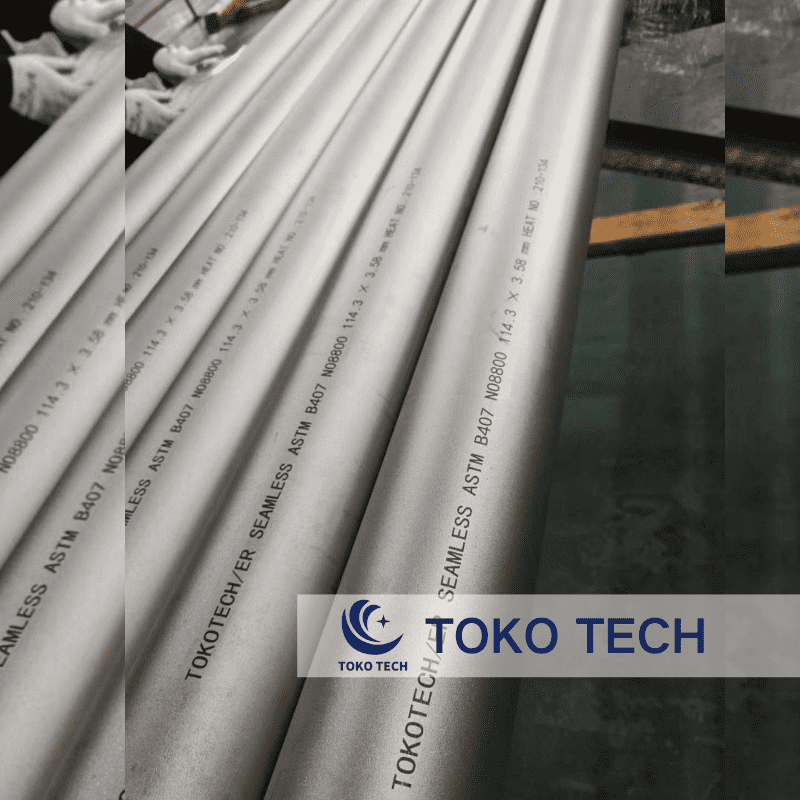
Since our establishment, TOKO TECH has adhered to the core philosophy of ”Quality First, Innovation Driven”, dedicated to providing high-performance, corrosion-resistant, and high-temperature/high-pressure pipeline products for global clients. Whether you require advanced konsantri̇k tüp uygulamalari or are evaluating the coiled tubing drilling cost for your next upstream venture, our products are engineered to dominate in industries such as petrochemicals, energy and power, shipbuilding, pharmaceutical processing, and environmental engineering. We strongly recommend partnering directly with a manufacturer that controls the metallurgical supply chain from raw billet to finalized, NDT-tested seamless pipe.
Sıkça Sorulan Sorular (SSS)
Seamless pipe is manufactured by piercing and extruding a solid, cylindrical billet of metal, creating a continuous tube with no joints. Welded pipe (ERW, LSAW) is formed by rolling a flat steel plate into a cylinder and welding the seam. Because seamless pipes lack a longitudinal weld seam—which acts as a structural stress concentrator—they can safely operate at significantly higher internal pressures and are preferred for critical, heavy-duty applications.
Nickel alloys (such as Inconel, Monel, and Hastelloy) are deployed when environmental conditions exceed the survival limits of standard stainless steel. They offer unparalleled resistance to chloride pitting, stress corrosion cracking, and extreme thermal degradation. If you are comparing sarmal boru şirketleri for deep, sour-gas (H2S) drilling, the capability to supply nickel alloy seamless tubing is an absolute prerequisite to prevent catastrophic wellhead failures.
Only up to a certain point. Standard carbon steel seamless pipe is typically rated for a maximum operating temperature of around 800°F (427°C). Prolonged exposure above this limit causes graphitization, where the steel becomes dangerously brittle. For superheated steam lines in power plants, engineers must step up to Chrome-Moly alloy steels or specialized high-temperature stainless grades.
Authoritative References and Industry Standards
To ensure your pipeline specifications meet global safety and engineering benchmarks, we advise consulting the standards established by the following authoritative organizations:
- ASTM International: Recognized globally for defining the metallurgical standards, chemical compositions, and mechanical testing requirements for virtually all materials used in seamless pipe manufacturing. Explore ASTM Standards
- American Petroleum Institute (API): The leading authority dictating the specifications (such as API 5L) for line pipe used in the transport of natural gas and petroleum. Review API Specifications
- NACE International (Now AMPP): The preeminent association for corrosion engineers, defining the strict material requirements (like MR0175) for pipes operating in sour gas and highly corrosive environments. Access AMPP/NACE Standards
 Turkish
  English
  Spanish
  Russian
  French
  Korean
  German
  Italian