Procuring high-performance nickel alloys is rarely a straightforward exercise. When engineering teams specify Alloy 600 for a critical pipeline or reactor vessel, procurement managers immediately face a volatile, opaque pricing market. Asking for the generic Inconel 600 price per kg is akin to asking for the price of a commercial building; the final number depends heavily on the product form, dimensional tolerances, order volume, mill origin, and the stringency of the certification testing required.
From our experience supplying high-end metal pipeline systems globally, buyers often make the costly mistake of budgeting based on raw commodity indexes. They look at the London Metal Exchange nickel prices and assume they can extrapolate the cost of finished Inconel 600 pipe. This fundamental misunderstanding leads to severe budget overruns. In this comprehensive guide, we strip away the industry opacity to give you the exact commercial realities of purchasing Inconel 600 in 2026.
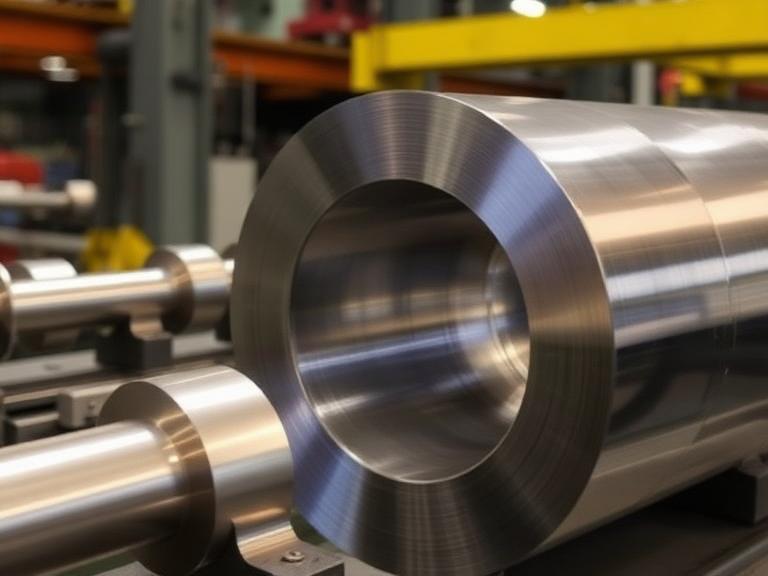
Quick Answer: What is the Inconel 600 Price Per Kg?
In 2026, the baseline industrial Inconel 600 price per kg ranges from $26 to $48 USD for standard product forms. Heavy industrial plate and standard bar stock typically fall on the lower end ($26 to $35 per kg). Conversely, precision-engineered products such as thin-wall seamless tubing, complex forged flanges, and highly certified stainless steel pipe fittings made from Alloy 600 will push toward the $40 to $48 per kg range. Retail or extremely small lot purchases from local stockists can easily exceed $55 per kg.
Table of Contents
- What is Inconel 600?
- How the Price is Calculated
- Quick Summary Table: Pricing by Form
- The Benefits of Investing in Inconel 600
- Limitations and Hidden Costs
- Who Should Use It (And Who Does Not Need It)
- Comparison Table: Inconel 600 vs. Alternatives
- Common Purchasing Mistakes
- Strategic Buying Considerations
- Expert Recommendation
- The Bottom Line
- Frequently Asked Questions
What is Inconel 600?
Inconel 600 (UNS N06600 / W.Nr. 2.4816) is a solid solution strengthened nickel-chromium alloy designed for use in severely corrosive and high-temperature environments. It typically contains a minimum of 72% Nickel, between 14% and 17% Chromium, and 6% to 10% Iron. Unlike precipitation-hardened alloys, Alloy 600 is hardened only by cold working.
From an engineering standpoint, this metallurgical composition makes it practically immune to chloride-ion stress-corrosion cracking—a frequent failure point for standard austenitic stainless steels. It maintains excellent mechanical properties from cryogenic temperatures up to 2000°F (1093°C). However, the massive nickel content is precisely what makes it an expensive material to source.
How the Price is Calculated
Understanding how the market determines the Inconel 600 price per kg requires looking past the base metal costs. While the raw nickel and chromium commodities establish the pricing floor, the conversion costs dictate the final invoice. Here is exactly how professional mills calculate your cost:
- Commodity Surcharges: Because nickel prices fluctuate wildly based on geopolitical events and electric vehicle battery demand, mills apply a monthly alloy surcharge. In 2026, nickel trading around $17,000 to $18,800 per metric ton forces base prices upward.
- Melting and Yield Loss: High-nickel alloys are notoriously difficult to melt and forge. Vacuum Induction Melting (VIM) and Electroslag Remelting (ESR) are energy-intensive processes. Furthermore, when producing a stainless steel seamless pipe or Inconel tube, the yield loss (the scrap generated during piercing and drawing) is significantly higher than with carbon steel.
- Form Factor Complexity: Extruding a seamless pipe is exponentially more difficult than rolling a flat plate. If you understand the difference between erw and seamless pipe, you know that seamless high-nickel production requires immense capital equipment, which drives up the per-kilo rate.
- Testing and Certification: Aerospace or nuclear-grade compliance requires ultrasonic testing, intergranular corrosion testing, and third-party witness inspections. Each testing protocol adds a hard cost to the per-kg baseline.
Quick Summary Table: Pricing by Form
| Product Form (Alloy 600) | Estimated 2026 Price Range (USD per Kg) | Primary Cost Drivers |
|---|---|---|
| Thick Plate / Billet | $26.00 – $32.00 | High yield, minimal cold working required. |
| Round Bar (Hot Rolled) | $30.00 – $36.00 | Standard mill production, easy stockholding. |
| Seamless Pipe & Tube | $38.00 – $46.00 | Complex extrusion, extensive NDT testing, high yield loss. |
| Forged Flanges & Fittings | $42.00 – $48.00 | Machining time, specialized forging dies, high scrap rate. |
| Precision Coiled Tubing | $50.00+ | Extreme tight tolerances, continuous lengths without orbital welds. |
The Benefits of Investing in Inconel 600
Why would a procurement officer authorize $40 per kg for Inconel 600 when standard stainless steel is available for a fraction of the cost? In most professional situations, the decision is driven by risk mitigation and lifecycle costs. When processing high-purity water in nuclear reactors, or handling caustic alkalis in chemical plants, the failure of a pipeline is catastrophic. Inconel 600 provides absolute resistance to chloride-ion stress-corrosion cracking.
Furthermore, in upstream oil and gas operations, dealing with sour gas (H2S) rapidly degrades lesser alloys. When evaluating the overall coiled tubing drilling cost, utilizing an inferior material leads to string failures downhole, costing millions in non-productive time. Investing the upfront capital in Inconel guarantees operational uptime in severe environments.
Limitations and Hidden Costs
Despite its legendary performance, Inconel 600 is not a universal solution. The primary limitation is its severe machinability rating. Because the alloy work-hardens rapidly, fabrication shops will charge you a massive premium for cutting, threading, and welding. You must use specialized tooling and run equipment at low speeds with heavy, continuous feeds.
Additionally, while it excels in alkaline and high-temperature environments, Inconel 600 is not optimal for highly oxidizing acid environments (like hot concentrated nitric acid). In such specific chemical applications, upgrading to a higher chromium alloy or a specialized Hastelloy might be required despite the cost penalty.
Who Should Use It (And Who Does Not Need It)
For heavy-duty applications: We recommend Inconel 600 for chemical processing plant managers handling caustic sodas, engineers designing furnace muffles and heat-treating trays, and offshore operators requiring extreme durability. If you are researching coil tubing in oil and gas applications for highly corrosive wellbore interventions, Alloy 600 (or its sibling, Alloy 625) is the benchmark standard.
Who does not need it: For commercial users building standard municipal water systems, low-temperature HVAC piping, or basic architectural structures, specifying Inconel 600 is an absurd waste of capital. A standard 316L stainless steel will perform flawlessly in these environments for less than a quarter of the price.
Comparison Table: Inconel 600 vs. Alternatives
| Material Grade | Average 2026 Price per Kg | Primary Advantage | Best Use Case |
|---|---|---|---|
| Inconel 600 | $26.00 – $48.00 | Chloride stress cracking immunity, high heat. | Chemical processing, furnace components. |
| Inconel 625 | $34.00 – $55.00 | Addition of Molybdenum; supreme pitting resistance. | Marine, severe offshore sour gas wells. |
| Stainless Steel 316L | $4.00 – $8.00 | Cost-effective baseline corrosion resistance. | Standard food processing, municipal water. |
| Duplex 2205 | $7.00 – $12.00 | High yield strength, better than 316L for chlorides. | Desalination plants, pressure vessels. |
Common Purchasing Mistakes
In our testing and industry observation, we repeatedly see buyers fall into identical procurement traps. The most severe mistake is sourcing based solely on the lowest spot price without verifying the mill test certificates (MTCs). The global market is plagued by counterfeit alloys. A broker may quote you an Inconel 600 price per kg of $18, but the material delivered may be a low-grade scrap melt with wildly inconsistent chromium levels.
Another common mistake is failing to specify the exact dimensions and tolerances upfront. Inconel is notoriously difficult to cold draw. If you require non-standard outer diameters or incredibly tight wall tolerances, custom drawing passes are required. Adding these specifications after a generic quote has been issued will instantly destroy your budget.
Lastly, many buyers fail to consider the capabilities of their chosen manufacturers. While compiling a list of the stainless steel pipe manufacturers usa based providers offer, buyers often realize that western mills carry extreme overhead and legacy pension costs, inflating the per-kilo price by 30% to 40% over global competitors for the exact same metallurgical chemistry.
Strategic Buying Considerations
When you are ready to issue a purchase order, you must evaluate the total landed cost, not just the quoted Inconel 600 price per kg. First, evaluate the delivery timeline. High-nickel alloys are rarely kept in deep inventory due to the massive capital tie-up. If a project is delayed waiting for a 16-week mill run, the cost of downtime will far exceed the alloy premium.
Second, assess the manufacturer’s integration. Are they buying hollows and just cold drawing them, or do they control the melt? Fully integrated mills provide much better traceability. If you are comparing seamless pipe manufacturers globally, you must demand EN 10204 3.1 or 3.2 certification to guarantee the chemical and mechanical properties of your specific batch.
Third, align your material with your deployment strategy. If you are evaluating downhole deployment methods and weighing wireline vs coiled tubing, ensuring your coiled tubing supplier utilizes strictly certified virgin melt Inconel 600 is non-negotiable for preventing catastrophic mechanical failures under pressure.
Expert Recommendation: Sourcing with TOKO TECH
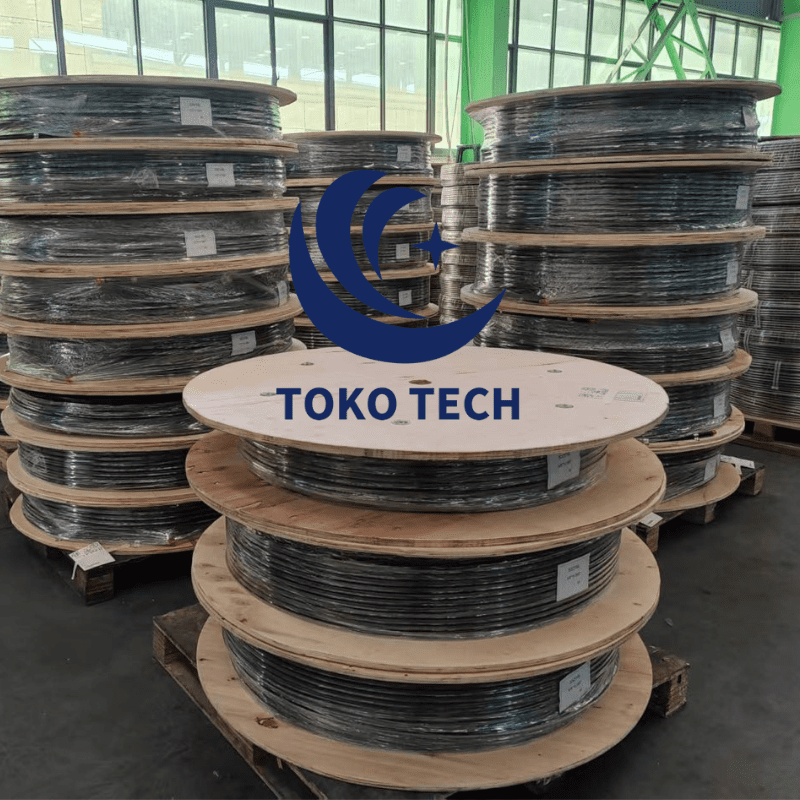
You do not have to pay the exorbitant legacy premiums demanded by western mills to acquire aerospace-grade Inconel 600. TOKO TECH is an export-driven manufacturing enterprise specializing in the R&D, production, and sales of high-end metal pipeline systems. Headquartered in Shanghai, China, with manufacturing facilities located in the Yangtze River Delta—China’s industrial core region—the company operates a modern production base.
Since its establishment, TOKO TECH has adhered to the core philosophy of “Quality First, Innovation Driven”, dedicated to providing high-performance, corrosion-resistant, and high-temperature/high-pressure pipeline products for global clients. By consolidating the supply chain and utilizing advanced continuous extrusion technologies, TOKO TECH eliminates the unnecessary middleman markups. Whether your application is in petrochemicals, energy and power, shipbuilding, pharmaceutical and food processing, or environmental engineering, we provide certified, traceable Inconel 600 products that protect both your infrastructure and your project budget.
The Bottom Line
The Inconel 600 price per kg in 2026 is a reflection of high nickel commodity costs compounded by complex metallurgical manufacturing. Budgeting between $30 and $45 per kg for standard industrial forms is a pragmatic starting point. Do not hunt for impossibly cheap spot prices; the risk of counterfeit chemistry or poor dimensional tolerance will cost your project exponentially more in downtime and fabrication struggles. Partner directly with an integrated, high-end pipeline manufacturer to secure exact specifications, traceable certifications, and commercial-grade pricing.
Frequently Asked Questions
Why is Inconel 600 so expensive compared to stainless steel?
Inconel 600 contains approximately 72% nickel, whereas standard 316L stainless steel contains only 10% to 14% nickel. Nickel is a high-cost commodity heavily demanded by the EV battery sector and aerospace. Additionally, the extreme hardness of Inconel makes melting, forging, and machining significantly more time-consuming and expensive than processing standard steel.
Is the price of Inconel 600 expected to drop in late 2026?
Significant price drops are highly unlikely. While global nickel supply from Indonesia has stabilized the commodity market somewhat, the conversion costs (energy, labor, and specialized machinery required to extrude and forge the alloy) remain persistently high due to global inflation and strict aerospace/defense demand.
How can I reduce my procurement costs when buying Inconel?
The most effective way to reduce costs is to order standard mill dimensions rather than custom sizes, thereby avoiding custom drawing setup fees. Secondly, consolidate your orders to meet mill minimum order quantities (MOQs) rather than buying small lots from secondary stockists. Lastly, buy directly from integrated manufacturing bases like TOKO TECH to bypass multi-tiered distributor markups.
Authoritative Industry References:
- London Metal Exchange (LME) – Real-time and historical nickel commodity pricing data.
- ASTM International – Standard specifications for Nickel and Nickel-Alloy Seamless Pipe and Tube (e.g., ASTM B167).
- Association for Materials Protection and Performance (AMPP / NACE) – Standards for materials required in highly corrosive oil, gas, and chemical environments.
 English
  Spanish
  Russian
  Turkish
  French
  Korean
  German
  Italian