The global energy sector operates on the principles of extreme thermodynamics, fluid dynamics, and rigorous material science. At the very core of these complex operational parameters lies the absolute necessity for precise temperature regulation. Without the ability to safely and efficiently transfer thermal energy between fluids, the modern petrochemical industry would cease to function. Consequently, understanding the specific design, application, and metallurgy of the various heat exchangers in oil and gas is not merely an academic exercise; it is a critical requirement for maintaining operational safety, maximizing refinery output, and ensuring environmental compliance.
Authored by TOKO TECH | Export-driven manufacturing enterprise specializing in the R&D, production, and sales of high-end metal pipeline systems. Headquartered in Shanghai, China, within the Yangtze River Delta industrial core. Guided by our philosophy of “Quality First, Innovation Driven.”
From our experience as a leading manufacturer stationed in China’s industrial core, the Yangtze River Delta, the demands placed upon heat exchangers in oil and gas facilities are uniquely severe. These units are routinely subjected to highly corrosive media, extreme operating pressures, and volatile temperature fluctuations. The failure of a single component within a heat exchange system can precipitate catastrophic plant shutdowns. Therefore, selecting the appropriate equipment architecture and the highest-grade metal pipeline systems is paramount. We recommend approaching thermal management infrastructure with a philosophy that prioritizes uncompromising material integrity and application-specific engineering.
In this authoritative guide, we will dissect the primary classifications of thermal transfer equipment, evaluate their specific operational advantages, and detail how high-performance metal components serve as the critical backbone for these vital industrial systems.
Table of Contents
- 1. The Crucial Role of Heat Exchangers in Oil and Gas Processing
- 2. Primary Types of Heat Exchangers in Oil and Gas
- 3. Material Selection: The Backbone of Reliable Thermal Exchange
- 4. Summary Table: Heat Exchangers in Oil and Gas
- 5. Frequently Asked Questions (FAQs)
- 6. Industry and Academic References
1. The Crucial Role of Heat Exchangers in Oil and Gas Processing
Before categorizing the specific equipment, one must grasp why thermal management is the lifeblood of the petrochemical sector. The extraction, refinement, and distribution of hydrocarbons require immense energy manipulation. Crude oil, as it is extracted from the wellhead, is a viscous, heterogeneous mixture that must be heated to facilitate separation into usable fractions (such as gasoline, diesel, and kerosene) during the fractional distillation process. Conversely, down-hole gases often require rapid cooling to undergo liquefaction for transport as Liquefied Natural Gas (LNG).
Heat exchangers in oil and gas facilities serve a dual purpose: operational necessity and energy recovery. By transferring heat from a high-temperature product stream that needs cooling to a cold incoming feed stream that needs heating, refineries reclaim millions of gigajoules of thermal energy annually. This process, known as heat integration, drastically reduces the reliance on external fuel sources, thereby lowering operational expenditures and mitigating greenhouse gas emissions.
However, the fluids involved are frequently toxic, highly flammable, and heavily laden with corrosive compounds such as hydrogen sulfide, chlorides, and naphthenic acids. Therefore, the heat exchangers in oil and gas must be engineered with absolute precision, utilizing specialized metallurgy to prevent fluid cross-contamination and environmental disasters.
2. Primary Types of Heat Exchangers in Oil and Gas
The industry relies on a variety of geometric designs to facilitate thermal transfer, each engineered to address specific fluid viscosities, phase changes, and spatial constraints. The following represent the foundational architectures deployed across global energy infrastructure.
2.1 Shell and Tube Heat Exchangers
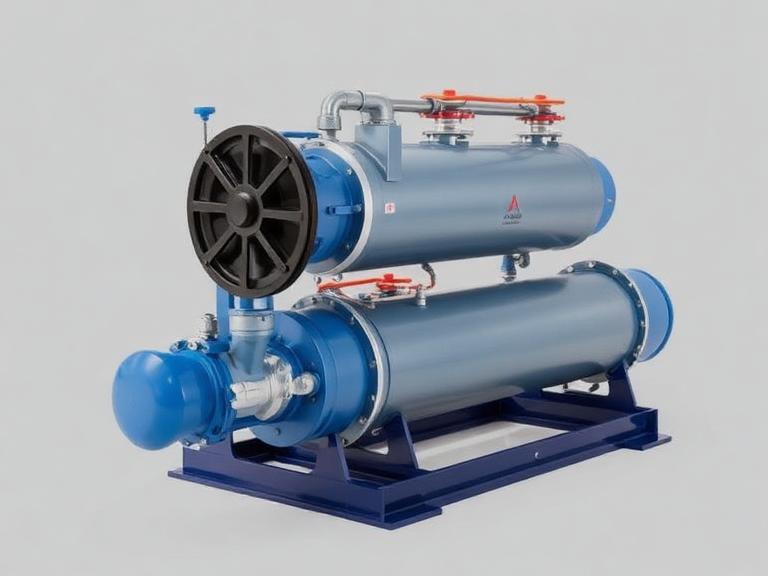
The shell and tube design is unequivocally the workhorse of the petrochemical industry. Its robust nature allows it to withstand the highest pressures and most extreme temperature differentials encountered in heavy refining. The architecture consists of a large cylindrical outer pressure vessel (the shell) housing a bundle of smaller tubes running parallel to the shell’s longitudinal axis. One fluid flows through the tubes, while the secondary fluid flows over the tubes within the shell. Baffles are typically installed within the shell to direct the fluid flow, induce turbulence, and enhance the heat transfer coefficient.
From our experience supplying global megaprojects, the integrity of a shell and tube exchanger relies entirely on the quality of its internal bundle. We recommend our Seamless Pipe/Tube configurations for the internal tube bundles. Because seamless tubes lack a longitudinal weld seam, they offer superior resistance to the localized hoop stresses and crevice corrosion that frequently plague high-pressure applications. In sour gas environments where hydrogen sulfide is prevalent, we strongly advise upgrading to our Nickel Alloy Seamless Pipe/Tube to guarantee decades of uninterrupted service.
2.2 Plate and Frame Heat Exchangers
When spatial constraints are severe and high thermal efficiency is required, plate and frame heat exchangers are the optimal solution. This design utilizes a series of thin, corrugated metal plates compressed together within a heavy steel frame. The corrugations create narrow, tortuous flow channels, forcing the hot and cold fluids to flow in alternating chambers. The extreme turbulence generated by the corrugated patterns results in exceptional heat transfer rates, allowing these units to be significantly smaller than shell and tube exchangers of equivalent capacity.
While highly efficient, plate and frame heat exchangers in oil and gas applications face limitations regarding operating pressure and temperature, as they rely on elastomeric gaskets to seal the fluid channels. However, advancements in welded and brazed plate technologies are expanding their utility in offshore platforms and LNG liquefaction trains. The construction of the fluid delivery manifolds for these compact units frequently requires precision-engineered Stainless Steel Pipe Fitting to ensure leak-free transitions under tight installation tolerances.
2.3 Air-Cooled Heat Exchangers (Fin Fan Coolers)
In arid regions or inland refineries where a continuous supply of cooling water is environmentally prohibitive or economically unfeasible, air-cooled heat exchangers (often called fin fan coolers) are heavily deployed. These units force ambient air across a bank of finned tubes using massive axial fans. The hot process fluid flows through the tubes, dissipating heat into the atmosphere.
The efficiency of air-cooled heat exchangers in oil and gas relies heavily on the extended surface area provided by the fins attached to the core tubes. To maintain structural rigidity and prevent vibration-induced fatigue from the high-velocity air streams, robust header boxes are required. TOKO TECH frequently supplies Welded Pipe/Tube for the massive structural headers required in these sprawling overhead cooling banks, ensuring rigid support for the delicate finned tubing.
2.4 Double Pipe Heat Exchangers
The double pipe heat exchanger represents the simplest, yet highly effective, thermal transfer architecture. It consists of a smaller pipe concentrically nested within a larger pipe. One fluid flows through the inner pipe, while the other flows through the annular space between the two pipes. This design operates predominantly in pure counter-current flow, making it ideal for applications requiring a temperature cross (where the cold fluid exit temperature is higher than the hot fluid exit temperature).
We recommend the double pipe configuration for high-fouling fluids, such as heavy crude slurries or asphalt, because the linear design allows for easy mechanical scraping and cleaning. To construct the robust outer containment jackets for these systems, our clients rely extensively on our premium Welded Pipe/Tube and high-pressure Stainless Steel Pipe Fitting solutions.
3. Material Selection: The Backbone of Reliable Thermal Exchange
Regardless of the geometric design, the operational lifespan of heat exchangers in oil and gas is dictated by the underlying metallurgy. The fluids processed in these systems—ranging from cryogenic liquid nitrogen to superheated steam and corrosive sulfuric acid—will rapidly destroy substandard materials. At TOKO TECH, our core philosophy of “Quality First, Innovation Driven” ensures that our materials meet the most stringent metallurgical standards.
For standard hydrocarbon processing and utility water cooling, our Seamless Pipe/Tube and Welded Pipe/Tube manufactured from high-grade austenitic stainless steels (such as 316L and 304L) provide excellent baseline corrosion resistance. However, as extraction techniques delve into deeper, more aggressive reservoirs, the presence of chlorides and hydrogen sulfide demands superior metallurgy.
For these severe-duty applications, we recommend outfitting your heat exchangers with our Nickel Alloy Seamless Pipe/Tube (including grades like Inconel and Hastelloy). These superalloys offer absolute immunity to chloride stress corrosion cracking and pitting. Furthermore, the massive tube sheets that anchor the tube bundles inside shell and tube exchangers require immense structural integrity. We supply precision-forged Nickel Alloy Bar/Rod that is machined into these critical tube sheets, ensuring that high-pressure differentials do not cause mechanical deformation or fluid leakage. Additionally, for specialized downhole thermal management and chemical injection cooling protocols, our Coiled Tubing/Control Line Tube provides continuous, weld-free deployment in the harshest subterranean environments.
4. Summary Table: Heat Exchangers in Oil and Gas
To assist procurement engineers and facility designers, we have synthesized the core operational profiles of the primary heat exchangers into the following reference matrix.
| Type of Heat Exchanger | Primary Advantage | Operational Limitations | Recommended TOKO TECH Products |
|---|---|---|---|
| Shell and Tube | Withstands extreme pressures and massive temperature differentials; easy to clean. | Requires a large physical footprint and significant material volume. | Seamless Pipe/Tube, Nickel Alloy Seamless Pipe/Tube, Nickel Alloy Bar/Rod |
| Plate and Frame | Exceptional thermal efficiency; highly compact spatial footprint. | Gaskets limit maximum pressure and temperature tolerances. | Stainless Steel Pipe Fitting (for manifold delivery) |
| Air-Cooled (Fin Fan) | Eliminates the need for massive volumes of cooling water. | Requires significant electrical power for fans; limited by ambient air temperatures. | Welded Pipe/Tube (for structural headers) |
| Double Pipe | Ideal for high-fouling, viscous fluids; true counter-current flow. | Not cost-effective for massive volume transfer due to limited surface area. | Welded Pipe/Tube, Stainless Steel Pipe Fitting |
5. Frequently Asked Questions (FAQs)
Why are seamless tubes preferred over welded tubes in high-pressure shell and tube heat exchangers?
From our experience in metal pipeline manufacturing, the longitudinal seam on a welded tube can present a localized area of microstructural vulnerability. In applications involving extreme pressures or highly corrosive media, a seamless tube eliminates the risk of weld-seam failure, providing uniform hoop strength across the entire geometry of the heat exchanger.
What is fouling in the context of heat exchangers in oil and gas?
Fouling refers to the accumulation of unwanted materials—such as biological growth, scale, corrosion products, or heavy hydrocarbon coke—on the heat transfer surfaces. Fouling acts as a thermal insulator, drastically reducing the efficiency of the heat exchanger. Utilizing high-grade alloys, such as our Nickel Alloy Seamless Pipe/Tube, reduces corrosion-based fouling, while specific flow velocity engineering helps mitigate particulate settling.
How does TOKO TECH ensure the quality of its heat exchanger components?
Operating from our modern production base in the Yangtze River Delta, we adhere strictly to the “Quality First” philosophy. Every batch of our Seamless Pipe/Tube, Coiled Tubing/Control Line Tube, and Nickel Alloy Bar/Rod undergoes rigorous non-destructive testing (NDT), including ultrasonic and hydrostatic assessments, to ensure compliance with global petrochemical standards before export.
6. Academic and Industry References
For engineers and procurement professionals seeking further technical specifications regarding thermal management infrastructure and metallurgical standards, we recommend reviewing the following authoritative resources:
 English
  Spanish
  Russian
  Turkish
  French
  Korean
  German
  Italian