In the highly demanding field of industrial piping, selecting the appropriate structural and transport materials dictates the safety, longevity, and financial viability of an entire project. At TOKO TECH, located in Shanghai, China, we have spent 11 years mastering the metallurgy, fabrication, and export of high-grade piping solutions. Over the past decade, supplying industries ranging from Sugar Refining and Water Process to Desalination and Geothermal energy, the single most critical engineering discussion we have with global procurement teams revolves around one topic: бесшовная труба vs erw pipe.
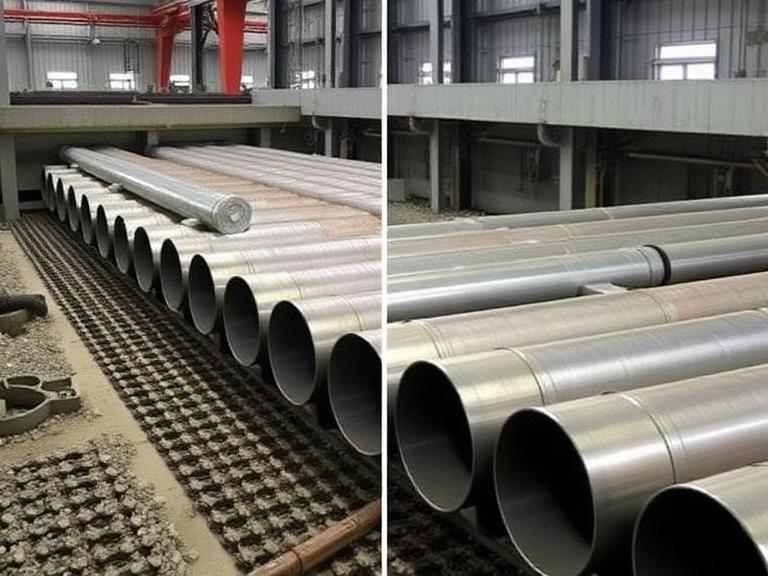
We are not neutral observers in this industry. Our factories are fully ISO and PED certificated, producing materials to rigorous ASTM, JIS, DIN, EN, and GOST standards. We manufacture and export both categories, including premium Бесшовная труба/трубопровод и Сварная труба/трубопровод. From our experience, the decision between seamless pipe vs erw pipe cannot be made on price alone. It requires a profound understanding of pressure metrics, structural homogeneity, and specific environmental exposures. In this authoritative guide, we will dissect the mechanical differences, manufacturing realities, and practical applications of seamless pipe vs erw pipe to help you make an uncompromising engineering choice.
Оглавление
- 1. Understanding the Manufacturing Processes
- 2. Critical Technical Differences: seamless pipe vs erw pipe
- 3. Structural Integrity and Testing Protocols
- 4. Industrial Applications: Which One Should You Choose?
- 5. From Our Experience: TOKO TECH’s Professional Recommendations
- 6. Summary Comparison Table: seamless pipe vs erw pipe
- 7. Frequently Asked Questions (FAQs)
- 8. Industry References
1. Understanding the Manufacturing Processes
To accurately evaluate seamless pipe vs erw pipe, you must first understand how they are forged. The fundamental distinction lies in the presence or absence of a longitudinal weld seam.
The Seamless Pipe Extrusion Process
Our Seamless Pipe/Tube products begin their life as a solid cylindrical ingot of steel, often referred to as a billet. This billet is heated to extreme temperatures and pushed or pulled over a piercing rod to create a hollow tube. Because the pipe is formed from a single, continuous piece of metal, it possesses no welding seam whatsoever.
From our experience, this homogeneous structure grants the pipe superior ability to withstand internal pressure and mechanical stress. The absence of a seam means there is no localized heat-affected zone (HAZ) that could become a point of vulnerability in highly corrosive environments. This makes it the absolute standard for high-pressure applications.
The ERW (Electric Resistance Welding) Process
Conversely, the manufacturing of Welded Pipe/Tube, specifically ERW, begins with a flat ribbon of steel known as skelp. The skelp is cold-formed through a series of rollers into a tubular shape. The edges are then fused together using a high-frequency alternating current. The electrical resistance of the steel itself generates the heat required to forge the weld, meaning no filler metal is used.
Decades ago, the ERW process was viewed with suspicion due to inconsistent weld quality. However, modern high-frequency induction (HFI) welding has revolutionized this category. Today, the weld seam is subjected to advanced post-weld heat treatment to normalize the grain structure, making it nearly indistinguishable from the parent metal. Yet, in the strict debate of seamless pipe vs erw pipe, the existence of that seam remains a primary engineering consideration.
2. Critical Technical Differences: seamless pipe vs erw pipe
When our engineers consult with clients in the USA, Canada, Japan, Germany, France, Korea, or Turkey, we break down the seamless pipe vs erw pipe comparison into three definitive technical metrics: pressure rating, dimensional accuracy, and supply chain availability.
Pressure Ratings and Yield Strength
In the context of seamless pipe vs erw pipe, pressure handling is the most heavily weighted factor. Seamless pipes can inherently withstand 20% to 30% higher operating pressures than ERW pipes of the exact same material grade and dimensions. We recommend seamless configurations for critical upstream Oil and Gas applications because the continuous grain structure guarantees maximum burst strength. While modern ERW pipes are incredibly strong, regulatory standards often apply a weld joint efficiency factor that slightly reduces their permissible working pressure.
Dimensional Accuracy and Wall Thickness
This is an area where ERW actually holds an advantage. Because ERW pipe is rolled from a flat sheet of steel, the wall thickness is exceptionally uniform. In contrast, the extrusion process of seamless pipe can result in slight eccentricities, meaning the wall thickness might vary marginally around the circumference. Therefore, in the seamless pipe vs erw pipe analysis, if your project demands strict concentricity and uniform wall thickness across a massive pipeline, ERW is often the superior structural choice.
Cost Efficiency and Availability
We cannot ignore project economics. Fabricating a seamless pipe is a highly energy-intensive and complex process, restricting its availability in massive diameters. Generally, seamless pipes are significantly more expensive than ERW pipes. In our seamless pipe vs erw pipe commercial evaluations, we advise clients that if their system operates under moderate pressure and requires large diameter conduits, ERW provides a massive financial advantage without compromising base safety standards.
3. Structural Integrity and Testing Protocols
At TOKO TECH, our commitment to manufacturing excellence means we do not guess; we verify. Assessing seamless pipe vs erw pipe requires rigorous non-destructive testing (NDT).
For our ERW pipes, the longitudinal weld seam undergoes continuous ultrasonic testing (UT) and eddy current testing right on the production line. This ensures zero lack-of-fusion defects. However, seamless pipes undergo full-body ultrasonic or hydrostatic testing. From our experience, the failure mode of seamless pipe vs erw pipe differs under extreme stress. ERW failures, while rare, typically propagate along the longitudinal weld line if subjected to extreme torsional stress. Seamless pipes distribute stress evenly across their circumference.
4. Industrial Applications: Which One Should You Choose?
The decision regarding seamless pipe vs erw pipe ultimately rests on the fluid medium, temperature, and environmental corrosivity.
Oil and Gas and Petrochemical Industries
For high-pressure flowlines, subsea manifolds, and critical downhole environments, the choice is unequivocally seamless. Products like our Coiled Tubing/Control Line Tube rely entirely on seamless construction to prevent catastrophic blowouts in volatile petrochemical environments. The high pressures and highly corrosive fluids (such as sour gas containing hydrogen sulfide) exploit any micro-imperfections in a weld seam. Therefore, in upstream sectors, the seamless pipe vs erw pipe debate is firmly settled in favor of seamless.
Desalination, Water Process, and Sugar Refining
These industries require moving massive volumes of fluids at low to moderate pressures. Here, ERW pipes dominate. Using seamless pipes for a municipal water process plant is an unnecessary over-engineering expense. We heavily supply Stainless Steel Pipe Fitting and ERW pipes for these sectors, providing excellent corrosion resistance and massive cost savings.
Specialized Geothermal and High-Temperature Environments
When dealing with extreme heat and aggressive brines in the Geothermal industry, standard carbon steel fails. For these applications, we manufacture Nickel Alloy Seamless Pipe/Tube and supply accompanying Nickel Alloy Bar/Rod materials. In extreme thermal cycling, the expansion and contraction rates of a weld seam can cause fatigue. We strongly recommend seamless nickel alloys to guarantee decades of uninterrupted service.
5. From Our Experience: TOKO TECH’s Professional Recommendations
After 11 years of exporting to dozens of countries, our stance on seamless pipe vs erw pipe is pragmatic but strict. We recommend ERW pipes for any structural application, low-pressure fluid transport, fencing, and large-diameter water transmission. ERW is the undisputed champion of cost-to-performance ratio in moderate environments.
However, when human life, environmental safety, and high-pressure volatile chemicals are involved, we refuse to compromise. For high-temperature refining, subsea oil extraction, and aggressive chemical processing, we insist our clients specify seamless piping. When you analyze seamless pipe vs erw pipe for critical infrastructure, the upfront cost of seamless is an essential insurance policy against catastrophic downtime.
6. Summary Comparison Table: seamless pipe vs erw pipe
| Feature / Specification | Бесшовные трубы | ERW (Electric Resistance Welded) Pipe |
|---|---|---|
| Производственный процесс | Extruded from a solid steel billet | Cold-formed and welded from steel coils |
| Weld Seam | None (Homogeneous structure) | Longitudinal high-frequency weld seam |
| Pressure Capacity | Exceptional (20-30% higher than ERW) | Moderate to High (Subject to weld joint efficiency factors) |
| Wall Thickness Uniformity | Variable (Prone to slight eccentricity) | Highly uniform (Rolled from flat sheet) |
| Стоимость | Higher manufacturing and raw material costs | Highly cost-effective |
| Diameter Limits | Limited in large diameters (Typically under 24 inches) | Available in massive diameters |
| Recommended Applications | High-pressure Oil & Gas, Petrochemical, Geothermal | Water Process, Sugar Refining, Structural, Low-pressure lines |
7. Frequently Asked Questions (FAQs)
In many cases, yes. From our experience, if the operating pressure falls within the permissible limits of the ERW specification and the fluid is not highly corrosive or toxic, ERW is a perfectly safe and economical substitute. However, in the seamless pipe vs erw pipe evaluation for high-pressure API or ASME applications, engineers must consult the specific piping codes before substituting.
Historically, the weld seam on the inside of an ERW pipe was visible. However, modern ERW manufacturing removes the internal and external weld flash, making it nearly invisible to the naked eye. To definitively distinguish seamless pipe vs erw pipe, one must look at the mill test certificate (MTC) or etch the pipe end with acid to reveal the metallurgical grain structure of the weld zone.
Yes. Because the extrusion process is highly specialized and relies on specific billet availability, the lead time for seamless is generally longer. ERW pipes can be rapidly manufactured from readily available steel coils. TOKO TECH maintains robust inventory levels to mitigate these delays for our global clients.
Assuming both pipes are made from the exact same grade of stainless steel or nickel alloy, the seamless pipe offers marginally better corrosion resistance. In the seamless pipe vs erw pipe comparison, the weld zone of the ERW pipe, even after heat treatment, can sometimes act as an anodic area, making it slightly more susceptible to localized pitting or galvanic corrosion in extreme chemical environments.
8. Industry References
To further explore the engineering standards governing the seamless pipe vs erw pipe manufacturing methodologies, we recommend consulting the following international standards organizations:
- ASTM International – Standard Specifications for Steel, Stainless Steel, and Related Alloys
- American Society of Mechanical Engineers (ASME) – Boiler and Pressure Vessel Code
- American Petroleum Institute (API) – Tubular Goods Standards
- International Organization for Standardization (ISO) – Pipeline Transportation Systems
At TOKO TECH, we are dedicated to advancing industrial piping infrastructure globally. Whether your project demands the impenetrable integrity of seamless piping or the scalable efficiency of ERW piping, our team in Shanghai is prepared to engineer a solution tailored to your exact specifications.
 Russian
  English
  Spanish
  Turkish
  French
  Korean
  German
  Italian