In the highly demanding sectors of global industry, the structural integrity of a pipeline system is the ultimate safeguard against catastrophic failure. For facilities managing volatile fluids, extreme temperatures, and volatile environments, understanding the precise parameters that govern the Welded pipe pressure Rating is non-negotiable. At TOKO TECH, an export-driven manufacturing enterprise headquartered in Shanghai, China, we operate a modern production base in the Yangtze River Delta—China’s industrial core region. Since our establishment, we have adhered strictly to the core philosophy of “Quality First, Innovation Driven.”
From our experience supplying high-end metal pipeline systems to industries such as petrochemicals, energy and power, shipbuilding, pharmaceutical, food processing, and environmental engineering, we recognize that engineers and procurement specialists face immense pressure to select the correct piping specifications. The Welded pipe pressure Rating dictates not only the operational boundaries of a system but also its safety margin, compliance with international codes, and overall lifecycle cost. We recommend that every pipeline designer possess a deep, authoritative understanding of how weld joint efficiency, material yield strength, temperature derating, and dimensional tolerances interact to define these critical pressure ratings.
목차
- Summary Table: Nominal Pipe Size and Pressure Classifications
- Engineering Fundamentals of the Welded pipe pressure Rating
- Calculating Pressure: The Role of Barlow’s Formula
- Understanding Longitudinal Weld Joint Efficiency (E)
- Temperature Derating: High-Temperature and High-Pressure Synergy
- TOKO TECH Solutions: Precision Engineered Welded Pipes
- Non-Destructive Testing (NDT) and Quality Assurance
- 자주 묻는 질문(FAQ)
- 업계 참고 자료
Summary Table: Nominal Pipe Size and Pressure Classifications
To provide an immediate reference point for engineers, the following summary table outlines the estimated maximum allowable working pressure for standard austenitic stainless steel welded pipes (such as 304L/316L) at ambient temperature (100 Degrees Fahrenheit). Note that the exact Welded pipe pressure Rating will fluctuate based on the specific manufacturing code, corrosion allowance, and exact material chemistry.
| Nominal Pipe Size (NPS) | Schedule (Wall Thickness) | Approx. Welded pipe pressure Rating (PSI) | Primary Industrial Application |
|---|---|---|---|
| 1 inch | Schedule 10S | 1,450 PSI | Light Chemical Processing / Pharmaceutical |
| 1 inch | Schedule 40S | 2,050 PSI | Standard Petrochemical Transfer Lines |
| 2 inch | Schedule 10S | 1,000 PSI | Environmental Engineering Water Systems |
| 2 inch | Schedule 80S | 2,300 PSI | High-Pressure Energy and Power Generation |
| 4 inch | Schedule 40S | 1,200 PSI | Shipbuilding and Marine Transfer Lines |
Engineering Fundamentals of the Welded pipe pressure Rating
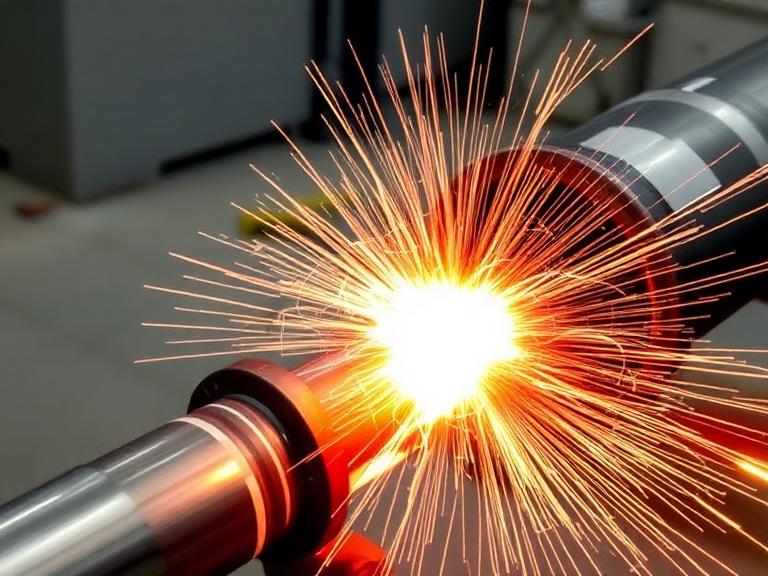
The calculation of a Welded pipe pressure Rating is a multidimensional process that extends far beyond simply measuring the outer diameter and wall thickness. Welded pipes are manufactured by rolling steel plates or coils into a cylindrical shape and fusing the seam using processes such as Electric Resistance Welding (ERW), Submerged Arc Welding (SAW), or Tungsten Inert Gas (TIG) welding. The introduction of a longitudinal weld seam alters the uniform metallurgical structure of the pipe, creating a Heat Affected Zone (HAZ).
From our experience in our Yangtze River Delta manufacturing facilities, the integrity of this weld seam is the defining factor in the maximum allowable working pressure. If the welding parameters are not perfectly controlled, the seam becomes a focal point for stress concentration. Therefore, regulatory bodies such as the American Society of Mechanical Engineers (ASME) require engineers to apply a conservative derating factor to welded pipes compared to their seamless counterparts. Understanding how to navigate these codes is essential for delivering high-performance, corrosion-resistant pipeline solutions for global clients.
Calculating Pressure: The Role of Barlow’s Formula
At the core of pipeline engineering is Barlow’s formula, which determines the internal bursting pressure of a cylindrical tube. When determining the Welded pipe pressure Rating, engineers rely on a modified version of this formula that incorporates safety margins and weld efficiency variables.
The standard equation for allowable operating pressure is: P = (2 * S * t * E) / D
- P represents the maximum allowable Welded pipe pressure Rating (in PSI or Bar).
- S represents the allowable stress of the material at the design temperature. This is typically a fraction of the material’s specified minimum yield strength (SMYS).
- t represents the nominal wall thickness of the pipe, minus any required corrosion, threading, or mechanical allowances.
- D represents the outside diameter of the pipe.
- E represents the longitudinal joint efficiency factor.
We recommend that design engineers always use the minimum wall thickness in their calculations, accounting for the standard 12.5% manufacturing tolerance allowed by ASTM specifications. A failure to subtract corrosion allowances from the wall thickness variable will result in a dangerously inflated Welded pipe pressure Rating.
Understanding Longitudinal Weld Joint Efficiency (E)
The variable E (Joint Efficiency) in Barlow’s formula is precisely what distinguishes the Welded pipe pressure Rating from a seamless pipe rating. Because a weld introduces a potential discontinuity, codes assign a penalty to the pipe’s pressure capacity depending on how the weld is manufactured and tested.
For example, a seamless pipe has a joint efficiency of 1.0 (100%). However, an Electric Resistance Welded (ERW) pipe that has not undergone supplementary non-destructive volume testing might be assigned a joint efficiency factor of 0.85 (85%). This immediately reduces the allowable Welded pipe pressure Rating by 15%. To achieve a joint efficiency of 1.0 on a welded pipe, the manufacturer must perform 100% radiography (RT) or ultrasonic testing (UT) along the entire length of the longitudinal weld seam. At TOKO TECH, our dedication to “Quality First” means we implement rigorous NDT protocols to ensure our welded products achieve the highest possible joint efficiency factors, maximizing their performance in the field.
Temperature Derating: High-Temperature and High-Pressure Synergy
Industries such as energy and power, as well as high-capacity petrochemical refineries, rarely operate at ambient temperatures. As the temperature of the fluid medium increases, the yield strength of the steel decreases. Consequently, the Welded pipe pressure Rating must be derated to prevent high-temperature creep and mechanical failure.
For instance, an austenitic stainless steel pipe that safely holds 2,000 PSI at 100 Degrees Fahrenheit will experience a dramatic reduction in allowable stress when operating at 800 Degrees Fahrenheit. Engineers must consult the allowable stress tables in ASME B31.3 (Process Piping Code) to find the correct derated stress value (S) for their specific operating temperature before applying Barlow’s formula. We recommend that clients operating in cyclic thermal environments work closely with our metallurgy team to select alloys that maintain structural rigidity under extreme thermal stress.
TOKO TECH Solutions: Precision Engineered Welded Pipes
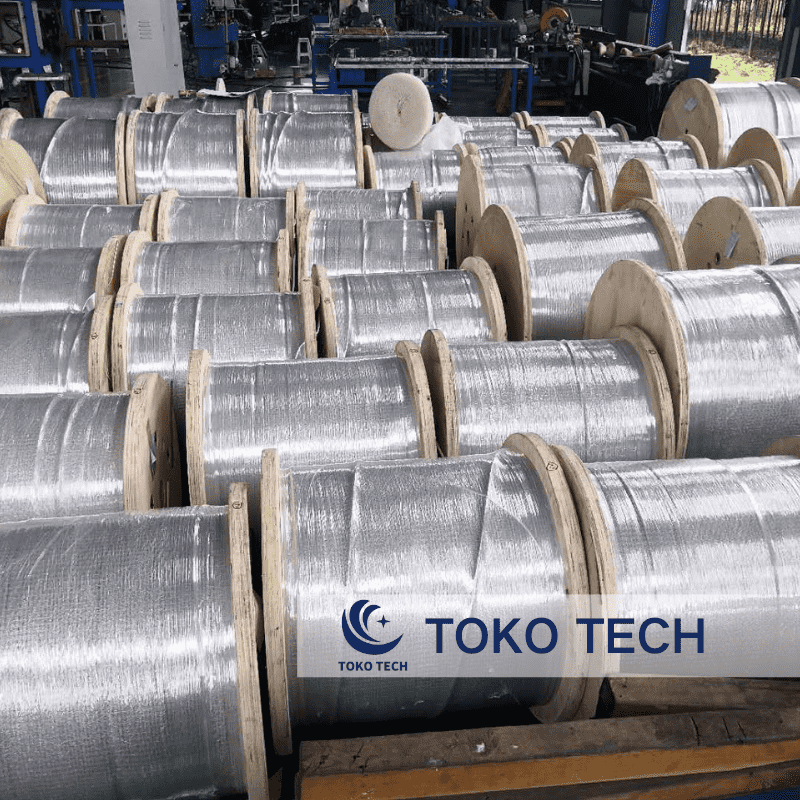
As a premier supplier for global clients, TOKO TECH manufactures a highly specialized portfolio of products designed to master the complexities of the Welded pipe pressure Rating. Our modern production base is optimized to deliver exact dimensional tolerances and flawless weld seams.
- 스테인리스 스틸 용접 직선 파이프: Designed for heavy-duty fluid transfer in the petrochemical and shipbuilding sectors. Through advanced TIG and plasma welding techniques, our straight pipes exhibit exceptional weld root penetration, ensuring a uniform wall thickness and a superior Welded pipe pressure Rating.
- 스테인리스 스틸 용접 U-튜브: Heat exchangers are the lifeblood of power generation and chemical processing. The bends in a U-tube are subject to severe wall thinning and fluid turbulence. We utilize precision mandrel bending and subsequent stress-relief annealing to ensure the Welded pipe pressure Rating is not compromised at the apex of the curve.
- 스테인리스 스틸 용접 코일 튜브: Widely used in control lines, umbilical applications, and pharmaceutical processing, our coiled tubing eliminates the need for mechanical fittings over long distances. By utilizing continuous, orbitally welded manufacturing processes, we provide seamless-like pressure capabilities in a highly flexible format.
Non-Destructive Testing (NDT) and Quality Assurance
To confidently guarantee a high Welded pipe pressure Rating, post-production testing is mandatory. TOKO TECH employs a comprehensive suite of Non-Destructive Testing (NDT) methods. We utilize hydrostatic testing to subject the pipe to internal pressures significantly higher than its designed operating pressure, verifying the absolute strength of the weld seam.
Additionally, we implement Eddy Current Testing (ECT) and Ultrasonic Testing (UT) to scan for microscopic subsurface inclusions, lack of fusion, or porosity within the Heat Affected Zone. From our experience, it is this unwavering commitment to stringent quality control that allows our high-temperature and high-pressure pipeline products to excel in the most punishing environmental engineering and offshore applications.
자주 묻는 질문(FAQ)
What is the difference between schedule 40 and schedule 80 in terms of the Welded pipe pressure Rating?
The “schedule” of a pipe refers to its wall thickness. For a given nominal pipe size, a Schedule 80 pipe has a thicker wall than a Schedule 40 pipe. According to Barlow’s formula, increasing the wall thickness (t) directly increases the maximum allowable Welded pipe pressure Rating, making Schedule 80 ideal for higher-pressure applications.
Can a welded pipe have the same pressure rating as a seamless pipe?
Yes, but it requires supplementary testing. If a welded pipe undergoes 100% radiographic or ultrasonic examination of the longitudinal weld seam, codes like ASME allow it to be assigned a joint efficiency factor (E) of 1.0, which effectively gives it the same theoretical Welded pipe pressure Rating as an equivalent seamless pipe.
How does corrosion affect the Welded pipe pressure Rating over time?
As a pipe corrodes, its effective wall thickness decreases. When the wall thickness is reduced, the pipe’s ability to contain internal pressure diminishes. Pipeline engineers account for this by subtracting a predefined “corrosion allowance” from the nominal wall thickness during the initial Welded pipe pressure Rating calculations.
Why is TOKO TECH’s Stainless Steel Welded Straight Pipe recommended for petrochemicals?
Our pipes are manufactured with strict adherence to metallurgical purity and advanced weld seam fusion. Petrochemical environments involve highly corrosive media and high pressures. Our commitment to “Quality First, Innovation Driven” ensures that our products maintain their Welded pipe pressure Rating and resist localized corrosion within the heat-affected zone.
업계 참고 자료
To ensure absolute accuracy in your engineering calculations and to stay updated on the latest international standards regarding pipeline pressure constraints, we recommend consulting the following authoritative organizations:
- 미국 기계학회(ASME) – Specifically the ASME B31.3 Process Piping Code.
- ASTM 국제 – Standards for steel piping, tubing, and fittings.
- 미국 에너지부(DOE) – Research and guidelines on pipeline infrastructure for energy and power generation.
 Korean
  English
  Spanish
  Russian
  Turkish
  French
  German
  Italian