In high-pressure fluid management, deep-well hydrocarbon extraction, and high-temperature petrochemical processing, selecting the right metallurgical alloys dictates system safety, lifecycle efficiency, and containment integrity. Engineering teams face regular challenges when designing infrastructure intended for extreme thermal loads and aggressive, acidic media. A foundational question often raised during material procurement and stress analysis cycles is whether Inconel 718 stronger than steel compounds. Answering this accurately requires looking past simple room-temperature tensile metrics to examine how these alloys perform under severe thermal, mechanical, and chemical stress profiles.
에서 TOKO TECH, we operate as an export-driven manufacturing enterprise specializing in the R&D, production, and sales of high-end metal pipeline systems. Headquartered in Shanghai, China, with our production facilities based in the Yangtze River Delta—China’s primary industrial manufacturing core—we manage a modern manufacturing footprint. Following our core philosophy of Quality First, Innovation Driven, we provide high-performance, corrosion-resistant, and high-temperature/high-pressure pipeline products across global sectors including petrochemicals, energy and power, shipbuilding, pharmaceuticals, food processing, and environmental engineering. From our experience, many industrial specifiers overlook the phenomenon of thermal creep and stress-corrosion cracking when selecting pipeline alloys, evaluating systems purely on initial room-temperature yield metrics. This technical guide desconstructs the real performance thresholds of Inconel 718 compared to standard and high-strength steels, delivering clear facts to optimize your project’s engineering layout.
- 1. Comprehensive Summary Matrix: Metallurgy Performance Compared
- 2. Chemical Metallurgy: The Superalloy Matrix vs. Iron-Based Crystals
- 3. Mechanical Strengths: Ambient Boundaries and High-Temperature Realities
- 4. Industrial Pipeline Applications: Coiled Tubing and Severe-Service Infrastructure
- 5. 자주 묻는 질문(FAQ)
- 6. Academic, Industrial, and Regulatory Material Science References
1. Comprehensive Summary Matrix: Metallurgy Performance Compared
Before launching a structural stress analysis or executing complex pipeline supply contracts, engineering teams must evaluate physical material thresholds. The table below presents a complete comparison tracking why an advanced superalloy like Inconel 718 stronger than steel options across specific high-stress parameters in 2026.
| Material Family Class | Yield Strength at 20°C | Yield Strength at 650°C | Corrosion Resistance Level | Primary Industrial Application Environment |
|---|---|---|---|---|
| Inconel 718 (Precipitation Hardened) | 1,030 – 1,200 MPa | 860 – 950 MPa | Exceptional (Immune to chloride & sour gas cracking) | Downhole oil tools, high-temp gas turbines, cryogenic valves |
| Carbon Steel (ASTM A106 Grade B) | 240 MPa | Approaching 0 MPa (Structural failure) | Poor (Requires active chemical coating protection) | Low-pressure utility steam lines and non-corrosive oil lines |
| Stainless Steel (Grade 316L) | 290 MPa | 140 MPa | Moderate (Susceptible to pitting & chloride stress cracking) | Standard chemical processing loops and general sanitary piping |
| Super Duplex Stainless (UNS S32750) | 550 – 750 MPa | Degrades past 300°C (Embrittlement risk) | High (Resists pitting in high-salinity seawater) | Offshore topside desalination systems and marine piping infrastructure |
| High-Strength Low-Alloy Steel (HSLA) | 550 – 800 MPa | Drastic drops past 400°C | Poor to Moderate | Heavy machine structures and standard land-based gas pipelines |
2. Chemical Metallurgy: The Superalloy Matrix vs. Iron-Based Crystals
To successfully integrate high-end alloys into your industrial pipeline systems, you must understand the underlying chemistry that separates nickel-based superalloys from traditional iron-based steels. Standard structural, low-alloy, and stainless steels are primarily comprised of iron, balanced with specific ratios of carbon, chromium, and nickel. While these configurations deliver highly predictable mechanical characteristics at room temperature, their crystalline lattice faces permanent challenges under extreme thermal or chemical stress.
Inconel 718 is classified as an austenitic nickel-chromium-based superalloy. Its core chemical structure features a massive concentration of nickel (50% to 55%), balanced with significant levels of chromium (17% to 21%), niobium (4.75% to 5.5%), and molybdenum (2.8% to 3.3%). From our experience, the material’s exceptional strength comes from an advanced metallurgical phenomenon known as precipitation hardening, or age hardening. During controlled heat treatments, the niobium combines with nickel to form sub-microscopic intermetallic precipitates throughout the face-centered cubic matrix. These tiny precipitates anchor the crystalline lattice, locking atomic boundaries firmly into place. This structural blocking is the physical reason why Inconel 718 stronger than steel alloys under high loads, completely preventing the micro-structural slipping that causes metals to deform and yield.
We recommend emphasizing that the true metric of strength in commercial metallurgy depends heavily on operating temperatures. At a standard 20°C room temperature, a specialized high-strength carbon tool steel or martensitic alloy can display yield strengths that match or slightly exceed Inconel 718. However, once operating temperatures pass the 500°C threshold, standard carbon and stainless steels experience rapid iron-matrix softening and grain boundary creep. Under these intense thermal conditions, Inconel 718 retains nearly 90% of its original structural yield strength, making it fundamentally stronger and safer than any iron-based steel option.
3. Mechanical Strengths: Ambient Boundaries and High-Temperature Realities
Analyzing structural safety limits requires evaluating how different material matrices react to concurrent thermal, tensile, and high-pressure loading cycles.
Resisting High Mechanical Pressures and Creep Deformities
Under heavy mechanical loads, steel components can suffer from plastic deformation, thinning out and failing under constant pressure. While high-strength low-alloy (HSLA) steels deliver solid performance across land-based networks, their internal crystal structures break down when subjected to continuous cyclic loading. Inconel 718 features an incredibly dense, age-hardened matrix that provides superior fatigue limits and excellent resistance to creep deformity. This molecular stability allows engineers to specify thinner pipe wall thicknesses while sustaining equivalent pressure limits, helping to lower overall system weight and reduce structural load stresses on matching supporting frames.
Immunity to Chemical Attack and Stress Corrosion
Strength in severe industrial service covers more than raw physical loading capacity; it also demands robust resistance to chemical breakdown. Standard 316L stainless steel pipelines provide decent protection in clean, low-acid environments, but they crack rapidly when exposed to high-temperature chloride solutions or sour hydrogen sulfide gas. Nickel-chromium superalloys provide absolute chemical inertia. The dense chromium and molybdenum additions form an unbroken passivation layer that completely stops localized pitting, crevice corrosion, and sour gas stress cracking, preserving your system’s pressure-containment integrity through decades of aggressive downhole service.
4. Industrial Pipeline Applications: Coiled Tubing and Severe-Service Infrastructure
Integrating high-performance alloys into critical fluid routing networks requires working alongside manufacturers who master advanced seamless tube fabrication and global delivery standards.
For modern, deep-well hydrocarbon extraction and high-velocity cleanouts, selecting flexible, continuous pipeline configurations is essential for maximizing field efficiency. Reviewing the production capabilities of leading global 코일 튜빙 업체들 highlights how top-tier manufacturers integrate advanced superalloys to handle intense bending cycles under immense pressures. For operations focused on calculating complex site budgets, exploring our comprehensive manual on 코일 튜빙 시추 비용 variables breaks down how choosing ultra-durable alloys protects against early fatigue failures, lowering your total lifetime asset expenditures.
| Advanced Tubing Class | Primary Drivetrain Application | Core Performance Advantage | TOKO TECH Resource Link |
|---|---|---|---|
| 연속 코일 튜브 | High-pressure live-well intervention and downhole sour gas tracking | Completely seamless construction eliminates structural weld seams | 석유 및 가스 분야의 코일 튜빙 |
| Specialized Intervention Lines | Comparing dynamic deep-well tool delivery methods | Optimized mechanical limits for extended-reach operations | 와이어라인 대 코일 튜빙 |
Sourcing Certified High-Pressure Seamless Piping
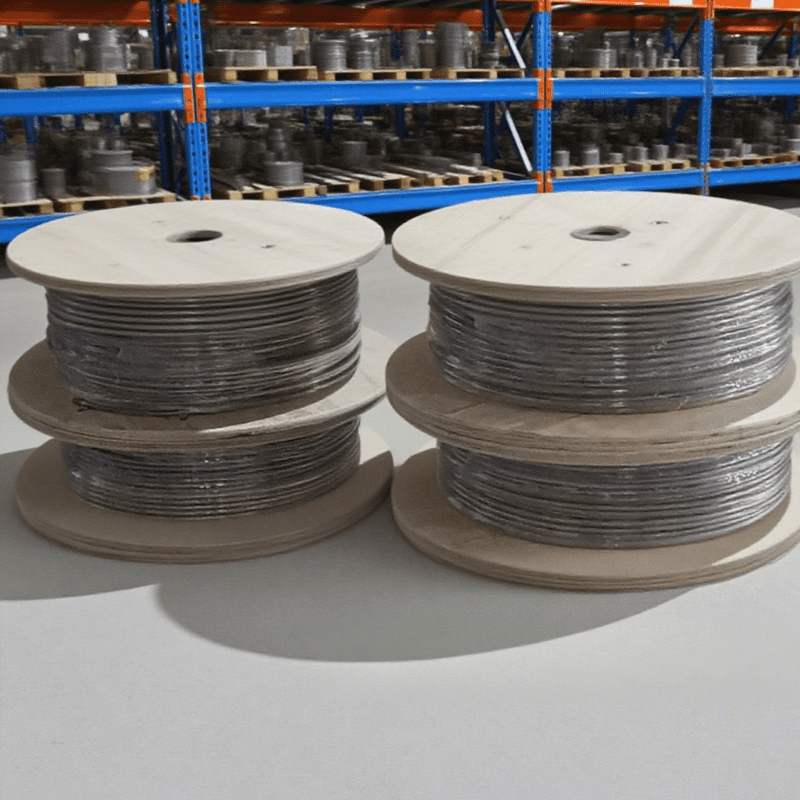
Deploying advanced nickel and iron-based alloys across multi-mile industrial networks demands strict manufacturing precision. Sourcing your components from factory-certified, heavy-duty 원활한 파이프 제조업체 channels ensures your facility receives products that undergo extensive non-destructive testing (NDT), ultrasonic inspections, and hydro-testing verification loops. TOKO TECH supports your global infrastructure installations with a highly skilled engineering team and an advanced Yangtze Delta manufacturing base, providing reliable, high-integrity pipeline systems engineered to withstand your most challenging operating parameters.
5. 자주 묻는 질문(FAQ)
6. Academic, Industrial, and Regulatory Material Science References
For official metallurgical testing standards, chemical compliance metrics, and high-pressure industrial pipeline codes, consult these authoritative international organizations:
- ASTM International. ASTM B637 Standard Specification for Precipitation-Hardening Nickel Alloy Bars, Forgings, and Springs. West Conshohocken, PA.
- NACE International / ISO. ANSI/NACE MR0175/ISO 15156 – Petroleum and Natural Gas Industries: Materials for Use in H2S-Containing Environments. Houston, TX.
- American Society of Mechanical Engineers (ASME). ASME B31.3: Process Piping Engineering and Superalloy Drivetrain Stress Specifications. New York, NY.
 Korean
  English
  Spanish
  Russian
  Turkish
  French
  German
  Italian