Selecting the right piping material is a critical decision that engineers and project managers face in industrial construction. TOKO TECH is an export-driven manufacturing enterprise specializing in the R&D, production, and sales of high-end metal pipeline systems. Headquartered in Shanghai, China, with manufacturing facilities located in the Yangtze River Delta—China’s industrial core region—the company operates a modern production base. Since its establishment, TOKO TECH has adhered to the core philosophy of Quality First, Innovation Driven, dedicated to providing high-performance, corrosion-resistant, and high-temperature/high-pressure pipeline products for global clients. Over the years, we have consulted with thousands of clients who ask us to explain the differences between erw and 이음매 없는 파이프. Making the wrong choice can lead to catastrophic system failures, exorbitant maintenance costs, and severe safety hazards.
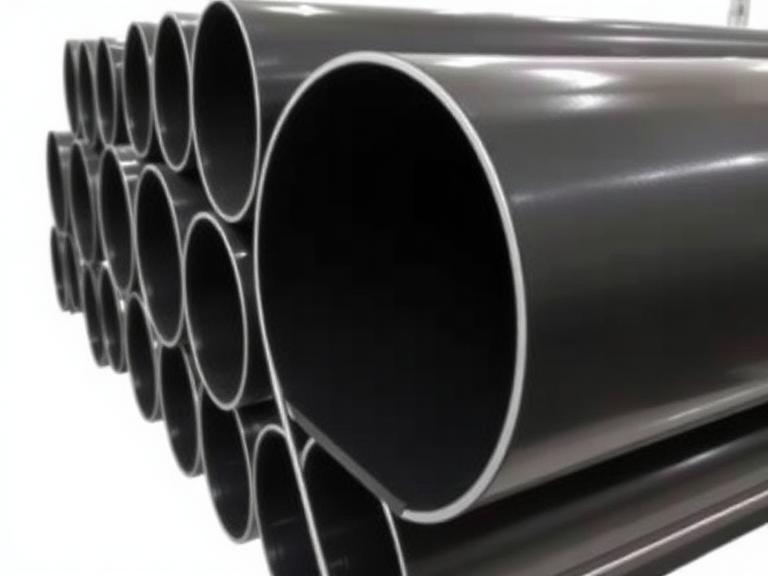
When analyzing the core components of modern infrastructure, understanding the differences between erw and seamless pipe is absolutely essential. ERW stands for Electric Resistance Welding, while seamless pipes are exactly what their name suggests: extruded metal tubes without a welding seam. While both types of pipes are used to transport fluids and gases, their manufacturing processes, structural integrity, and ideal applications vary significantly. Our products are widely used in industries such as petrochemicals, energy and power, shipbuilding, pharmaceutical and food processing, and environmental engineering. From our experience across these demanding sectors, we know that selecting the appropriate pipe type dictates the longevity and reliability of the entire system.
In this comprehensive, expert-led guide, we will break down the 6 key differences between erw and seamless pipe. We will explore their manufacturing methodologies, pressure capacities, dimensional tolerances, and cost implications. By the end of this article, you will have a thorough understanding of which pipeline solution best suits your specific industrial requirements.
목차
Understanding the Basics of ERW and Seamless Pipes
Before diving into the detailed technical variations, it is crucial to establish a foundational understanding of what these pipes are. ERW pipes are manufactured by cold-forming a flat sheet of steel into a cylindrical shape. An electric current is then passed through the edges of the steel, heating them to a point where they can be fused together without the use of welding filler material. On the other hand, seamless pipes are created from a solid cylindrical block of steel known as a billet. This billet is heated to extreme temperatures and then pierced through the center with a mandrel to create a hollow tube.
These distinct beginnings set the stage for the numerous differences between erw and seamless pipe. The presence of a weld seam in ERW pipes introduces a potential weak point, whereas the continuous, unbroken structure of a seamless pipe offers uniform strength across its entire circumference. As a premier manufacturer, TOKO TECH rigorously tests both configurations, but we consistently observe that the continuous metallurgical structure of seamless configurations delivers superior long-term reliability under stress.
Summary Table: Differences Between ERW and Seamless Pipe
For quick reference, we have compiled a summary table highlighting the major differences between erw and seamless pipe. This overview provides a snapshot of the technical parameters that engineers evaluate during the procurement phase.
| Feature / Characteristic | ERW (Electric Resistance Welded) Pipe | 심리스 파이프 |
|---|---|---|
| 제조 프로세스 | Formed from steel coils/sheets and welded along the seam. | Extruded and pierced from a solid steel billet. No welding involved. |
| Pressure Capacity | Moderate pressure ratings. The weld seam is a potential weak point. | High pressure ratings. Uniform structure handles extreme stress. |
| Wall Thickness | Highly uniform wall thickness due to rolled sheet origins. | Slight variations in thickness due to the piercing/extrusion process. |
| 표면 마감 | Visible weld seam (internally and externally, unless fully treated). | Smooth, continuous surface with no seam marks. |
| Cost Efficiency | Generally more cost-effective and faster to produce in large volumes. | Higher initial cost due to complex manufacturing and higher material quality. |
| Typical Applications | Low-to-medium pressure pipelines, structural casing, fencing, water transport. | Petrochemicals, high-pressure steam, oil and gas exploration, power plants. |
Deep Dive: 6 Core Differences Between ERW and Seamless Pipe
To truly appreciate how these materials function in the field, we must examine the engineering principles behind them. Here is an in-depth analysis of the 6 major differences between erw and seamless pipe.
1. Manufacturing Process and Formation
The most defining of all the differences between erw and seamless pipe is the method of fabrication. ERW pipes start as a flat ribbon of steel, known as skelp. This skelp is passed through a series of rollers that gradually curve the edges upward until they form a cylinder. High-frequency electrical currents are then applied to the edges, melting the metal slightly so they fuse together under pressure. The flash (excess weld metal) is then trimmed from the inside and outside.
Seamless pipes bypass the welding process entirely. A solid steel billet is heated until it becomes malleable. It is then stretched and pushed or pulled over a piercing rod (mandrel) to create a hollow shell. This shell is further rolled and elongated to achieve the desired diameter and wall thickness. Because no edges are joined together, the resulting pipe has a completely homogeneous structure. From our experience, this lack of a metallurgical discontinuity is the defining hallmark of premium piping systems.
2. Pressure Rating and Performance
When our clients design high-stress systems, the pressure rating differences between erw and seamless pipe become the primary focal point. In an ERW pipe, the longitudinal weld seam is inherently the weakest point of the cylinder. Although modern high-frequency welding techniques and post-weld heat treatments have vastly improved the strength of the seam, it remains a vulnerable area subjected to localized stress concentrations. Under extreme internal pressure or thermal cycling, the weld seam is the most likely area to fail or suffer from stress corrosion cracking.
Seamless pipes do not have this vulnerability. Because they are extruded from a single piece of steel, they possess uniform strength around the entire circumference. This allows them to withstand significantly higher internal pressures and harsher operating conditions. We recommend seamless pipes exclusively for applications involving volatile chemicals, high-pressure steam, or deep-sea operations where failure is simply not an option.
3. Dimensional Accuracy and Wall Thickness
Interestingly, when it comes to dimensional precision, ERW pipes often hold an advantage. Because ERW pipes are manufactured from steel sheets that have been precisely rolled in a steel mill, the wall thickness is incredibly uniform throughout the entire length of the pipe. This consistency makes ERW pipes highly predictable in terms of weight and internal volume.
Conversely, the piercing and extrusion process used for seamless pipes can sometimes result in slight eccentricities. The wall thickness may vary marginally from one side of the pipe to the other due to the massive physical forces applied to the hot billet. However, at TOKO TECH, our advanced manufacturing facilities in the Yangtze River Delta employ state-of-the-art rotary piercing and precision cold-drawing technologies that minimize these variations, bridging the gap in the dimensional differences between erw and seamless pipe.
4. Surface Finish and Aesthetics
The visual and internal surface conditions present another key set of differences between erw and seamless pipe. ERW pipes have a weld seam that runs the entire length of the product. Even after the flash is removed and the pipe is heat-treated, a faint line or a slight alteration in the grain structure may be visible. Internally, if the flash is not perfectly removed, it can create turbulence in fluid flow or act as a focal point for internal corrosion.
Seamless pipes offer a continuous, unbroken surface both internally and externally. This smooth internal bore reduces friction, allowing for more efficient fluid and gas transportation. For pharmaceutical and food processing industries where sanitation is paramount, the lack of a weld seam means there are no microscopic crevices where bacteria can accumulate. We recommend our Seamless Straight pipe/tube for any application where internal hygiene and uninterrupted flow dynamics are critical.
5. Cost and Availability
Budget constraints frequently drive procurement decisions, bringing the economic differences between erw and seamless pipe to the forefront. ERW pipes are significantly cheaper to manufacture. The process of rolling and welding flat steel is fast, highly automated, and requires less energy than heating and piercing solid billets. Consequently, ERW pipes are widely available in massive quantities and at lower price points.
Seamless pipes command a premium price. The complex manufacturing process requires heavier, more expensive machinery and consumes more energy. Additionally, seamless pipes are often made from higher-grade steel alloys to withstand the rigors of the extrusion process. While the initial capital expenditure is higher, from our experience, the total cost of ownership for seamless pipes in critical applications is lower due to reduced maintenance, fewer replacements, and minimized risk of catastrophic downtime.
6. Ideal Applications and Industry Suitability
The ultimate culmination of all the differences between erw and seamless pipe is where they are deployed in the real world. ERW pipes are excellent for low-to-medium pressure applications. They are heavily utilized in structural engineering, scaffolding, fencing, water transportation, and low-pressure gas distribution. Whenever the operating environment is relatively mild, ERW provides a highly cost-effective solution.
Seamless pipes are the undisputed champions of extreme environments. They are the industry standard for petrochemical refineries, power generation plants, nuclear facilities, and deep-water oil rigs. In these sectors, the pipeline must endure high pressures, corrosive chemicals, and extreme temperature fluctuations. The uninterrupted molecular structure of a seamless pipe provides the necessary safety margins that ERW pipes simply cannot guarantee.
Why We Recommend Seamless Pipes for Critical Applications
As an industry leader, TOKO TECH understands that the stakes are incredibly high in sectors such as petrochemicals, energy and power, and shipbuilding. While we acknowledge the utility of welded pipes in certain structural scenarios, our core philosophy of Quality First, Innovation Driven compels us to focus on the unmatched reliability of seamless technology.
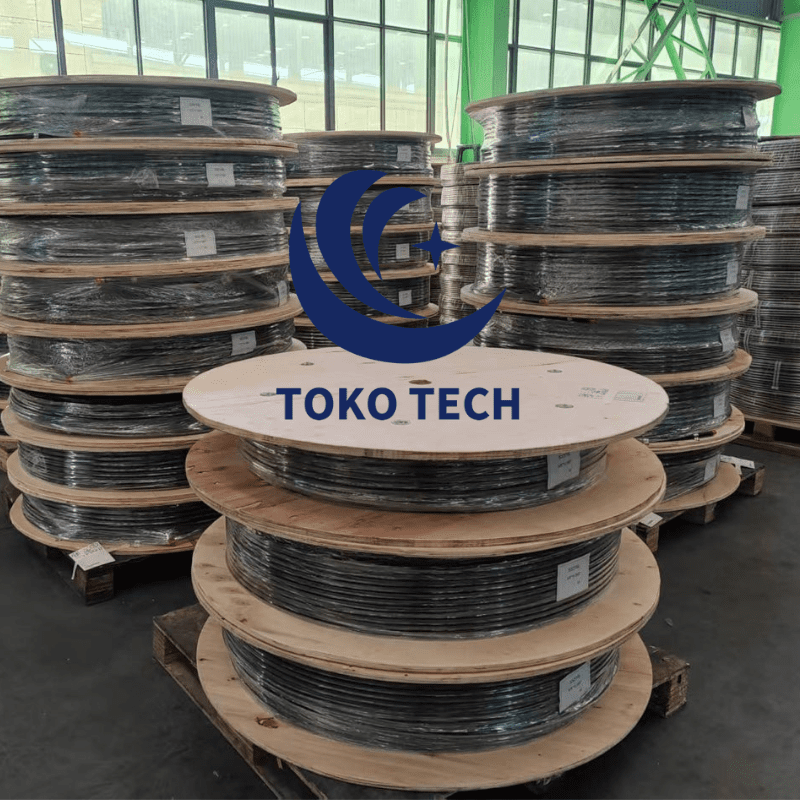
To address the most demanding industrial challenges, we have developed a premier portfolio of seamless solutions. For complex heat exchange systems and intricate routing, we recommend our 스테인리스 스틸 심리스 코일 튜브 and our 스테인리스 스틸 심리스 U-튜브. These products eliminate the need for multiple mechanical fittings and welded joints within the system, drastically reducing the potential for leaks. For main transportation lines and high-pressure manifolds, our 심리스 스트레이트 파이프/튜브 delivers the robust performance required by modern environmental engineering and pharmaceutical applications.
When you evaluate the differences between erw and seamless pipe, it becomes clear that investing in seamless technology is an investment in safety, longevity, and operational excellence. By eliminating the weld seam, you eliminate the primary point of failure.
자주 묻는 질문(FAQ)
참조
1. American Society of Mechanical Engineers (ASME). (2023). “ASME B31.3: Process Piping Standard.” This standard outlines the acceptable applications and pressure calculations that highlight the structural differences between erw and seamless pipe.
2. 미국석유협회(API). (2022). “API Specification 5L: Specification for Line Pipe.” A comprehensive guide on the manufacturing requirements for seamless and welded steel pipes used in pipeline transportation systems.
 Korean
  English
  Spanish
  Russian
  Turkish
  French
  German
  Italian