Written by TOKO TECH
In the highly demanding and technically complex world of oil and gas well intervention, selecting the appropriate deployment method for downhole tools is a critical decision that directly impacts operational success, safety, and economic viability. When petroleum engineers and well intervention specialists evaluate their options for logging, well stimulation, cleanouts, or mechanical interventions, the primary debate almost always centers around the difference between wireline and 코일 튜브 technologies. Both methods are indispensable to modern oilfield operations, yet they serve distinctly different functions based on their metallurgical properties, structural capabilities, and fluid dynamics.
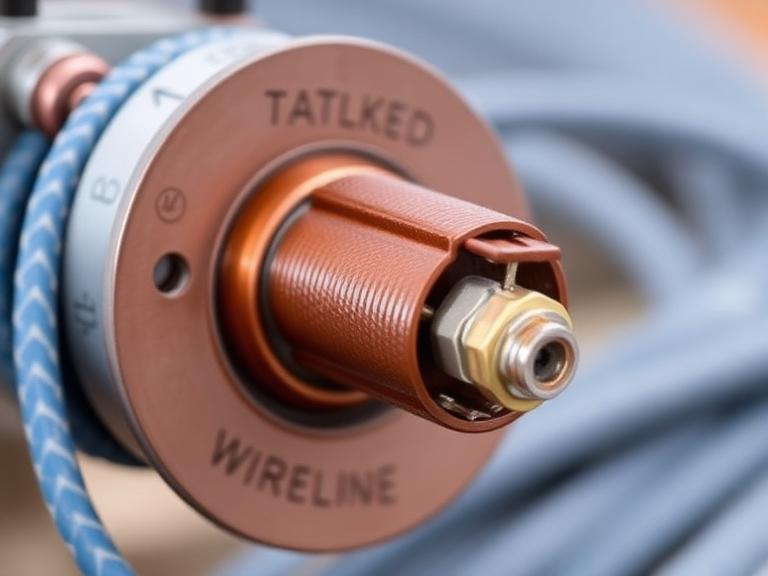
At TOKO TECH, an export-driven manufacturing enterprise specializing in the R&D, production, and sales of high-end metal pipeline systems, we deeply understand the metallurgical and mechanical demands placed on well intervention equipment. Headquartered in Shanghai, China, with state-of-the-art manufacturing facilities located in the Yangtze River Delta—China’s industrial core region—our company operates a modern production base dedicated to extreme environments. Since our establishment, TOKO TECH has adhered to the core philosophy of “Quality First, Innovation Driven”. We are dedicated to providing high-performance, corrosion-resistant, and high-temperature/high-pressure pipeline products for global clients in industries such as petrochemicals, energy and power, and environmental engineering. From our experience engineering the alloys used in these harsh downhole environments, we know that understanding the fundamental difference between wireline and coiled tubing is paramount for any reservoir or completions engineer.
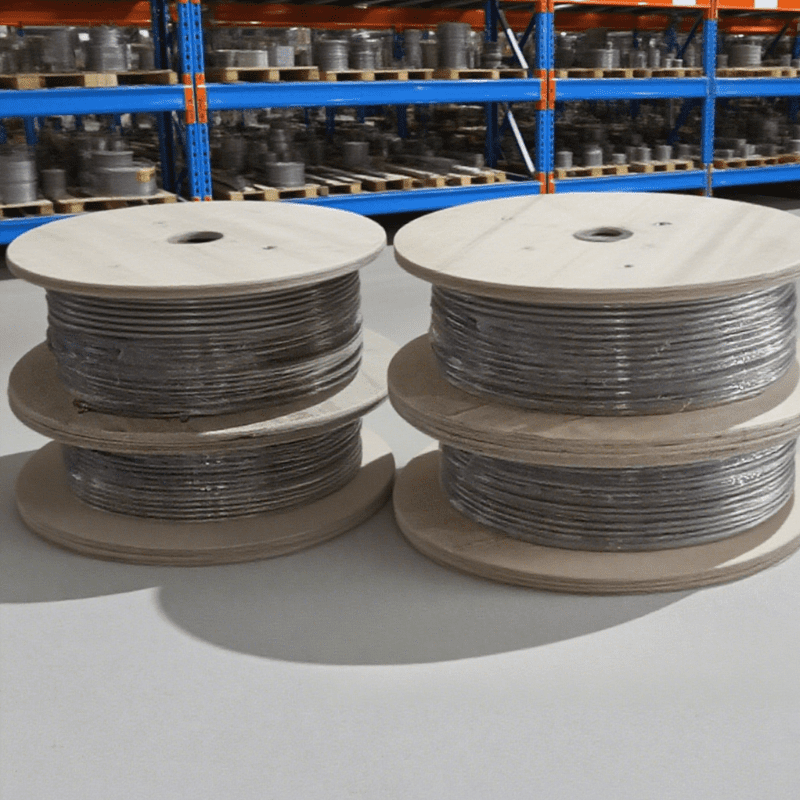
In this authoritative guide, we will explore the 6 difference between wireline and coiled tubing, analyzing their structural characteristics, pumping capabilities, deployment speed, and economic footprint to help you make highly informed well intervention decisions.
목차
- 1. Structural Integrity and Pumping Capabilities
- 2. Strength, Push-Pull Capacity, and Reach
- 3. Telemetry and Real-Time Data Transmission
- 4. Operational Footprint and Deployment Speed
- 5. Fluid Circulation and Wellbore Cleanout
- 6. Cost Efficiency and Economic Considerations
- The Role of High-Quality Materials in Well Intervention
- Summary Table: Difference Between Wireline and Coiled Tubing
- 자주 묻는 질문(FAQ)
- Industry References
1. Structural Integrity and Pumping Capabilities
The most fundamental difference between wireline and coiled tubing lies in their physical structure and, consequently, their ability to convey fluids downhole. Wireline is essentially a solid or braided metal cable. It is primarily categorized into slickline (a single solid strand of wire) and braided line or electric line (multiple strands woven together, often encasing an electrical conductor). Because wireline is a solid cable, it completely lacks an internal hollow core. Therefore, it is physically impossible to pump fluids through a wireline from the surface to the bottom of the wellbore.
Conversely, coiled tubing is a continuous length of flexible steel or alloy pipe wound on a large spool. Unlike wireline, coiled tubing possesses a hollow internal diameter. This structural distinction creates a massive difference between wireline and coiled tubing regarding well stimulation. With coiled tubing, engineers can continuously pump acids, nitrogen, cement, or completion fluids directly into the wellbore while the tubing is being run in or pulled out of the hole. For operations requiring acidizing to stimulate the reservoir matrix or nitrogen lifting to kick off a dead well, our Coiled Tubing/Control Line Tube products provide the essential conduit required for high-pressure fluid delivery.
2. Strength, Push-Pull Capacity, and Reach
As the industry aggressively develops unconventional shale reservoirs and highly deviated offshore wells, the geometry of the wellbore dictates the intervention method. Here, the difference between wireline and coiled tubing becomes a matter of physics and gravity. Wireline is highly flexible and relies entirely on gravity to reach the target depth. In a vertical well, the weight of the tool string pulls the wireline downhole. However, in highly deviated or horizontal wells, gravity is no longer sufficient. The wireline will simply lay on the low side of the casing, halting forward progress due to friction.
Coiled tubing, manufactured from high-yield strength steel or specialized alloys, possesses significant mechanical rigidity. This rigidity allows the surface equipment (the injector head) to mechanically push the continuous pipe deep into horizontal laterals. When comparing the difference between wireline and coiled tubing in extended-reach drilling (ERD) profiles, coiled tubing is vastly superior. It can apply set-down weight to actuate downhole tools, shift sliding sleeves, or mill out composite frac plugs in the horizontal section of a well—tasks that are impossible for standard gravity-dependent wireline unless specialized downhole tractors are deployed.
3. Telemetry and Real-Time Data Transmission
When the objective is strictly reservoir evaluation, logging, or precise depth control, the difference between wireline and coiled tubing heavily favors electric wireline (e-line). An electric wireline contains a conductive copper core surrounded by protective armor. This allows for high-speed, real-time data transmission from sophisticated downhole logging tools (such as gamma ray, neutron porosity, and resistivity sensors) directly to the surface computers.
Standard coiled tubing does not inherently possess data transmission capabilities; it is simply a hollow pipe. While it is possible to pump pressure-activated tools or use memory logging tools on coiled tubing (where data is downloaded only after the tool is retrieved to the surface), it lacks the immediate feedback of e-line. However, from our experience at TOKO TECH, the industry is advancing. We are seeing the implementation of “smart” coiled tubing, where an electric wire or fiber optic cable is installed inside the Coiled Tubing/Control Line Tube. Even so, for standard diagnostic operations, the fundamental difference between wireline and coiled tubing means that wireline remains the undisputed choice for rapid, real-time well logging.
4. Operational Footprint and Deployment Speed
Logistics and surface footprint play a massive role in offshore platforms or remote onshore pads where space and crane capacity are severely limited. The difference between wireline and coiled tubing in terms of surface equipment is staggering. A standard slickline or wireline unit is highly compact. It typically consists of a small winch drum unit, a power pack, and a lubricator (a pressure control pipe) suspended by a mast or crane. Wireline units can be rigged up and running in a matter of hours, requiring a minimal crew.
Coiled tubing interventions require a massive logistical footprint. A standard coiled tubing spread includes the tubing reel (which can weigh upwards of 80,000 lbs depending on the length and diameter of the pipe), a control cabin, a high-pressure pumping unit, a nitrogen pumping unit, an injector head, and extensive blowout preventer (BOP) stacks. The mobilization, rig-up time, and personnel requirements for coiled tubing are substantially higher. Therefore, when evaluating the difference between wireline and coiled tubing for a simple task like setting a plug or retrieving a subsurface safety valve in a vertical well, we recommend wireline due to its rapid deployment and minimal footprint.
5. Fluid Circulation and Wellbore Cleanout
Throughout the lifecycle of a producing well, sand, scale, paraffin, and debris inevitably accumulate in the wellbore, restricting hydrocarbon flow. Removing these blockages highlights another critical difference between wireline and coiled tubing. Because wireline cannot circulate fluids, it must rely on mechanical bailing. A wireline bailer is lowered into the well, captures a small volume of sand or debris, and is pulled back to the surface to be emptied. This process is incredibly tedious, inefficient, and generally ineffective for large volumes of fill.
Coiled tubing is the ultimate tool for wellbore cleanouts. By utilizing specialized jetting nozzles or downhole mud motors attached to the end of the pipe, coiled tubing can continuously pump high-pressure fluids to scour the casing walls. The circulated fluid then carries the sand and debris up the annulus (the space between the coiled tubing and the production casing) and out of the well at the surface. From our experience supplying 심리스 파이프/튜브 그리고 용접 파이프/튜브 for surface return lines, the ability to establish a continuous circulation loop is the defining difference between wireline and coiled tubing when heavy wellbore intervention is required.
6. Cost Efficiency and Economic Considerations
Ultimately, engineering decisions must align with economic reality. The financial difference between wireline and coiled tubing interventions is vast. Due to the heavy machinery, massive transportation logistics, large crew sizes, and associated fluid pumping services, coiled tubing operations carry a significantly higher daily operational rate. Furthermore, coiled tubing suffers from bending fatigue. Every time the pipe is spooled off the reel and bent over the gooseneck into the injector head, it experiences plastic deformation. This limits the lifespan of a coiled tubing string, adding to the overall service cost.
Wireline operations are highly cost-effective. The equipment is cheaper to mobilize, the crew size is smaller, and the wireline itself does not suffer from the same extreme bending fatigue as steel pipe. Therefore, understanding the difference between wireline and coiled tubing allows operators to optimize their budgets. We recommend utilizing wireline for all diagnostic, light mechanical, and explosive (perforating) operations where the well geometry permits, reserving the heavy expenditure of coiled tubing for complex cleanouts, milling, and high-volume fluid stimulation.
The Role of High-Quality Materials in Well Intervention
Regardless of whether an operator chooses wireline or coiled tubing, the intervention tools must withstand extreme downhole pressures, highly corrosive sour gas (H2S), and elevated temperatures. This is where TOKO TECH excels. As a leader in high-end metal pipeline systems, our products form the backbone of safe and reliable oilfield operations.
When operating in highly corrosive reservoirs, standard carbon steel is insufficient. We supply premium Nickel Alloy Seamless Pipe/Tube and Nickel Alloy Bar/Rod that offer unparalleled resistance to chloride stress corrosion cracking and hydrogen embrittlement. Furthermore, our precision-manufactured Stainless Steel Pipe Fitting ensures leak-proof integrity for the high-pressure surface pumping equipment required during coiled tubing operations. By adhering to our philosophy of Quality First, Innovation Driven, TOKO TECH ensures that the Coiled Tubing/Control Line Tube and supporting metallurgical systems deployed in the field maximize operational safety and minimize catastrophic failures.
Summary Table: Difference Between Wireline and Coiled Tubing
To assist drilling engineers, completion managers, and procurement specialists in their decision-making process, we have compiled the core operational differences into a responsive reference table.
| Operational Characteristic | Wireline (Slickline / E-Line) | Coiled Tubing (CT) |
|---|---|---|
| Physical Structure | Solid or braided cable (no hollow core). | Continuous hollow steel or alloy pipe. |
| Pumping / Circulation | Cannot pump or circulate fluids. | Continuous fluid pumping and circulation. |
| Push-Pull Capacity | Gravity-dependent; cannot be pushed mechanically. | High rigidity; can be pushed into horizontal wells. |
| Primary Applications | Logging, perforating, setting plugs, light mechanical. | Cleanouts, acidizing, milling plugs, nitrogen lifting. |
| Logistical Footprint | Small footprint, fast rig-up, minimal crew. | Massive footprint, heavy equipment, large crew. |
| Relative Cost | Highly cost-effective. | High operational and mobilization costs. |
자주 묻는 질문(FAQ)
Industry References
To further expand your technical understanding of well intervention methodologies, metallurgical standards, and the engineering difference between wireline and coiled tubing, we recommend consulting the following authoritative industry resources:
- 미국석유협회(API) – Comprehensive standards governing the manufacturing specifications for coiled tubing, wireline pressure control equipment, and pipeline metallurgy.
- 석유 공학자 협회(SPE) – Peer-reviewed technical papers and industry best practices regarding well intervention, extended reach drilling, and downhole telemetry.
- Intervention & Coiled Tubing Association (ICoTA) – The premier global organization dedicated to advancing the safety, technology, and operational efficiency of coiled tubing and wireline intervention techniques.
 Korean
  English
  Spanish
  Russian
  Turkish
  French
  German
  Italian