1. Definition and Basic Concept
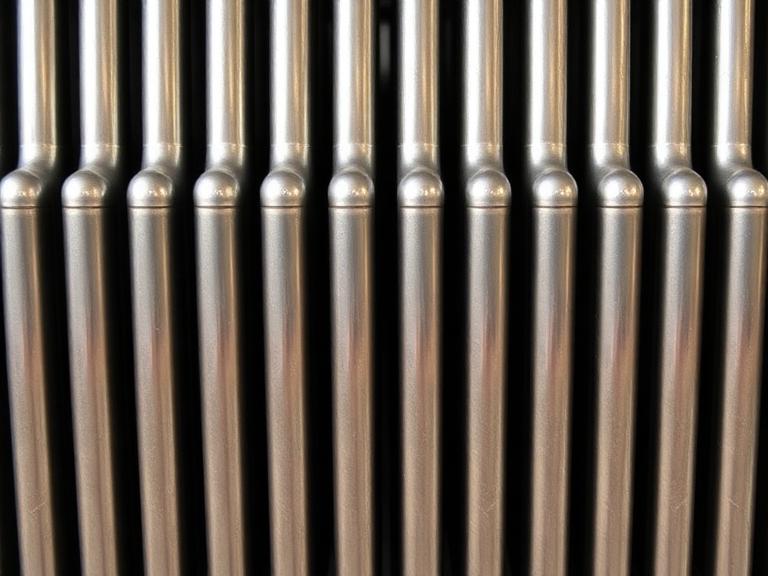
A Finned tube heat exchanger is a specialized heat transfer device that features tubes with extended surfaces, or fins, attached to the exterior (or sometimes interior) of the pipe. The fundamental purpose of these fins is to increase the total surface area of the heat exchanger without significantly increasing the overall footprint of the equipment.
Indice dei contenuti
- 1. Definition and Basic Concept
- 2. How a Finned Tube Heat Exchanger Works
- 3. TOKO TECH: High-End Materials for Heat Exchangers
- 4. Types of Fins and Their Applications
- 5. Material Selection and Durability
- 6. Key Industrial Applications
- 7. Advantages and Disadvantages
- 8. Maintenance and Cleaning Strategies
- 9. Summary Comparison Table
- 10. Frequently Asked Questions (FAQs)
- 11. References and Standards
In standard heat exchangers, heat is transferred between two fluids through the wall of a smooth tube. However, when one of the fluids is a gas (like air) and the other is a liquid (like water or oil), there is a massive disparity in their heat transfer coefficients. Gases are poor conductors of heat. To compensate for this, engineers use a Finned tube heat exchanger to provide more area for the gas to interact with, thereby balancing the thermal resistance and improving the overall efficiency of the system.
2. How a Finned Tube Heat Exchanger Works
The working principle of a Finned tube heat exchanger relies on the laws of conduction and convection. Heat from the hot fluid inside the tube is conducted through the tube wall into the fins. As the cooler fluid (usually air) passes over the fins, the heat is transferred via convection from the large surface area of the fins to the surrounding air.
The efficiency of this process is governed by the fin efficiency and the overall heat transfer coefficient, denoted by the formula:
$$Q = U \cdot A \cdot \Delta T_m$$
Where $Q$ is the heat transfer rate, $U$ is the overall heat transfer coefficient, $A$ is the total surface area (including fins), and $\Delta T_m$ is the log mean temperature difference. By increasing $A$ through the use of fins, the total heat $Q$ increases dramatically even if $U$ remains relatively low due to the properties of the gas.
3. TOKO TECH: High-End Materials for Heat Exchangers
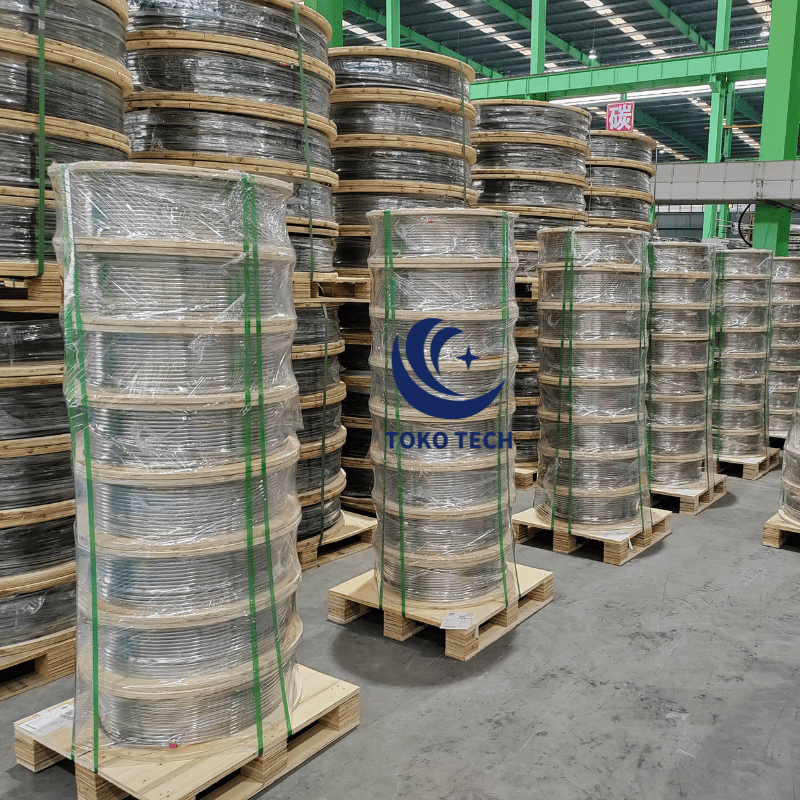
The heart of any Finned tube heat exchanger is the base tube. If the base tube fails due to corrosion or pressure, the entire system is compromised. This is where specialized manufacturers like TOKO TECH play a vital role.
TOKO TECH is an export-driven manufacturing enterprise specializing in the R&D, production, and sales of high-end metal pipeline systems. Headquartered in Shanghai, China, with manufacturing facilities located in the Yangtze River Delta—China’s industrial core region—the company operates a modern production base. Since its establishment, TOKO TECH has adhered to the core philosophy of “Quality First, Innovation Driven”, dedicated to providing high-performance, corrosion-resistant, and high-temperature/high-pressure pipeline products for global clients.
For a Finned tube heat exchanger to operate in demanding environments like petrochemical plants or power stations, the base tubes must be made from superior materials. TOKO TECH offers a range of products that serve as the foundation for these systems:
- Tubo senza saldatura in lega di nichel: Essential for high-corrosion environments.
- Barra/barre in lega di nichel: Used in the fabrication of custom fittings and supports.
- Tubo senza saldatura: Precision-engineered for high-pressure heat transfer.
- Tubo a spirale/tubo della linea di controllo: Ideal for compact heat exchanger designs.
- Raccordi per tubi in acciaio inox: Ensuring leak-proof connections in complex arrays.
- Tubo saldato: Cost-effective solutions for large-scale industrial heating.
These products are widely used in industries such as petrochemicals, energy and power, shipbuilding, pharmaceutical and food processing, and environmental engineering.
4. Types of Fins and Their Applications
The design of the fins on a Finned tube heat exchanger varies depending on the specific thermal requirements and the environment.
Helical or Spiral Fins
Helical fins are wrapped around the tube in a continuous spiral. These are the most common in air-cooled heat exchangers and boilers. They provide excellent turbulence in the air stream, which further enhances the heat transfer rate.
Longitudinal Fins
Longitudinal fins run parallel to the axis of the tube. These are typically used in double-pipe heat exchangers where the flow is parallel. They are ideal for viscous fluids where pressure drop needs to be kept to a minimum.
Extruded Fins
In an extruded Finned tube heat exchanger, the fins are actually formed from the outer wall of a bimetallic tube. This creates an uninterrupted bond between the fin and the tube, offering the best heat transfer efficiency and protection against atmospheric corrosion.
L-Foot and G-Fin (Embedded)
L-Foot fins are wrapped under tension with an L-shaped base that covers the tube surface. G-Fins are embedded into a groove cut into the tube wall. These designs are chosen based on the operating temperature; G-Fins can handle much higher temperatures than L-Foot designs.
5. Material Selection and Durability
The longevity of a Finned tube heat exchanger is determined by its resistance to fouling and corrosion. Material selection is the most critical phase of the design process.
In the petrochemical and energy sectors, tubes are often exposed to sour gases or high-pressure steam. Using a Tubo senza saldatura in lega di nichel from TOKO TECH ensures that the base tube remains intact under chemical attack. For the fins themselves, aluminum is frequently used because of its high thermal conductivity and low weight. However, in marine environments, copper-nickel or stainless steel fins might be necessary to prevent salt-air corrosion.
The thermal expansion coefficient must also be considered. If the fin and the tube expand at drastically different rates, the mechanical bond between them may loosen, creating an air gap that acts as an insulator, destroying the efficiency of the Finned tube heat exchanger.
6. Key Industrial Applications
The versatility of the Finned tube heat exchanger makes it a staple in modern industry.
Petrochemical and Refinery
Refineries use massive air-cooled heat exchangers (also known as fin-fans) to condense process vapors. Because these facilities often process corrosive crude, the high-performance pipeline products from TOKO TECH are essential for maintaining safety and operational uptime.
Power Plants
In thermal power plants, the Finned tube heat exchanger is found in economizers and air preheaters. They recover waste heat from flue gases to preheat boiler feedwater, significantly improving the plant’s overall efficiency.
HVAC and Refrigeration
Your home air conditioner uses a Finned tube heat exchanger in both the evaporator and condenser coils. The fins allow the unit to be small enough to fit on a wall while having enough surface area to cool an entire room.
Food and Pharmaceutical Processing
These industries require strict hygiene. Stainless steel finned tubes are used here because they can be cleaned easily and do not react with the products being processed.
7. Advantages and Disadvantages
Like any engineering solution, the Finned tube heat exchanger has trade-offs.
Vantaggi
- High Efficiency: Maximizes heat transfer in gas-to-liquid applications.
- Compact Design: Reduces the physical size of the heat exchanger unit.
- Efficiente dal punto di vista dei costi: Lower material usage for the same thermal output compared to smooth tubes.
- Versatilità: Can be customized with different fin densities and heights.
Svantaggi
- Fouling Risk: The small gaps between fins can trap dust, debris, and biological growth.
- Cleaning Difficulty: Requires specialized high-pressure or chemical cleaning methods.
- Pressure Drop: Fins increase the resistance to air flow, requiring more powerful fans.
8. Maintenance and Cleaning Strategies
The performance of a Finned tube heat exchanger can degrade rapidly if the fins become fouled. Fouling acts as an insulating layer, preventing the air from reaching the heat transfer surface.
In industrial environments, maintenance teams use “air-combing” or high-pressure water blasting to clear debris. However, care must be taken not to bend the fins, as flattened fins block air flow entirely. For chemical fouling, specialized foam cleaners are applied to dissolve oils and scales.
Utilizing corrosion-resistant materials, such as the Raccordi per tubi in acciaio inox and high-grade tubes from TOKO TECH, can reduce the rate of chemical fouling and extend the intervals between deep cleans.
9. Summary Comparison Table
| Caratteristica | Standard Tube Exchanger | Finned Tube Heat Exchanger |
|---|---|---|
| Surface Area | Low (limited to tube OD) | Very High (extended surface) |
| Gas-to-Liquid Efficiency | Poor | Eccellente |
| Space Requirement | Grande | Compatto |
| Cleaning Ease | Facile | Moderate to Difficult |
| Initial Cost | Lower per foot of tube | Higher per foot of tube |
| Primary Usage | Liquid-to-Liquid | Gas-to-Liquid / Gas-to-Gas |
10. Frequently Asked Questions (FAQs)
What is fin pitch in a Finned tube heat exchanger?
Fin pitch refers to the distance between adjacent fins. A higher fin pitch (more fins per inch) increases surface area but also increases the resistance to air flow and the risk of fouling.
Why is aluminum the most common fin material?
Aluminum offers an excellent combination of high thermal conductivity, low weight, and relatively low cost. It also forms a protective oxide layer that resists atmospheric corrosion.
Can I use a Finned tube heat exchanger for liquid-to-liquid transfer?
It is generally not recommended. Fins are used when one fluid’s heat transfer coefficient is much lower than the other. In liquid-to-liquid scenarios, both fluids have high coefficients, and fins would add unnecessary cost and pressure drop without a proportional gain in efficiency.
How does TOKO TECH ensure the quality of the base tubes?
TOKO TECH utilizes advanced CNC automation, vacuum heat treatment, and comprehensive testing facilities in the Yangtze River Delta core industrial region to ensure all high-end metal pipeline products meet global high-pressure and corrosion standards.
11. References and Standards
- API Standard 661: Air-Cooled Heat Exchangers for General Refinery Service.
- ASME Section VIII: Rules for Construction of Pressure Vessels.
The Finned tube heat exchanger remains one of the most vital components in modern thermal management. By bridging the gap in heat transfer efficiency between liquids and gases, it enables the high-performance operations we see in today’s energy, pharmaceutical, and petrochemical sectors. Choosing high-quality components from manufacturers like TOKO TECH ensures that these systems operate safely and efficiently for decades to come.
 Italian
  English
  Spanish
  Russian
  Turkish
  French
  Korean
  German