In the modern industrial landscape of 2026, the structural integrity and fluid transport capabilities of metal pipelines are more critical than ever. Among the various manufacturing methods, welded piping systems stand out for their versatility, cost-effectiveness, and adaptability to complex geometries. Understanding the different types of welded pipes is essential for engineers, procurement specialists, and project managers working in high-stakes sectors like petrochemicals and energy.
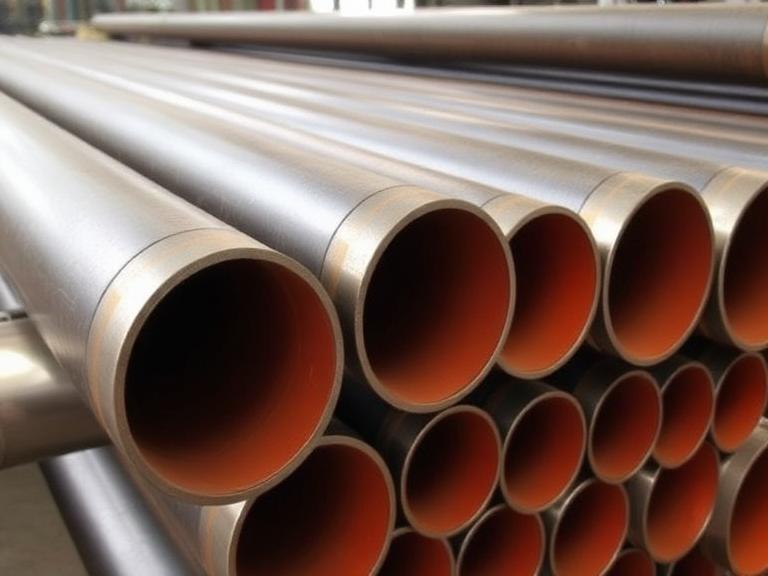
As global infrastructure demands higher efficiency, manufacturers are pushing the boundaries of metallurgy and welding technology. This guide explores the foundational and advanced variations of welded piping, highlighting the precision engineering required for the most demanding environments.
Table of Contents: Pipeline Engineering
- 1. The Engineering Significance of Welded Pipes
- 2. Spotlight: TOKO TECH Precision Metal Pipeline Systems
- 3. Type 1: Electric Resistance Welded (ERW) Pipes
- 4. Type 2: Longitudinal Submerged Arc Welded (LSAW) Pipes
- 5. Type 3: Spiral Submerged Arc Welded (SSAW) Pipes
- 4. Type 4: High-Frequency Welded (HFW) Pipes
- 7. Type 5: TIG/Plasma Welded Precision Pipes
- 8. Comparison Table: Welded Pipe Characteristics
- 9. Frequently Asked Questions (FAQs)
- 10. References and Quality Standards
1. The Engineering Significance of Welded Pipes
In the global market for industrial fluids, the various types of welded pipes serve as the circulatory system of modern civilization. Unlike tubi senza saldatura, which are extruded from solid billets, welded pipes are formed from flat steel plates or coils. This manufacturing process allows for greater control over wall thickness consistency and enables the production of extremely large diameters that would be impossible to achieve through seamless extrusion.
The reliability of a welded pipe depends entirely on the quality of its seam. In 2026, advances in automated laser tracking and ultrasonic testing have made welded joints nearly as strong as the parent metal. Whether transporting natural gas across continents or managing high-purity chemicals in a pharmaceutical lab, selecting the correct types of welded pipes is the first step in ensuring operational safety and longevity.
Professional manufacturer of precision Coil tubing tubes
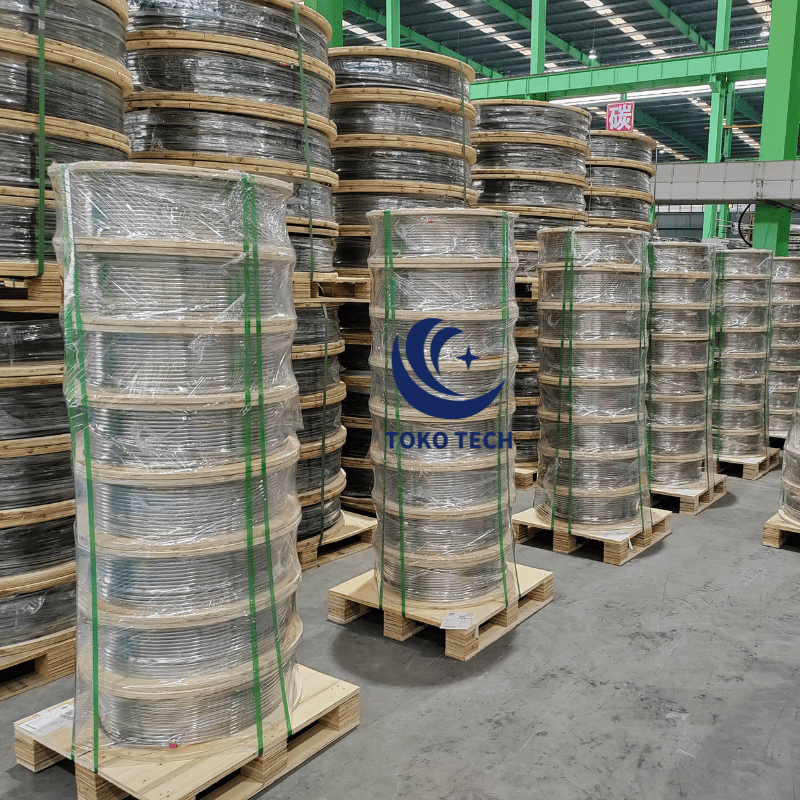
TOKO TECH is an export-driven manufacturing enterprise specializing in the R&D, production, and sales of high-end metal pipeline systems. Headquartered in Shanghai, China, with manufacturing facilities located in the Yangtze River Delta—China’s industrial core region—the company operates a modern production base.
Since its establishment, TOKO TECH has adhered to the core philosophy of “Quality First, Innovation Driven”, dedicated to providing high-performance, corrosion-resistant, and high-temperature/high-pressure pipeline products for global clients. These products are widely used in industries such as petrochemicals, energy and power, shipbuilding, pharmaceutical and food processing, and environmental engineering.
Core Product Range:
3. Type 1: Electric Resistance Welded (ERW) Pipes
Electric Resistance Welding (ERW) is one of the most common types of welded pipes used in low to medium-pressure applications. The process involves cold-forming a steel ribbon into a cylindrical shape. Current is then passed between the two edges of the steel to heat the metal to a point where the edges are forced together to form a bond without the use of welding filler material.
ERW pipes are highly favored for their dimensional accuracy and cost-efficiency. In 2026, ERW technology has evolved to utilize high-frequency induction, which significantly reduces the heat-affected zone (HAZ), resulting in a more uniform grain structure at the weld. These pipes are frequently found in water transport, scaffolding, and line pipe for the oil and gas industry.
4. Type 2: Longitudinal Submerged Arc Welded (LSAW) Pipes
For high-pressure, heavy-wall applications, LSAW is the preferred choice among the different types of welded pipes. This method uses a single wide steel plate as the raw material. The plate is pressed (UOE or JCOE process) into a pipe shape and then welded both internally and externally using submerged arc welding. The use of flux protects the weld pool from atmospheric contamination, resulting in extremely clean and strong joints.
LSAW pipes are the backbone of long-distance oil and gas pipelines, particularly those crossing difficult terrain or offshore environments where high tensile strength is mandatory. Their ability to reach diameters of up to 60 inches makes them irreplaceable for major infrastructure projects.
5. Type 3: Spiral Submerged Arc Welded (SSAW) Pipes
SSAW pipes, also known as HSAW (Helical Submerged Arc Welded), are unique in their production. Rather than a longitudinal seam, the weld follows a spiral path around the circumference of the pipe. This allows a narrow coil of steel to be transformed into a very large diameter pipe. One of the structural advantages of SSAW pipes is that the spiral seam provides extra resistance against internal pressure, as the stresses are distributed across the helical path.
While historically seen as less robust than LSAW, modern SSAW pipes produced in 2026 under strict quality controls are widely used for low-pressure fluid transport, piling for construction, and large-scale water distribution systems.
6. Type 4: High-Frequency Welded (HFW) Pipes
HFW is a specialized subset of ERW that utilizes high-frequency current (typically 70 kHz or higher). This type of welded pipe is synonymous with high-quality automotive and mechanical tubing. The high-speed welding process ensures that the seam is nearly invisible and extremely ductile. HFW pipes are often subjected to post-weld heat treatment (PWHT) to normalize the seam, making it ideal for applications requiring bending or flaring.
7. Type 5: TIG/Plasma Welded Precision Pipes
When dealing with stainless steel and high-nickel alloys, Tungsten Inert Gas (TIG) or Plasma welding is the gold standard for creating the most precise types of welded pipes. This process is slower than ERW or LSAW but offers unmatched control over the weld bead and penetration. This is the method used by leaders like TOKO TECH to produce specialized products such as Stainless steel welded Coiled tubes.
Precision TIG welding is essential for the pharmaceutical and food processing industries, where the internal surface of the pipe must be perfectly smooth to prevent bacterial growth. Furthermore, the ability to produce these in coiled formats allows for long, continuous runs in heat exchangers and hydraulic systems, reducing the number of potential leak points at mechanical fittings.
8. Comparison Table: Welded Pipe Characteristics
| Pipe Type | Welding Method | Typical Diameter | Best Application |
|---|---|---|---|
| ERW | Electric Resistance | 1/2″ to 24″ | Water transport, low-pressure gas |
| LSAW | Submerged Arc (Straight) | 16″ to 60″ | High-pressure oil/gas, offshore |
| SSAW | Submerged Arc (Spiral) | 8″ to 100″+ | Construction piles, drainage |
| HFW | High-Frequency Induction | 1″ to 20″ | Automotive, mechanical tubing |
| TIG/Plasma | Inert Gas/Plasma Arc | 1/8″ to 8″ (Precision) | Pharmaceuticals, coiled tubing |
9. Frequently Asked Questions (FAQs)
Are welded pipes as strong as seamless pipes?
In modern engineering, the “weld factor” is often 1.0, meaning the weld is considered as strong as the parent metal. While seamless pipes are traditionally used for the highest pressures, the types of welded pipes produced today with automated ultrasonic inspection are sufficient for nearly all industrial applications.
What are the benefits of stainless steel welded Coiled tubes?
Coiled tubes, like those produced by TOKO TECH, offer significant advantages in installation. Because they can be produced in lengths of several kilometers, they minimize the need for welds and joints in the field, which are common failure points in subsea or high-pressure energy systems.
What is JCOE in LSAW manufacturing?
JCOE refers to the “J-ing, C-ing, O-ing, and Expanding” process. The steel plate is bent into a ‘J’ shape, then a ‘C’ shape, and finally an ‘O’ shape before the seam is welded and the pipe is mechanically expanded to its final diameter.
Can welded pipes be used in corrosive environments?
Yes, provided the correct alloy and welding technique are used. Stainless steel welded pipes with high chromium and nickel content are specifically designed for corrosion resistance in chemical plants and shipbuilding.
 Italian
  English
  Spanish
  Russian
  Turkish
  French
  Korean
  German