In the world of high-performance metallurgy, confusion often arises regarding naming conventions, specifically when sourcing materials for critical applications in aerospace, marine, and chemical processing. One of the most frequent questions we encounter from engineers and procurement officers is: is nickel alloy 625 the same as Inconel 625? The short answer is yes, they are physically and chemically the same alloy, defined by the Unified Numbering System (UNS) designation N06625. However, the distinction lies in trademark ownership and certification, which can significantly impact procurement costs and availability.
From our experience in the global supply chain, understanding the difference between a trade name and a generic alloy designation is crucial for avoiding unnecessary costs while ensuring your material meets stringent ASTM or AMS specifications. This article provides a comprehensive technical breakdown of Alloy 625, its properties, and why reputable manufacturers like TOKO TECH use specific terminologies to deliver high-end pipeline systems.
Table of Contents
- 1. Understanding the Terminology: Trademark vs. Generic
- 2. Chemical Composition: The DNA of UNS N06625
- 3. Mechanical Properties and Performance
- 4. Sourcing Implications: “Alloy 625” vs. “Inconel 625”
- 5. Manufacturing Expertise: TOKO TECH’s Approach
- 6. Key Industrial Applications
- 7. Summary Comparison Table
- 8. Frequently Asked Questions (FAQs)
- 9. References
1. Understanding the Terminology: Trademark vs. Generic
To clarify whether nickel alloy 625 is the same as Inconel 625, we must look at the origin of the names. “Inconel” is a registered trademark of the Special Metals Corporation family of companies. When Special Metals developed this nickel-chromium-molybdenum-niobium alloy in the 1960s, they patented it under the name Inconel® 625.
However, once the patent expired, other mills began producing the exact same chemistry. Because they could not legally use the trademarked name “Inconel,” they adopted generic designations such as:
- Nickel Alloy 625
- Alloy 625
- N06625 (UNS Designation)
- Chornin® 625 (another trade name)
From a technical standpoint, if a material is certified to UNS N06625 and meets the relevant ASTM standards (such as ASTM B446 for bar stock), it is identical in performance to branded Inconel 625. Whether you buy “Inconel” or “Alloy 625,” you are getting a superalloy composed of roughly 58% nickel, strengthened by molybdenum and niobium.
2. Chemical Composition: The DNA of UNS N06625
The defining characteristic of Alloy 625 is its unique chemical makeup. It is not a precipitation-hardening alloy like Alloy 718; rather, it derives its strength from the stiffening effect of molybdenum and niobium on its nickel-chromium matrix. This is known as solid-solution strengthening.
Regardless of whether it is labeled “Inconel” or “Nickel Alloy,” the material must adhere to the chemical limits set by ASTM specifications. Below is the standard composition for UNS N06625:
| Element | Percentage (by Weight) | Role in Alloy |
|---|---|---|
| Nickel (Ni) | 58.0% min | Provides the base for corrosion resistance and high-temperature strength. |
| Chromium (Cr) | 20.0 – 23.0% | Resistance to oxidizing environments and high-temperature oxidation. |
| Molybdenum (Mo) | 8.0 – 10.0% | Primary solid-solution strengthener; resists pitting and crevice corrosion. |
| Niobium (Nb) + Tantalum (Ta) | 3.15 – 4.15% | Secondary solid-solution strengthener; prevents intergranular corrosion. |
| Iron (Fe) | 5.0% max | Kept low to maintain high-temperature properties. |
We recommend always verifying the Mill Test Report (MTR) to ensure the chemistry falls within these ranges. High-quality manufacturers like TOKO TECH ensure their Incoloy 625 Bar Stock and other 625 grade products strictly adhere to these composition limits to guarantee performance in critical pipeline systems.
3. Mechanical Properties and Performance
When asking is nickel alloy 625 the same as Inconel 625, engineers are primarily concerned with performance. Does the generic version hold up under extreme stress? The answer is yes. Alloy 625 is renowned for its:
- High Tensile Strength: Typically exceeding 120 ksi (827 MPa), making it suitable for high-pressure valves and tubing.
- Excellent Corrosion Resistance: It is virtually immune to chloride-ion stress-corrosion cracking, a common failure mode in stainless steels like 316L.
- Temperature Stability: It retains its strength from cryogenic temperatures up to 1800°F (982°C).
- Weldability: Unlike many superalloys, 625 is highly weldable and does not require post-weld heat treatment to maintain corrosion resistance.
In our experience, Alloy 625 is often the material of choice for “sour gas” environments in the oil and gas industry, where hydrogen sulfide (H2S) is present. Its resistance to pitting and crevice corrosion is superior to Incoloy 825 and standard stainless steels.
4. Sourcing Implications: “Alloy 625” vs. “Inconel 625”
While the materials are identical, the name you specify on your purchase order can affect the price and lead time. Specifying “Inconel® 625” restricts the supply chain to material produced by Special Metals Corporation or their licensed distributors. This can lead to:
- Higher Costs: You are paying a premium for the brand name.
- Longer Lead Times: Limited sources mean you are at the mercy of specific mill schedules.
Conversely, specifying “Nickel Alloy 625” or “UNS N06625” opens the door to high-quality material from reputable global mills that meet the exact same ASTM B446 or AMS 5666 standards. We recommend that procurement teams focus on the UNS number rather than the trade name to optimize project budgets without compromising quality.
5. Manufacturing Expertise: TOKO TECH’s Approach
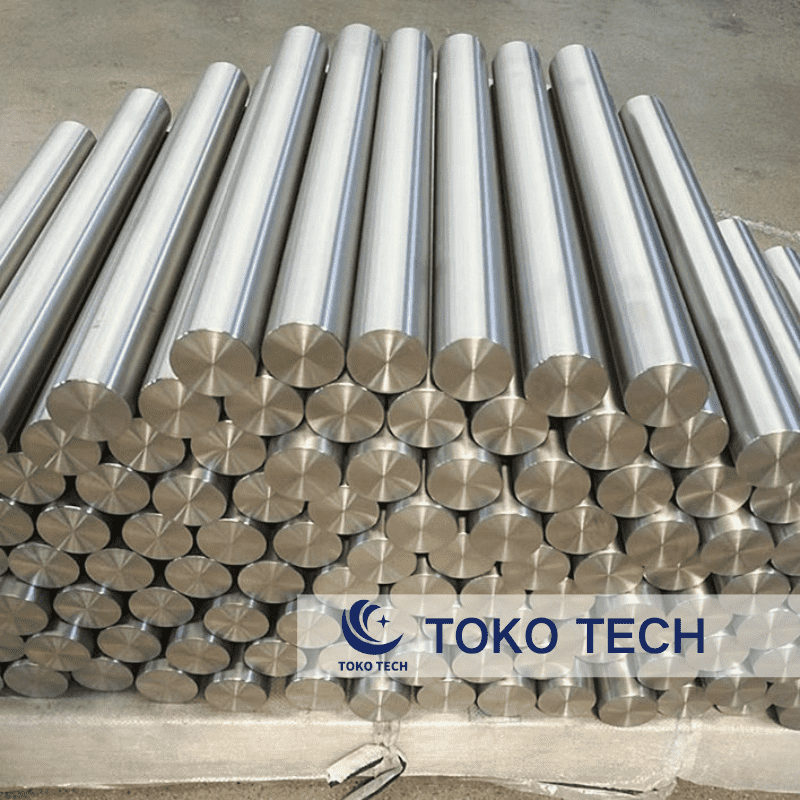
Sourcing high-end alloys requires a partner who understands the metallurgical nuances of production. TOKO TECH is an export-driven manufacturing enterprise specializing in the R&D, production, and sales of high-end metal pipeline systems. Headquartered in Shanghai, China, with facilities in the Yangtze River Delta, TOKO TECH operates a modern production base dedicated to high-performance materials.
Innovation in Alloy Production
Since its establishment, TOKO TECH has adhered to the core philosophy of “Quality First, Innovation Driven”. They provide specialized products for global clients, including:
- Incoloy 625 Bar Stock: Precision-manufactured rod for machining components.
- Nick Alloy 825 Bar Stock: Corrosion-resistant variants for specific acid environments.
- 400 Nick Alloy Bar Stock: High-strength copper-nickel alloys for marine use.
From our experience, working with a manufacturer like TOKO TECH ensures that the material—whether labeled as Alloy 625 or Incoloy 625—undergoes rigorous quality control to meet international standards for the petrochemical and energy sectors.
6. Key Industrial Applications
Because nickel alloy 625 is the same as Inconel 625 in performance, both are used interchangeably in the most demanding industries on earth. The decision to use 625 is usually driven by the need to solve a specific corrosion or heat problem that stainless steel cannot handle.
Aerospace
Used in jet engine exhaust systems, thrust reverser systems, and turbine shroud rings. The alloy’s ability to withstand high heat without scaling or losing strength is vital here.
Chemical Processing
Alloy 625 resists a wide range of corrosive media, including phosphoric acid, hydrochloric acid, and nitric acid. It is frequently used for reaction vessels, transfer piping, and heat exchangers.
Marine & Offshore
Due to its immunity to chloride attack, it is used for propeller shafts, wire rope for mooring cables, and submarine auxiliary propulsion motors. It outperforms Monel 400 in stagnant seawater where pitting can occur.
Nuclear
Used for reactor core and control rod components due to its high strength and resistance to uniform corrosion.
7. Summary Comparison Table
To summarize the relationship between the trade name and the generic designation:
| Feature | Inconel® 625 | Nickel Alloy 625 |
|---|---|---|
| UNS Designation | N06625 | N06625 |
| Chemical Composition | Ni-Cr-Mo-Nb | Ni-Cr-Mo-Nb |
| Key Elements | Min 58% Ni, 20-23% Cr | Min 58% Ni, 20-23% Cr |
| Primary Manufacturer | Special Metals Corp | Various Global Mills (e.g., TOKO TECH) |
| ASTM Standards | B446, B443, B444 | B446, B443, B444 |
| Performance | Excellent | Identical to Inconel |
| Cost | Premium (Brand Name) | Competitive (Generic) |
8. Frequently Asked Questions (FAQs)
Is Incoloy 625 the same as Inconel 625?
Technically, “Incoloy” is typically reserved for nickel-iron-chromium alloys (like Incoloy 800 or 825), while “Inconel” refers to nickel-chromium alloys. However, in some product catalogs, such as TOKO TECH’s listings, you may see Incoloy 625 used. In the context of the grade “625,” it almost always refers to the UNS N06625 chemistry, regardless of the brand prefix used.
Why is Alloy 625 so expensive?
The high cost is due to the high content of Nickel (58%) and Molybdenum (9%), both of which are expensive raw materials. Additionally, the alloy is difficult to machine and process due to its high strength and work-hardening rate, increasing manufacturing costs.
Can I weld Alloy 625 to steel?
Yes, Alloy 625 is frequently used as a weld overlay (cladding) on steel to provide corrosion resistance at a lower cost than a solid alloy component. It is highly weldable and resistant to weld cracking.
9. References
- ASTM International. (2023). ASTM B446 – Standard Specification for Nickel-Chromium-Molybdenum-Columbium Alloy (UNS N06625) Rod and Bar.
- Special Metals Corporation. (n.d.). Inconel alloy 625 Data Sheet.
 English
  Spanish
  Russian
  Turkish
  French
  Korean
  German
  Italian