Introduction: The Pinnacle of Pipeline Integrity
In the world of industrial piping, structural integrity is non-negotiable. Whether it is high-pressure hydraulic systems in aerospace or corrosive fluid transport in chemical plants, the failure of a tube can be catastrophic. This is why engineers frequently ask: how is seamless tubing made? Unlike welded tubing, which starts as a flat strip and is rolled and fused, seamless tubing is manufactured from a solid round billet, resulting in a product with no longitudinal seam. This absence of a weld seam provides uniform strength and superior resistance to internal pressure.
Table of Contents
- Introduction: The Pinnacle of Pipeline Integrity
- Step 1: Raw Materials and Billet Preparation
- Step 2: Heating and Thermal Soaking
- Step 3: The Rotary Piercing Process
- Step 4: Hot Extrusion vs. Rotary Rolling
- Step 5: Elongation and Mandrel Rolling
- Step 6: Cold Finishing (Pilgering and Drawing)
- Step 7: Heat Treatment and Metallurgy
- Our Premium Seamless Solutions
- Quality Control and Testing Standards
- Why Choose Seamless Over Welded?
- Process Summary Table
- Frequently Asked Questions
- References
Understanding how is seamless tubing made reveals why it is the preferred choice for critical applications. The process involves extreme heat, immense pressure, and precision engineering to transform solid steel into a hollow shell. As we move through 2026, advancements in metallurgy and automation have refined this century-old process, making seamless tubes more consistent and durable than ever before.
Step 1: Raw Materials and Billet Preparation
The journey of learning how is seamless tubing made begins at the molecular level. The process starts with the selection of raw materials. Depending on the final application, the base material might be carbon steel, alloy steel, or high-performance stainless steel. These materials are cast into solid cylindrical logs known as “billets.”
Before any deformation can occur, these billets must be inspected for surface defects. Any cracks or fissures present in the raw billet will be exacerbated during the piercing process. The billets are cut to specific lengths based on the required dimensions of the final tube. This calculation is critical; the volume of metal in the solid billet must equal the volume of metal in the final hollow tube, accounting for slight losses during processing.
Step 2: Heating and Thermal Soaking
Once the billets are cut, they are transported to a rotary hearth furnace. This is a crucial phase in understanding how is seamless tubing made. The steel must be heated to its plastic deformation temperature—typically between 1,200°C and 1,300°C (2,190°F to 2,370°F). This state is hot enough for the metal to be malleable but not so hot that it melts.
Uniform heating is essential. If the core of the billet is cooler than the surface, the piercing process will fail, leading to eccentric walls (where one side of the tube is thicker than the other). The billet is soaked in the heat until the temperature is consistent throughout its entire cross-section.
Step 3: The Rotary Piercing Process
This is the most dramatic step in the manufacturing cycle. To truly grasp how is seamless tubing made, one must understand the Mannesmann process or rotary piercing. The heated solid billet is pushed between two barrel-shaped rollers that rotate in the same direction. These rollers are angled to pull the billet forward while compressing it.
This compression creates immense stress at the center of the billet, causing the metal to tear apart internally. Simultaneously, a pointed tool called a “piercing plug” is positioned at the center. As the rollers force the billet over the plug, the solid core is displaced, creating a hollow shell. In a matter of seconds, a solid log becomes a rough, thick-walled tube. This is the defining moment of the seamless process.
Step 4: Hot Extrusion vs. Rotary Rolling
Depending on the material and diameter, the process may diverge here. For stainless steel—which is tougher and harder to pierce than carbon steel—manufacturers often use the hot extrusion method. This is a vital distinction when researching how is seamless tubing made for different alloys.
In extrusion, the hollowed billet is placed inside a container. A hydraulic ram forces the metal through a die and over a mandrel. Glass powder is often used as a lubricant because it melts at these high temperatures, protecting the tools and the steel surface. This method produces tubes with excellent concentricity and surface finish, ideal for high-specification industries.
Step 5: Elongation and Mandrel Rolling
After piercing or extrusion, we have a “mother tube” or “hollow shell.” However, its walls are still too thick, and its diameter is not yet precise. To refine the dimensions, the tube is passed through a mandrel mill. A lubricated mandrel bar is inserted into the tube, and the assembly is passed through a series of rollers.
These rollers reduce the wall thickness and elongate the tube. This step answers the question of how is seamless tubing made to specific lengths. The friction and pressure stretch the steel, aligning the grain structure and enhancing the mechanical properties of the metal. The mandrel bar is then extracted, leaving behind a semi-finished seamless tube.
Step 6: Cold Finishing (Pilgering and Drawing)
While hot finishing is sufficient for standard piping, high-precision applications (like instrumentation or medical tubing) require cold working. This happens at room temperature and is essential for achieving tight tolerances.
Cold Pilgering
In the pilgering process, the tube is mechanically reduced by ring dies that rotate and move back and forth over a tapered mandrel. This process can reduce the cross-sectional area by up to 90%. It is a slow, precise method that produces a superior surface finish and excellent grain structure.
Cold Drawing
Alternatively, cold drawing involves pulling the tube through a die that is smaller than the tube’s current diameter. This “draws” the metal out, making it longer and thinner. This process hardens the material, so it is often followed by annealing.
Step 7: Heat Treatment and Metallurgy
Mechanical manipulation induces stress in the metal structure. To relieve this stress and restore ductility, the tubes undergo heat treatment. This is a critical answer to how is seamless tubing made safe for use. The specific treatment depends on the alloy:
- Annealing: Heating and slow cooling to soften the metal for further working.
- Normalizing: Heating and air cooling to refine the grain structure.
- Quenching and Tempering: Rapid cooling followed by reheating to achieve specific hardness and toughness levels.
For stainless steel, “solution annealing” is performed to dissolve any carbides that may have precipitated, ensuring maximum corrosion resistance.
Our Premium Seamless Solutions
As leaders in the precision piping industry, we utilize the advanced manufacturing techniques described above to deliver high-performance products. Our inventory is tailored for the most demanding environments:
Stainless steel seamless Coiled tubing
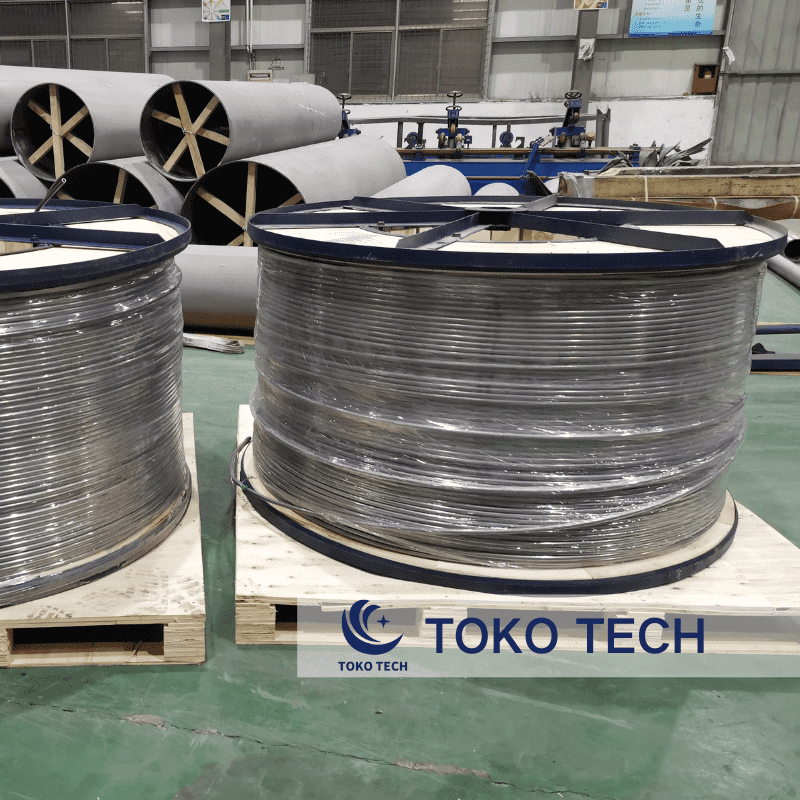
Manufactured for continuous, long-length applications such as downhole control lines in oil and gas, or geothermal heat exchangers. Our coiled tubing minimizes the number of fittings required, reducing leak points and installation time. The seamless nature ensures consistent pressure ratings throughout the entire reel length.
Stainless steel seamless U-tube
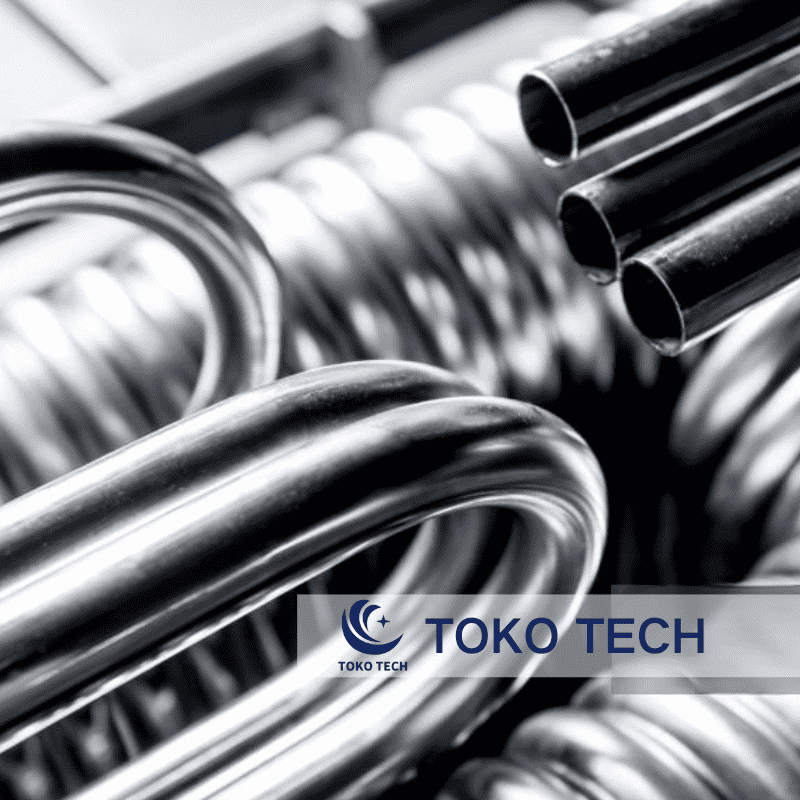
Designed specifically for heat exchangers and condensers. These tubes are bent precisely to specified radii and then stress-relieved to prevent cracking. The U-bend design allows for thermal expansion and contraction, making them ideal for high-temperature processing plants.
Seamless Straight pipe/tube
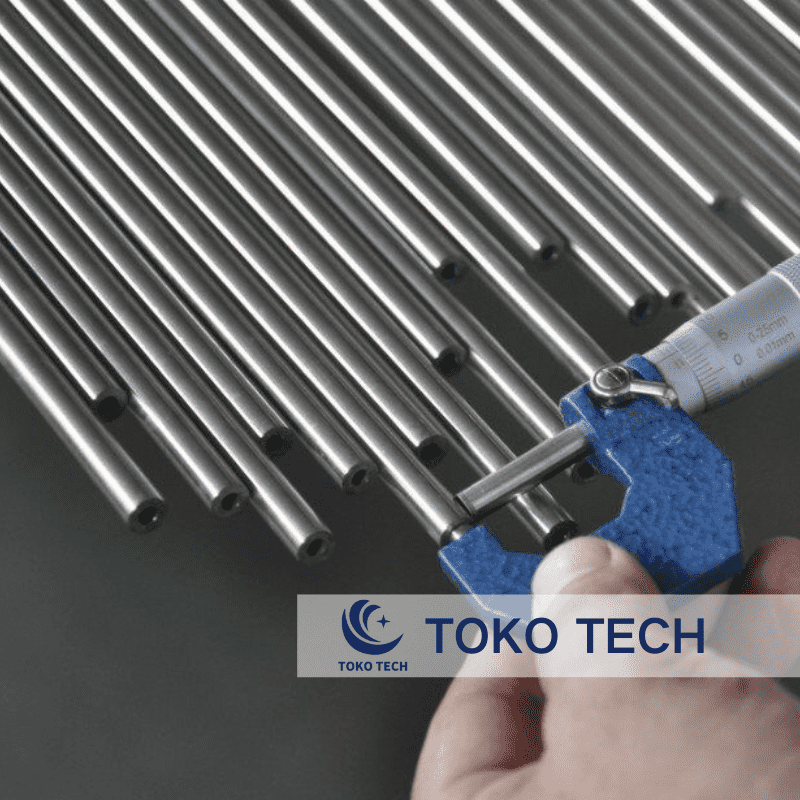
The backbone of industrial infrastructure. Available in a wide range of diameters and wall thicknesses, our straight seamless pipes offer superior strength for transporting high-pressure fluids, steam, and gases. They are rigorously tested to meet ASTM and ASME standards.
Quality Control and Testing Standards
Knowing how is seamless tubing made is incomplete without understanding how it is tested. Quality assurance is rigorous. Common non-destructive testing (NDT) methods include:
- Ultrasonic Testing (UT): Sound waves are sent through the tube to detect internal flaws or inconsistencies in wall thickness.
- Eddy Current Testing (ET): Electromagnetic fields are used to detect surface defects and cracks.
- Hydrostatic Testing: The tube is filled with water and pressurized to 1.5 times its working pressure to ensure it does not leak or burst.
- Positive Material Identification (PMI): X-ray fluorescence is used to verify the chemical composition of the alloy.
Why Choose Seamless Over Welded?
The manufacturing process dictates the performance. Because seamless tubing is extruded from a solid billet, it possesses several distinct advantages:
- Higher Pressure Ratings: Without a weld seam, the tube has uniform strength around its circumference, allowing it to withstand higher internal pressures.
- Corrosion Resistance: Weld seams are often the weak point where corrosion begins. Eliminating the seam eliminates this vulnerability.
- Uniformity: The seamless process ensures consistent material structure, which is vital for post-fabrication processes like bending or flaring.
Process Summary Table
| Process Step | Temperature | Key Action | Outcome |
|---|---|---|---|
| Billet Heating | 1200°C – 1300°C | Thermal Soaking | Malleable steel ready for deformation. |
| Rotary Piercing | High Heat | Cross-rolling over plug | Transformation from solid log to hollow shell. |
| Elongation | Variable | Mandrel Rolling | Reduction of wall thickness and increase in length. |
| Cold Pilgering | Room Temp | Ring Die Reduction | Precise tolerances and superior surface finish. |
| Heat Treatment | Variable | Annealing/Quenching | Restoration of mechanical properties. |
 English
  Spanish
  Russian
  Turkish
  French
  Korean
  German
  Italian