In the high-stakes world of industrial engineering, precision is everything. As we move into 2026, the demand for high-performance materials like nickel alloys continues to surge, driven by the expanding needs of the energy, petrochemical, and aerospace sectors. Understanding the exact nickel alloy seamless pipe tailles is critical for engineers and procurement managers alike. These materials are chosen not just for their dimensions, but for their ability to withstand extreme environments where failure is not an option.
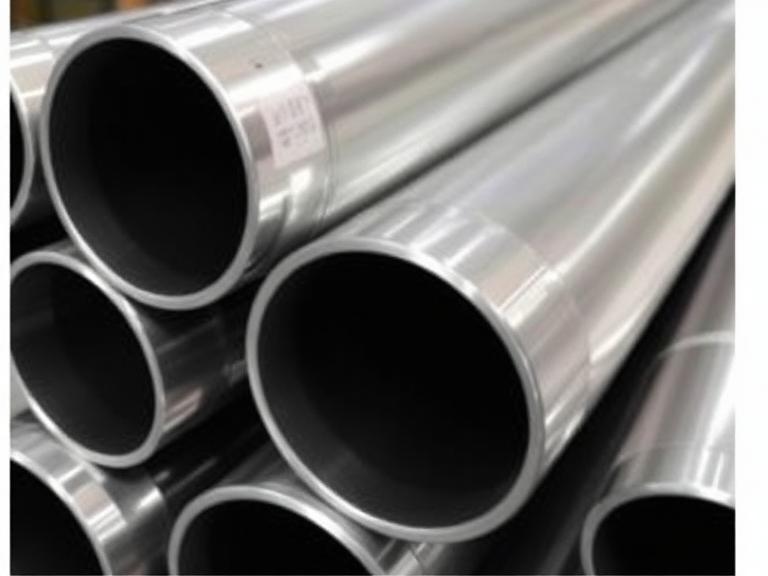
This comprehensive guide details the standard dimensions for seamless nickel alloy pipes, converting traditional Imperial units (inches) to Metric units (centimeters and millimeters), and explores the specific availability of key alloys like Incoloy 625, Alliage 825et Hastelloy C-276.
Table des matières
- 1. Global Dimensional Standards: ASME B36.10M & B36.19M
- 2. Master Chart: Nickel Alloy Seamless Pipe Sizes (Inch & CM)
- 3. Incoloy 625 Seamless Pipe Specifications
- 4. Nickel Alloy 825 Dimensions and Applications
- 5. Monel 400: Sizes for Marine Engineering
- 6. Hastelloy C-276: High-Performance Sizing
- 7. Manufacturer Spotlight: TOKO TECH
- 8. Frequently Asked Questions
- 9. Références
1. Global Dimensional Standards: ASME B36.10M & B36.19M
The sizing of nickel alloy seamless pipes is governed primarily by standards set by the American Society of Mechanical Engineers (ASME). Even when manufacturing advanced superalloys, the physical dimensions generally adhere to the same standards used for stainless steel and carbon steel to ensure compatibility with fittings and flanges.
- ASME B36.10M: This standard covers the dimensions and masses of welded and seamless wrought steel pipe. It applies to nickel alloys when used in high-pressure or high-temperature piping systems.
- ASME B36.19M: This is the standard specifically for stainless steel pipe, but it is the primary reference for nickel alloy seamless pipe sizes. It defines the “Schedule” (Wall Thickness) designations such as Schedule 10S, 40S, and 80S.
When ordering, it is crucial to note that the “Nominal Pipe Size” (NPS) does not equal the actual outside diameter (OD) for sizes 12 inches and smaller. For example, a 1-inch pipe has an actual OD of 1.315 inches (3.34 cm).
2. Master Chart: Nickel Alloy Seamless Pipe Sizes (Inch & CM)
The following table provides a reference for the most common nickel alloy seamless pipe sizes available in 2026. This chart converts standard Inch sizes to Centimeters (cm) to assist international projects.
| NPS (Inch) | Outside Diameter (Inch) | Outside Diameter (CM) | Sch 10S Wall (CM) | Sch 40S Wall (CM) | Sch 80S Wall (CM) |
|---|---|---|---|---|---|
| 1/8″ | 0.405 | 1.03 | 0.124 | 0.173 | 0.241 |
| 1/4″ | 0.540 | 1.37 | 0.165 | 0.224 | 0.302 |
| 3/8″ | 0.675 | 1.71 | 0.165 | 0.231 | 0.320 |
| 1/2″ | 0.840 | 2.13 | 0.211 | 0.277 | 0.373 |
| 3/4″ | 1.050 | 2.67 | 0.211 | 0.287 | 0.391 |
| 1″ | 1.315 | 3.34 | 0.277 | 0.338 | 0.455 |
| 1 1/2″ | 1.900 | 4.83 | 0.277 | 0.368 | 0.508 |
| 2″ | 2.375 | 6.03 | 0.277 | 0.391 | 0.554 |
| 3″ | 3.500 | 8.89 | 0.305 | 0.549 | 0.762 |
| 4″ | 4.500 | 11.43 | 0.305 | 0.602 | 0.856 |
| 6″ | 6.625 | 16.83 | 0.340 | 0.711 | 1.097 |
| 8″ | 8.625 | 21.91 | 0.376 | 0.818 | 1.270 |
3. Incoloy 625 Seamless Pipe Specifications
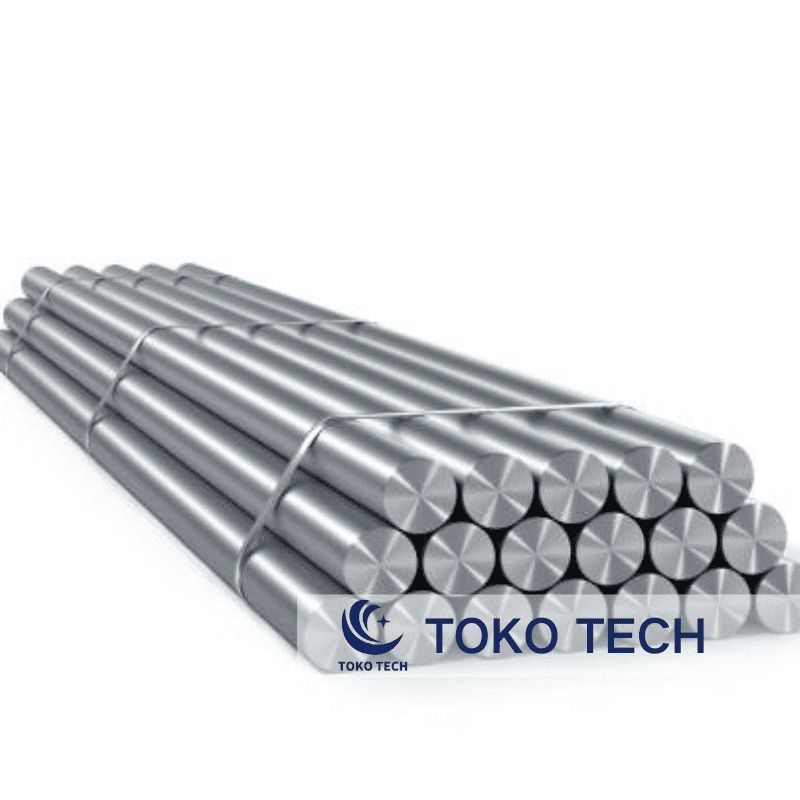
Incoloy 625 (UNS N06625) is a nickel-chromium-molybdenum alloy known for its high strength and outstanding corrosion resistance. It is immune to chloride-ion stress-corrosion cracking.
- Standard Specs: ASTM B444 / ASME SB444
- Common Sizes: 1/2″ to 8″ (1.27 cm to 20.32 cm)
- Primary Application: Chemical processing equipment, aerospace engine exhaust systems, and offshore seawater piping.
Because Incoloy 625 is difficult to machine and form, seamless pipes are often preferred over welded variants for high-pressure critical applications. The wall thickness for Grade 2 (Solution Annealed) pipes is critical for maintaining creep-rupture strength at temperatures above 1100°F (593°C).
4. Nickel Alloy 825 Dimensions and Applications
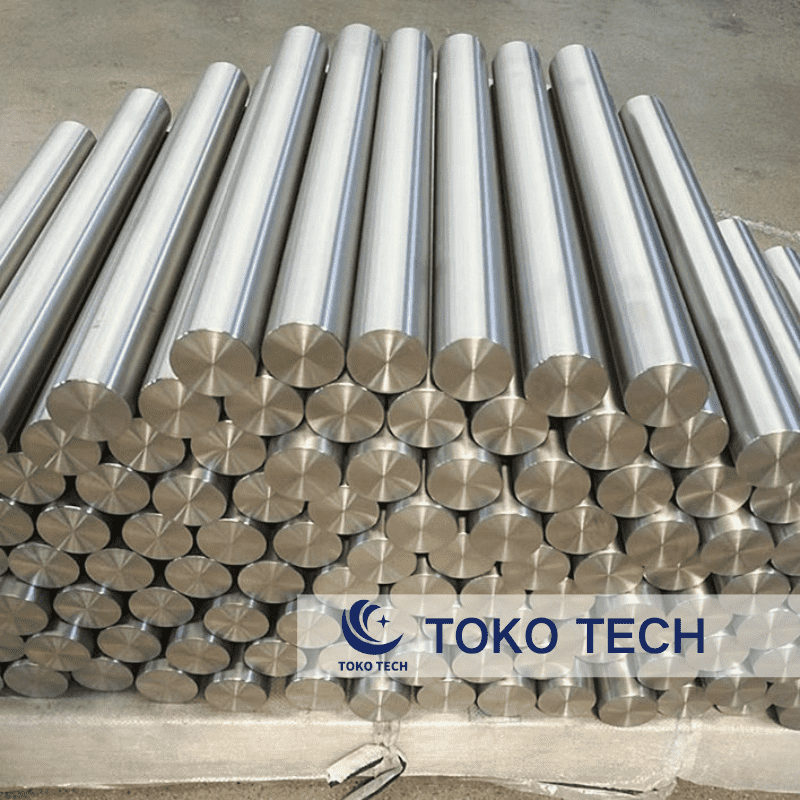
Alloy 825 (UNS N08825) is a titanium-stabilized austenitic nickel-iron-chromium alloy with additions of copper and molybdenum. It offers exceptional resistance to oxidizing and reducing acids.
- Standard Specs: ASTM B423 / ASME SB423
- Dimensional Tolerance: Cold worked seamless pipe sizes often have tighter tolerances than hot finished pipes.
- Key Feature: The copper addition makes it particularly resistant to sulfuric acid and phosphoric acid.
In 2026, we are seeing increased demand for Alloy 825 in the oil and gas industry for “sour gas” service (wells containing hydrogen sulfide) due to its resistance to sulfide stress cracking.
5. Monel 400: Sizes for Marine Engineering
Monel 400 (UNS N04400) is a solid-solution alloy that can only be hardened by cold working. It exhibits high strength and toughness over a wide temperature range and excellent resistance to many corrosive environments.
- Standard Specs: ASTM B165 / ASME SB165
- Availability: Widely available in smaller instrument tubing sizes (1/8″ to 1″) as well as larger process piping (up to 12″ NPS).
- Usage: Marine fixtures, pumps, valves, and heat exchangers.
6. Hastelloy C-276: High-Performance Sizing
Hastelloy C-276 (UNS N10276) is considered the most versatile corrosion-resistant alloy available. It resists the formation of grain boundary precipitates in the weld heat-affected zone, making it suitable for most chemical process applications in the as-welded condition.
- Standard Specs: ASTM B622 / ASME SB622
- Wall Thickness Issues: Due to the high cost and density of C-276, engineers often calculate the minimum required wall thickness carefully to avoid over-specification. Schedule 5S and 10S are popular to reduce weight and cost while maintaining corrosion resistance.
Manufacturer Spotlight: TOKO TECH

TOKO TECH is an export-driven manufacturing enterprise specializing in the R&D, production, and sales of high-end metal pipeline systems. Headquartered in Shanghai, China, with manufacturing facilities located in the Yangtze River Delta—China’s industrial core region—the company operates a modern production base. Since its establishment, TOKO TECH has adhered to the core philosophy of “Quality First, Innovation Driven”, dedicated to providing high-performance, corrosion-resistant, and high-temperature/high-pressure pipeline products for global clients.
These products are widely used in industries such as petrochemicals, energy and power, shipbuilding, pharmaceutical and food processing, and environmental engineering. Their capability to produce precise nickel alloy seamless pipe sizes ensures that projects meet rigorous international standards.
8. Frequently Asked Questions
How do I convert Nominal Pipe Size (NPS) to Centimeters?
To convert NPS to centimeters, you must first know the actual Outside Diameter (OD) in inches (as NPS is not the physical diameter). Multiply the OD in inches by 2.54. For example, a 2-inch NPS pipe has an OD of 2.375 inches. 2.375 x 2.54 = 6.03 cm.
What is the difference between Pipe and Tube sizes in nickel alloys?
Pipe is measured by Nominal Pipe Size (NPS) and Schedule (wall thickness). Tube is measured by actual Outside Diameter (OD) and Wall Thickness (often in gauge or decimal inches). A 1-inch tube has exactly a 1-inch OD, whereas a 1-inch pipe has a 1.315-inch OD.
Why are seamless pipes preferred over welded pipes for nickel alloys?
Seamless pipes have no weld seam, which is traditionally the weak point in a piping system for both pressure containment and corrosion resistance. In high-stakes environments using expensive nickel alloys, the reliability of a uniform, seamless structure is often worth the extra cost.
Can TOKO TECH provide custom lengths for Alloy 625 pipes?
Yes, manufacturers like TOKO TECH often provide custom cutting and finishing services. While standard “double random” lengths are common (approx. 11-12 meters), specific project requirements can usually be met upon request.
 French
  English
  Spanish
  Russian
  Turkish
  Korean
  German
  Italian