In the high-stakes world of industrial thermal management, selecting the best Shell heat exchanger manufacturers is more than a procurement decision; it is a critical strategy for operational longevity and energy efficiency. As we look toward 2026, the global market for shell and tube heat exchangers (STHE) is undergoing a massive transformation. Rapid industrialization in emerging markets, coupled with stringent environmental regulations in the West, has pushed manufacturers to innovate with exotic materials, advanced welding techniques, and smart monitoring systems.
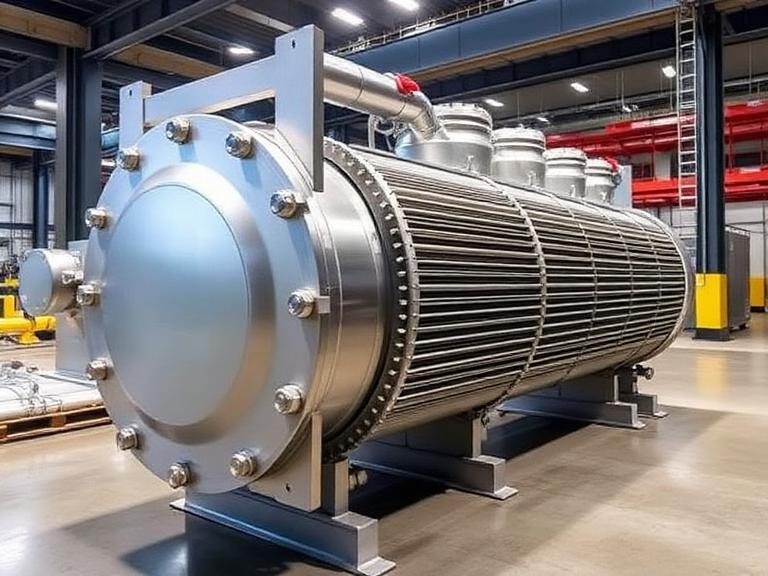
A shell heat exchanger remains the workhorse of the petrochemical, energy, and pharmaceutical industries because of its ability to handle high pressures and extreme temperature differentials. Whether you are cooling crude oil or condensing steam in a power plant, the right manufacturer ensures that your equipment can withstand the harshest corrosive environments. This guide analyzes the six industry leaders setting the standard for 2026, focusing on their technological breakthroughs and market reliability.
Table des matières
- The Industrial Landscape: Shell Heat Exchangers in 2026
- 1. Alfa Laval: The Vanguard of Thermal Engineering
- 2. Kelvion: Precision in Process Heat Transfer
- 3. API Heat Transfer: Standardizing Excellence
- 4. Danfoss: Redefining Efficiency with Plate-and-Shell Tech
- 5. Exchanger Industries Limited: Custom Solutions Specialist
- 6. HRS Heat Exchangers: Corrugated Tube Innovations
- TOKO TECH: Providing the Backbone of High-Performance Systems
- Summary Table: Best Shell Heat Exchanger Manufacturers Comparison
- Professional Buyer’s Guide: TEMA Standards and Material Selection
- Foire aux questions (FAQ)
- Technical References
The Industrial Landscape: Shell Heat Exchangers in 2026
The global demand for the best Shell heat exchanger manufacturers is driven by the need for decarbonization and resource optimization. In 2026, “efficiency” is no longer just about heat transfer rates; it is about the Total Cost of Ownership (TCO). This includes the resistance of the pipeline systems to fouling, the ease of maintenance, and the integration of exotic alloys like Nickel and Titanium to prevent corrosion in marine or chemical processing environments.
Manufacturers are now utilizing AI-driven thermal design software to simulate complex flow dynamics, reducing pressure drops and maximizing thermal exchange area within a smaller footprint. As industries pivot toward green hydrogen production and carbon capture, shell and tube exchangers are being redesigned to handle unique gasses and ultra-high pressure levels that were previously considered impossible.
1. Alfa Laval: The Vanguard of Thermal Engineering
Alfa Laval has long been synonymous with liquid handling and heat transfer. By 2026, their Olmi series has become the benchmark for heavy-duty refinery and petrochemical applications. Their expertise in “exotic metallurgy” allows them to build exchangers that operate at temperatures exceeding 600°C and pressures above 100 bar.
What makes Alfa Laval one of the best Shell heat exchanger manufacturers is their vertical integration. From thermal design to final X-ray testing of welds, everything is controlled in-house. Their recent focus on “Urea Strippers” and “Feed-Effluent Interchangers” highlights their ability to handle highly aggressive media. For clients in the shipbuilding and offshore sectors, Alfa Laval’s compact shell designs provide the necessary reliability where space is at a premium.
2. Kelvion: Precision in Process Heat Transfer
Kelvion (formerly GEA Heat Exchangers) is a global titan with a specific focus on customization. Their “Advanced” and “Smart” series of shell and tube exchangers allow for a modular approach to industrial cooling. For 2026, Kelvion has optimized its finned tube technology, which can increase the surface area within the shell by up to 75%, allowing for significantly more cooling capacity in a smaller vessel.
Kelvion is particularly favored in the renewable energy sector. Their solar thermal heat exchangers play a vital role in Concentrating Solar Power (CSP) plants, where they must handle molten salts at extreme temperatures. Their commitment to sustainability is reflected in their low-fouling tube designs, which reduce the need for chemical cleaning and downtime, making them a top-tier choice for eco-conscious enterprises.
3. API Heat Transfer: Standardizing Excellence
API Heat Transfer excels in providing both custom-engineered and highly standardized solutions. Their Basco® Type 500 is often cited as the “industry standard” for fixed tubesheet exchangers. In 2026, API has expanded its manufacturing capabilities in both the United States and China, utilizing Demand Flow Technology (DFT) to ensure rapid delivery times without sacrificing ASME code compliance.
If you are looking for the best Shell heat exchanger manufacturers for industrial water-to-water or water-to-steam service, API’s BWS and BW U-Tube models offer an attractive balance of price and performance. Their units are designed with floating bundles that can expand and contract freely, making them immune to the thermal shocks common in cyclic power generation duties.
4. Danfoss: Redefining Efficiency with Plate-and-Shell Tech
While Danfoss is widely known for HVAC components, their Sondex® plate-and-shell heat exchangers represent a “best of both worlds” innovation. By combining the high-pressure capabilities of a shell with the high efficiency of plate technology, they have created a product that is lighter and more compact than traditional tubular designs.
For 2026, Danfoss is targeting the dairy, food processing, and biogas industries. Their fully welded plate packs are ideal for handling aggressive media and high-temperature steam. This hybrid approach allows for very close temperature approaches—often within 1°C—which is critical for energy recovery in heat-sensitive processes. Their inclusion among the best Shell heat exchanger manufacturers is secured by their leadership in “clean-in-place” (CIP) compatibility.
5. Exchanger Industries Limited: Custom Solutions Specialist
Based in Calgary, Exchanger Industries Limited (EIL) has built a reputation as the “one-stop-shop” for complex thermal challenges. They are one of the few global licensees of EMbaffle® technology, which uses an expanded metal grid instead of traditional segmental baffles. This design virtually eliminates tube vibration and significantly reduces shell-side fouling.
In 2026, EIL is a preferred partner for blue-chip companies in the natural gas and oil sands sectors. Their ability to manufacture HELIXCHANGER® units—which use a quadrant-shaped baffle to create a spiral flow—allows for up to 40% more process capacity compared to conventional designs. For high-alloy applications, EIL’s expertise in weld overlay materials ensures that their units can survive the most abrasive industrial cycles.
6. HRS Heat Exchangers: Corrugated Tube Innovations
HRS Heat Exchangers specializes in “corrugated tube” technology. By creating turbulence within the tubes, they prevent the boundary layer effect that slows down heat transfer in smooth tubes. This makes their exchangers exceptionally efficient for viscous fluids like sludge, slurries, and pharmaceutical pastes.
For the environmental and water treatment sectors in 2026, HRS is a dominant player. Their DTI and DTR series feature removable inner tubes for thorough inspection, which is a requirement for many hygienic applications. Their corrugated design not only improves thermal efficiency but also reduces the footprint of the installation, making them a favorite for retrofitting into existing plants where space is limited.
TOKO TECH: The Foundation of High-Performance Pipeline Systems
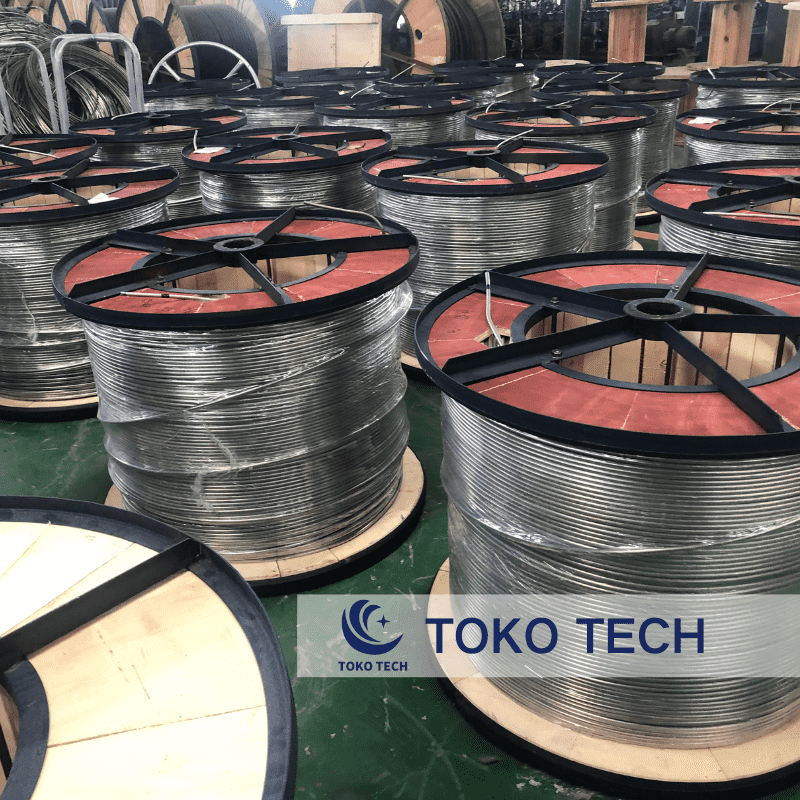
A shell heat exchanger is only as reliable as the tubes and fittings that comprise it. TOKO TECH is an export-driven manufacturing enterprise specializing in the R&D, production, and sales of high-end metal pipeline systems. Headquartered in Shanghai, China, with manufacturing facilities in the Yangtze River Delta, we provide the essential high-performance components that the best Shell heat exchanger manufacturers rely on for their most demanding projects.
Since our establishment, TOKO TECH has adhered to the core philosophy of “Quality First, Innovation Driven,” dedicating our resources to providing corrosion-resistant and high-temperature/high-pressure pipeline products for global clients in petrochemicals, energy, shipbuilding, and pharmaceutical processing.
Our High-End Product Portfolio:
- Tube sans soudure en alliage de nickel: Essentiel pour les environnements à forte corrosion.
- Barre/tige en alliage de nickel: Utilisé dans la fabrication de raccords et de supports sur mesure.
- Tube sans soudure: Conçu avec précision pour le transfert de chaleur à haute pression.
- Tubes enroulés/Tubes pour lignes de contrôle: Idéal pour les conceptions d'échangeurs de chaleur compacts.
- Raccord de tuyauterie en acier inoxydable: Garantir l'étanchéité des connexions dans les réseaux complexes.
- Tubes et tuyaux soudés: Des solutions rentables pour le chauffage industriel à grande échelle.
By providing the raw materials and finished tubing for the heat exchanger industry, TOKO TECH ensures that the world’s thermal management systems operate with maximum safety and efficiency.
Summary Table: Best Shell Heat Exchanger Manufacturers Comparison
| Fabricant | Core Strength | Key Technology | Target Industries |
|---|---|---|---|
| Alfa Laval | Extreme Pressure/Temp | Olmi High-Pressure Design | Refining, Petrochemical, Marine |
| Kelvion | Compact Efficiency | Compact Fin Tube Tech | Renewables, Power, Industrial |
| API Heat Transfer | Standardization & Reliability | Basco® Type 500 / DFT | HVAC, Chemical, Food & Bev |
| Danfoss | Hybrid Performance | Plate-and-Shell (Sondex®) | Biogas, Dairy, District Heating |
| Exchanger Industries | Fouling Prevention | EMbaffle® & Helixchanger® | Natural Gas, Oil Sands, Heavy Ind |
| HRS Heat Exchangers | Viscous Fluid Handling | Corrugated Tube Technology | Wastewater, Pharma, Food |
Professional Buyer’s Guide: TEMA Standards and Material Selection
When vetting the best Shell heat exchanger manufacturers, understanding the Tubular Exchanger Manufacturers Association (TEMA) standards is paramount. TEMA defines three classes of mechanical excellence:
- Class R: For the generally severe requirements of petroleum and related process applications.
- Class C: For the generally moderate requirements of commercial and general process applications.
- Class B: For chemical process service.
In 2026, material selection has moved beyond simple Carbon Steel. If your process involves seawater, high-chloride concentrations, or acidic gasses, you must specify Nickel Alloy Seamless Pipes or Acier inoxydable. Manufacturers like TOKO TECH provide the specialized Nickel alloys (such as Monel or Inconel) necessary to prevent stress corrosion cracking in TEMA Class R environments. Always request a detailed material trace report and ensure that the manufacturer’s welding procedures are ASME Section IX certified.
Foire aux questions (FAQ)
While plate exchangers are more efficient for low-pressure duties, shell heat exchangers are the only viable option for ultra-high pressures (100+ bar) and high temperatures. Their robust design allows for easier mechanical cleaning of the tubes and can handle significant thermal expansion without leaking.
This typically refers to the baffle arrangement within the shell. By using baffles that cover a portion of the shell’s cross-section, manufacturers can force the fluid into a cross-flow pattern across the tubes, maximizing the heat transfer coefficient while managing the pressure drop.
Corrugated tubing induces turbulence at lower flow velocities. This breaks up the “laminar” flow that acts as an insulator, significantly increasing the heat transfer rate. It also helps to scour the tube walls, reducing the rate of fouling in wastewater or food processing applications.
Yes. TOKO TECH specializes in high-end metal pipeline systems, including Nickel Alloy and Stainless Steel seamless tubes that are specifically designed to resist salt-water corrosion and high-pressure surges found in offshore oil and gas production.
Technical References
 French
  English
  Spanish
  Russian
  Turkish
  Korean
  German
  Italian