In the highly demanding sectors of petrochemical processing, offshore drilling, and thermal power generation, relying on generic steel components is a direct path to catastrophic system failure. When temperatures exceed 1000°C or when fluids contain lethal concentrations of hydrogen sulfide and chlorides, industry professionals do not gamble; they specify nickel alloys. However, selecting the right metallurgical grade is only half the battle. If you fail to specify the correct Nickel alloy tube sizes, your system will suffer from pressure drops, compromised structural integrity, and eventual mechanical rupture.
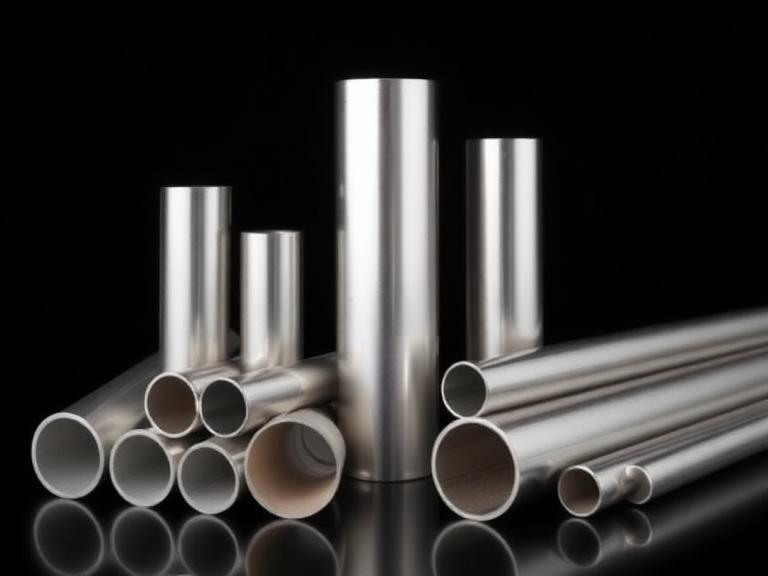
From our experience working with global energy contractors and leading fabricantes de intercambiadores de calor de carcasa, we see procurement teams consistently make devastating errors when converting theoretical design dimensions into physical purchase orders. Misunderstanding the strict standards governing outer diameters (OD), minimum wall thicknesses, and dimensional tolerances leads to delayed projects and blown budgets. In this comprehensive technical guide, we will cut through the confusion surrounding dimensional standards, explain exactly how to interpret sizing charts, and provide aggressive, commercial-grade advice on procuring the right tubing for your critical applications.
Quick Answer: Understanding Nickel Alloy Tube Sizes
Nickel alloy tube sizes are strictly defined by their actual Outer Diameter (OD) and Wall Thickness (WT), unlike “pipes” which are defined by a Nominal Pipe Size (NPS). Standard commercial sizes range from 1/4 inch to 24 inches in Outer Diameter, with wall thicknesses varying from ultra-thin 0.5mm walls up to massive 50mm heavy-duty barriers (SCH 5S to SCH 160). When procuring these components, you must ensure the dimensions comply strictly with ASTM B444, B619, or B622 standards to guarantee they can withstand rated pressures of up to 10,000 PSI in highly corrosive environments.
Índice
- What Are Nickel Alloy Tube Sizes?
- How Sizing Works: OD, WT, and Lengths
- Quick Summary Table: Standard Size Chart
- The Benefits of Exact Sizing in High-Pressure Systems
- Limitations and Sizing Constraints
- Quién debería utilizarlo y quién no lo necesita
- Pros and Cons Table: Nickel Alloy Tubing
- Common Mistakes When Specifying Dimensions
- Strict Buying Considerations
- Comparison Table: Seamless vs. Welded
- Expert Recommendation from TOKO TECH
- Preguntas más frecuentes (FAQ)
What Are Nickel Alloy Tube Sizes?
When we discuss Nickel alloy tube sizes, we are referring to the exacting dimensional specifications applied to tubular products manufactured from superalloys like Inconel, Hastelloy, and Monel. In most professional situations, the word “tube” indicates a requirement for precise engineering. Tubes are used in structural applications, heat exchangers, and instrumentation where exact outside diameters are required for proper fitting with ferrules, compression fittings, and tube sheets.
Unlike standard carbon steel piping used to simply move water from point A to point B, nickel alloy tubes are active components in thermal and chemical processes. Because nickel alloys are incredibly expensive raw materials, manufacturers produce these tubes in highly specific dimensions to eliminate excess weight and material waste while maintaining strict safety factors.
How Sizing Works: OD, WT, and Lengths
The mechanics of selecting Nickel alloy tube sizes revolve around three primary vectors: Outer Diameter (OD), Wall Thickness (WT), and Length. The Outer Diameter is the critical measurement because it dictates how the tube will interface with surrounding equipment, such as passing through the baffles of a heat exchanger. The Wall Thickness dictates the maximum allowable working pressure (MAWP) and the corrosion allowance. If you consult any reputable guía de diseño de intercambiadores de calor, you will see that wall thickness is calculated down to the fraction of a millimeter to optimize heat transfer while preventing catastrophic bursting.
Wall thickness is frequently denoted by Birmingham Wire Gauge (BWG) for smaller tubes, or by Schedule (SCH) for larger process tubes. For example, a 1-inch OD tube might be offered in 16 BWG (1.65mm wall) for standard cooling, or it might require a much heavier wall if handling high-pressure acidic vapor. Lengths are typically supplied in “random lengths” of 6 to 12 meters to optimize shipping, but cut-to-size formats are mandatory for specific productos de tubos con aletas and modular skids.
Quick Summary Table: Standard Nickel Alloy Tube Sizes Chart
Below is a condensed reference chart highlighting the most commonly procured Nickel alloy tube sizes used across global petrochemical and marine sectors.
| Outer Diameter (Fractional) | Outer Diameter (Metric) | Common Wall Thickness (BWG/SCH) | Wall Thickness (Metric) | Typical Application |
|---|---|---|---|---|
| 1/4″ | 6.35 mm | 20 BWG – 16 BWG | 0.89 mm – 1.65 mm | Instrumentation, control lines, sensing. |
| 1/2″ | 12.70 mm | 18 BWG – 14 BWG | 1.24 mm – 2.11 mm | Hydraulic systems, sample lines. |
| 3/4″ | 19.05 mm | 16 BWG – 12 BWG | 1.65 mm – 2.77 mm | Standard heat exchanger tubes. |
| 1″ | 25.40 mm | 14 BWG – 10 BWG | 2.11 mm – 3.40 mm | High-volume thermal transfer, condensers. |
| 2″ | 50.80 mm | SCH 10 – SCH 40 | 2.77 mm – 3.91 mm | Chemical process lines, downhole tools. |
| 4″ to 24″ | 101.6 mm – 609.6 mm | SCH 40 – SCH 160 | 6.02 mm – 50.0 mm | Main heavy-duty process lines, structural headers. |
The Benefits of Specifying the Correct Dimensions
Why obsess over dimensional accuracy? From our experience, the benefits of getting the sizing exactly right are operational survival and financial efficiency. When you specify the correct Nickel alloy tube sizes for aplicaciones de tubos concéntricos, you ensure laminar fluid flow and maximize the surface area available for heat exchange.
Furthermore, precise wall thickness calculations prevent over-purchasing. Nickel is a premium commodity. If your process only requires a 2mm wall to contain the pressure and account for a 20-year corrosion allowance, buying a 4mm wall tube literally doubles your material costs for zero operational gain. Correct sizing ensures you hit the exact sweet spot between mechanical safety and procurement budget.
Limitations and Sizing Constraints
We must apply commercial and practical judgment: nickel alloys are notoriously difficult to manufacture. The primary limitation you will face is availability of extreme or non-standard sizes. Because superalloys like Inconel 625 and Hastelloy C-276 work-harden rapidly during the drawing and extrusion processes, creating ultra-thin walls on large diameter tubes, or extremely thick walls on micro-tubes, is a metallurgical nightmare.
In our testing and manufacturing oversight, pushing a mill to produce highly non-standard dimensions will result in massive minimum order quantities (MOQs) and extended lead times of 16 to 24 weeks. Always attempt to design your systems around standard ASTM dimensional tables to ensure a resilient supply chain.
Who Should Use High-Grade Nickel Alloy Tubes? & Who Does Not Need Them
For heavy-duty applications: We recommend precise nickel alloy tubing strictly for extreme environments. If you are operating sour gas wells, managing sulfuric acid production lines, or running nuclear power condensers, these tubes are non-negotiable. Leading coiled tubing companies rely exclusively on high-nickel alloys to survive the lethal pressures and corrosive agents found miles beneath the earth’s surface.
Quién no lo necesita: For beginners or contractors building standard commercial HVAC systems, municipal water lines, or low-pressure food-grade processing facilities, utilizing nickel alloy is an absurd waste of capital. Standard 304 or 316L stainless steel, or even copper, is perfectly adequate for these benign applications. Do not over-engineer a simple system.
Pros and Cons Table: Nickel Alloy Tubing
| The Pros (Advantages) | The Cons (Disadvantages) |
|---|---|
| Exceptional resistance to pitting, crevice corrosion, and stress-corrosion cracking (SCC). | Extremely high initial material and procurement costs. |
| Maintains massive tensile strength at cryogenic temperatures and exceeding 1000°C. | Difficult to machine, cut, and weld without specialized equipment and inert gas shielding. |
| Available in incredibly precise Outer Diameters suitable for high-pressure instrumentation. | Non-standard custom sizes command high MOQs and long manufacturing lead times. |
| Required for strict NACE MR0175 compliance in sour oil and gas environments. | Higher density than some standard steels, adding weight to overall skid structures. |
Common Mistakes When Selecting Nickel Alloy Tube Sizes
The most catastrophic error in industrial procurement is confusing “Pipe Size” with “Tube Size.” We see this constantly. If a junior engineer orders 2-inch pipe when the design requires a 2-inch tube, the components will not fit. A 2-inch Nominal Pipe Size (NPS) actually has an Outer Diameter of 2.375 inches. A 2-inch Tube has an exact Outer Diameter of 2.000 inches. Mixing these up will halt construction and ruin fabrication schedules.
Another profound mistake is ignoring ovality and eccentricity tolerances. In high-performance systems requiring coil tubing in oil and gas interventions, a tube that is slightly oval rather than perfectly round will jam in the injector head or fail to seal inside a compression fitting. You must demand strict adherence to ASTM B444 or B622 dimensional tolerance tables.
Strict Buying Considerations
For commercial users, executing a purchase order for nickel alloy tubes requires a rigorous vetting checklist. You must specify the exact alloy grade (e.g., Inconel 625 vs. Monel 400), as their chemical resistances differ vastly. You must state whether the tube needs to be seamless or welded. You must also dictate the required surface finish—whether standard annealed and pickled is sufficient, or if your application demands a polished internal surface (Ra≤0.8μm) to prevent bio-fouling or chemical scaling.
| Specification Category | What You Must Define | Why It Matters |
|---|---|---|
| Dimensional Standard | Exact OD (mm/inch) & Exact WT (mm/BWG). | Ensures compatibility with existing fittings, tube sheets, and wireline vs coiled tubing tools. |
| Calidad del material | UNS Number (e.g., UNS N06625 for Inconel 625). | Dictates temperature thresholds and specific chemical resistance (e.g., H2S vs. Chlorides). |
| Manufacturing Method | Seamless vs. Welded (and Cold Drawn). | Seamless guarantees highest pressure containment; Welded is more economical for lower pressures. |
| Testing & Compliance | Hydrostatic, NDT (Eddy Current), NACE MR0175. | Provides legal and operational proof that the tube will not rupture under rated operational loads. |
Comparison Table: Seamless vs. Welded Nickel Alloy Tubes
| Attribute | Tubos de aleación de níquel sin soldadura | Welded Nickel Alloy Tubes |
|---|---|---|
| Proceso de fabricación | Extruded from a solid billet; no longitudinal weld seam. | Rolled from flat strip/plate and welded longitudinally. |
| Presión nominal | Highest possible burst pressure; absolute structural uniformity. | Approx 20% lower allowable working pressure compared to seamless. |
| Dimensional Consistency | Excellent OD consistency, though wall thickness can vary slightly. | Highly uniform wall thickness due to flat-strip origin. |
| Commercial Verdict | Mandatory for high-pressure downhole, nuclear, and extreme thermal cycling. | Acceptable for low-to-medium pressure chemical transport and basic condensers. |
Expert Recommendation from TOKO TECH
In most professional situations, the integrity of your entire processing facility rests upon the quality of the raw tubulars you procure. Substandard manufacturing leads to microscopic inclusions, uneven wall thicknesses, and devastating failures. We strongly recommend partnering with a proven, globally certified manufacturer capable of delivering exacting Nickel alloy tube sizes straight from the mill.
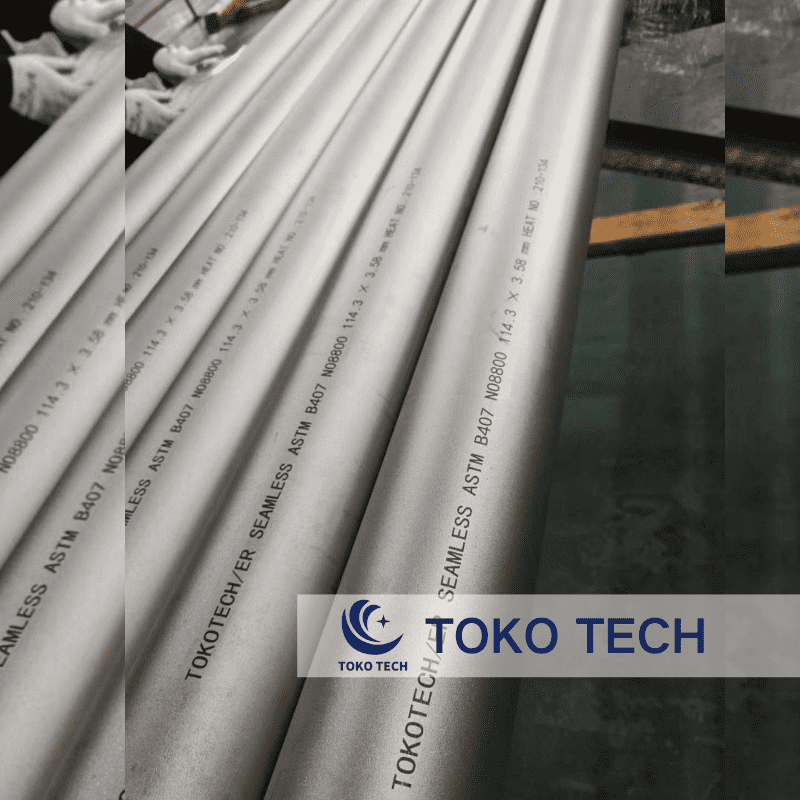
TOKO TECH Nickel Alloy Seamless Straight Pipes
Engineered for absolute reliability in the harshest environments on earth. TOKO TECH delivers uncompromising dimensional accuracy and metallurgical purity, ensuring your projects exceed safety and lifespan expectations.
Material & Manufacturing:
- Grades: Inconel 600/625, Hastelloy C-22/C-276, Monel 400, Alloy 20
- Standards: ASTM B444/B619/B622, EN 10216-5, NACE MR0175
- Surface Finish: Annealed & Pickled, Polished (Ra≤0.8μm), Bead-Blasted
Dimensions & Tolerance:
- Outer Diameter: 1/4″ to 24″ (DN6-DN600)
- Espesor de pared: SCH 5S to SCH 160 (0.5mm to 50mm)
- Length: Random (6-12m) or Cut-to-Size (Custom)
Performance:
- Temperature Range: -200°C to 1200°C (Cryogenic to High-Temp)
- Presión nominal: Up to 10,000 PSI (ASME B31.3 Compliance)
- Resistencia a la corrosión: HCl, H2S, Chlorides, Seawater
By specifying TOKO TECH seamless pipes, you are eliminating the guesswork from your supply chain. If you are comparing proveedores de tubos para intercambiadores de calor, evaluate them on their ability to meet the rigorous metrics outlined in our product profile above.
Preguntas más frecuentes (FAQ)
Authoritative Industry References
To ensure your engineering and procurement strategies meet global industrial standards, we highly advise consulting the technical guidelines published by the following authoritative bodies:
- The American Society of Mechanical Engineers (ASME) – Providing the essential B31.3 Process Piping codes which dictate allowable stress values and sizing requirements for high-pressure systems.
- ASTM Internacional – Defining the rigorous material specifications and dimensional tolerances for nickel alloys, including standards like ASTM B444 (Inconel 625 Seamless Pipe and Tube).
- Asociación para la Protección y el Rendimiento de los Materiales (AMPP / NACE) – Establishing the MR0175 standards for materials utilized in H2S-containing environments in oil and gas production to prevent sulfide stress cracking.
 Spanish
  English
  Russian
  Turkish
  French
  Korean
  German
  Italian