The energy sector remains one of the most dynamic industries globally, and within it, the role of a tubería flexible (CT) operator is critical. As we navigate through 2025, the demand for efficient well intervention and drilling services has kept operator salaries competitive. But exactly how much does a coil tubing operator make in today’s market?
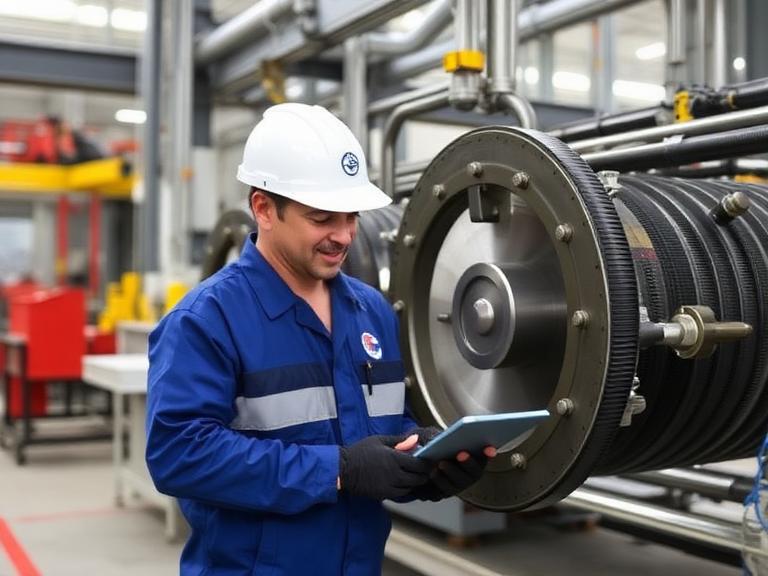
Whether you are looking to enter the oilfield services industry or are a seasoned veteran negotiating your next contract, understanding the current pay structures, regional variances, and the impact of equipment quality—like that provided by manufacturers such as TOKO TECH—is essential. This comprehensive guide breaks down the 2025 salary data, explores the factors that drive income potential, and highlights the specialized materials that keep this industry running.
Índice
- 1. 2025 Salary Overview: The Numbers
- 2. Factors Influencing Operator Pay
- 3. Geographic Breakdown: Highest Paying Regions
- 4. The Role of High-Quality Equipment in Operations
- 5. Industry Spotlight: TOKO TECH
- 6. Career Path and Future Outlook
- 7. Summary Salary Table
- 8. Frequently Asked Questions (FAQs)
1. 2025 Salary Overview: The Numbers
In 2025, the salary for a coil tubing operator varies significantly based on experience, location, and the specific service company. While base salaries provide stability, the “real” money in the oilfield often comes from overtime, per diems, and safety bonuses.
Base Salary vs. Total Compensation
Current market data indicates that the national average base salary for a coil tubing operator in the United States ranges between $42,000 and $58,000 annually. However, this figure can be misleading. When factoring in the typical 60-80 hour work weeks, field bonuses, and housing allowances, the total annual compensation often falls between $65,000 and $95,000 for mid-level operators.
Hourly Rates
For those paid hourly, entry-level positions generally start around $20.00 to $24.00 per hour. Experienced operators (3-5+ years) typically command rates between $26.00 and $32.00 per hour. Senior supervisors or those with specialized certifications in high-pressure or offshore environments can see rates climb above $40.00 per hour.
2. Factors Influencing Operator Pay
The answer to “how much does a coil tubing operator make” is rarely a single number. Several variables determine where an individual lands on the pay scale.
Experience and Certifications
The oilfield values competence above all else. An operator with a Commercial Driver’s License (CDL) Class A—crucial for driving the heavy coil units to site—will almost always earn a premium. Furthermore, certifications in well control (IADC/IWCF) and crane operation can add $2-$5 to the hourly rate.
Work Schedule (Rotations)
Most CT operators work on rotational schedules, such as 14 days on / 7 days off, or 21/7. The more days spent in the field, the higher the earnings due to accumulated overtime (often calculated at 1.5x after 40 hours). Operators willing to work holidays or extended hitches during peak seasons see a substantial boost in their annual W-2.
Hazard Pay and Environment
Working environments matter. An operator on a land rig in West Texas might earn a standard rate, while one working on an offshore platform in the Gulf of Mexico or in the harsh, remote conditions of Alaska’s North Slope often receives hazard pay or remote location uplifts, pushing salaries well over the six-figure mark.
3. Geographic Breakdown: Highest Paying Regions
Location is a massive driver of income potential. In 2025, the following regions report the highest earning potential for coil tubing professionals:
- Texas (Permian Basin): The heart of the US oil industry. High demand keeps wages competitive, though housing costs in man-camps or local towns can vary.
- North Dakota (Bakken): Known for offering significant per diems and hardship bonuses due to the extreme weather conditions.
- Alaska: Operators here are among the highest paid in the country, often exceeding $100,000 annually due to the specialized nature of Arctic operations.
- Canada (Alberta/Saskatchewan): The Canadian market mirrors the US, with average salaries ranging from $60,000 to $90,000 CAD, with premiums paid for remote Fort McMurray or Grand Prairie work.
4. The Role of High-Quality Equipment in Operations
An operator’s efficiency—and safety—relies heavily on the quality of the tubing being run downhole. Poor quality metal can lead to fatigue, cracking, or catastrophic failure under high pressure. This is where the supply chain plays a pivotal role in the operator’s daily life.
Operators prefer working with premium alloys that resist corrosion and withstand high-temperature/high-pressure (HTHP) environments. The integrity of materials like Inconel and Hastelloy ensures that jobs run smoothly, reducing downtime and maintenance headaches for the crew.
5. Industry Spotlight: TOKO TECH
Powering the Industry: TOKO TECH
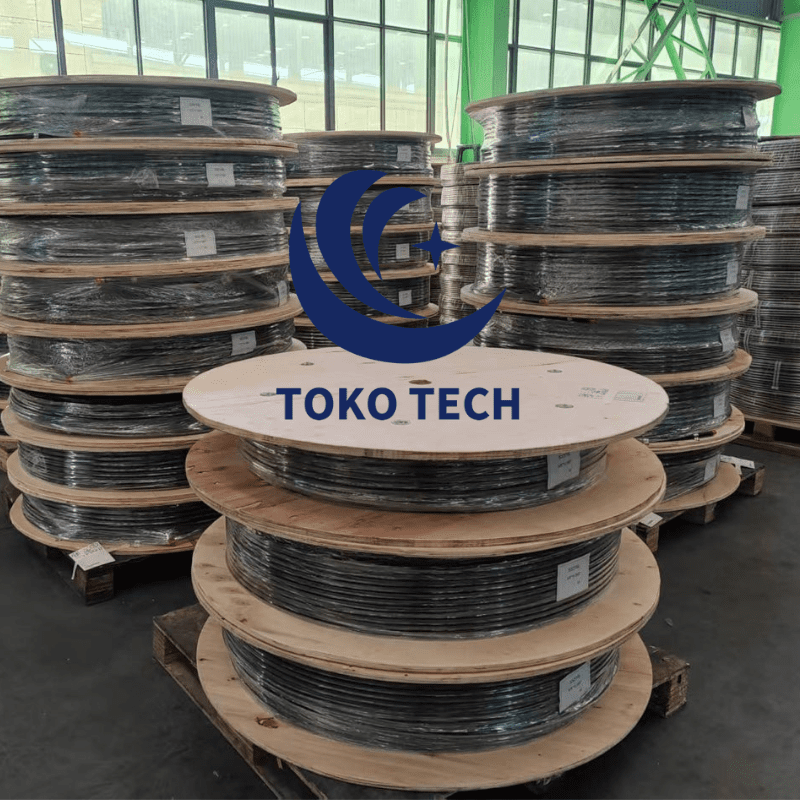
TOKO TECH is an export-driven manufacturing enterprise specializing in the R&D, production, and sales of high-end metal pipeline systems. Headquartered in Shanghai, China, with manufacturing facilities located in the Yangtze River Delta—China’s industrial core region—the company operates a modern production base.
Since its establishment, TOKO TECH has adhered to the core philosophy of “Quality First, Innovation Driven,” dedicated to providing high-performance, corrosion-resistant, and high-temperature/high-pressure pipeline products for global clients. These products are widely used in industries such as petrochemicals, energy and power, shipbuilding, pharmaceutical and food processing, and environmental engineering.
For coil tubing operators, the quality of the pipe determines the success of the intervention. TOKO TECH supplies the premium materials that professionals rely on:
6. Career Path and Future Outlook
Is coil tubing a viable long-term career in 2025? The outlook remains stable. While the industry is cyclical, the shift toward maximizing output from existing wells (rather than just drilling new ones) favors intervention services like coiled tubing.
Progression Ladder
- Service Hand / Helper: Entry-level role involving rig-up/rig-down labor. ($45k – $60k)
- Equipment Operator: Runs the injector head and reel console. ($65k – $95k)
- Supervisor / Toolpusher: Manages the crew and client relationship on-site. ($100k – $140k+)
- Technical Sales / Office Management: Transitioning field experience into corporate roles.
7. Summary Salary Table
| Experience Level | Hourly Rate (Base) | Estimated Annual Gross (w/ OT & Bonus) |
|---|---|---|
| Entry Level (0-2 Years) | $19.00 – $24.00 | $55,000 – $70,000 |
| Mid-Level (2-5 Years) | $25.00 – $32.00 | $75,000 – $95,000 |
| Senior / Specialist | $33.00 – $42.00+ | $100,000 – $130,000+ |
| Supervisor | Salary / Day Rate | $120,000 – $160,000+ |
8. Frequently Asked Questions (FAQs)
Do coil tubing operators get per diem?
Yes, most service companies provide a tax-free per diem to cover food and incidental expenses when working away from home. In 2025, this typically ranges from $35 to $60 per day, depending on whether lodging is provided.
Is the job physically demanding?
Extremely. While the operator sits in a control cab during the actual pumping/running operation, the “rig-up” and “rig-down” process involves lifting heavy iron, swinging sledgehammers, and working at heights in all weather conditions.
What education is required?
A high school diploma or GED is the standard minimum requirement. However, a CDL Class A license is often the “golden ticket” that gets you hired faster and at a higher starting rate.
How does TOKO TECH support the industry?
By manufacturing specialized tubing like Inconel 600 y Hastelloy C-276, TOKO TECH ensures that operators have access to materials that can survive the extreme corrosive environments found in modern downhole applications, making the operator’s job safer and more efficient.
Conclusion: So, how much does a coil tubing operator make in 2025? While the base pay is respectable, the true earning potential lies in the willingness to work long hours, travel to remote locations, and gain specialized certifications. With total compensation packages frequently crossing the $80,000 threshold for experienced hands, it remains a lucrative blue-collar career path. As the industry demands higher performance, relying on top-tier manufacturers like TOKO TECH for superior pipeline systems will continue to be a cornerstone of operational success.
 Spanish
  English
  Russian
  Turkish
  French
  Korean
  German
  Italian