In the highly demanding sectors of modern industrial engineering, material selection is the foundational pillar of any successful project. Engineers, procurement specialists, and project managers constantly evaluate metallurgical properties to ensure the safety, longevity, and efficiency of their infrastructure. One of the most common and complex inquiries we encounter in the high-performance metals industry is the question: Is nickel alloy stronger than steel? To answer this accurately, we must move beyond simple dictionary definitions and delve deep into the mechanical, thermal, and chemical environments where these materials operate.
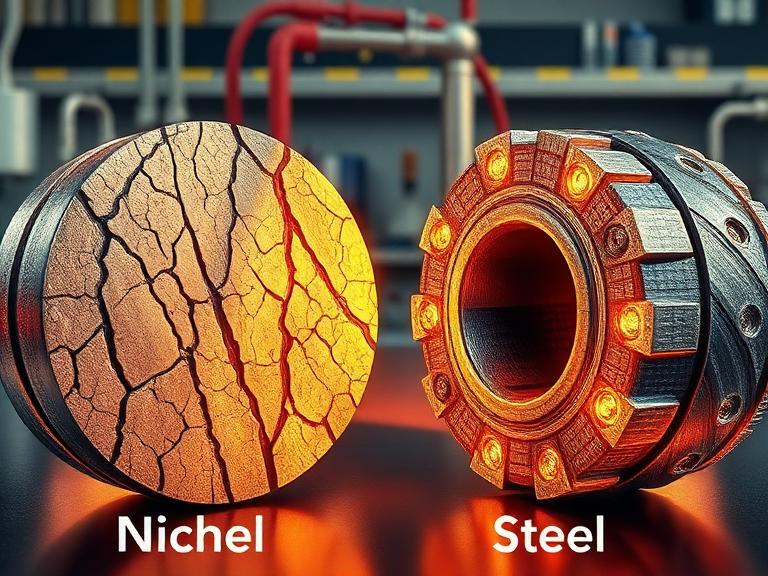
As an export-driven manufacturing enterprise specializing in the R&D, production, and sales of high-end metal pipeline systems, TOKO TECH understands the nuances of this debate perfectly. Headquartered in Shanghai, China, with our modern manufacturing base strategically located in the Yangtze River Delta—China’s industrial core region—we have built our reputation on precision and metallurgical excellence. Since our establishment, we have adhered strictly to the core philosophy of Quality First, Innovation Driven. We are dedicated to providing high-performance, corrosion-resistant, and high-temperature/high-pressure pipeline products for global clients. In this comprehensive expert guide, we will definitively answer the question Is nickel alloy stronger than steel by examining tensile strength, yield strength, environmental degradation, and the specific industrial applications where advanced superalloys render traditional steel obsolete.
Inhaltsübersicht
- 1. Understanding the Basics of Steel and Nickel Alloys
- 2. Is nickel alloy stronger than steel? A Direct Mechanical Comparison
- 3. How Environmental Factors Dictate Material Strength
- 4. Industry Applications Demanding High-Performance Alloys
- 5. TOKO TECH High-Performance Bar Stock Solutions
- 6. Summary Table: Strength and Property Comparison
- 7. Frequently Asked Questions (FAQs)
- 8. Industry References
1. Understanding the Basics of Steel and Nickel Alloys
Before we can fully address the query Is nickel alloy stronger than steel, we must establish a clear definition of the materials in question. Steel is fundamentally an alloy of iron and carbon. Depending on the specific grade, standard carbon steel is prized for its excellent baseline tensile strength, affordability, and ease of fabrication. When chromium is added to the mix (typically at a minimum of 10.5%), the material becomes stainless steel, gaining a significant boost in corrosion resistance while maintaining a high degree of mechanical strength at room temperature.
On the other hand, nickel alloys—often referred to as superalloys—use nickel as their primary base matrix element, rather than iron. By alloying nickel with elements such as chromium, molybdenum, iron, and copper, metallurgists create materials engineered to survive conditions that would cause standard steel to structurally fail. When clients ask us Is nickel alloy stronger than steel, we immediately ask them to define the parameters of their operating environment. Strength is not merely how much weight a bar can hold at room temperature; it is how well the material resists deformation, creeping, and fracturing under extreme stress, corrosive chemicals, and elevated temperatures.
2. Is nickel alloy stronger than steel? A Direct Mechanical Comparison
If we look purely at ambient (room temperature) tensile and yield strength, the answer to Is nickel alloy stronger than steel is highly dependent on the specific grades being compared. High-carbon steels and specialized martensitic stainless steels can achieve incredibly high tensile strengths at room temperature, sometimes exceeding the baseline strength of standard nickel alloys. In a purely cold, dry environment, heavily tempered steel is remarkably strong and rigid.
However, the narrative changes dramatically when we introduce operational stress. Is nickel alloy stronger than steel when subjected to constant mechanical fatigue? Yes. Nickel-based superalloys exhibit superior toughness and ductility. They can absorb massive amounts of kinetic energy without undergoing brittle fracture. Furthermore, as the temperature rises, the crystalline structure of carbon and stainless steels begins to weaken rapidly. At temperatures exceeding 600 degrees Celsius, standard steel loses a significant percentage of its load-bearing capacity.
This is where the true superiority of nickel superalloys becomes apparent. When evaluating Is nickel alloy stronger than steel in a high-temperature environment, nickel alloys are the undisputed champions. They maintain their high tensile and yield strengths at temperatures where steel would effectively soften and deform. From our experience supplying the global market, this high-temperature mechanical stability is the primary reason why advanced pipeline systems transition away from steel and rely exclusively on nickel-based bar stock and piping.
3. How Environmental Factors Dictate Material Strength
In industrial engineering, mechanical strength cannot be divorced from chemical resistance. The question Is nickel alloy stronger than steel must account for environmental degradation. A steel pipe may possess a high initial tensile strength, but if it is exposed to aggressive acidic compounds or localized chloride environments, it will rapidly corrode. Pitting and crevice corrosion severely reduce the effective wall thickness of the material, leading to catastrophic pressure failures. In this scenario, the steel loses its strength entirely.
Nickel alloys are inherently highly resistant to a vast spectrum of corrosive media, including sulfuric acid, hydrochloric acid, and seawater. We recommend utilizing nickel alloys because their strength does not degrade over time in these harsh environments. The molybdenum and chromium additions in alloys like C-276 create a passive oxide layer that heals itself when scratched, ensuring that the structural integrity of the pipeline system remains exactly as it was on the day of installation. Therefore, over the lifespan of a facility, the answer to Is nickel alloy stronger than steel is a definitive yes, as it retains its design strength while steel succumbs to environmental attack.
4. Industry Applications Demanding High-Performance Alloys
At TOKO TECH, we have witnessed firsthand how the transition from traditional steel to advanced nickel alloys revolutionizes facility safety and efficiency. Our products are widely used in industries such as petrochemicals, energy and power, shipbuilding, pharmaceutical and food processing, and environmental engineering. In each of these sectors, asking Is nickel alloy stronger than steel leads to operational upgrades.
In the petrochemical industry, pipelines transport highly reactive, sour gases at extreme pressures. Standard steel suffers from sulfide stress cracking in these environments. By integrating nickel alloys, facilities prevent sudden pipeline ruptures. In the energy and power sector, particularly within nuclear reactors and gas turbines, the materials must withstand immense thermal fatigue and creep. Nickel superalloys provide the necessary high-temperature strength that keeps power generation running smoothly. Similarly, in shipbuilding and offshore environmental engineering, the constant exposure to hyper-saline conditions demands materials that will not rust or weaken under the crushing pressure of the ocean depth.
5. TOKO TECH High-Performance Bar Stock Solutions
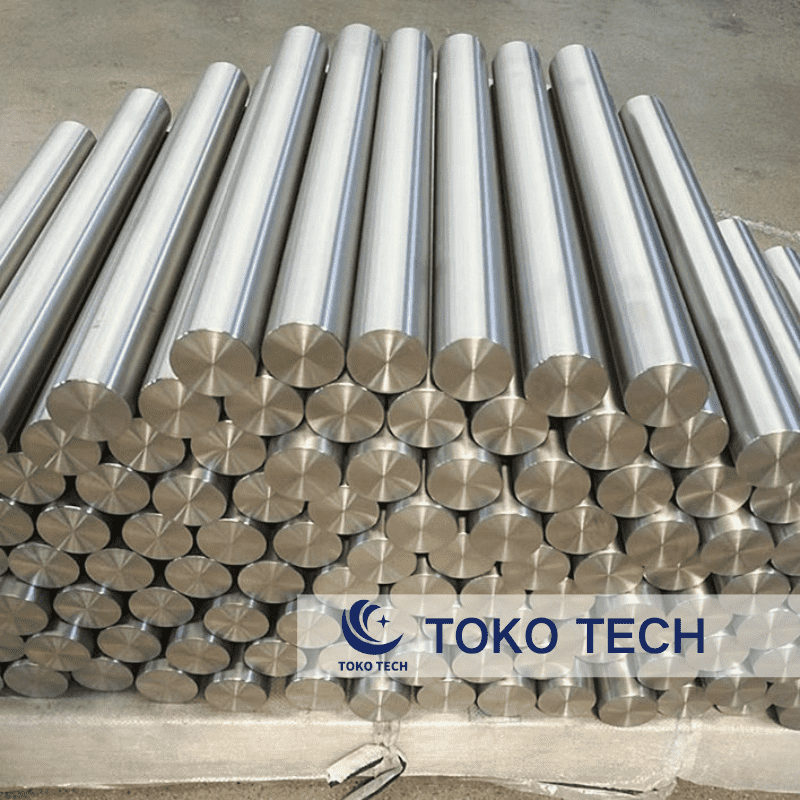
To fully leverage the benefits discussed above, procuring the correct grade of material is vital. At TOKO TECH, our manufacturing facilities in the Yangtze River Delta produce some of the finest metallurgical products available globally. When our clients evaluate Is nickel alloy stronger than steel for their specific needs, we direct them to our premium bar stock inventory, engineered for uncompromising performance.
Incoloy 625 Bar Stock
The Incoloy 625 Bar Stock is an austenitic nickel-chromium-molybdenum alloy known for its superb high strength and outstanding aqueous corrosion resistance. We recommend this material for marine engineering and aerospace applications. The stiffening effect of molybdenum and niobium on the nickel-chromium matrix gives Incoloy 625 Bar Stock exceptional tensile strength without the need for strengthening heat treatments.
Nick Alloy 825 Bar Stock
Our Nick Alloy 825 Bar Stock (often referred to as Incoloy 825) is a nickel-iron-chromium alloy with additions of molybdenum, copper, and titanium. It is specifically designed to provide exceptional resistance to many aggressive corrosive environments. It performs brilliantly in sulfuric and phosphoric acid applications. When answering Is nickel alloy stronger than steel regarding chemical resilience, the 825 grade is a prime example of superior long-term structural stability.
400 Nick Alloy Bar Stock
The 400 Nick Alloy Bar Stock (Monel 400) is a solid-solution alloy that can only be hardened by cold working. It boasts high strength and toughness over a wide temperature range and excellent resistance to flowing seawater. From our experience, the 400 Nick Alloy Bar Stock is the premier choice for marine fixtures, pump shafts, and chemical plant equipment where standard steel would rapidly corrode and fail mechanically.
Stangenmaterial aus Nickellegierung C-276
Considered one of the most versatile corrosion-resistant alloys available, the C-276 Nick Alloy Bar Stock (Hastelloy C-276) exhibits excellent resistance in a wide variety of chemical process environments. It resists the formation of grain-boundary precipitates in the weld heat-affected zone, making it excellent for most chemical applications in the as-welded condition. If you are questioning Is nickel alloy stronger than steel in highly oxidizing and reducing environments, C-276 provides the ultimate proof of nickel’s superiority.
6. Summary Table: Strength and Property Comparison
To provide a clear, technical perspective on the question Is nickel alloy stronger than steel, we have compiled a summary table comparing standard industry steel with premium TOKO TECH nickel alloy bar stock.
| Material Typ | Base Element | High-Temp Strength (>600°C) | Korrosionsbeständigkeit | Primary Application |
|---|---|---|---|---|
| Kohlenstoffstahl | Iron | Poor (Rapid degradation) | Low (Requires coating) | General construction, low-stress piping |
| 316 Stainless Steel | Iron | Mäßig | Good (Susceptible to pitting) | Food processing, basic chemical handling |
| Incoloy 625 Bar Stock | Nickel | Ausgezeichnet | Outstanding (Marine/Acid) | Aerospace, offshore pipelines, reactors |
| Stangenmaterial aus Nickellegierung C-276 | Nickel | Ausgezeichnet | Ultimate (Extreme chemicals) | Pollution control, severe chemical processing |
7. Frequently Asked Questions (FAQs)
Why exactly Is nickel alloy stronger than steel at high temperatures?
The atomic structure of a nickel-based matrix remains highly stable at elevated temperatures compared to the iron-carbon matrix of steel. Steel experiences phase changes and grain boundary sliding as heat increases, leading to a loss of tensile strength and creep. Nickel alloys, particularly those alloyed with molybdenum and niobium like our Incoloy 625 Bar Stock, resist this thermal degradation, maintaining their mechanical load-bearing capacity.
Is nickel alloy stronger than steel in terms of impact resistance?
Yes. Nickel alloys generally possess superior toughness and ductility compared to high-strength carbon steels. In cryogenic environments or under sudden, heavy kinetic impacts, steel can become brittle and fracture. Nickel alloys retain their ductility, absorbing the impact energy without shattering, which makes them critical for high-pressure valve components.
If nickel alloys are stronger and more resistant, why is steel still used?
The primary reason is cost. Nickel is a more expensive raw material than iron. When clients ask Is nickel alloy stronger than steel, we confirm it is, but we also advise that steel is perfectly adequate for low-stress, non-corrosive, ambient-temperature applications. TOKO TECH recommends investing in nickel alloys specifically for critical infrastructure where failure would result in catastrophic financial or environmental damage.
Can TOKO TECH supply custom dimensions for nickel alloy bar stock?
Absolutely. Rooted in our philosophy of Quality First, Innovation Driven, our manufacturing base in the Yangtze River Delta is equipped to produce custom specifications of Incoloy 625 Bar Stock, Nick Alloy 825 Bar Stock, 400 Nick Alloy Bar Stock, and C-276 Nick Alloy Bar Stock to meet the exact engineering requirements of our global clients.
8. Industry References
For engineers and procurement specialists seeking to further their understanding of metallurgical properties and the ongoing debate of Is nickel alloy stronger than steel, we recommend reviewing the following authoritative resources:
 German
  English
  Spanish
  Russian
  Turkish
  French
  Korean
  Italian