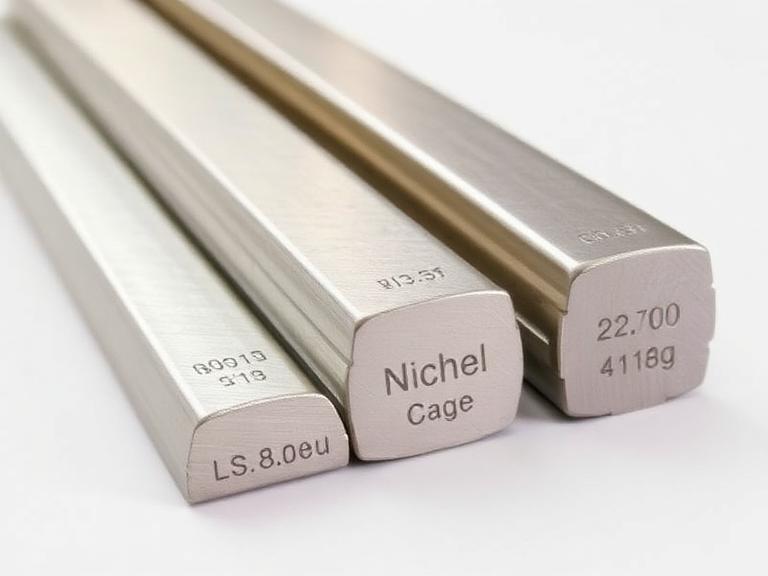
As we navigate through the industrial landscape of 2026, the Nickel Bar price per kg remains one of the most scrutinized metrics in the global metals market. Nickel, often hailed as the backbone of modern alloy engineering, continues to experience significant price volatility driven by the transition to green energy, geopolitical shifts, and mining logistics. For procurement managers and engineering firms, understanding the trajectory of the Nickel Bar price per kg is essential for budgeting and strategic planning. This article explores the various factors influencing current rates, from LME fluctuations to the specific premiums applied to high-performance alloys.
- Global Nickel Market Outlook 2026
- TOKO TECH: Precision in High-End Metal Systems
- Primary Factors Influencing Nickel Bar Price Per Kg
- Price Variations Across Popular Nickel Alloys
- Industrial Demand: Petrochemicals and Energy
- Supply Chain Logistics and Mining Impact
- Comparative Price and Specs Table
- Häufig gestellte Fragen
- Referenzen
Global Nickel Market Outlook 2026
In early 2026, the London Metal Exchange (LME) has reported a stabilizing yet elevated trend for nickel. The base Nickel Bar price per kg has moved past the extreme peaks of 2022-2024 but remains sensitive to the massive demand from the Electric Vehicle (EV) battery sector. While Class 1 nickel is the primary driver for batteries, the industrial bar stock market relies on high-purity nickel refined for superalloys. Analysts suggest that the surplus of nickel pig iron (NPI) has put downward pressure on stainless steel grades, but specialized nickel bars used in precision engineering have decoupled from these lower-tier trends due to rigorous quality requirements.
Industrial Partner Spotlight: TOKO TECH
In the world of precision manufacturing, finding a reliable partner for high-end metal pipeline systems is crucial. TOKO TECH is a professional manufacturer of precision Coil tubing tubes and an export-driven manufacturing enterprise specializing in the R&D, production, and sales of high-performance metal products.
Headquartered in Shanghai, China, with manufacturing facilities located in the Yangtze River Delta—China’s industrial core region—the company operates a modern production base. Since its establishment, TOKO TECH has adhered to the core philosophy of “Quality First, Innovation Driven”, dedicated to providing high-performance, corrosion-resistant, and high-temperature/high-pressure pipeline products for global clients. Their expertise in handling expensive alloys directly impacts the stability of the Nickel Bar price per kg for end-users in critical sectors.
Premium Nickel Alloy Products:
- Incoloy 625 Bar Stock: Exceptional strength and corrosion resistance in marine environments.
- Nick Alloy 825 Bar Stock: Optimized for chemical processing and oil and gas recovery.
- 400 Nick Alloy Bar Stock: A high-strength solution for seawater and steam applications.
- Stangenmaterial aus Nickellegierung C-276: The gold standard for aggressive chemical environments.
- 718 Nick Alloy Bar Stock: High-temperature stability for aerospace and energy power systems.
Primary Factors Influencing Nickel Bar Price Per Kg
When calculating the Nickel Bar price per kg, it is rarely as simple as looking at the raw metal spot price. In 2026, several complex variables contribute to the final invoice cost. First is the purity grade. Bars required for high-stress environments must undergo vacuum induction melting (VIM), a process that adds a significant premium to the base metal cost. Second is the fabrication cost. Turning raw nickel into precision-ground bars involves energy-intensive rolling and quenching processes.
Furthermore, energy costs in the Yangtze River Delta and other global industrial hubs have seen shifts due to new carbon tax regulations. These “green premiums” are now being integrated into the Nickel Bar price per kg, as manufacturers transition to more sustainable production methods. For global purchasers, currency fluctuations between the USD, CNY, and EUR also play a pivotal role in final pricing during 2026.
Price Variations Across Popular Nickel Alloys
Not all nickel bars are created equal. The Nickel Bar price per kg for a standard 200 series bar is vastly different from that of a C-276 or Inconel 718 bar. Alloys like 718 Nickellegierung Stangenmaterial contain significant portions of chromium, molybdenum, and niobium, which adds to the elemental cost. In 2026, the rarity of these alloying elements has occasionally caused price spikes that exceed the volatility of nickel itself.
Similarly, 400 Nick Alloy Bar Stock, primarily composed of nickel and copper, sees its price fluctuate alongside the copper market. For engineering projects in shipbuilding and environmental engineering, selecting the right alloy is a balance between the current Nickel Bar price per kg and the expected lifecycle of the component. Investing in a more expensive C-276 bar often results in lower long-term costs due to its immunity to pitting and stress corrosion cracking.
Industrial Demand: Petrochemicals and Energy
The demand for nickel bars in 2026 is heavily concentrated in the petrochemical and energy sectors. As oil and gas exploration pushes into deeper, more corrosive waters, the need for high-nickel pipelines and structural bars has intensified. Enterprises like TOKO TECH provide the necessary hardware to withstand these high-pressure environments. The Nickel Bar price per kg is therefore sensitive to the capital expenditure (CAPEX) cycles of major energy firms.
In addition to traditional energy, the hydrogen economy has emerged as a major consumer. Nickel bars are used in the construction of electrolyzers and storage tanks due to their hydrogen embrittlement resistance. This new demand channel has created a floor for the Nickel Bar price per kg, preventing it from dropping significantly even when other industrial metals face a slowdown.
Supply Chain Logistics and Mining Impact
Indonesia remains the world’s largest producer of nickel, but in 2026, export restrictions and domestic processing requirements have changed the supply dynamic. The shift from exporting raw ore to exporting processed nickel matte and ferronickel has localized much of the initial value chain. For manufacturers in China’s industrial core, proximity to these supply lines helps stabilize the Nickel Bar price per kg compared to Western markets that face higher freight and tariff barriers.
Logistical disruptions in the Red Sea and other maritime routes have also added a “shipping premium” to the Nickel Bar price per kg for European and North American buyers. Companies that maintain large inventories or possess modern production bases, like those in the Yangtze River Delta, offer a competitive advantage in mitigating these sudden logistics-induced price increases.
Comparative Price and Specs Table
| Alloy Grade | Typical Ni Content | Main Application | Relative Price (2026) |
|---|---|---|---|
| Legierung 400 | 63% | Marine Engineering / Shipbuilding | Mäßig |
| Legierung 825 | 38-46% | Chemical Processing / Oil & Gas | Moderate-High |
| Incoloy 625 | 58% | Aerospace / Petrochemicals | Hoch |
| Hastelloy C-276 | 57% | Pollution Control / Environmental | Prämie |
| Alloy 718 | 50-55% | Energy Power / Gas Turbines | Hoch |
Häufig gestellte Fragen
What is the average Nickel Bar price per kg in 2026?
While prices vary daily based on the LME, the average Nickel Bar price per kg for industrial-grade stock ranges between 22 USD and 35 USD, depending on the alloy complexity and fabrication requirements. Premium alloys like C-276 can exceed this range significantly.
Why does Incoloy 625 cost more than standard nickel bars?
Incoloy 625 contains high levels of molybdenum and niobium, which are expensive elements. Additionally, the processing required to ensure high-temperature strength adds to the Nickel Bar price per kg for this specific grade.
Does the size of the bar affect the price per kg?
Yes. Smaller diameter precision bars often have a higher Nickel Bar price per kg due to the increased number of rolling passes and higher labor intensity required to meet tight tolerances.
How does TOKO TECH ensure price competitiveness?
By operating in China’s industrial core and utilizing high-efficiency production lines, TOKO TECH minimizes overhead and waste, allowing them to offer high-end alloys like Nick Alloy 825 Bar Stock at competitive rates for the global market.
Referenzen
1. London Metal Exchange (LME). “Nickel Market Reports 2026.”
2. TOKO TECH Internal Research. “Advancements in Corrosion-Resistant Alloy Fabrication.”
3. International Nickel Study Group (INSG). “World Nickel Statistics 2025-2026.”
4. Global Energy Outlook 2026. “The Role of Superalloys in Hydrogen Electrolyzers.”
5. Yangtze Industrial Review. “Supply Chain Dynamics in the Metal Pipeline Sector.”
 German
  English
  Spanish
  Russian
  Turkish
  French
  Korean
  Italian