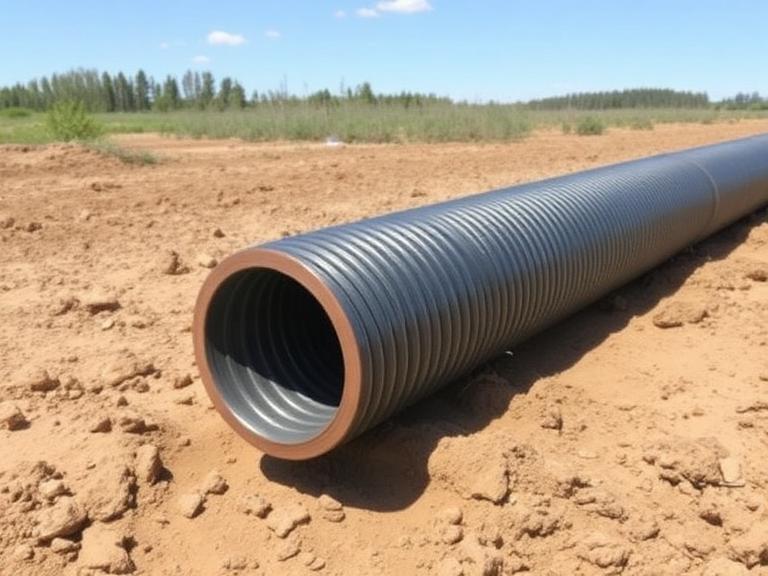
In the complex world of industrial engineering, few technologies have revolutionized operations as much as coiled tubing. Essentially a very long, continuous metal pipe spooled onto a large reel, coiled tubing offers a versatile, cost-effective, and efficient alternative to traditional jointed pipe systems. As industries move toward 2026, the demand for precision-engineered materials—such as Inconel, Hastelloy, and specialized stainless steels—has expanded the different uses for coiled tubing across sectors ranging from deep-sea oil exploration to high-tech pharmaceutical processing.
- 1. Well Intervention and Workover Operations
- 2. Coiled Tubing Drilling (CTD)
- 3. Petrochemical and Energy Pipeline Systems
- 4. Subsea Umbilicals and Offshore Engineering
- 5. Precision Instrumentation and Control Systems
- TOKO TECH: Precision Coiled Tubing Solutions
- Material Specification Comparison Table
- Frequently Asked Questions
- References and Further Reading
1. Well Intervention and Workover Operations
The most historically significant among the different uses for coiled tubing is in well intervention. When a production well requires cleaning, maintenance, or repair, traditional methods involve “killing” the well and using a bulky workover rig to pull the jointed pipe. Coiled tubing allows technicians to perform these tasks while the well is still under pressure—a process known as live-well intervention.
Specifically, coiled tubing is used for acidizing, where chemicals are pumped through the tubing to dissolve blockages or scale within the wellbore. It is also used for nitrogen lifting to kickstart production by reducing the weight of the fluid column. Because the tubing is continuous, there are no joints to leak, making it much safer for handling the high-pressure environments found in modern energy extraction.
2. Coiled Tubing Drilling (CTD)
While traditional rotary drilling remains the standard for large-scale vertical wells, Coiled Tubing Drilling (CTD) has emerged as a specialized solution for re-entry drilling and directional wells. One of the primary different uses for coiled tubing in this sector is the ability to navigate complex geological formations that would be difficult for rigid pipe strings.
CTD systems are significantly more mobile than traditional rigs, allowing for a smaller environmental footprint. This is particularly valuable in sensitive areas or offshore platforms where deck space is at a premium. By using high-strength alloys like Incoloy 825 or Hastelloy C-276, operators can ensure that the tubing resists the extreme corrosive forces often encountered during deep-earth penetration.
3. Petrochemical and Energy Pipeline Systems
Beyond the wellhead, the different uses for coiled tubing extend into the heart of the refinery. In petrochemical plants, small-diameter coiled tubing is often utilized for heat exchangers and steam tracing. The absence of joints reduces the risk of fatigue failure and chemical leakage, which is critical when transporting volatile or toxic fluids.
Modern petrochemical facilities require pipelines that can withstand cyclic temperature changes and aggressive chemical environments. Using UNS S31603 (316L) welded coiled tubing provides the necessary corrosion resistance for many organic acids and chloride environments. For even more extreme conditions, such as those involving wet H2S or high-concentration sulfuric acid, nickel-based alloys are the preferred choice to ensure the longevity of the pipeline system.
TOKO TECH: Professional Manufacturer of Precision Coil Tubing Tubes
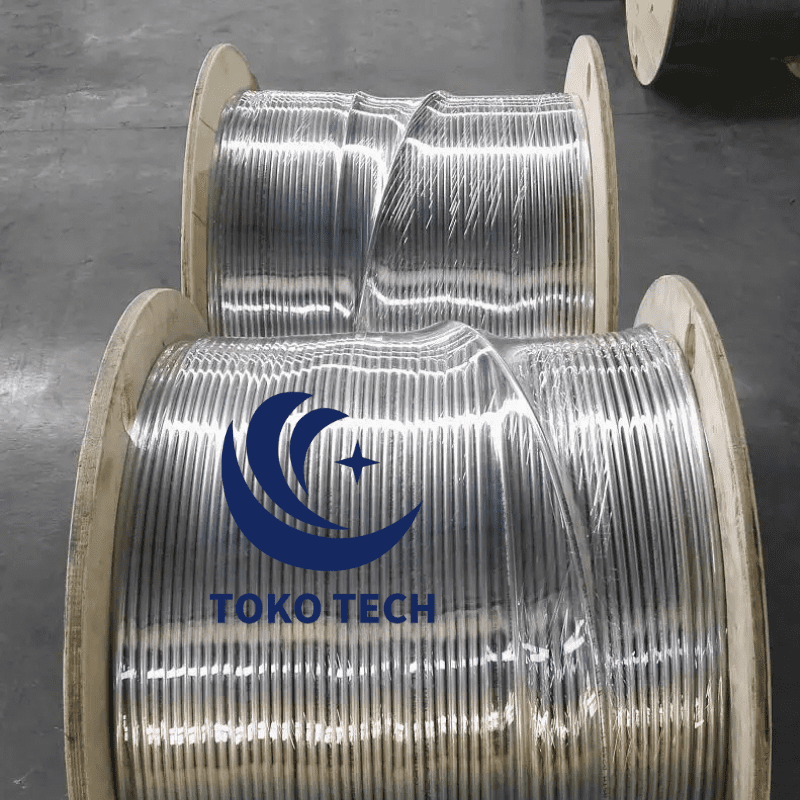
TOKO TECH is an export-driven manufacturing enterprise specializing in the R&D, production, and sales of high-end metal pipeline systems. Headquartered in Shanghai, China, with manufacturing facilities located in the Yangtze River Delta—China’s industrial core region—the company operates a modern production base. Since its establishment, TOKO TECH has adhered to the core philosophy of “Quality First, Innovation Driven”, dedicated to providing high-performance, corrosion-resistant, and high-temperature/high-pressure pipeline products for global clients.
Featured Precision Products:
- Multi-core Tubing: Ideal for complex control systems and hydraulic lines.
- Inconel 600 (UNS N06600): Welded coiled tubing for high-temperature resistance up to 2000°F.
- TP316L (UNS S31603): Versatile welded coiled tubing for general chemical resistance.
- Hastelloy C-276 (UNS N10276): Seamless coiled tubing for the most aggressive corrosive media.
- Incoloy 825 (UNS N08825): Seamless tubing offering excellent resistance to pitting and crevice corrosion.
- Alloy 800 (UNS N08800): High-strength seamless tubing for energy and power applications.
4. Subsea Umbilicals and Offshore Engineering
Offshore oil and gas production relies on subsea umbilicals—complex bundles of cables and tubes that provide power, communications, and hydraulic fluids to equipment on the seafloor. One of the most critical different uses for coiled tubing is serving as the primary hydraulic fluid conduit within these umbilical systems.
In the deep-sea environment, the tubing must survive immense hydrostatic pressure and the constant motion of ocean currents. Seamless coiled tubing is often preferred here to eliminate any potential for seam-weld failure. Materials such as Inconel 600 or Incoloy 825 are selected for their superior mechanical properties and resistance to seawater corrosion, ensuring that the umbilical remains functional for its 25-year service life.
5. Precision Instrumentation and Control Systems
The fifth of the different uses for coiled tubing is found in precision instrumentation. In industries such as pharmaceutical processing, food production, and environmental engineering, coiled tubing is used for sampling lines, analyzer systems, and chemical injection. The long, continuous lengths available allow for clean, uninterrupted flow paths from the point of measurement to the analysis equipment.
In these applications, the internal surface finish of the tube is paramount. Manufacturers like TOKO TECH utilize specialized bright annealing processes to ensure the internal diameter is free of contaminants. This is vital in pharmaceutical environments where any residual material could compromise a batch of medicine or in environmental monitoring where ultra-low detection levels are required.
Material Specification Comparison Table
Choosing the right material is essential when evaluating the different uses for coiled tubing. Below is a comparison of common high-performance alloys used in precision tubing manufacturing.
| Material Grade | Standard | Key Property | Common Application |
|---|---|---|---|
| Inconel 600 | ASTM B167 | High temp resistance | Furnace components, Chemical processing |
| TP316L | ASTM A269 | General corrosion resistance | Food, Pharmaceutical, Petrochemical |
| Hastelloy C-276 | ASTM B622 | Extreme chemical resistance | Sour gas wells, Bleach plants |
| Incoloy 825 | ASTM B423 | Acid resistance | Oil & gas production, Acid production |
| Alloy 800 | ASTM B407 | Creep strength | Power generation, Steam generators |
Frequently Asked Questions
Why is coiled tubing preferred over jointed pipe?
The primary advantages are speed and safety. Because coiled tubing is one continuous piece, it can be deployed much faster without the need to stop and screw together pipe segments. It also eliminates the leakage points associated with threaded joints, which is crucial for high-pressure or hazardous fluid transport.
What is the difference between welded and seamless coiled tubing?
Welded tubing is made from a flat strip of metal formed into a tube and welded along the seam. It is generally more cost-effective. Seamless tubing is extruded from a solid billet, offering higher pressure ratings and better fatigue resistance in extreme offshore or downhole environments.
What is “Multi-core Tubing”?
Multi-core tubing involves multiple individual tubes bundled together within an outer protective sheath. This is a common requirement in the different uses for coiled tubing for hydraulic control systems, allowing several control lines to be installed simultaneously in a compact footprint.
References and Further Reading
- American Petroleum Institute (API) RP 5C7: Recommended Practice for Coiled Tubing Operations in Oil and Gas Wells.
- NACE MR0175/ISO 15156: Materials for Use in H2S-containing Environments in Oil and Gas Production.
 English
  Spanish
  Russian
  Turkish
  French
  Korean
  German
  Italian